Saturday, 28 July 2007

Madam Anne Lefroy

Anne Lefroy, known as Madam Lefroy, was born in 1749 to the Brydges family at Wootton Court, near Canterbury.

When George Austen was made rector at Deane by his Uncle Francis, Francis also sold his assets in Ashe to a wealthy man, Benjamin Langlois, so that ten years later in 1783, he could also reward his own nephew, the Reverand Isaac Peter George Lefroy, by giving him the living of Ashe. The very attractive and cultivated Anne married the Reverand in 1778 and they lived as Ashe, making them the Austen’s closest neighbours. They had four surviving children; the eldest Lucy and three sons; John Henry George (who succeeded his father at Ashe), Christopher Edward and Benjamin Langlois (who later married James Austen’s daughter Jane).


Anne was a keen poet and her brother, Egerton Brydges, thought highly enough of her work to get two of her poems published before her marriage. In The Poetical Register and Repository of Fugitive Poetry, there are two poems by a Miss Brydges (Spence, 2003). The poems are considered witty and contain issues suited to the feminine mind such as masculine pretension. They show that she was at ease with herself and her feelings.


Anne and Jane, despite their age difference, formed a friendship that was marked by intelligence and respect. This friendship started when the Lefroy’s invited the 11 year old Jane to play with their 7 year old daughter. Due to a mutual love of literature, Anne and Jane began long literary discussions about novels, poetry and plays. It is believed that Jane shared her writing with Anne who acted as her friend and mentor. She was given free reign of their library at the Ashe parsonage. This must have acted as a important source of self-affirmation for Jane who was a child that was of limited confidence and needed encouragement and support in her early years.


Anne was a woman of charm, intelligence and means and soon became hostess to the neighbourhood. She opened a school for the poor children of the surrounding neighbourhood and taught them to read; this shows her determination and strong will, character traits that Jane would have greatly admired. She also personally vaccinated hundreds of people in her husband’s parish against smallpox (Ray, 2006). The Lefroy’s had a carriage and Anne would often lend out the carriage to families without, such as the Austen’s. These acts of kindness led her to be named ‘Madam’ Lefroy by all who knew her.


Anne was the aunt of Tom Lefroy who came to visit them in December 1795 after recently graduating from Trinity College in Dublin. It is unclear as to the role she played or her opinion of the loving relationship forming between Tom and Jane. She did organise a ball the Friday evening (15th January 1796) before Tom was to return to London but we are unsure as to what happened at Ashe on this evening. Jane did not receive any proposal, perhaps as she was expecting, or even some kind of assurance of a continued attachment between the two lovers. It has been speculated that Madam Lefroy became aware of the relationship that was forming between her nephew and Jane and promptly packed him off back to London before any more harm could be done. If this was the situation that it can be questioned why she encouraged the friendship between them and organised this ball before he left.


Perhaps out of some kind of guilt or duty to Jane, Madam Lefroy remained very interested in her matrimonial prospects. In the winter 1797 a Reverand Samuel Blackall was invited to stay at Ashe and became acquainted with Jane. Even after he had left, letters support that Anne Lefroy reported of events at Steventon, particularly mentioning Jane. His response ‘It would give me particular pleasure to have the opportunity of improving my acquaintance with that family- with a hope of creating to myself a nearer interest. But at present I cannot indulge any expectation of it.’ Nothing was to develop between Jane and the Reverand and she heard no more about him. Although she was probably not upset over his later indifference, it is sure to have dented her pride as it would any woman’s.


Anne died prematurely in a riding accident on December 16th 1804, Jane’s 29th birthday, when she was just 55 years old. The few months following Anne’s tragic accident must have been a very difficult time for Jane as her father died a month later on January 21st 1805. Jane was mid-way through writing The Watsons which she terminated and this only serves to represent the devastation she was experiencing.


Four years later Jane wrote a poem entitled ‘To the Memory of Mrs Lefroy’ which begins with the acknowledgment that her friend died on her own birthday. She expresses her feelings towards, and opinions of ‘Madam’ Anne Lefroy’s character. Here is a poignant extract:

“I see her here with all her smiles benign
Her voice of eager love, her accents sweet;
That voice and countenance almost devine;
Expression, harmony , alike complete.


Listen: ‘tis not sound alone- ‘tis sense,
’Tis genius, taste and tenderness of soul:
‘Tis genuine warmth of heart without pretence,
And purity of mind that crowns the whole.”


The whole piece can be found at http://home.earthlink.net/~lfdean/austen/poetry/lefroy.html
Although Anne Lefroy was clearly a dedicated wife and mother, it is clear that she was a very interesting lady who had a sense of independence in her mind and spirit.


References:

http://www.ashevillage.co.uk/helenlefroy.html

Spence, J. 2003, Becoming Jane Austen, 2007, Second edn, Continuum International Publishing Group, London

Shields, C. 2001. Jane Austen. Published by Weidenfeld and Nicolson.

Collins, I. 1998. Jane Austen. A Parson's Daughter. Published by The Hambledon Press

Ray, J.K. 2006. Jane Austen for Dummies. Published by Wiley Publishing Inc.


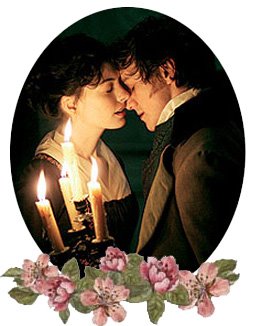
Pic 1: Madam Lefroy. Taken from www.austenblog.com/.../03/Madame%20Lefroy.jpg
Pic 2: Ashe Rectory. Drawn by E. Hill, 1901. Taken from www.jasa.net.au/japeople/img/ashe.gif

Update 20 September 2008:

The Jane Austen Center in Bath has adopted this excellent article for their Austen family/friends biography. Thanks a lot Laura Boyle of the JA Center and also to Rachel for the great bio! Here's the link.

'Becoming Jane' clips in U.S. Official Site!

Thanks to Kari for informing me. Go to the U.S. Official Site, under the 'Video' section, and click 'Clips'. The moment I saw the kissing scene by the pool... I truly want to see it again... (it's not rain, just water sprinkling from the fountain).

So now we have the scene where Jane criticized Tom Lefroy in front of Henry and Eliza, while Tom was all along behind her listening! Then, the Basingstoke dance, where Tom and Jane bashed each other's flaws. We also have the great scene of Mum and Jane quarelling, with Mr. Austen as the negotiator (lovely scene!)... and of course, the kissing by the pool!

The thing is, in Basingstoke, there's a scene I remember SO WELL where Tom said something and (pretending to forget Jane's name again), resumed with '....Miss?' on which Jane replied with 'Austen.' She then threw her repartees and also, pretending to forget Tom's name, added, '...Mr...?' to which Tom coolly replied with, 'Lefroy.'

That scene is NOT there! Bhuhuhuuuu!!! Why do you have to change that, Julian? It was perfect! The tone where James McAvoy said 'Depend on the woman. And what she thinks of me!' is also different...

I hope the UK DVD has the version that I watched.... or hopefully, the clip is the cut version, but in the movie it will be the same with the UK version...

Pic: Jane and Tom kissing by the pool, from the Yahoo movie.


More Jane & Tom breadcrumbs from Emma

As I was watching Kate Beckinsale’s Emma just now, I was struck (again) by how many Irish reference are there, and how I could be so blind not to make the connections. Remembering what Radovici wrote in ‘A Youthful Love: Jane Austen & Tom Lefroy?’ (p. 30) that Jane Austen made several Irish references in Emma, I pulled out my copy and skimmed the pages. And, recalling what Arnie said about Jane Austen’s own bread crumbs, I indeed found possible clues Jane left for us regarding her star-crossed love story with Tom Lefroy in Emma.

Now, I might be wrong, but I think Emma is the only Austen novel that has sprinkles of Ireland everywhere. Of course, one of the main supporting character (who was also a Jane: Ms. Fairfax) was designed to be seemingly in love with an unattainable Irishman who was about to be married in Ireland (Mr. Dixon in this story). And it’s not a rocket science to guess which one of Jane Austen’s acquaintance who was an unattainable Irishman…

I think Jane made at least two references of Tom Lefroy in Emma: Mr. Dixon and Frank Churchill. Of course, she mixed them with other characters as well; Frank Churchill was raised by his relatives the way Edward Austen (Knight) was. Mr. Dixon was an Irishman, ‘a most amiable, charming young man’, according to Miss Bates, who also added that ‘Jane [Fairfax] was quite longing to go to Ireland, from his account of things’ for ‘he [Mr. Dixon] had shown them some drawings of the place, views that he had taken himself’ (Emma, Volume II chapter 1). Hmmm, I bet Jane Austen also longed to go to Ireland, after listening to (or even looking at) Tom Lefroy’s description of his home island.

That was not the only time Mr. Dixon was promoted. Of course the story teller in the chapter was Miss Bates, who loved to chat about anything, thus her promoting the Irishman would not seem so odd. But I counted from my Penguin edition (2003) that Mr. Dixon was praised in at least four pages (149, 150, 155 and 164). That’s quite a lot for an Irishman that never truly appeared in the story.

In page 150 (Volume II chapter 1), Miss Bates continued rattling, ‘He [Mr. Dixon] is a most charming young man… I have been so fond of Mr. Dixon!’ In page 155 (Volume II chapter 2), Mr. Dixon’s charm was mentioned again: ‘Miss Campbell…engaged the affections of Mr. Dixon, a young man, rich and agreeable, almost as soon as they were acquainted; and was eligibly and happily settled, while Jane Fairfax had yet her bread to earn’.

Was Jane Austen talking of Mary Paul as she wrote Miss Campbell, or also of her old self who engaged the affections of Tom Lefroy almost as soon as they were acquainted? It could be both. But the last line (‘Jane Fairfax had yet her bread to earn’) was surely about Jane Austen herself, for by the time Tom married Mary, Jane was barely holding her own financial life.

In page 164 (Volume II chapter 3), Mr. Dixon’s charm was mentioned again by Miss Bates: ‘And Mr. Dixon seems a very charming young man, quite worthy of him.’ This Irish Mr. Dixon was surely quite important for Jane Austen…

And there was Frank Churchill, who pretended to tease Jane Fairfax, but in actually was secretly engaged with her, lest his aunt (Mrs. Churchill) would be mad because he was in love with a woman of no significant rank. Well, Tom Lefroy’s aunt (Mrs. Anne Lefroy) was also a bit cautious of Tom’s unexpected development with Jane Austen. Could it be that Tom and Jane resumed their relationship secretly for a while; at least after January 1796 and before November 1798? (This bread crumb continues in the upcoming post about Bath).

I also think that Frank Churchill's benefactor (Mrs. Churchill) might be the equivalent of Benjamin Langlois for Tom Lefroy. Mrs. Churchill and Mr. Langlois were both rich, and with NO offspring. And after all, the Judge was the benefactor of Tom's family, someone Tom should not mess with.

Another Irish reference in Emma that I found most intriguing was of the music. Frank Churchill was a talented singer, ‘he was accused of having a delightful voice, and a perfect knowledge of music…They had sung together once or twice…’ (Volume II chapter 8, p. 212).

My previous post referencing Jane and Tom singing together (taken from the book ‘From Ireland to Western Australia’, Cranfield 1960) had this quote:

He [Tom] had an agreeable tenor voice, while she [Jane] had a light soprano, and also played the pianoforte “with great precision.” They sang duets which included melodies from Handel’s Oratorio, “Susannah”, also Scottish and Irish airs of the popular kind.

In my post on Susanna, Arnie has confirmed that Helen Ashton’s ‘Parson Austen’s Daughter’ has the musical reference, so I think the information provided by Cranfield is valid. So, Frank had a delightful voice… and Tom Lefroy was also a good tenor singer. Both Frank Churchill and Jane Fairfax sang duets together while Jane played the pianoforte… and so were Jane Austen and Tom Lefroy, singing duets while Jane Austen playing the pianoforte. Interesting.

Arnie also provided info that Jane and Tom sang livelier Scotch and Irish airs, e.g. ‘I have laid a herring in saut’, ‘The Yellow Haired Laddie’, and ‘Robin Adair’, with a note that ‘that last supposedly being his favorite’. I’m still waiting for my copy of Ashton’s book, so I cannot check if Helen Ashton suggested it, or was it your own suggestion, Arnie.

In any case, the suggestion must have been inspired by Emma, for Frank Churchill also teased Jane Fairfax (page 226) by going, ‘And here are a new set of Irish melodies.’ And while Jane was playing the pianoforte, he said to Emma that Jane ‘is playing Robin Adair at this moment – his favourite.’ (Penguin notes that Robin Adair was a popular Gaelic Scottish and Irish music in the 18th century, appearing in the first volume of Irish Melodies, under the title of ‘Eileen Aroon’).

Hmmm… Robin Adair was Mr. Dixon’s favourite, eh? Or was it Frank Churchill’s favourite? Either way, I suspect that Robin Adair was one of Tom Lefroy’s favourites. And the fact that Frank Churchill sang duets with Jane Fairfax a few weeks after Christmas reminded me of the 1795 Christmas holiday where Tom Lefroy sang duets with Jane Austen in Hampshire.

Anyway, as Frank Churchill was supposed to have no interest whatsoever with Miss Fairfax, he joined Emma in teasing Miss Fairfax of Mr. Dixon and anything Irish. So, in chapter 10 (Volume II, p. 225), Frank said to Jane Fairfax, ‘How much your friends in Ireland must be enjoying your pleasure on this occasion, Miss Fairfax. I dare say they often think of you, and wonder which will be the day, the precise day of the instrument’s coming to hand.’

Earlier, Jane Fairfax had received a lovely pianoforte from Mr. X; Emma immediately gossiped with Frank that Mr. Dixon might be the one who sent the instrument. However, it was Frank Churchill who actually sent the pianoforte for Jane, as ‘an offering of love’. Now, I don’t think that Tom Lefroy sent Jane Austen a pianoforte (not even the second hand one, if ever any), for he would be on budget, too obvious and too early a stage if he did want to buy her one. But there were indeed several Irish songs in Jane Austen’s songbook. Is the speculation that Tom did give Jane the book, after all, correct? That Tom gave Jane an Irish songbook as an offering of love, or fondness, at least? And would he not often, or sometimes, think of Jane playing such music with her pianoforte?

One thing is sure for me: the many references to Irish and Irishman in Emma are too good to be coincidence. That must be Jane Austen leaving her bread crumbs there.

In this post, I also mention a possible reference of Bath through Frank Churchill. That’s not the only reference in Emma that might lead to Bath in 1797. I will talk about it later on in a post about Bath.

Reference:

Austen, J. 1815, Emma (2003 edition), Penguin, London.

Cranfield, R. E. 1960, From Ireland to Western Australia: The Establishment of a Branch of the Lefroy Family at Walebing, Western Australia, 1842 to 1960, Service Printing Perth.

Radovici, N. 1995, A Youthful Love: Jane Austen and Tom Lefroy?, Merlin Books Devon.


Pic 1: cover to the A&E Emma DVD (1996) from Amazon.com

Pic 2: Emma Woodhouse (Gwyneth Palthrow) in the movie version of Emma, 1996

Pic 3 & 4: from the Jane Austen Centre, U.K.

Friday, 27 July 2007

Music of the second ball: I found it!

I’m 100% sure. I was watching Kate Beckinsale’s Emma (A&E, 1996) tonight (just borrowed it from my friend), and was struck by the music for the ball where Mr. Knightley watched Emma dancing (with Frank Churchill), which is about 1 hour 3 minutes into the show (scene 8: The Ball). Now, as most of you, I’ve listened to Becoming Jane’s second ball scene (or famously called ‘Husbands and Lovers’ scene in YouTube) many times, and also a few times of the Behind the Scene by Special Treats Production. The music was very similar to Emma’s ballroom music.

I’ve listened to both music several times by now, both BJ and Emma, and am sure that it’s the very same. The music in Becoming Jane is a bit slower than the one in Emma, but I like the slower beat in BJ better for it is indeed appropriate for the scene where Jane danced with Tom. Now, I just have to find out the name of the score, for the 1997 Emma did not show the music credit.

In any case, I’m SO happy that I’ve learned that the particular music I’ve been looking for is somewhere there… a classical music somewhere I can buy!

Next: Jane & Tom bread crumbs from Emma

'Becoming Jane' music videos and interview in YouTube

Apparently I've missed several music videos of Becoming Jane from YouTube, so here they are. Now, the first one I found was Anne Hathaway's interview with Talking Pictures' host Tony Toscano. No embedded tag, so you have to click here to see it.

The second one is a music video by SinnedAngel08, titled 'Jane and Tom'.


Afterwards, we have Celine Dion singing Then You Look at Me for the background, music video made by Floramir. There's a few seconds clip of James McAvoy and Jessica Ashworth (Lucy Lefroy), apparently off the set watching the filming. Lovely!


Enjoy!

Which Jane are you? Take a Jane Austen quiz!

From the U.S. Official Site (Take the Jane Quiz), answer a series of ten questions to find out which character trait of Jane Austen you most identify with. Have a try; it’s fun! Me… after answering those questions (though some answers were not suitable), I found this:

You’re a romantic!

You daydream of prince charming sweeping you off your feet and living happily ever after. You’re old-fashioned when it comes to love and courtship, but you’re also not afraid to follow your heart wherever it may take you.

Oh, and take a look at the trailers afterwards (you have to take the quiz first)… in London, when Tom and Jane walked up the stairs (after the excursion to Mrs. Ann Radcliffe's)… sooo gorgeous, I almost fainted!

JA: Could we really have this?

TL: What, precisely?

JA: …You

TL: Me, how?

JA: … this life with you

TL: Yes…

And they are about to kiss when brother Henry Austen came!

HA: Lefroy...!

TL: Hush! The Judge!

Then, Jane and Tom looked at each other.

JA: Goodnight…

TL: Goodnight...

Then, as Jane was about to enter her room…

TL: Miss Austen?

JA: Yes? (waiting to be kissed)

TL: … goodnight!


Damned! Tom is soo yummy! I looooove that stairs scene! (if I were Jane, I would grab Tom and kiss him right away! Don’t care about the Judge!).

Oh, seemingly only the 'romantic' ones got that stair-scene, for I tried again, and I got 'A forward thinker'... and landed on the scene between Lady Gresham and Jane Austen! Haha! And the 'Rebel' got the cricket scene, which is fun as well.

Pic: www.annie-hathaway.com


‘I can’t act opposite you anymore. You’re too good.’

The above line was said by Anne Hathaway to James McAvoy during their first filming from an article by Ruben V. Nepales of The Inquirer. I found it touching. See the entire article here. This is the excerpt of the article:


We asked Anne if she buys the notion that Jane Austen’s romantic heartbreak over the affair with Tom Lefroy, who reportedly inspired the Mr. Darcy character in “Pride and Prejudice,” sparked her writing.


“It’s a very controversial argument,” she answered. “I don’t think she needed to find Mr. Right to write. I shouldn’t say that because I’m the star of a movie that says she did. We have an argument in the movie that sums it up the best. It’s a part of the script that I fell in love with right from the beginning. It was the artists’ argument—is it experience or imagination that informs the work? I think it’s both.”


English accent


The one time Vassar College and New York University student continued, “I think Jane did have heartbreak in her life. Not just a romantic heartbreak but she had extreme disappointments brought on by a lack of money and by society’s views of what a woman could achieve. Her sad life is probably more responsible for motivating her to write.”


On mastering an English accent for the role, Anne explained, “In the beginning, I tried going in and out of the accent when I was on the set. I felt a bit silly speaking to British people in a fake accent. I just felt like an impostor...I moved to England for a month before we started filming. I worked with a dialect coach for about six hours every day. And I practiced on my own. I would try to go out into the streets and try to pass my British accent. Some days I was successful and some days I got some very strange looks.


Great partner


Anne lavished praise on James, who appeared with Forest Whitaker in “The Last King of Scotland: “I had been working with him for a couple of days when I realized, my God, this guy’s really good. He’s just fascinating to watch. He was a great partner. He has no ego. Believe me, he’s someone who could have an ego—he’s so talented.”


She went on, “I saw him act on that UK TV show called ‘Shameless’ with his wife, Anne Marie Duff. I just burst into tears because I thought, I can’t work with him. He’s too good.


“So I went in the next day and I remember just staring at him. He goes, ‘You’re creeping me out. What’s going on?’ I said, I can’t act opposite you anymore. You’re too good. He just told me to stop being stupid, shut up and say my lines.”


Isn’t James McAvoy wonderful? And I’m so glad to find out that Anne did match him up. Happy sigh…


On the side note, Jennifer Freeman of the Mammoth Advertising (who is in charge of the BJ promotion in the US) has given me the link to the downloadable U.S. Trailers. Now you can watch it without going online!

http://server.mammothnyc.com/becomingjane/trailers.zip

Happy watching guys! Thanks Jen!


Pic: Tom Lefroy (James McAvoy) and Jane Austen (Anne Hathaway), www.james-mcavoy.net


Thursday, 26 July 2007

Jane Christmas Lefroy part 3

I’m moving ‘Jane Christmas Lefroy’ to her own section because it’s getting too large to put under her father’s section (Tom Lefroy). Anyway, I hope you guys bear with me… for it’s seemingly gonna be a rather long ride.

I’m very curious with the name Elizabeth Christmas, hence I took some Google queries of Jeffry Paul and Elizabeth Christmas. Found that record, JP died in 1730 and EC was born in 1689. Jeffry Paul was from County Carlow, Ireland. And guess what? They’re not Mary Paul’s ancestors.

This picture here is taken from Tim Sandberg’s Genealogy Database, a very good one, I should say, for it’s free and provided me the answer for the Pauls and Christmases (not for the Lefroys, though, surprisingly…). Up until now, I never knew that Christmas is a family name. See Henry Christmas for example. Loads of his descendants.

Anyway, Elizabeth Christmas and Jeffry Paul had several children, including the Jeffrey Paul Jr., who later married to Margaret Morris (daughter of Benjamin Morris) of Co Waterford, Ireland. Hence, Elizabeth Christmas was NOT Mary Paul’s grandmother or Jeffry Paul’s mother or something like that; so that ruled out the idea in my previous post that ‘Jane Christmas Lefroy’ was named after Mary’s grandmother…for the moment. I will still try to find Mary Paul’s and Jane Paul’s dates of birth, see if they have December or Christmas connections; also if any of their female ancestors have any relationships with the Christmases.

Sigh… Tom, where do you take me now, lad? I need to take a break, I start to see everything as family trees now…

Becoming Tom: James McAvoy Takes on Tom Lefroy

I’ve been missing James McAvoy so much, so here’s another copy from the U.S. Official Site about ‘Becoming Tom’, from the Production Notes (under ‘About the Film’). Gosh, I miss James’ Tom...

Becoming Tom: James McAvoy Takes on Tom Lefroy

When Jane Austen falls in love in BECOMING JANE, it is with the consummate Austen-style rogue, a wily young rake with both ambitions and notions. This is Tom Lefroy, about whose personality little is known, so the writers drew both on Austen's male characters and one fact that Lefroy's favorite book was Henry Fielding's comic novel Tom Jones, about a vigorously lusty yet kind-hearted young man, similar to the character Tom Jones himself to create a portrait of a man well aware of the powers of his charisma.

To play him, the filmmaker sought someone who had not been seen in this kind of role before, a modern, sexy, young leading man who could bring something new to the portrait. Julian Jarrold was soon put in mind of rising Scottish star James McAvoy, having directed in him in the British television series "White Teeth," well before McAvoy came to the attention of Hollywood playing the naive and youthful doctor who becomes personal physician to Forest Whittaker's Idi Amin in THE LAST KING OF SCOTLAND.

McAvoy was equally keen to work with Jarrold again. "With a lesser director, the film could have become some kind of parallel Pride and Prejudice but Julian made sure that did not happen," he says. "I've wanted to work with him again for years. He's got impeccable taste and elevates an ordinary film into an extraordinary one. He has expertly teased out the romance at the center of BECOMING JANE."

As he learned more about Tom Lefroy's high-stakes position as a young man with his family's hopes pinned on him, McAvoy developed empathy for his character's wild ways in the seedy gentleman's clubs of London. "Tom is under a lot of pressure," says McAvoy. "His job, as the eldest son, is to revive his family's ailing fortunes. He has been aware of that duty since the age of eleven or twelve. His Uncle Langlois took him away from his family and friends at an early age to train in law in London. It was an opportunity to elevate himself, marry well and, although he is a true non-conformist at heart, he does feel the weight of that responsibility on his shoulders. So he is a conflicted person and when you are experiencing that kind of conflict you do strange things." McAvoy continues: "Through his teenage years and early twenties, Lefroy goes off the rails a bit, but then he meets Jane. They are both non-conformists and I think recognize a kindred spirit in each other. Then, in our film, they fall in love."

As much as it is about becoming Jane, the film is also about Tom becoming a man of his times, facing the tragic reality that love must take a back seat to forging one's fortunes and keeping one's family commitments. "The interesting thing is that later in life Tom would conform completely, while Jane becomes a brilliant non-conformist, writing in a revolutionary way," observes McAvoy.

McAvoy knew his portrait of Tom could only come alive with the right Jane, and he found Anne Hathaway almost supernaturally suited for the part. “I don’t think we could have chosen anyone better to play Jane Austen,” he says.

Pic 1: Tom Lefroy, from www.annie-hathaway.com

Pic 2: Tom Lefroy carrying Jane Austen, from Reading Kit of the U.S. Official Site

Anne Hathaway on "Becoming Jane" and Becoming Famous

From the Fashion Wire Daily, one of the first reports of the New York Premiere of Becoming Jane. I'm a bit low that James McAvoy did not attend the premiere... but I hope, if ever the movie gets any Oscar nominations, he will...

Anne Hathaway on "Becoming Jane" and Becoming Famous

by Jenny Peters

As Anne Hathaway walked the red carpet on Tuesday night in New York at the premiere of "Becoming Jane," her latest film that chronicles Jane Austen's rise to fame and fortune as an author in the late 1700's, she looked fresh and fabulous. At 24, Hathaway is already at the top of her chosen career, with a string of movie hits behind her, including "The Princess Diaries," "Brokeback Mountain," and "The Devil Wears Prada." It's a life that differs dramatically from that of Jane Austen, who didn't find fame and success with her novels until she was in her mid-thirties.

But that didn't stop Hathaway from identifying with Austen, once she explored more about the author, whose novels "Sense and Sensibility," "Pride and Prejudice," "Mansfield Park," and "Emma" continue to be read and loved to this day.

"I was ashamed when I read the script that I'd never been more curious about her life, actually," Hathaway revealed at an earlier press day for the film. "I just assumed that I knew her because of [reading] her work. I accepted the two-line biography: ‘Jane Austen lived 41 years, published five novels, never married.'"

But in making "Becoming Jane," and exploring the story of Austen's early romance with Tom Lefroy (played by James McAvoy), Hathaway discovered much more about the woman behind the novels.

"I inherited the image of Jane Austen as a sort of a dried-out old spinster. And in doing my research I found she was anything but that. She was wonderfully alive, very fun, a bit naughty and so much, so much more alive than I'd ever thought. And so it was wonderful, the idea of playing the woman before the icon."

Hathaway, who attended the premiere at the Landmark Sunshine Cinema and after party at the Bowery Hotel with her long-time boyfriend Raffaello Follieri, seems to be blessed with everything a modern woman could possibly desire – career, financial independence, love, health - much more than Jane Austen ever had in her short life, in which mere financial survival was a constant struggle. But as Anne tells it, she's a bit more like Jane than people might think.

"One of my mantras in life is from the brilliant Mr. Oscar Wilde. He says, 'The less said about life's sores, the better.' I prefer to talk about the nice things that have happened to me and I'm very grateful and feel very blessed in my life, but, no, it hasn't been one big, easy, wonderful ride. There have been hidden [bad] moments in there, too, I assure you."

But none of those were on display at the "Becoming Jane" premiere; that night, both Anne Hathaway and Jane Austen shared a very happy moment together.

Pic: Anne Hathaway by Grant Lamos at Fashion Wire Daily

'Becoming Jane' reading kits and book lover guide

For teachers and education officers, the U.S. Official Site has provided the 'Becoming Jane reading kit', complete with questions and quizzes for Jane Austen lovers. For book lovers and book club goers, there's the 'BJ Reading Group Guide'. Both of them are accessible from the Official Site, under the Link (Reading Kit and Book Club Guide) in pdf format.

I don't think I can post the pdf here, but downloading them is easy. Happy reading!

Oh, and I'm so happy to report that most seats in U.S. cities scheduled for first-screening are booked out. As I write, cities that still have vacant seats for the early screening are Austin, Indianapolis, Lexington, Raleigh, Sacramento, Salt Lake City, San Antonio and St. Louis.

Go, Jane!

Jane Christmas Lefroy part 2

In the spirit of honesty and fair research, I am compelled to make this article, referring back to the previous article re: Jane Christmas Lefroy. Linda (who really is our Oracle in this blog, if you ever into DC Universe…) found through her proxies that there was a Jeffry Paul who died in 1730 and married to Elizabeth CHRISTMAS born 1689. I’m certain that this Elizabeth Christmas was not Mrs. Jane Paul, for Jeffry Paul still lived when Tom Lefroy married Mary Paul in 1799 (Memoir of Chief Justice Lefroy), and Mrs. Elizabeth Christmas Paul would have died by then (she could be either Jeffry Paul’s mother or grandmother).

Hence, I agree that ‘Christmas’ could be a familiar name within the Pauls, and Tom adopted that name for his baby girl Jane. As a good husband (and I'm being sincere here), he could adopt the name Jane (referring to Mrs. Jane Paul) and Christmas (to Mr. Jeffry Paul’s ancestor). But I still see the connections between Jane Austen of Hampshire and the 1795 Christmas where Tom Lefroy met Jane Austen for the first time.

What was that method Dan Brown used in Da Vinci Code? Where one code or number or name actually meant several things at the same time? Like, PS means Post Script, but also Princess Sophie, plus Priori of Sion. And the Fibonnaci number not only refers to anagram, but also to the bank account of Sophie’s grandfather. Whatever that method is named (it’s not anagram, more like a hidden code), I think Tom Lefroy (subconsciously, at least) applied it to his baby girl. Hence, he paid homage to both his wife and his youthful love. If it is true, would he be a bad guy to do so, then? Personally, I don’t think so.

Of course, research is still rolling on, and I’m open to any other explanations. But indeed, as I found that the name ‘Jane Christmas Lefroy’ is never mentioned before, I still think this finding is a significant one.

PS 26 July 2007, 9pm:

Well-well-well... this Mrs. Elizabeth Christmas was NOT Mary Paul's ancestor after all. See this post for more info. We're still digging...

Picture: A little girl, by Hilda Boswell

Wednesday, 25 July 2007

The U.S. Becoming Jane OST

I really gotta go to Bedfordshire... but I bumped into this info from the U.S. Official Site: Becoming Jane OST. It contains 23 tracks, the same with the U.K. OST that I bought from HMV UK, just different cover. The price is $ 12.97 in Amazon.com, to be released on July 31, 2007, which is only a few days away. Price is cheaper than the U.K. one, if converted. But I did not regret buying the U.K. version... for it allowed me three months of indulgence.

But of course (sigh...) no track of that second ball in the U.S. OST either. Really, guys... we really want to listen to the music of the second ball. Why is it not included here, I know not...

Nonetheless, the music is great, the tracks are lovely... so you should get it. My fave are Bond Street Airs, A Game of Cricket, Basingstoke Assembly, Selbourne Wood and Laverton Fair. Lovely music.... making you wanna dance.

Dressing Jane: About the Costumes

This time, I copy an article from the U.S. about the costume. I’m happy to see that quite a few of my earlier observations in the female and male costumes were correct (including Tom's white coat referring to Jane's letters on January 9 and 16, 1796). But of course, this article gives more info than what I have excavated. See the U.S. Official Site, under the ‘About the movie’ and ‘Production Notes’ for ‘Dressing Jane’. I've said it, and I will say it again: this movie deserves an Oscar for costume design!

As with the photography and production design, Julian Jarrold hoped to take a different view of Austen-era costumes in BECOMING JANE. For this, he worked with Emmy-nominated Irish costume designer Eimer Ní Mhaoldomhnaigh ("David Copperfield," THE WIND THAT SHAKES THE BARLEY).

"Like most people I studied Jane Austen at school so I was familiar with her world," says Ní Mhaoldomhnaigh. "But I deliberately moved away from recent film adaptations of Jane Austen's work and my priority was to try to do something different. 1790s Regency England was a very transitional era in terms of fashion so it was a real challenge to make it work."

Ní Mhaoldomhnaigh read up on the fashion of the day, visited museums for inspiration, consulted Austen's letters for clues and reread the novels for context and color. In particular she investigated the influence of continental fashions and also the likely differences not only between town (London) and country (Hampshire) but between the social classes. She discovered that Jane and her family were quite fashion conscious - but the family's financial circumstances dictated that they make their own clothes. While practical clothes were required for the farm yards, there was also the opportunity to dress up and show off at the occasional local ball.

By the mid-1790s, Ní Mhaoldomhnaigh also learned, fashion was becoming simpler, moving away from the huge dresses of the French Revolution and towards a more modern look. "Things were heading towards the Empire line which is a very basic style influenced by the Roman and Greek civilizations," she says. "1795 marked the beginning of that trend. But because Jane Austen was from the country which is slower to adapt to fashion changes we are showing just the introduction of that. The look in London of course is very different from the look in the countryside."

Ní Mhaoldomhnaigh sourced authentic fabric in India and scoured the costume houses of London as well as the BBC costume department. "We kept away from very ornate fabrics and were very careful to pare back the look," she says. When it came to dressing Jane, Ní Mhaoldomhnaigh made Anne Hathaway's wardrobe entirely from scratch, using a combination of research and intuition. "I wanted to get her youthfulness and innocence across through her dress," she states. "But crucially there was also her strength of character. So we kept away from frills and flounces. I wanted a look that was quite strong but also pretty. Jane was living on a working farm so her dress had to be practical as well. We were definitely trying to steer away from the chocolate box image that we associate with Jane Austen." Ní Mhaoldomhnaigh sifted through Austen's own correspondence to get a better picture of the writer's fashion sense and sensibility. "In her letters to Cassandra, Jane talks about going into town and buying new ribbon for her hat," she says. "She would not, at that time, have been able to afford a new hat so she buys ribbons and flowers to trim the bonnet. People would also visit from London and Jane and her friends would ask them about the latest fashion in London. She would write in her letters of new fabric that she had bought and she would describe it in detail."

It didn't hurt that Ní Mhaoldomhnaigh was dressing the preternaturally lovely Anne Hathaway, who became a close collaborator in the creation of her character's costumes. "It was great to dress Annie," the designer says. "She had just come from THE DEVIL WEARS PRADA, in which she wore all this amazing couture fashion and now I had to talk to her about wearing simple cotton dresses! But she was very keen to get the details right. Sometimes I would suggest a little extra piece of lace but she would say that it might be too much. She really grasped what we were trying to do. Of course Annie looks so wonderful on camera that she doesn't need adornment."

Meanwhile, Ní Mhaoldomhnaigh focused equally on creating clothes for Tom Lefroy that reveal him as a fashionable man-about-town. The designer was partly inspired by Jane Austen's letter to Cassandra, in which she writes of Lefroy: "He has but one fault, which time will, I trust, entirely remove - it is that his morning coat is a great deal too light. He is a very great admirer of Tom Jones, and therefore wears the same colored clothes."

But she also was influenced by the screenplay's colorful portrait. "When we first meet him, Tom is boxing, boozing and cavorting so there's definitely had to be rakishness to him," says Ní Mhaoldomhnaigh. To make Lefroy stand out from the crowd, Ní Mhaoldhomnaigh used a few tricks of the rag trade. "We used much richer fabrics like velvets," she says. "For his hat we used a beaver fur which is a lot more luxurious than the other hats. He wears very stylish waist coats and cut-away jackets.

With Jane around he'd have an extra swagger in front of her. James was really into it. We'd talk about the colors and fabrics to achieve his distinctive look." Ní Mhaoldhomnaigh notes that men's fashion at the time was also in a state of flux in 1795. "Some of the younger men have cut away style jackets which were just coming into fashion," says Ní Mhaoldomhnaigh. "In the countryside the men were wearing slighter older fashions except for those who had been to London and picked up styles there like a silk waist coat which they would wear to the ball.

Long trousers did not come into vogue until the early part of the 1800s. Men wore riding boots which were practical but also fashionable. Men's calves were seen as very sexy at the time so if somebody had good calves it was something to be proud of."

Of the other characters, one of the most distinctive is Maggie Smith's Lady Gresham. "I spoke with Maggie and told her that I'd like her costume to be from a slightly earlier period," recalls Ní Mhaoldhomnaigh. "We went for the 1770s, the sort of dress that the Of the other characters, one of the most distinctive is Maggie Smith's Lady Gresham. "I spoke with Maggie and told her that I'd like her costume to be from a slightly earlier period," recalls Ní Mhaoldhomnaigh. "We went for the 1770s, the sort of dress that the character would have worn when she was much younger. Lady Gresham is very much her own character and is not someone who is dictated to by fashion. She looked quite stern, almost gothic so the colors that we choose were greys and sea greens. Everything about her is quite rigid from the skirts to the fabrics. She wears a very large hood called a calash that was very common at the time. No one else in the film is wearing it so it makes her look quite different and even eccentric. Maggie loved it.

Not so enjoyable were the corsets -- de rigueur in Regency England but the bane of the 21st Century actors' lives. "Having to put on the corsets, especially first thing in the morning, they would say, ‘Oh do I have to?’" recalls Ní Mhaoldomhnaigh. "But that's how you get the distinctive look and silhouette of the period."

Pic 1,2 and 5: www.annie-hathaway.com

Pic 3 and 4: www.james-mcavoy.net

Observing Jane

I am happy to compliment the U.S. Official Site for finally giving Jane what she deserves. The production notes are particularly interesting to read, though I have to say the explanatory texts are a bit too small. Hence, I took this article below verbatim from the Production Notes section (under the ‘Observing Jane’) for your convenient reading. Two words: homage and reverse engineering. I agree that Becoming Jane is not copying other Jane Austen movies in negative ways; it instead pays homage to Austen’s genuine works. Enjoy!

Observing Jane: How Jane Austen’s Fiction Informs Her Character in Becoming Jane

In a kind of reverse engineering, BECOMING JANE utilizes key scenes and characters from Jane Austen’s novels – from the beloved Pride and Prejudice all the way to the lesser known Northanger Abbey and Persuasion – to forge the film’s depiction of Jane and Tom as a man and woman caught up in a courtship driven by heady feelings but complicated by money and mores. Austen scholar Joan Ray has identified several areas after a single viewing where the film converges with Austen’s fiction, including:

Harking back to Pride and Prejudice, Jane’s character resembles both the flirtatious Lydia Bennet who loved to dance and later Elizabeth Bennet who engages in witty repartees with Mr. Darcy, much as Jane does with Tom Lefroy in BECOMING JANE.

Tom Lefroy at first resembles Wickham, who in Pride and Prejudice was studying law with rather haphazard study habits, and also Darcy in the pejorative way he tends to judge country people.

Lady Gresham, the character played by Maggie Smith, closely resembles Catherine de Bourgh from Pride and Prejudice, Darcy’s wealthy aunt who didn’t want Elizabeth Bennet to marry Darcy. Lady Gresham is controlling and opinionated, like Lady Catherine, and Jane in the film even runs aside to scribble a note when Lady Gresham mentions a “little wilderness or shrubbery,” just as Lady Catherine does when she visits Elizabeth to discourage her from marrying Darcy.

The clumsy Mr. Collins in Pride and Prejudice is echoed in BECOMING JANE’s klutzy young clergyman Mr. Warren. Warren also resembles Mr. Elton in Emma with his unexpected proposal.

Jane’s heightened emotional reactions resemble those of the sensitive Marianne Dashwood in Sense and Sensibility.

In BECOMING JANE, Countess Eliza has a pug dog, just as she did in real life, and as does Lady Bertram who spends her days on the couch petting her pug in Mansfield Park.

In Mansfield Park, Lady Bertram tells her impoverished niece Fanny Price that it is every woman’s duty to marry well and Lady Gresham is given similar lines in BECOMING JANE.

Jane Austen is shown playing cricket in BECOMING JANE, a favorite pastime of young Catherine Morland, the heroine of Northanger Abbey.

Jane and Tom visit the popular Gothic novelist Ann Radcliffe in BECOMING JANE, while Catherine Morland in Northanger Abbey is reading Radcliffe’s Mysteries of Udolpho, which fires her imagination.

In Northanger Abbey, Jane Austen defends the art of writing novels, noting that it is in books that “the most thorough knowledge of human nature, the happiest delineation of its varieties, the liveliest effusions of wit and humor are conveyed to the world.” Jane is given a similar line as a young writer in BECOMING JANE.

The scene where Jane and Tom are in the staircase in Uncle Benjamin’s house provides a quick homage to the staircase scene with Henry Tilney and Catherine Morland in Northanger Abbey.

The heroine of Persuasion, Anne Elliot, breaks off her engagement with Frederick Wentworth, despite her true love for him, in a similar fashion to the way Jane does with Tom Lefroy in BECOMING JANE.

When BECOMING JANE imagines Jane meeting Tom Lefroy again at a concert of Italian music this mirrors the moment in Persuasion when Anne Elliot sees Wentworth at a concert and, though realizing that he loves her, is unable to communicate with him, wondering “How was the truth to reach him?”

Confessions of a Jane Austen Addict

Icha and I were fortunate enough to be sent a copy of Confessions of a Jane Austen Addict by Laurie Viera Rigler. I began reading and have to say I could not put it down; it is the ultimate feel-good, page turner. I think that in this world we all live in it is so easy to become submerged in serious, real issues but after finishing this book I was truly refreshed and just wanted to read more.

I am sure all of you Jane Austen fans reading this will know the familiar feelings of wondering just what it would be like to live in the world that Jane creates for us in her novels. I know that I have often gone to bed at night and tried to create a dream that involves me going to a regency ball and meeting my very own Mr Darcy. What makes this novel so special is that Laurie Viera Rigler takes this common fantasy that we all hold dormant and can all relate to and wrote it down; it is absolutely fantastic.

The story begins with a 30 year old woman called Jane Mansfield waking up in her bed in 1813. There is a catch, however, she may have the body of a woman existing in 1813 but the mind of this woman is actually Courtney who comes from modern day Los Angeles. Courtney, a huge Jane Austen fan from 2007, has just recently split from her unfaithful fiancé and upon going to bed one evening, finds herself waking up as Jane Mansfield in 1813.

She instantly thinks that she is in a dream but when the dream does not seem to end, she becomes accustomed to the notion that she may be permanently stuck nearly 200 years in the past. As someone who has studied psychology, I love the way that the author pursues the themes of the mind and thoughts that Jane/Courtney is having through analysing her new situation. It is very cleverly written and very insightful whilst remaining funny.

It is then that the author really explores this time period. The research is exceptional and she takes Jane/Courtney on a journey, allowing the reader to learn about family life, social etiquette and the hierarchical structure of the early 1800’s. The modern mind of Miss Mansfield finds it hard to grasp the oppressed position of women and the sheer innocence of the romantic interactions between men and women. We follow her to social Bath and then to London and there is consistent references to the Jane Austen novels that we love and cherish so much.

The reader finds themselves constantly asking the same questions: Will Courtney who is trapped inside Jane Mansfield ever find her way back to 2007? Will they both find their true loves- their own Mr Darcy’s? Will Courtney/Jane have the opportunity to interact with the real Jane Austen who was obviously alive in 1813?

The characters are developed so neatly but in a discrete fashion; by only part the way through the book I really cared for Jane/Courtney and her future and was itching to see what was about to unfold. Her dear friend Mary is adorable, her father Mr M has more depth to him than is originally perceived and there is the traditional Austen comic, shallow character in the form of Mrs M and Louisa. This novel had me laughing out loud constantly and never bored; to entertain there are fortune tellers, numerous eligible bachelors, balls, bonnets, bed bugs, scandal, friendship and love.

I really would recommend it to anyone who has a love of Jane Austen and her novels and their themes. It is a very light read that will lift your mood and make you wish you were a Courtney who also had the chance walk the footsteps of an 1813 lady. Upon realising the unlikeliness of this dream, it certainly makes you want to immediately pick up each of Jane’s novels in turn and read them all over again!

Go buy this book, priced £10.96 in UK ($16.47 in US dollars), available from Amazon. Also see this site for more about the book http://janeaustenaddict.com/

Pic 1: Book cover, taken from Amazon

Pic 2: Basingstoke Assembly from Jane Austen's Regency World Magazine March 2007

The Girliest Girl Who Ever Girled

Thanks to Kari (again), here's the very bit of Becoming Jane Premiere in New York, this 24 July. I can't believe it's not in Google News yet, where's everyone? Anne Hathaway and James McAvoy will be present... but no news yet... Aarrrgh! I also know that Canada premiere was this 24 July, for a good friend of mine got a free ticket! (Lucky her...). I'm waiting for her report now...

Link to the NY magazine is here.

The Girliest Girl Who Ever Girled

Becoming Jane premiere. Landmark Sunshine Cinema, 143 E. Houston St., nr. Forsyth St., 7:30 p.m. Stars Anne Hathaway and James McAvoy will be present. After appearing in a movie about Vogue and a movie about Jane Austen, there's really only one way Anne Hathaway could get any more girlie: by portraying a pair of shoes in the Sex and the City movie.

Pic: James McAvoy and Anne Hathaway, presumably during the BJ filming in Dublin. I don't know who the gentleman in the middle... but the image is from Gettyimage and www.annie-hathaway.com.

Baron Lefroy at Work

I see that the recent post of Jane Christmas Lefroy has created such a surge into the BJ Fansite in the best and ‘worst’ sense, perhaps :-D Thus, while dear readers digest upon the Jane Christmas post, and also to celebrate our 100th post, here I present you Baron Lefroy at work.

Memoir of Chief Justice Lefroy (1871, p. 228) mentioned that Thomas Langlois Lefroy was given the ‘Baron’ post in the Court of Exchequer a few days after November 5th, 1841 (Letter from Mr. Roden, 5th November 1841). Stealing from Wikipedia, I found out that Irish Exchequer is the department or ministry that deals with financial and monetary matters. Hence, Lord Chief Baron has such responsibility: ‘in the absence of both the Treasurer of the Exchequer or First Lord of the Treasury, and the Chancellor of the Exchequer, it was he who presided in the equity court and answered the bar i.e. spoke for the court.’ Thus, Baron of Exchequer is ‘the most important office of the court of the Exchequer.’

The Illustrated London News, dated Saturday, May 27, 1848 had the rather comical sketch (above) and the following text (thanks again to Linda):

We give, also, a characteristic Sketch from the Bench, introducing Baron Lefroy and Judge Moore; with the Lord Mayor of Dublin, who is joined in commission with the Judges.

It seems that Baron Lefroy was indeed in his ‘serious mode’ that day. Wish I can find a picture of him laughing…or at least, smiling cheerfully.

The House on Henrietta Street, Dublin

Throughout our journey in building the Becoming Jane Fansite, Rachel and I found many coincidences that, as they were too many of them, do not look like real coincidences. Linda also keeps delivering me documents that support the non-coincidences of some facts. It’s just spooky. Eve Stewart, the Becoming Jane production designer, also found such ‘coincidence’ during her hunt for a Georgian house in Dublin that would serve as the house of Mrs. Ann Radcliffe. This is the quote from the production notes of the U.S. Official Site:

For Stewart, perhaps the most satisfying find of all was the house on Henrietta Street, which doubled up for the London residence of the authoress Ann Radcliffe, where fate seemed to have led the production. “In a court room on Henrietta Street, we came across Tom Lefroy’s name on a stained glass window,” she recalls. “It was quite a spooky discovery.”

Spooky indeed. I mean, if you find Tom’s name on a court document, that is not surprising, for he was the Chief Justice of Ireland anyway. But on a stained glass window? Brrr…Just FYI, Tom Lefroy often resided at Leeson Street while staying in Dublin (Memoir of Chief Justice Lefroy). That's about 1.5 miles away from Henrietta Street, southeasterly.

By the way, Henrietta Street in Dublin is indeed famous for her Georgian buildings. This is what Irish Architecture.com says:

Henrietta Street dates from the 1720s and was laid out by Luke Gardiner as his first venture. Gardiner, more than any other individual was responsible for turning Dublin into an elegant Georgian city. Named after Henrietta, Duchess of Grafton it is a dead-end terminated by the Law Society’s Kings Inns and was designed an as enclave of prestigious houses. The street is still cobbled but many of the fine houses are now in disrepair.

In the mid 1700s, the street was inhabited by five peers, a peeress, a peer's son, a judge, a member of parliament, a Bishop and two wealthy clergymen as well as Luke Gardiner himself. At the top end of the street next to the Kings Inns is the Law Library designed by Frederick Darley in 1827. This replaced three of the oldest houses on the street. A proposal by Abercrombie for a National Cathedral in this area would have meant the demolition of the street with the Kings Inns forming one side of a large piazza.

Pic: Henrietta Street, from Irish Architecture.com