Showing posts with label About Tom Lefroy. Show all posts

Sunday, 17 August 2014

Tom Lefroy Quote of the Week 42


We received a very interesting email a couple of weeks ago from a man who owns the former church of St. Oswalds in Fulford, York, England. His garden is the former grave yard and he emailed us to tell us that there were two mid 19th century burials in this graveyard, captain Anthony Lefroy and his wife Elizabeth.


We have touched on Anthony Lefroy, Tom Lefroy's younger brother, before in previous quotes but here are some details below. Anthony Lefroy was born on October 19 1777 –and became a Captain in the 65th Regiment, the commission being purchased for him by his Langlois great-uncles. Anthony had a love match marriage in 1798 to Elizabeth Wilkin, she was considered undesirable due to her lack of fortune and the Langlois family refused to provide any further financial assistance. Tom Lefroy was eventually able to obtain for his brother the position of Barrack-Master, first in Arundel and later in York, where this branch of the family therefore remained. One of Anthony and Elizabeth's sons, Thomas Edward Preston Lefroy (1815-1887), married in 1846 his cousin Anna-Jemima Lefroy (daughter of Anna Austen and Benjamin Lefroy. Anthony Lefroy died on September 7th 1857. 


This story has always been interesting to us as the marriage between Anthony and Elizabeth was in 1798, this is the year that Tom Lefroy would have still had very strong feelings for Jane Austen. Given that his younger brother had married a woman of no fortune and gone against the families wishes, it would have been very difficult for Tom to also cut himself off from the family too, he would have felt a huge responsibility to "marry well" given that his second younger brother (Benjamin) was still 16 years old.


The email received recently stated:


"He was indeed the master of nearby Fulford cavalry barracks, but I have no more information regarding his tenure. The grave consists of a huge thick slab of stone
surrounded by railings. There is a full inscription of who he was and more
importantly, who his father was. It is said he married without the support of
his family, especially his rich uncle Benjamin and  subsequently lost the
support of his family. Perhaps this explains why he remained in obscurity as a
lowly captain when his brother achieved greatness. What is sure he remained true
to his wife and they stayed together until his death - she died only a few
months later."


We have asked whether a photograph can be sent with the inscription and we will be sure to post it if we do receive.


I think that this story demonstrates that true love and following your heart always wins in the end.


Pic: True Love


Monday, 13 January 2014

Tom Lefroy Quote of the Week 36


This week I chose a quote from part 9 of Tom Lefroy's memoirs:

"But the things I am speaking of concerning his personal character – his love for God’s word, his humiliation as a sinner, his confidence in Christ – these are not gone. My brethren, for ourselves let us think can we look for more earthly things than he had? Few of us, perhaps none of us here, will attain to that advanced life. A few, indeed, may attain to the same high eminence in the world, or to the honors that crowned him; but even of those who attain these honors few may have that unbroken family peace and happiness which he had."


The highlighted words stood out for me. We hear such horrifying stories on the news every day and I wonder whether there is a reduction in the number of people who feel a sense of humiliation after committing a sin? I also wonder whether there are less people who have unbroken family peace and happiness in the world we live in today? Perhaps people don't fight as hard for what is important.


I think that from reading this it is clear that Tom was a very admirable character, someone to respect and follow as a compass of morality. I believe he may have understood the importance for balance in life.

Pic: Yin Yang symbol

Sunday, 30 September 2012

The sad fate of Carrigglas Manor

We received an email a few days ago from a John O'Neill. He conveyed sad news about what is happening to Carrigglas Manor, the former home of the Lefroys (including our Tom Lefroy, of course). John went to Carrigglas earlier last year, and found the estate to be in an unkept condition.


It seems that whatever hotel/estate development it was meant to be done in Carrigglas isn't happening now. We wrote several posts about Carrigglas here, here and here. Sad that that Tom Lefroy's symbol of pride and love is now in an utterly desperate state....

Tom Lefroy Quote of the Week 24

This weeks quote is from chapter XII, page 370 of Tom Lefroy's memoir.

"I feel that any memorial of him would be wanting which omitted to notice his unalterable cheerfulness under the little every-day crosses of life. Though the shadow of a cloud might flit past, it seemed as if it could never long obscure the sunshine of his temper or his countenance. If a wet day interfered with some cherished plan for a holiday excursion (and he retained to the very last an almost childlike enjoyment of such occasions) we were sure soon to hear some such remark as "well, only think of the good this gracious rain will do in the country," or "Really when I come to think of it, 'tis a decided advantage to me to have the day at home."

What a wonderful way to be remembered!


Sunday, 11 September 2011

Tom Lefroy Quote – Week 10

We have left behind Tom Lefroy for a while, so it’s time to revisit some of Tom’s personal aspects: gardening. Taken from his son’s (i.e. Thomas Lefroy) note in the Memoir of Chief Justice Lefroy page 51:


He had a great taste for gardening in early life, which induced him soon after his marriage to take a lot of ground in Leeson-street, (then on the outskirts of Dublin). On this lot he built the house which continued to be his town residence up to his death, enclosing a garden of about half an English acre; and here after he gave up going Circuit, he constantly spent a great part of his evenings during the spring and summer months in pruning his fruit trees and other garden work. I have still vividly before me our whole merry-hearted group – parents and children sallying forth into the garden after dinner, the youngest as well as the oldest taking share in the busy task of weeding borders, watering flowers, cutting shreds, or sitting at his side while he pruned the fruit-trees, and reading the pretty story book which he had bought on his way from Court in order that the evening might not pass without profit as well as pleasure.


Sigh…Beautiful… is it not? Reminding me that I must buy more flowers and shrubberies for my tiny weenie garden.

Monday, 16 May 2011

Memoir of Chief Justice Lefroy in Amazon

Following the announcement we made over a year ago (geez... that long?), we'd like to inform you gentle readers that the Memoir of Chief Justice Lefroy is available in Amazon in a very lovely cover. It was published by Nabu Press in August 2010.

It's definitely a good price for an ancient book. And I cannot help thinking that our continuous discussions on Tom Lefroy has helped the publishing of this book. Perchance... the Radovici book might be reprinted as well one day?

Pic: Cover to the Memoir of Chief Justice Lefroy from Amazon

Saturday, 4 December 2010

Jane Austen Quote of the Week 134


This week's quote was provided by Linda. It is a Jane quote, but it is heavily related to Tom Lefroy. Enjoy!


JA Letter to Cassandra, Saturday 9 - Sunday 10 January 1796:


" . . . I am almost afraid to tell you how my Irish friend and I behaved. Imagine to yourself everything most profligate and shocking in the way of dancing and sitting down together."


Using the Memoir as a reference, I hope to point to some information contained therein, but not as a quoted passage as we have been doing here. This information answers a question that has been on my mind for quite a while.

Jane Austen has been quoted as calling Tom "her Irish friend". I accepted that without question until one day it hit me that his uncle and aunt Lefroy were in England thereby making them "English". That led me to do some digging for their 'roots' to find out just who they were.

In chapter 1 of the Memoir we find this place named: Cambray, Netherlands and Flanders. So I tried looking that up on a map, as a matter of fact several maps, only to find that the area changed nationality several times. Then Tom's father ended up in Ireland in the army where he chose to remain until his death. Now Tom's mother was from Ireland which makes our Tom at least half Irish. So deducting from all that information, since Tom was born in Ireland, lived in Ireland, and his mother was an Irish native of Doonass in the County of Clare, we might get away with calling him "Irish" also.

I guess my problem is that I was looking for a truly Irish persona and now I discover that he is only half 'Irish'. This is of interest to me since I became interested in discovering my own roots. Needless to say I was surprised to find out that this "American" is "English" with one "German" thrown in for good measure. So what does that make me? Your guess is as good as mine.

One other item that the Memoir is sure to shed some light on is the financial situation of Tom's family. I shall be taking notes on that subject also as I read, mainly because all those bios of Jane want to claim that he was too 'poor' to marry Jane. I believe there is more to the story than that. So this group of posts is 'to be continued' as we look into 'Tom'.

Yrs aff'ly,
Linda the Librarian
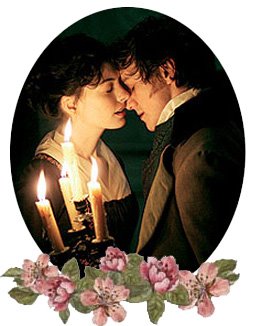
Pic: Tom Lefroy (James McAvoy) and Jane Austen (Anne Hathaway), 'Becoming Jane'

Sunday, 19 September 2010

Answer to the Puzzle: Tom Lefroy's handwriting!

My dear friends, apologies for the very belated instalment of the puzzle. Thanks to Amy who has contributed the trivia and to Mimi who has wrecked her brain in trying to solve it (I wrecked my brain for 5min and gave up, hahaha!).


The above is the scanned image of a letter Amy posted to me, and this is the interpretation:

1st line: “Longford October …1836”

2nd line: “…Herries… &Co.”

3rd line: “St James St.”

4th line: “Lefroy London”

Amy’s note:
1. In the olden days, addresser was written on the left side
2. In 1836 , Messers Herries, Farquhar and Company was located on 16 St James Street, London. Some years later it was acquired by Lloyds Bank.

And the leading material that confirms that it was a letter from Thomas Langlois Lefroy (which we didn't post until now on purpose...):


“The Right Honble [Honourable] Thomas Lefroy”

Wikipedia entry of the University of Dublin confirms that "The Right Honourable" was Tom Lefroy's official title by 8 January 1835 (scroll down to 'Elections in the 1830s). The Memoir of Chief Justice Lefroy page 120 noted that in 1830, Tom Lefroy was first elected as the Representative of the University of Dublin. He contested again for a general election on 7 May 1831 and 18 December 1832. He won those elections (wow!) but he had not had "The Right Hon." in his title by then. It seems that Thomas Langlois Lefroy received "The Right Honourable" title somewhere between 1832 and 1835.

Anyway, it seems to me that the letter was indeed written by our Tom Lefroy. Thus this letter might be a specimen of his hand-writing!

Hope the trivia is enjoyable!

Sunday, 24 January 2010

Lefroy books online!

Thanks to our dearest Linda the Librarian, we have in announcement the hard copy version of The Memoir of Chief Justice Lefroy, available since 31 Dec 2009, or just before the New Year. What an interesting New Year present! Get it in Amazon, dearest...

Also found on Google Book (Linda's been very active!) is the Notes and documents relating to the family of Loffroy, by a cadet [J.H. Lefroy]. You can download the PDF from the link. By the way, Sir John Henry Lefroy was the son of Tom Lefroy's first cousin; or the grandson of Madam Lefroy.

Happy reading!

Pic: Thomas Langlois Lefroy by George Engleheart, private collection of Edward Lefroy

PS: I posted this one on 31 Jan, but since I made the draft last week, Blogger just registered it as posted on 24 Jan. Weird...

Monday, 29 June 2009

Once upon a “Bad Tuesday”

The following is Mariana’s companion article for the marvellous calendar that she had made earlier and I’ve posted here. Thank you so much, Mariana!

-xxx-

This is something I’ve started a while ago after reading Ellen Moody’s calendars. Like her I was trying to find patterns in Jane’s books, just that I was looking for them hoping to make the connection with Tom Lefroy –the dates and events that matched those from Jane’s surviving letters written in the years she met and ‘flirt’ with her “Irish friend”.

As per one of her articles, “A Startling Pattern: Bad Tuesday”, Tuesday seems to be “repeatedly a pivotal day in Austen's novels, a day on which some embarrassing or mortifying incident or series of incidents occurs (at a ball, a change of home) which sets off an important change in the plot.”


In P&P, the last ball at Netherfield during which Darcy becomes aware that everyone is saying Bingley will marry Jane and leads him to separate them, occurs on a Tuesday. There is a very similar event in S&S: the first traumatic day which is specifically named as Tuesday is the day when Marianne and her family expected Willoughby to make her an offer, but instead he comes to tell he’s been sent away to London by his reach aunt. Another book in which Jane chose to send away the gentleman on a Tuesday is Emma. Frank leaves Highbury on Shrove Tuesday but not before trying to confess to Emma his love for Jane and their secret engagement.

After reading Jane’s letters ‘between the lines’ and with the help of BJF JA/TL Timeline article, here’s my special calendar with all those pivotal Tuesdays I’ve found in her surviving letters.

In Jane’s first 2 surviving letters, one day gets mentioned repeatedly which happens to be a Tuesday: January 19th 1796, and I believe this was the day Tom Lefroy returned to London, after their last ball at Ashe, during which Jane was also expecting an “offer” (one reason to believe that Jane was talking about an offer in marriage is her statement: I mean to confine myself in future to Mr. Tom Lefroy” and that someone drew Tom’s picture for her):

1. On Sunday January 10 1796, Jane added few more lines to her 1st surviving letter which she started the day before. She talks about her cousins, the Coopers, but I believe this was more a sing of her disappointment in not having her sister home before Tom’s departure, and so not able to meet her “Irish friend”: “By not returning till the 19th you will exactly contrive to miss seeing the Coopers, which I suppose it is your wish to do.”

2. At the beginning of her 2nd surviving letter (January 14-16, 1796) Jane shows again disappointment in not having Cassandra coming home before Tom’s departure. She’s even telling her sister how little she cares about the ball that will be held when Tom is gone (I assume this one was on Friday like all previous balls): “I do not at all expect to see you on Tuesday, since matters have fallen out so unpleasantly; and if you are not able to return till after that day, it will hardly be possible for us to send for you before Saturday [January 23], though for my own part I care so little about the ball [January 22] that it would be no sacrifice to me to give it up for the sake of seeing you two days earlier.”


Another Tuesday I’ve discovered in her 1st surviving letter is the day she visited Mrs Lefroy at Ashe: January 5th, 1796.: “…he [Tom] is ashamed of coming to Steventon, and ran away when we called on Mrs. Lefroy a few days ago.” Most likely the visit took place after she sent her missing letter (January 2-4, 1796) and that’s the reason I think it was on Tuesday. By saying “few days ago” on Saturday morning, it means that more than 2 days passed since this visit.

This is matching again a Tuesday in P&P – the day when Miss Bingley writes to Jane inviting her for dinner at Netherfield Park. Probably the ball at Ashe has been confirmed, or announced during this visit (same as in P&P), after Jane sent her missing letter, and that’s the reason to have it communicated to Cassandra only on January 9th: “I can expose myself, however, only once more, because he leaves the country soon after next Friday [another reason to believe Tom’s departure probably took place onTuesday19th and explains Jane’s hopes to have her sister returning home till this date] , on which day we are to have a dance at Ashe after all.”


One more important Tuesday I’ve ‘picked’ from Jane’s letters is the day she spent in Cork Street –London, August (23) 1796, on the same street if not the same house, where Tom’s great-uncle Langlois lived. Although it can not be confirmed, I still believe this short letter and the missing one (25-29 August, 1796) sent from Rowling-Kent are related to Tom Lefroy. In the first letter we have from Kent, Jane apologizes for the length of her previous one “I am sorry that you found such a conciseness in the strains of my first letter” and promises to make amends for it when they will meet “by some elaborate details, which I shall shortly begin composing”. Jane sent 3 more letters to her sister before returning home, but none of them contained those secret details that I believe were referring to Tom Lefroy and her short visit in Cork Street. Most likely they’ve been communicated in person, as Jane mentioned, when she met Cassandra – an indication these details were not safe to be sent in a letter.

There are similar events in P&P and S&S: Jane Bennet is encouraged by her sister to go to London hoping she’ll meet Mr Bingley again, but instead she’ll send letters (the first one very short) filled with “elaborate details” about Miss Bingley’s plan to have her brother married to Georgiana Darcy: “an event which will secure the happiness of so many”. In S&S, the day Willoughby leaves his card, which Marianne sees when they come in form the morning's drive, it’s mentioned again to be a Tuesday -a week after their arrival in London. Also, the central traumatic moment wherein Willoughby humiliates Marianne at the ball is dated, as per Ellen’s calendar, on Tuesday January 16, 1798.


The last pivotal date for Jane and Tom’s story seems to be again a day when he returned to London after visiting Ashe, in November 1798. Most likely Tom’s departure was related to his brother’s “imprudent marriage” (November 5th, 1798 -reference JA/TL timeline) and probably it took place the day after the news reached them, on Tuesday 6th or Tuesday 13th –the day before Mrs Lefroy’s visit to Steventon (Wednesday November 14th).

This is again only an assumption but it just happens to be a very good match of a pivotal date in S&S: Tuesday November 7th, 1797 (as per Ellen Moody’s calendar) is the day when Willoughby has been sent away to London by his reach aunt. Between 6 and 7 November, Mrs. Smith had discovered Willoughby's affair with Miss Williams and demanded Willoughby marry her as price of her forbearance.


…and the link for a ‘matching video’ on YT: http://www.youtube.com/watch?v=0cYTRTOaW3k&feature=channel

All pictures belong to Mariana Gheorghe

Monday, 20 April 2009

Jane Austen’s forgiveness


I’ve been thinking about forgiveness as of late, particularly of forgiving myself and also others that have hurt me. I realise that forgiveness is not easy to achieve, and I often wonder how Jane fared on the subject. I also remembered that I had a very dusty file about Jane’s forgiveness towards Tom Lefroy. Still a theory of course, but Linda’s question in the last week’s quote made me realise that it was time for me to dust off the file, sit nicely, and finish it. Hence, this article, very belatedly.

So the theory is simple: that prior to her death, Jane Austen has forgiven Thomas Langlois Lefroy for leaving her to marry Mary Paul. True, after reading her novels and letters, I cannot deny that Jane felt very bitter about Tom leaving her, and it was rather inevitable. But I firmly believe that she gradually understood why Tom left her, and the process was reflected in her novels. Please be mindful that I believe that Miss Austen was not only inspired by Tom Lefroy; no… she was too smart just to obtain her inspiration from a single person. But I firmly believe that Tom Lefroy was still Jane’s major influence in her novels, and there is nothing wrong with that.

Therefore, it is important for me to chronologically visit Jane Austen’s novels one by one and extract supporting hints. Looking back and forth to our own JA/TL timeline and having a better understanding of another main character, i.e. Anthony Lefroy (Tom Lefroy’s younger brother) will also help first readers here. I also have to stress out how subjective this article is, and that I analyse Jane Austen’s perceptions on Tom Lefroy and Anthony Lefroy that influenced her characters in her own novels. My gratitude in advance for various people that have contributed to the thinking and sleuthing processes of Team Jane during the last two years.


Northanger Abbey


In this context and in a nutshell, Northanger Abbey was Jane's memory of Tom Lefroy when they were still young, when hope still lingered in the air. Yes, yes, I hear you… NA was written circa 1797, and the general knowledge is that Jane and Tom were never in contact anymore after January 1796. So…?

Well, several Austen investigators, e.g. Jon Spence (‘Becoming Jane Austen’) and Claire Tomalin (‘Jane Austen’s Life’), paired with various research in this blog have strongly indicated that JA and TL still resumed their contact well beyond 1797. See JA/TL timeline for details. So, as I said earlier, NA was the fresh scent of JA/TL romance if I may say so. By the first time she wrote NA, Jane Austen was still full of love and hope for TL, and thus TL was effused in the personification of Henry Tilney (clergyman, gardening, clever conversation...). November 1798 brought the nightmare for Jane Austen, for Tom left to Ireland (not to see Mary, but to see his family) – and I believe that it was in strong association with Anthony Lefroy’s elopement (might never been proven, but I strongly believe it was an elopement instead of a sweet and nice marriage). Hence the beautiful drama in Jane Austen’s life ended.

Bottom-line of NA: Henry Tilney = Tom Lefroy. Catherine Morland was of course Jane Austen. Happy thoughts. No young black goat here... only the scary old General Tilney. He might be the great uncle Langlois...


Sense & Sensibility


Written circa 1811, well beyond her final separation with Tom Lefroy circa November 1798, Sense & Sensibility was the first novel which clearly indicated Jane Austen’s mixed opinion of Tom Lefroy. Here, Jane saw Tom as BOTH John Willoughby and Edward Ferrars. Our dissections on Mansfield Park led me to believe that Tom finally disclosed the true nature of Anthony Lefroy’s elopement. I am still uncertain of the approximate time, but most definitely I believe that Tom finally confided in Jane about his brother (see this post). We will eventually arrive in MP, but before that I just want to know that by the time SS was written, Jane still had troubles in grasping the fact that Tom had to leave her to save his family.

Yes, deep inside, Jane believed that Tom would not leave her for money like that. But Tom did not give her enough information (eh, typical man… thinking that all women are from Venus, hence possessing the ability to read minds); hence Jane also saw him as Willoughby (how come Willoughby and Wickham all start with W? As in Wicked?). This John Willoughby of Allenham was a coward who left Marianne for a very rich Miss Grey and thus still deserves age-old spankings.

Nonetheless, Jane Austen still had soft spot for Willoughby, for then she made him calling on Marianne... well, Elinor, and confessed to the elder Miss Dashwood that he still loved Marianne despite everything. Jane still believed that Willoughby had a good side…that Tom Lefroy had a good side. Her believe was magnified by Edward Ferrars' character; a character that fell in love with a good, smart woman (Elinor) after engaging with a silly girl (Lucy Steele). From an observer’s viewpoint, I see that Mary Paul was so NOT Lucy Steele; Miss Paul was too good a woman to be the model of Miss Steele. I am more inclined to see Mary Paul as the inspiration of Miss Grey. But again, that was Jane's perspective at that time, and I do not judge her at all (she could just create Lucy Steele ‘just for fun’... not referring to Mary Paul directly).

Bottom-line of SS: John Willoughby + Edward Ferrars = Tom Lefroy


Pride & Prejudice


Before I resume with PP, I have to thank Arnie Perlstein for his discussions with me more than a year ago. In relation to my article here that Anthony Lefroy was the main reason for Tom Lefroy to return to Ireland in November 1798, Arnie’s theory was simply put as: George Wickham = Anthony Lefroy. Both conducted elopement and both had forced two gentlemen (Fitzwilliam Darcy/Tom Lefroy) to clean up their messes. Makes no sense? Read on…

Somehow, between 1811 -1813, Jane came to terms with the role of Anthony Lefroy in changing the entire course of her life with Tom Lefroy. Hence, as she revised First Impression into Pride & Prejudice, she added the character Wickham - who to me was worse than Willoughby, for at least Willoughby loved Marianne, though he loved Sophia Grey's money better. I’m not sure if the first drafts of First Impression had Wickham (or someone akin to him) in it… worth checking…

In 1812/1813, Jane saw Anthony as Wickham - a bastard who ran away with an immature girl and disturbed the growing interactions between Darcy and Lizzy. In the real world, Anthony Lefroy was this young man who ran away with a girl (Elizabeth Wilkin) and hence disturbing the budding romance between JA and TL. In Wickham’s case, Darcy (who shared a bit of Lefroy in his seriousness) had to go down the streets of London for damage controls (did Tom do the same thing? Only in the streets of York instead of London?).

But Jane did not know back then that Tom did that NOT only because he had to, but also because he wanted to. Tom loved Anthony, I believe, hence his action was a brotherly love action, and not only out of responsibility. The evidence of Tom's affection towards Anthony was not only him helping little brother Anthony to gain the title of Barrack Master (see Fay’s ‘Jane Austen’s Letters’), but also Tom's closeness with Thomas Edward Preston Lefroy (TEPL). For why would he share such a bond with his nephew if he was not in good terms with Anthony? That would be awkward. Had Tom Lefroy been in a bad speaking term with Anthony Lefroy, Tom would not commission TEPL for the Cadell letter, and hence there would be no MOTIVE for TEPL to obtain the Cadell paper.

And who was Tom Lefroy in PP? Well, I tend to see Tom not only as Darcy/Lizzy combo (see Jon Spence for more info), but also as Charles Bingley (and hence Jane Austen herself as Jane Bennet). See this old post as another reference.

Bottom-line of PP: Tom Lefroy was NOT George Wickham. Lefroy was more of Bingley instead. Now the case went directly to Anthony Lefroy, who was more or less portrayed as Wickham here. That brings us to Mansfield Park.


Mansfield Park

Written in 1814, MP is indeed Jane's tribute to Tom Lefroy; hence the weird, unmatched feeling with other novels (thanks to Nadia Radovici for her amazing, out-of-print book!). I sense that before writing MP, Jane truly came to terms with the true nature of Tom's leaving to Ireland in Nov 1798 (and hence, also Anthony Lefroy's marrying Elizabeth Wilkin).

I see Tom's characters were split into both Fanny Price (shy and reserved but smart) and Edmund Bertram (kind, serious, an excellent clergyman-to-be). Michelle and I had dissected MP in a rather lengthy fashion here; hence I am not to repeat it again. And what of Tom Bertram? Ah…Wikipedia says:

Tom Bertram: The elder son of Sir Thomas and Lady Bertram; he is seven years older than Fanny. Tom is principally interested in carousing in London society and enjoying the pleasures of the theatre with his friend Mr Yates. Tom incurs large debts, forcing Sir Thomas to sell the church position that was to have gone to Edmund, Tom's younger brother. One celebratory journey leaves Tom with a fever.

Tom Bertram had a bit of Anthony Lefroy, again to me in Jane's perspective. I don't know how well Jane knew Anthony's character, hence I keep saying 'perspective'. Because marrying to an undesirable woman does not equal to a bad guy. Anthony might be bored with all the society pretence and scruples, and he wanted to break all the rules by marrying Elizabeth Wilkin. But Jane would not know this. Jane started to see Anthony as not the 100% wicked guy… he was just a lost case here. A poor, lost soul. She also reduced his importance in the story, unlike Wickham's role in PP.

Bottom-line of MP: Fanny Price + Edmund Bertram = Tom Lefroy. The black goat Anthony Lefroy was now Thomas Bertram instead.


Emma


In 1815, after the strange, rather out of place MP, came Emma. Now, Emma was very cheerful compared to MP, and to me, she's on par with PP in the brilliance. More, perhaps. And Emma, correct me if I'm wrong, has NO direct reference to a character akin to Willougby, and no Wickham or Tom Bertram either. All good and happy, despite the hidden mocks, puns, and jokes. Emma has Frank Churchill, who to me was Tom Lefroy himself. In Emma, Jane Austen had come to understand Tom in almost perfection. By now, she might have seen Anthony in different light, hence her understanding towards Tom's difficulty and her forgiving him for leaving her. See this post for more reference of Tom Lefroy (and Ireland) in Emma. Oh, and Frank Churchill was about three and twenty when he was introduced in Emma (Tom Lefroy was twenty years old when he met Jane Austen), and he (like Tom Lefroy) had a good singing voice as well!

Bottom-line Emma: Tom Lefroy = Frank Churchill + Charles Dixon. Anthony Lefroy? Uh, I couldn’t find him. Perhaps some of you could…


Persuasion

The last punch and evidence of Jane's understanding and forgiving Tom was Persuasion. There, we find no Willoughby and no Wickham/Tom Bertram, not even Frank Churchill (who despite him lying to everybody, everybody still loved him. Like Jane to Tom). In Persuasion, we find only Captain Wentworth and Anne Elliot. Back to the first dot of the cycle: Northanger Abbey. Back to Henry Tilney and Catherine Morland.

In Persuasion, Jane came to terms with Anthony's marriage and Tom's actions towards it. She had forgiven Tom (and also Anthony for that). There was William Elliot, who according to Wikipedia, was 'a relation and the heir presumptive of Sir Walter, who became estranged from the family when he wed a woman of much lower social rank, for her fortune.' Sounds like Anthony Lefroy to me… but I don't think William Elliot was even 25% Anthony now. But Miss Austen still had to have an antagonist in her story, and hence poor William Elliot’s role.

By the way, I think dear Charles Musgrove is Harris Bigg-Wither. You know Charles… a nice guy, husband of Mary Musgrove (nee Elliot) and heir to the Musgrove estate. He originally wanted to marry Anne but had to settle with Mary (much to the disappointment of the Musgrove family, and to his misfortune) when Anne refused him due to her eternal love for Wentworth.

Bottom-line Persuasion: Tom Lefroy = Captain Wentworth. Jane Austen = Anne Elliot. Here, Jane had finally forgiven Tom Lefroy for leaving her. She had finally come to terms with the past. Tom Lefroy left Jane Austen for family honour, and Miss Austen respected and forgave Tom for that.


Bottom-line for me: Forgiveness can be extremely hard to do. But if it brings peace to us… like I believe it did Jane… why can’t we forgive others? And most importantly, ourselves… for our stupid past?

Pic 1: Tom Lefroy (James McAvoy) and Jane Austen (Anne Hathaway) in 'Becoming Jane'

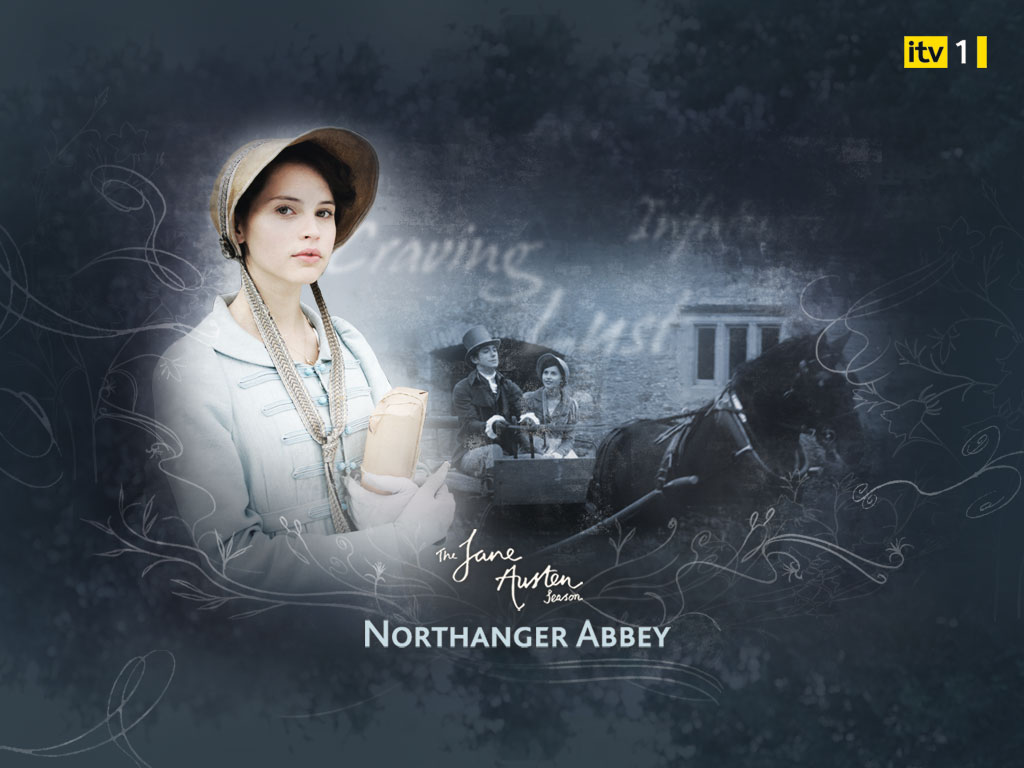
Pic 2: Northanger Abbey 2007, from fanpop.com

Pic 3: Sense & Sensibility 2008 cast, from BBC UK

Pic 4: Pride & Prejudice 2005 wallpaper, from vistawallpaper.com


Pic 5: Mansfield Park 2007, from fanpop.com


Pic 6: Emma 1995, from photobucket.com

Pic 7: Persuasion 2007
, from videodetective.com

Tuesday, 22 July 2008

Carrigglas company is facing liquidation

A rather bad news for Carrigglas, I'm afraid. And it's two months old news anyway, so there might be some other news I'm not aware of. Thanks to Rachel and Simon for the hints. News from The Post in Ireland. Hope things are getting better.


Carrigglas company is facing liquidation


18 May 2008

The development company behind Carrigglas Manor, the €160 million hotel and golf development in Longford, is set to go into liquidation, writes Ian Kehoe.

The directors of Thomas Kearns Developments have petitioned the High Court to wind up the company and have it placed into liquidation. The petition is due to be heard by the court early next month.

Construction work on the development has been stopped since last year, following a dispute over payments to contractors. Bowen Construction, the lead contractor on the Carrigglas Manor project, issued a letter to sub-contractors, informing them of payment issues.

The latest move by the directors of Thomas Kearns Developments has thrown the project further into doubt. It is understood that the directors of the company Tommy Kearns and his son Tom, own the development land in a personal capacity, and not through the company.

Bank of Ireland has a €35 million exposure to Carrigglas Manor, and recently asked accountancy firm Deloitte to assess the viability of the project. Kearns and his son provided the bank with personal guarantees over the capital.

The €160 million development was to include a four-star 96-bedroom hotel, spa, country club and 300 properties.

The project also includes a championship golf course designed by Retief Goosen, the South African golf star. Carrigglas was to have been financed through property sales, but suffered due to the downturn in the housing market.

Bowen Construction, has since made an €8 million bad debt provision in its accounts, arising from its involvement in Carrigglas.

Pic: Carrigglas Manor from the backyard, courtesy of Edward Lefroy (private collection)


Sunday, 6 July 2008

Jane Austen’s admirer from Ireland

Thanks to Mariana, I can upload this article albeit taking too long a time. And no, the title does not refer to Thomas Langlois Lefroy. Not directly, at least! Below is the summary of what Mariana informed us a few weeks ago.

It’s about one of Jane’s letters written on 25 September 1813 from Godmersham Park (Wednesday, Nov. 3), in which she has a very interesting comment regarding S & S and the fact that she is “read & admired in Ireland too”. The letter is quoted below:

Cassandra 1813: Godmersham Park Wednesday Novr* 3d*.

“Who has it next?-I am glad William's going is voluntary, & on no worse grounds. An inclination for the Country is a venial fault.-He has more of Cowper than of Johnson in him, fonder of Tame Hares & Blank verse than of the full tide of human Existence at Charing Cross.-Oh! I have more of such sweet flattery from Miss Sharp!-She is an excellent kind friend. I am read & admired in Ireland too.-There is a Mrs. Fletcher, the wife of a Judge, an old Lady & very good & very clever, who is all curiosity to know about me-what I am like & so forth-. I am not known to her by name however. This comes through Mrs. Carrick, not through Mrs. Gore-You are quite out there.-I do not despair of having my picture in the Exhibition at last-all white & red, with my Head on one Side;-or perhaps I may marry young Mr. D'arblay.-I suppose in the meantime I shall owe dear Henry a great deal of Money for Printing & c.-I hope Mrs. Fletcher will indulge herself with S & S.” (Mariana’s emphasise)

We all know that Jane wanted to remain anonymous (Lord Brabourne edition): “There is also an interesting entry of the date of September 28, 1811: "Letter from At. Cass. to beg we would not mention that Aunt Jane wrote Sense and Sensibility."

Godmersham Park-Sept: 25. 1813: “People shall pay for their knowledge if I can make them. Henry heard P. & p. warmly praised in Scotland, by Lady Robt* Kerr & another Lady; & what does he do in the warmth of his Brotherly vanity & Love, but immediately tell them who wrote it! A Thing once set going in that way-one knows how it spreads!-and he, dear Creature, has set it going so much more than once. I know it is all done from affection & partiality but at the same time, let me here again express to you & Mary my sense of the superior kindness which you have shewn on the occasion, in doing what I wished. I am trying to harden myself. After all, what a trifle it is in all its Bearings, to the really important points of one's existence even in this World!”

The Irish admirer “happened” to be the wife of a judge and not any judge, but the one connected with Tom Lefroy. Even more interesting is the fact that Mrs. Fletcher was “all curiosity to know about me-what I am like & so forth. I am not known to her by name however.”

Memoir of Chief Justice Lefroy - Chapter III

On the resignation of Judge Mayne, in 1820, he was offered the vacant seat in the Queen's Bench, by Earl Talbot, but he declined the offer. Again in the following year, on the resignation of Baron George, he was offered the vacant seat on the Exchequer Bench, by the Marquis of Wellesley, who had then succeeded Earl Talbot in the Lord Lieutenancy of Ireland; and in 1823, on the death of Judge Fletcher, he was offered a seat in the Court of Common Pleas, also by Marquis of “Wellesley”.

To learn more about Judge Fletcher, read the old article of Connaught Journal of Galway, Ireland (Monday, June 9, 1823) here.

Both names, Gore and Carrick could be linked to Lefroy, although it might be a simple coincidence. Mariana could not find any other information about these two ladies other than a small review of Mrs Carrick for Mansfield Park in Pemberley.com: "All who think deeply & feel much will give the Preference to Mansfield Park."

Anyway, bottom line is that a Mrs. Fletcher, wife of Judge Fletcher, knew about Jane Austen’s book, and she was keen to know more about Jane. As Judge Fletcher was within Tom Lefroy’s circle, could it be that Tom Lefroy himself recommended the book to Mrs. Fletcher?

Or are Mariana and I reading too much between the lines?

Pic: Thomas Langlois Lefroy by G. Engleheart from the Independent UK


Tuesday, 10 June 2008

Tom Lefroy on Sale!

Well, his miniature portrait, to be exact! Thanks to Anielka and Jane Odiwe for their scrutiny, I found about the sale of Tom Lefroy’s miniature picture drawn by George Engleheart in 1798, and it’s on sale for GBP 50,000 now!

The sale is conducted by Judy & Brian Harden at the Grosvenor House Art and Antiques Fair on June 12-18, 2008 at Stand 23. This is what their site says:

SHOWING AT THE GROSVENOR HOUSE ART AND ANTIQUES FAIR JUNE 12TH-18TH STAND 23.

We shall be offering for sale,an important piece of JANE AUSTEN'S history. A portrait miniature of her young lover Tom Lefroy by George Engleheart. The original, signed, painting, of which only one other version was made.

What are you waiting for? Any of you rich Jane/Tom fans can start bidding now. Obviously not me, though I’m a hard core fan. My cash now is not even enough to buy the frame, haha!

The first picture up there is the miniature portrait to be sold by the Hardens. Take a look at the picture. It’s rather different from the one we usually have on the left here, no? It’s because Engleheart only made TWO of these portraits, and the one we have on the site is the one currently held by the Lefroys in UK/Ireland. The one on sale is the second version, with rather firmer facial structures, but no less handsome.


But I have to tell you, there is a third picture here that makes me confused, is this one also the portrait currently held by the Lefroys? It was available in Maggie Lane’s Jane Austen’s World. This picture should have been the one held by the Lefroys, but somewhat still differs slightly. Perhaps the lighting.

There is also a very lovely article of Tom Lefroy’s portrait sale at The Independent UK. Here’s the excerpt of what The Independent wrote about the sale and Brian Harden’s comment about the portrait:

The watercolour, which is painted on ivory and measures just 3 inches by 1 ¼ inches, is on display at the Grosvenor House Art and Antiques Fair, at Park Lane in London, from Thursday. It is by Engleheart, the great English miniaturist, and the only one which is dated and signed with the artist's distinctive cursive E. The other portrait remains in the hands of Lefroy's descendants.

Brian Harden, one half of the Gloucestershire-based specialist dealers Judy and Brian Harden, who are selling the painting, said: "We bought this at auction quite a long time ago and it's been in our private collection since that time. We didn't know whom Tom Lefroy was when we bought it – it went through the auction house unrecognised – but we were able to identify and discover the history of the sitter. It's a very fine piece. The sitter is very handsome and personable. It was painted just two years after he met Jane Austen."

Sigh… Two years after he met Jane Austen…swoon…

Anyone up to the bidding, just let us know. Meanwhile, we will keep monitoring the sale and report back to you for the final result.

Pic 1. Thomas Langlois Lefroy by George Engleheart, from The Independent UK

Pic 2. The other version of Tom Lefroy’s miniature portrait kept by the Lefroy descendents (picture courtesy of Edward Lefroy)

Pic 3. Tom Lefroy’s portrait from Maggie Lane’s ‘Jane Austen’s World’. It should be the same with the one kept by the Lefroys.