The truth is that great novels are great fairy tales – and the novels in this series (Lectures on Literature) are supreme fairy tales. - Vladimir Nabokov
I stumbled across Vladimir Nabokov’s
Lectures on Literature by happy accident, whilst reading Amazon reviews on Dickens, and I am sold. I am only part-way through the book, but I recommend it very highly. I will be buying my own copy, and if you can find a copy at your local library, I hope you’ll enjoy it as much as I do. It’s very accessible, and not at all intimidating – just an exhilarating read recounting and unfolding literature masterpieces with great love and passion.
Vladimir Nabokov (1899 – 1977) was a multilingual Russian novelist and academic, most famous for his 1955 novel Lolita. Lectures on Literature is a collection of nine lectures published posthumously, taken from his collection of one hundred lectures (!) on great novels. In this collection, Nabokov reveals how the masterpieces work, and teaches how to use imagination and memory most effectively – to enjoy “shivers of the spine”, while studying Mansfield Park, Bleak House, Madame Bovary, Dr Jekyll and Mr Hyde, The Walk by Swann’s Place, The Metamorphosis, and Ulysses.


Literature is invention. Fiction is fiction. There are three points of view from which a writer can be considered: he may be considered as a storyteller, as a teacher, and as an enchanter. A major writer combines these three – storyteller, teacher enchanter – but it is the enchanter in him that predominates and makes him a major writer. … The three facets of the great writer – magic, story, lesson – are prone to blend in one impression of unified and unique radiance … There are masterpieces of dry, limpid, organized thought which provoke in us an artistic quiver quite a strongly as a novel like
Mansfield Park does. (p. 5)

But, as I discovered (to great amusement), Nabokov did not always hold Austen in high regard:
“Next year I am teaching a course called ‘European Fiction’. What English writers (novels or short stories) would you suggest? I must have at least two.” Wilson promptly responded, “About the English novelists: in my opinion the two incomparably greatest (leaving Joyce out of account as an Irishman) are Dickens and Jane Austen. … Jane Austen is worth reading all through – even her fragments are remarkable.” Nabokov wrote back, “Thanks for the suggestion concerning my fiction course. I dislike Jane, and am prejudiced, in fact, against all women writers. They are all in another class. Could never see anything in
Pride and Prejudice….I shall take Stevenson in stead of Jane A.” Wilson countered, “You are mistaken about Jane Austen. I think you ought to read
Mansfield Park … She is, in my opinion, one of the half dozen greatest English writers (the others being Shakespeare, Milton, Swift, Keats and Dickens). … And, uncharacteristically, Nabokov capitulated, writing, “I am in the middle of
Bleak House – going slowly because of the many notes I must make for class-discussion. Great stuff…I have obtained
Mansfield Park and think I shall use it too in my course. Thanks for the most useful suggestions.” Six months later, he wrote Wilson with some glee:
I want to make my mid-term report on the two books you suggested I should discuss with my students. In connection with
Mansfield Park I had them read the works mentioned by the characters in the novel – the first two cantos of the “Lay of the Last Minstrel,” Cowper’s “The Task”, passages from
King Henry the Eighth, Crabbe’s tale “The Parting Hour,” bits of Johnson’s
The Idler, Brownes’s address to “A Pipe of Tobacco” (Imitation of Pope), Sterne’s
Sentimental Journey (the whole “gate-and-no-key” passage comes from there – and the starling) and of course
Lovers’ Vows in Mrs. Inchbald’s inimitable translation (a scream) … I think I had more fun than my class. (pp. xxi – xxii)

After recovering Nabokov in my opinion - women writers in another class! - I read his
Mansfield Park (MP) observations with great interest. I have read one of the works mentioned in MP,
Lovers' Vows, but it would be an exercise
on another level altogether to read
all of the works mentioned in a particular work, and to familiarise myself with the character's own reading. It's quite exciting, and I think I will put it into practice with other books also. Nabokov believes there should be an, "“artistic harmonious balance between the reader’s mind and the author’s mind … The reader (must) get clear the specific world that author places at his disposal. We must see things and hear things, we must visualize the rooms, the clothes, the manners of an author’s people. The colour of Fanny Price’s eyes in
Mansfield Park and the furnishing of her cold little room are important. (p. 4)
Nabokov goes on to describe reading, in interesting detail:
…The best temperament for a reader to have, or to develop, is a combination of the artistic and the scientific … If, a would-be reader is utterly devoid of passion and patience – of an artist’s passion and a scientist’s patience – he will hardly enjoy great literature. … Although we read with our minds, the seat of artistic delight is between the shoulder blades. That little shiver behind is quite certainly the highest form of emotion that humanity as attained when evolving pure art and pure science. … The brain only continues the spine: the wick really goes through eh whole length of the candle. If we are not capable of enjoying that shiver … we cannot enjoy literature. (p. 5, 64)

…Since the master artist used his imagination in creating his book, it is natural and fair that the consumer of a book should use his imagination too. (p. 4)
Time and space, the colours of the seasons, the movements of muscles and minds, all these are for writers of genius (as far as we can guess and I trust we guess right) not traditional notions which may be borrowed from the circulating library of public truths but a series of unique surprise which master artists have learned to express in their own unique way. To minor authors is left the ornamentation of the commonplace: these do not bother about any reinventing of the world; they merely try to squeeze the best they can out of a given order of things, out of traditional patterns of fiction … and minor readers like to recognise their own ideas in a pleasing disguise. ( p. 2)
 At the beginning of his Mansfield Park lecture, Nabokov addresses what he calls the "space and time" issue, identifying the "time element" of the novel - the world scene, political players, etc, and then the "space element" - the family history and the Park itself. Nabokov then moves on to discussion of Jane Austen's "machinery” – her four methods of characterization utalised in MP. He identifies them as: 1.) direct description with gems of ironic wit on Austen’s part (Much of what we hear of Mrs. Norris comes in this category). 2.) direct quoted history, including mode of speech and mannerisms (example: Sir Thomas’s “elephantine speech”). 3.) reported and oblique speech and 4.) imitating the character’s speech when speaking of him.
I found Nabokov's explanation of a clergy living enlightening:
An incumbent is a parson who is in possession of a benefice, of an ecclesiastical living, also termed a spiritual living. This incumbent clergyman represents a parish: he is a settled pastor. The parsonage is a portion of lands with a house for the maintenance of the incumbent. This clergyman receives an income from his parish, a kind of tax, the tithe, due from lands and certain industries within the limits of the parish. In culmination of a long historical development the choice of the clergyman became in some cases the privilege of a lay person, in this case of Sir Thomas Bertram. The choice was subject to the Bishop’s approval, but such approval was nothing more than a formality. Sir Thomas, by the usual custom, would expect to receive some profit from the gift of the living. This is the point. Sir Thomas needs a tenant. If the living remained in the family, if Edmund were ready to take over, the income from the Mansfield parish would go to him and would therefore take care of his future. But Edmund is not yet ready to be ordained, to become a clergyman. Had not Tom, the elder son, been guilty of debts and bets, Sir Thomas might have given the living temporarily to some friend to hold until Edmund’s ordination, with no profit to himself. But now he cannot afford such an arrangement, and a different disposal of the parsonage is necessary. Tom only hopes that Dr Grant will soon “pop off,” as we learn from a reported speech with characterises Tom’s slangy manner and also his light carelessness for Edmund’s future. (p. 17)
 Well, I'm stuck! There is such an amount of interesting material in this lecture, but I am at risk of dragging this post out waaay to much. Perhaps it needs two parts. I will wind down now (not even quarter the way through the lecture!) with a brief mention of alluded literary works early in the novel.
Nabokov turns to the "first big conversational piece in the book" - where the Crawfords, Rushworth, the Bertram's and the Grants are shown in speech. The subject of the conversation is gardening, which, “from the age of Pope to the age of Henry Crawford was a chief amusement of cultivated leisure. Mr. Humphrey Repton, then the head of his profession, is introduced by name. Miss Austen must have seen his books on drawing-room tables in the country houses which she visited. She misses no opportunity for ironic characterisation” (p. 22)
Mrs Norris’s “baron apricot tree” story follows, and her laments of Mrs Norris’s poor health and consequent uselessness (more or less). Here, “the inedible apricot, nicely corresponds to the late sterile Mr Norris – this bitter little apricot is all that Mrs Norris’s long voluble speech about her improvement of the grounds and all her late husband’s labours are able to produce.” (p. 23)
Nabokov then discusses Fanny’s tendency to quote poetry, or at least allude to it during her conversations, often with Edmund. He says, that, “we must bear in mind that in Fanny’s time the reading and knowledge of poetry was much more natural … and widespread than today. Our cultural, or so-called cultural, outlets are perhaps more various and numerous than in the first decades of the last century, but when I think of the vulgarities of the radio, video, or of the incredible, trite woman’s magazines of today, I wonder if there is not a lot to be said for Fanny’s immersion in poetry.”
I have to add – the “trite woman’s magazines of today” – this was written in the 50s, or thereabouts. How Nabokov would shudder (and much worse) at today’s magazine culture!
He quotes William Cowper’s poem “The Sofa” at length, as Fanny quoted it to Edmund – Ye fallen avenues! – and then moves on to Fanny’s poetic allusions, this time in the chapel at Rushmore’s Sotherton. Nabokov informs that Fanny is quoting loosely from Sir Walter Scott’s The Lay of the Last Minstrel. I had no idea!
I will continue reading the lecture, and if anything extremely interesting grabs me, I will post it. I'm currently reading Nobokov structural analysis; Mansfield Park's breakdown into themes and motifs. Very interesting. Lectures on Literature is worth reading for this reason alone.
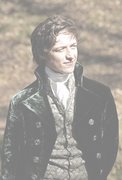
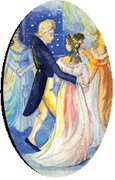
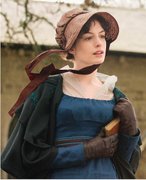
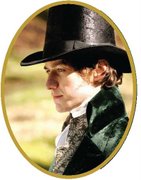
Mansfield Park pics from: Thrushcross


 (All emphasis my own)




 Posts
Posts