Showing posts with label About Jane Austen. Show all posts

Saturday, 14 March 2015

Jane Austen portrait

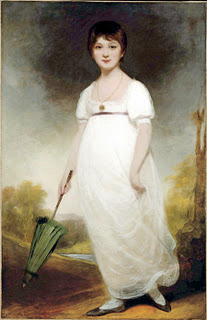
An interesting email came to me last week from Ed Lefroy, a descendant from Thomas Lefroy (see here for our Oct 2007 post). When going through some of the books from Carrigglas Manor (built in 1837 by Thomas Lefroy) he found one called Personal Aspects of Jane Austen by Mary Augusta Austen-Leigh (1838-1922, great niece of Jane Austen) which has a frontispiece of a painting by Zoffany entitled Jane Austen.


The book was published in 1920 and interestingly the painting claiming to be of Jane Austen is the same painting known as the Rice Portrait (see our 2012 post). The Rice Portrait was originally attributed to Johann Zoffany as inscribed in this book but now is believed to have been made by Ozias Humphry (a renowned English painter) around 1788 when Jane Austen was 13 years old. Some still suggest that the painting dates to the early 19th century and thus cannot be of Austen, an interesting mystery.


Do you believe the painting is of Jane? We welcome your comments.


Pic 1 and 2: Sent from Ed Lefroy, taken from Personal Aspects of Jane Austen (1920)
Pic 3: Mary Augusta Austen-Leigh

Sunday, 9 December 2012

Jane Austen Quote of the Week 215

This week I had the fortune to visit the christmas market at Winchester. The market was located just behind Winchester cathedral, the site of Jane's burial. In 2007 I wrote a post with information regarding Cassandra's response to her death, read it here.

The market was beautiful and I kept thinking about Jane and how the cathedral was "a building she admired so much" (written in a letter from Cassandra Austen in 1817, XCV, Winchester: Sunday )

I have chosen to quote a poem Jane wrote three days before her death in Winchester:

When Winchester races


When Winchester races first took their beginning


It is said the good people forgot their old Saint


Not applying at all for the leave of Saint Swithin


And that William of Wykeham's approval was faint.


The races however were fixed and determined


The company came and the Weather was charming


The Lords and the Ladies were satine'd and ermined


And nobody saw any future alarming.--


But when the old Saint was informed of these doings


He made but one Spring from his Shrine to the Roof


Of the Palace which now lies so sadly in ruins


And then he addressed them all standing aloof.


'Oh! subjects rebellious! Oh Venta depraved


When once we are buried you think we are gone


But behold me immortal! By vice you're enslaved


You have sinned and must suffer, ten farther he said


These races and revels and dissolute measures


With which you're debasing a neighboring Plain


Let them stand--You shall meet with your curse in your pleasures


Set off for your course, I'll pursue with my rain.


Ye cannot but know my command o'er July


Henceforward I'll triumph in shewing my powers


Shift your race as you will it shall never be dry


The curse upon Venta is July in showers--'.

For your information the roman name for Winchester was Venta. St Swithin's Day is 15th July, the day this poem was written and always associated with rain. I find it so amazing that she was writing such inspiring poetry days before her death, and funny too - rain does not make the best conditions for a race!


Pic: Winchester Cathedral

Thursday, 1 November 2012

Hampshire: The Upper Test Valley and The Jane Austen Churches

Hi all.

In February of this year I made a post about Chris Brindle's theories regarding the "Unseen Portrait" of Jane Austen, the article can be found again on the link below:

Jane Austen an unseen portrait...the alternative theory

Chris has been in touch to make me aware of two new books that he has written on the topic of Hampshire. The second book titled "Hampshire: Volume 2: Southampton and North Hampshire: Discovering the 19th Century World of Portsmouth Artist R.H.C. Ubsdell" has a 20 page chapter on 'The Upper Test Valley and The Jane Austen Churches.' This and other chapters tells the story of Jane Austen & Anna Lefroy and in full colour covers all the places in Hampshire associated with them and the wider Austen family.

Both these books can be found on  amazon.co.uk and there are some secondhand review copies for £10 if interested.

If any of you have not had the opportunity to visit the UK and see Jane's house and surroundings in Hampshire, make sure it is on the to-do list as it really is worth it.

Pic: Hampshire: Volume 2 cover

Wednesday, 22 August 2012

Jane's Ring ... SOLD

The turquoise and gold ring that belonged to romantic novelist Jane Austen 

Sorry it has taken us a while to write this information but a ring belonging to Jane Austen sold for £152,450 at a Sotheby's auction in London on July 10th, this was over five times the predicted price!

An article from the guardian newspaper states "The turquoise and gold ring came to Sotheby's from Austen's family, complete with a note sent by Jane's sister-in-law, Eleanor Austen, in November 1863, to Jane's niece, Caroline Austen. "My dear Caroline," wrote Eleanor. "The enclosed ring once belonged to your Aunt Jane. It was given to me by your Aunt Cassandra as soon as she knew that I was engaged to your uncle. I bequeath it to you. God bless you!""

The ring was passed from Jane Austen to sister Cassandra Austen to sister-in-law Eleanor Austen to niece Caroline Mary Craven Austen to niece Mary A. Austen-Leigh to her niece, Mary Dorothy Austen-Leigh, then to her sister, Winifred Jenkyns, who passed it to her descendants.

There has been speculation that the ring was given to her by Tom Lefroy but experts predict that she actually received it from her brother Henry who she was very close to.

Pic: http://www.guardian.co.uk/books/2012/jul/06/jane-austen-ring-for-auction

Friday, 10 February 2012

Jane Austen the Unseen Portrait - an alternative theory ...

We made a post a month ago (view here) which proposed that the new portrait found and owned by Dr Paula Bryne is actually Jane Austen.


I have received a detailed email from Chris Brindle who is related to the portrait painter and topographical recorder of the Hampshire scene, R.H.C. Ubsdell (1812-1887). I am going to present the information below.


The 'unseen' portrait is thought to have been created from life in London around 1816 by an artist of moderate abilities. Although it is acknowledged that Paula may be correct in her assumptions, given that the work of art is this old, there must leave some room for conjecture, so Chris would like to offer another possibility. The documentary made the point that the picture fits Anna Lefroy’s description exactly, so he believes it could be exactly that, a picture produced to the recollection of Anna, most probably in 1833.

Chris has actually seen Anna Lefroy’s diary and this places Anna at a house in the grounds of Oakley Hall (see 1st picture above) for a period from 1831 until 1833 and again for a period between 1840 and 1849.


As we know Anna Lefroy was the first child of eldest Austen son, James, by his first wife Anne Matthew. On her mother’s early death, when Anna was two she spent a lot of her early life at Steventon with Aunt Jane. Anna went on to marry Ben the youngest of the Leforys of Ashe. Ben did not take holy orders initially and it seems probable that Ben claimed he could make a living as an artist, and Anna claimed she would make a living as a writer like Aunt Jane. Jane had written her play 'Sir Charles Grandison' as an entertainment for Anna, they had talked about the characters of Pride & Prejudice as if they were real people, and on the brink of married life with Ben Lefroy, Anna embarked on her first attempt at writing 'Which is The Heroine' which was ultimately to be thrown on the fire in frustration sometime in the early 1820s. It is Jane's letters giving her comments on this attempt which tell us so much about Jane's own attitude to writing.

Anna’s house in the grounds of Oakley Hall was most probably the Garden Cottage of the present hotel, and it was here Chris believes that Anna finally plucked up the courage to become a writer like her Aunt Jane. Her short story 'Mary Hamilton' was published in the Literary Review of 1833, the same year Austen's novels came back into print in the Bentley Standard Editions. Anna had to vacate Oakley Hall on the death of its owner Wither Bramston in 1833, and Chris postulates that it had been Wither who had supported Anna in her writing to the displeasure of Wither’s wife Mary, sister of William Chute of the Vyne. William and his wife Eliza had strong connections with the Austens; James (Anna's husband) had hunted with the Vine Pack and Anna’s half brother James Edward Austen (Leigh) married Eliza’s niece.


Is it possible that Anna had an artist produce the image of Jane Austen from her recollections with a view to 1) making a link with Jane Austen, 2) justify women as professional writers, 3) illustrate the forthcoming Bentley editions, 4) reestablish favour with the family of William Chute?


Upon her return to her house in the grounds of Oakley Hall in 1840, Anna again found the ability to write. 'The Winter's Tale' was published in 1841 and 'Springtide' in 1842. Most importantly, it was here in 1845 that she wrote her continuation of Austen's last and unfinished novel Sanditon having received the manuscript following Cassandra’s death early that year. Her continuation was finally published in America in 1983. Finally in 1845 Anna found courage to be recorded as a writer, shown sitting at her writing desk in R.H.C. Ubsdell's tiny portrait miniature of her completed in the October of that year. This pose has remarkable similarities with the ‘unseen portrait of Jane’.

Chris Brindle believes that it was Ubsdell who produced the 1833 picture because he knew of Anna’s struggle as a writer. Ubsdell was known to have sketched Anna back in 1833 because he included her in his picture, “Sermon at St Lawrence” (see 2nd picture below). In this allegorical work Ubsdell uses the images of the famous people he has painted, to create a scene of people sitting round the smallest church in the country listening to a sermon by Samuel Wilberforce. Ubsdell portrays his patron Charles Richard Sumner Bishop of Winchester as a shepherd leaning on his shepherd’s crook, whilst Anna holds her hand on his as if seeking his guidance.

In his early years Ubsdell had an art gallery and studio at 135 High Street Portsmouth, England, opposite the theatre. He became very successful with the advent of photography and in 1859 moved to possibly the best house in Portsmouth, 1 Green Row. He became the local artist of choice for the rich and famous passing through Portsmouth. Portraits of Sir Francis Austen and Charles Austen are also probably by him. It is likely Ubsdell was selected for the retrospective Jane Austen picture in 1833 because in that year he had exhibited at the Royal Academy for the first time.

There could also be other Ubsdell pictures of the Austen family. The miniature painting of Sir Charles Austen (done surely in England in 1846 rather than Malta in 1850) at Chawton Cottage is remarkably similar in size, shape and style to the Anna Lefroy miniature, and the admiral in 'The Royal Navy No 2' aquatint in the National Maritime Museum based on an Ubsdell watercolour, bears a remarkable similarity to the Francis Austen portrait, plate 5 in Southam's 'Jane Austen & The Navy'.


What do you think? I have been reliably informed that he “unseen” picture of Jane Austen, owned by Paula Byrne, which featured in the recent documentary, is to go on exhibition at Chawton Cottage at Easter for a period of six months so any of you able to make a visit, I think it will be well worth it to make your own judgement.


Any comments welcome ...


If anyone would like to contact Chris Brindle for more information, his email address is brindlechris@aol.com. He does have a key to who everyone is in the “Sermon at St Lawrence”, and a note of other picture references to the people involved. He also has information about the likely materials used for the portrait.


Pics: Sent to me by Chris Brindle

Monday, 16 January 2012

Jane Austen the Unseen Portrait


Thanks to Mariana Georghe, here we are aware of the 'new' unseen portrait of Jane Austen. The clip is from BBC, but is now in SMaryG's YouTube account. The picture was found by Dr Paula Bryne and was later discussed in the recent BBC documentary titled 'The Unseen Portrait of Jane Austen?'.

A detailed article about this portrait can be found here.

I have to say that the picture does not match to my personal image of hers, which was more influenced by the sketches made by Rice and James Stanier Clarke (we discussed them here and here). The Rice and Clarke sketches displayed the frontal view of the young girl's faces, hence I was led to believe that the nose would not be so pronounced, as in the Bryne portrait.

But the facial features does speak of the talented, witty woman we know as Jane Austen. So... who knows?


Pic: Dr Paula Bryne's found portrait of Jane Austen.

Sunday, 1 January 2012

Jane Austen Quote of the Week - Week 178

Firstly Happy New Year to you all and thank you very much for your continued support. If any of you have any suggestions on Jane-related things we can do this year on the blog then please do write to us.

Linda has kindly made me aware of a website that we wanted to bring to your attention. It provides information about The Rice Portrait of Jane Austen.
Before I continue I want to link this to a fantastic article that Icha wrote here on the blog in July 2007 about this very same topic Rice Portrait and Clarke's Sketch. Basically it is believed that the 'Rice Portrait’ refers to a portrait of a young girl made by Ozias Humphry, an English painter (1742-1810). It is proposed that the portrait is of Jane Austen when she was around 13/14 years old but there has been much debate about the authenticity of this portrait.

The website mentioned above, The Rice Portrait of Jane Austen, has recently been constructed by Anne Winston Rice who was married to Henry Rice, a descendent from Jane. She wants to set the record straight about whether this portrait is indeed Jane Austen, she believes it is.

The website is quite detailed and I will not try to summarise all the information here as it is well worth exploring yourself if you are interested. She describes 4 pieces of primary evidence which puts together an excellent case. I have simplified the information below:

- Colonel Thomas Austen, Jane's second cousin, had possession of the painting and gave it to his great friend Colonel Thomas Harding-Newman in 1818. Colonel Harding-Newman’s son wrote in 1880: “I shall hope to give another painting of Jane Austen to her relative Morland Rice. It is of a girl about 15, and came into my family the gift of Colonel Austen of Kippington, to my mother-in-law, or rather, step-mother, my father’s second wife, who was a great admirer of the novelist."

- Admiral Sir Francis Austen, Jane's brother, was very close to his grandson John H. Hubback and it is believed he shared valuable information regarding the Rice Portrait with him. Hubback told Mrs Graveson (a lady researching the portrait) that his cousins, the Rices, owned the only professionally executed painting of the authoress.

- Lord Brabourne was the eldest son of Fanny Knight, who married a Knatchbull Hugesson. He was Jane Austen’s great nephew, as also were John Hubback and Morland Rice. They were all cousins. In 1884, he published the first book about Jane, her “Life and Letters”. He relates how he has written to Mr Cholmeley Austen-Leigh about Morland Rice’s portrait, and that Mr Cholmeley Austen-Leigh has replied that if Morland’s portrait is authentic.

- Fanny Caroline Lefroy, the granddaughter of the Rev. James Austen was the family historian. Her mother, Anna Austen had lived in the same house as Jane Austen for some ten years, and therefore would have known what she looked like. Morland Austen, who received the portrait, asked Fanny Caroline Lefroy for her opinion about the portrait. She says she “knew before of the portrait in your possession”, and cites one or two little difficulties but only of when, and where, the portrait was painted.

Pic: Taken from Jane Austen Rice Portrait

Sunday, 27 March 2011

Jane Austen Quote of the Week 145

This weekend’s quote was taken from Jane Austen’s letter in 1808 which was written for Cassandra Austen. It was a simple, no-brainer quote that I searched for because today I just tried a new green tea cake recipe. I am pleased to report that the cake did not disappoint me, although a slightly more moist texture would be preferable. The quote was directly taken from Pemberley.com.

Godmersham: Wednesday (June 15)


Your account of Anna gives me pleasure. Tell her, with my love, that I like her for liking the quay. Mrs. J. A. seems rather surprised at the Maitlands drinking tea with you, but that does not prevent my approving it. I hope you had not a disagreeable evening with Miss Austen and her niece. You know how interesting the purchase of a sponge-cake is to me.

So there you go. Miss Jane Austen loved sponge cake. I’m not certain that we can find a sponge cake recipe here in the Jane Austen Cookbook , but it’s always worth a try. Anyone has an award-winning sponge cake recipe they'd like to share?

Pic: Cover of the Jane Austen Cookbook (by Maggie Black & Deirdre le Faye)

Friday, 17 December 2010

Happy Birthday Jane!

Roxana reminded me that yesterday (Australian time) was Jane Austen's 235th birthday (thanks Roxana!). Since it's still 16 December in U.S., I can still safely wish Jane a very happy birthday without being ashamed of being late.

And Maria provided me with a Google picture of what looks like Jane Austen and Tom Lefroy here, so thanks to Maria as well!

Friday, 24 September 2010

Jane Austen Quote of the Week - Week 127

It was the annual Jane Austen Festival in Bath this week and I was fortunate enough to go for a two days and a night at the beginning of the week.
Bath is the most amazing city, so beautiful. I took part in two of the organised activities; on monday night I attended a regency food tasting evening presented by a Jane enthusiast and it was most entertaining. There were a few people there in regency dress which was exciting. On the tuesday morning I went on an organised walk around where Jane would have walked herself during her time living in Bath (between 1801 and 1806). There are many activities organised over the week period such as dance lessons and balls so I am certain that I am going to go back next year and do more. This was just a taster.

I have attached various pictures with associated description. I have many of Bath so if you are interested to see more then do email me.

I photographed some of the recipes mentioned at the food talk so that you could see some examples of what Jane would have eaten during this time.


The young lady who presented actually had made her own variations of these recipes to taste which I actually didnt think were too bad! She did mention a few times how at the turn of the 19th century there was very limited storage and meat therefore went rancid very quickly so the meals were very rich in spices to try to conceal the rotten taste of the meat! I also thought that the use of language and variations in spelling was very interesting. One point raised was that recipes were not documented how we are used to, i.e. with a list of ingredients, instead it was often just a paragraph of words with little punctuation as seen in these photographs.

She also gave us a couple of recipes to take home for White Soup and Gooseberry Tart (email me if you would like a copy) and also made me aware of a poem called "Puddings Without Rhyme or Reason" written by Cassandra Austen (Jane's mother). It can be read on the Jane Austen Centre website . It makes us aware that Jane was not the only talented writer in the family.

The walk on tuesday morning started in Laura Place (where Lady Dalrymple - Sir Walter's cousin in Persuasion- lived) and walked up Great Pulteney Street towards Sydney Place where Jane Austen resided. There are two interesting facts about Great Pulteney Street; William Wilberforce lived here during the same period and it was highly likely that Jane and Cassandra would have passed him frequently on their walks. Also, Great Pulteney Street actually converges with a Henrietta Street at Laura Place. The mystical me is ignited here as Henrietta Street in Dublin houses the Law Library of King's Inns which holds the Stained glass window of Thomas Lefroy coat of arms ! I like finding signs when most would say it is just sheer coincidence.


Great Pulteney Street, Bath


Next we walked into Sydney Place and saw where Jane Austen and her family lived. There is a plaque on the wall. It still is a stunning part of Bath. The tour guide was explaining that rental prices in Great Pulteney Street where William Wilberforce lived would have been highly expensive and probably more than what the Austen's could afford. By simply walking 1 minute off the main street meant that they could afford to rent but still in the very plush and highly popular area of Bath. It was very very strange to stand on the steps where Jane herself would have stood. It was an amazing sense of uplifting.

The Austen's lease on 4 Sydney Place ended in 1804 and they moved to Green Park Buildings (no longer exists) and Mr Austen died a few months later. Mrs Austen, Cassandra and Jane lost their income and moved to lodgings at 25 Gay Street, which unfortunately I did not photograph but it is the same street as where The Jane Austen Centre now stands (pic below). They left Bath for good in 1806 to go to Southampton with Jane’s brother Frank and his family.


The next photos are just of the beautiful landscape surrounding where she lived. It fascinated me to consider how far she would have walked so frequently. There are lots of hills around there and wonderful areas to walk. We know she loved walking and she must have spent a great deal of time strolling considering she was not spending her time writing over this time which poses the question of what was going through her mind during these years?

The picture on the right shows where Sir Walter Elliot in Persuasion lived, Camden Place on the Crescent.

It is believed that Jane's uncle James Leigh-Perrot (her mothers brother) showed Jane the canal (seen in the picture on the bottom right)


The picture above left is of the pump rooms (next to the great Roman Baths) which Jane and her characters would have been very familiar with. Edward, Jane's brother, used the healing baths when he visited Bath as he was suffering from gout. Jane wrote in a letter to Cassandra...

'He was better yesterday than he had been for two or three days before...He drinks at the Hetling pump...is to bathe tomorrow.'
'Edward has been pretty well this last week, and as the waters have never disagreed with him in any respect, we are inclined to hope he will derive advantage from them in the end'.


I really like the lamp posts in Bath and I took care to take a photo with the one which had The Jane Austen Centre sign displayed. As mentioned above, The Jane Austen Centre is at 40 Gay Street, along the same street as Jane herself lived after her father died.

I ended my trip at St Swithin’s church, Walcot (below right), where Jane’s parents married and her father is buried.


I had a wonderful two days and I urge all of you to visit the wonderful city if you can. I end with my quote of the week, spoken by Catherine Morland to Mr Tilney in chapter 10 of Northanger Abbey:

"Oh! Who can ever be tired of Bath?"


Pics: Taken by myself 20th and 21st Sept 2010

Saturday, 17 April 2010

A Carriage Ride in Queen's Square - Piano Music & CD

From my latest edition of Jane Austen's Regency World, I have been made aware of a wonderful gift/present for yourself if you are lucky enough to demonstrate musical talent.

It is a book of piano pieces with cd related to Bath at the time when Jane Austen lived there. There are original compositions from the great-great-grandaughter of Jane Austen's niece, Fanny Knight.

For more information and details for ordering, see the link below:
http://giftshop.janeausten.co.uk/acatalog/info_565.html


Pic: Jane Austen Centre giftshop

Thursday, 12 November 2009

Austen's Women- Theatre Tours International

Last night I had the pleasure of going to a production of Austen's Women, a breathtaking performance from one actress playing multiple female Austen characters. She narrated in between the character performances, providing comments and some analysis. It was the voice of Austen herself who we sometimes would love to hear but is missing from adaptations.


Characters were chosen from the six main novels and also from The Three Sisters (her juvenilia work), The Watsons and Sanditon (Jane's unfinished novel). I particularly adored her accurate and astounding performances of both Miss Bates and Mrs Norris. Her repertoire also included Lizzy Bennet, Emma Woodhouse, Harriet Smith and many more. It really was a treat.


The production was directed by Guy Masterson and managed by Rebecca Vaughan but the ultimate praise had to be given to Bex Vaughan, the performer who recited Austen lines and switched characters so fantastically for 70 minutes with no interval.

I realise that most of you who read our blog are not in the UK but hopefully if popularity and awareness increases, there is a hope that the production may be distributed wider.
If you do however have the opportunity, I would recommend any Austen lovers to go to see it.

You can find out more at the theatre tours international website and there are a list of tourdates available.

Saturday, 7 November 2009

Quote of the Week- Week 81

I have chosen quite an unusual quote this week.

I remember reading the Jane Austen biography by Carol Shields years ago and loving a particular paragraph which she used to describe our beloved authoress.

So....I dug out my copy and thought I would use the quote as our quote of the week to remind ourselves of the universal respect for Jane and her writings.


"Her legacy is not a piece of reportage from the society of a particular past, but a wise and compelling exploration of human nature. Her men and women speak their needs and define the barriers that separate them from peace and satisfaction. They are as alive today in their longing as they were two hundred years ago, when she first gave them breath."


I think that this homage is so accurate and speaks the mind of many of us. Thanks Carol for such a wonderful quote.


Monday, 29 June 2009

Once upon a “Bad Tuesday”

The following is Mariana’s companion article for the marvellous calendar that she had made earlier and I’ve posted here. Thank you so much, Mariana!

-xxx-

This is something I’ve started a while ago after reading Ellen Moody’s calendars. Like her I was trying to find patterns in Jane’s books, just that I was looking for them hoping to make the connection with Tom Lefroy –the dates and events that matched those from Jane’s surviving letters written in the years she met and ‘flirt’ with her “Irish friend”.

As per one of her articles, “A Startling Pattern: Bad Tuesday”, Tuesday seems to be “repeatedly a pivotal day in Austen's novels, a day on which some embarrassing or mortifying incident or series of incidents occurs (at a ball, a change of home) which sets off an important change in the plot.”


In P&P, the last ball at Netherfield during which Darcy becomes aware that everyone is saying Bingley will marry Jane and leads him to separate them, occurs on a Tuesday. There is a very similar event in S&S: the first traumatic day which is specifically named as Tuesday is the day when Marianne and her family expected Willoughby to make her an offer, but instead he comes to tell he’s been sent away to London by his reach aunt. Another book in which Jane chose to send away the gentleman on a Tuesday is Emma. Frank leaves Highbury on Shrove Tuesday but not before trying to confess to Emma his love for Jane and their secret engagement.

After reading Jane’s letters ‘between the lines’ and with the help of BJF JA/TL Timeline article, here’s my special calendar with all those pivotal Tuesdays I’ve found in her surviving letters.

In Jane’s first 2 surviving letters, one day gets mentioned repeatedly which happens to be a Tuesday: January 19th 1796, and I believe this was the day Tom Lefroy returned to London, after their last ball at Ashe, during which Jane was also expecting an “offer” (one reason to believe that Jane was talking about an offer in marriage is her statement: “I mean to confine myself in future to Mr. Tom Lefroy” and that someone drew Tom’s picture for her):

1. On Sunday January 10 1796, Jane added few more lines to her 1st surviving letter which she started the day before. She talks about her cousins, the Coopers, but I believe this was more a sing of her disappointment in not having her sister home before Tom’s departure, and so not able to meet her “Irish friend”: “By not returning till the 19th you will exactly contrive to miss seeing the Coopers, which I suppose it is your wish to do.”

2. At the beginning of her 2nd surviving letter (January 14-16, 1796) Jane shows again disappointment in not having Cassandra coming home before Tom’s departure. She’s even telling her sister how little she cares about the ball that will be held when Tom is gone (I assume this one was on Friday like all previous balls): “I do not at all expect to see you on Tuesday, since matters have fallen out so unpleasantly; and if you are not able to return till after that day, it will hardly be possible for us to send for you before Saturday [January 23], though for my own part I care so little about the ball [January 22] that it would be no sacrifice to me to give it up for the sake of seeing you two days earlier.”


Another Tuesday I’ve discovered in her 1st surviving letter is the day she visited Mrs Lefroy at Ashe: January 5th, 1796.: “…he [Tom] is ashamed of coming to Steventon, and ran away when we called on Mrs. Lefroy a few days ago.” Most likely the visit took place after she sent her missing letter (January 2-4, 1796) and that’s the reason I think it was on Tuesday. By saying “few days ago” on Saturday morning, it means that more than 2 days passed since this visit.

This is matching again a Tuesday in P&P – the day when Miss Bingley writes to Jane inviting her for dinner at Netherfield Park. Probably the ball at Ashe has been confirmed, or announced during this visit (same as in P&P), after Jane sent her missing letter, and that’s the reason to have it communicated to Cassandra only on January 9th: “I can expose myself, however, only once more, because he leaves the country soon after next Friday [another reason to believe Tom’s departure probably took place onTuesday19th and explains Jane’s hopes to have her sister returning home till this date] , on which day we are to have a dance at Ashe after all.”


One more important Tuesday I’ve ‘picked’ from Jane’s letters is the day she spent in Cork Street –London, August (23) 1796, on the same street if not the same house, where Tom’s great-uncle Langlois lived. Although it can not be confirmed, I still believe this short letter and the missing one (25-29 August, 1796) sent from Rowling-Kent are related to Tom Lefroy. In the first letter we have from Kent, Jane apologizes for the length of her previous one “I am sorry that you found such a conciseness in the strains of my first letter” and promises to make amends for it when they will meet “by some elaborate details, which I shall shortly begin composing”. Jane sent 3 more letters to her sister before returning home, but none of them contained those secret details that I believe were referring to Tom Lefroy and her short visit in Cork Street. Most likely they’ve been communicated in person, as Jane mentioned, when she met Cassandra – an indication these details were not safe to be sent in a letter.

There are similar events in P&P and S&S: Jane Bennet is encouraged by her sister to go to London hoping she’ll meet Mr Bingley again, but instead she’ll send letters (the first one very short) filled with “elaborate details” about Miss Bingley’s plan to have her brother married to Georgiana Darcy: “an event which will secure the happiness of so many”. In S&S, the day Willoughby leaves his card, which Marianne sees when they come in form the morning's drive, it’s mentioned again to be a Tuesday -a week after their arrival in London. Also, the central traumatic moment wherein Willoughby humiliates Marianne at the ball is dated, as per Ellen’s calendar, on Tuesday January 16, 1798.


The last pivotal date for Jane and Tom’s story seems to be again a day when he returned to London after visiting Ashe, in November 1798. Most likely Tom’s departure was related to his brother’s “imprudent marriage” (November 5th, 1798 -reference JA/TL timeline) and probably it took place the day after the news reached them, on Tuesday 6th or Tuesday 13th –the day before Mrs Lefroy’s visit to Steventon (Wednesday November 14th).

This is again only an assumption but it just happens to be a very good match of a pivotal date in S&S: Tuesday November 7th, 1797 (as per Ellen Moody’s calendar) is the day when Willoughby has been sent away to London by his reach aunt. Between 6 and 7 November, Mrs. Smith had discovered Willoughby's affair with Miss Williams and demanded Willoughby marry her as price of her forbearance.


…and the link for a ‘matching video’ on YT: http://www.youtube.com/watch?v=0cYTRTOaW3k&feature=channel

All pictures belong to Mariana Gheorghe

Friday, 15 May 2009

JA Fans In London

We have received a very exciting email today from Ali at Faber and Faber Publishing House in London. On Saturday 27th there is a 'How to Read: Jane Austen' course.

I am going to paste the information she provided below:

Saturday 27 June 2009:

Faber and Faber, Bloomsbury House, 74-77 Great Russell Street, London WC1B 3DA

In the first of an exciting series of How to Read courses from the Faber Academy, John Mullan will lead you through the intriguing minutiae of Austen’s fiction, believing that the closer you look, the more you see.

Virginia Woolf said that ‘of all great writers she [Austen] is the most difficult to catch in the act of greatness’, but catching this act is our purpose. We will examine the content of her novels – her interest in courtship, or money, or impoliteness – but also at how she writes. The classes are designed to help readers recognise the audacity of some of Austen's narrative techniques and see that this genteel and conservative woman was a great innovator in the art of fiction. Quite simply, this is a day for those who love Jane Austen’s novels.

The day will take place at the beautiful Georgian offices of independent publisher, Faber and Faber, and there are no hard and fast criteria for attendance, save the following:
To have read Jane Austen’s novels
To come with a lively, open mind
To ask interesting questions and be prepared to have your opinions challenged

Course cost: £100 (inclusive of VAT)

Coming soon: Jeanette Winterson on Virginia Woolf; John Carey on William Golding; Claire Keegan on Anton Chekhov; Maxim Jakubowski on Raymond Chandler.
Call Patrick on +44 (0) 20 7927 3822 for more details


Course outline
10-10.30 A cunning Jane Austen Literary Quiz
10.30-11.30 Sense and Sensibility and Pride and Prejudice: topics - illness and letters
11.30-11.45 Coffee
11.45-12.45 Mansfield Park: topics - acting and dialogue
12.45-1.45 Lunch
1.45-2.45 Guest speaker on Austen's life
2.45-3.45 Emma: topics - blunders and free indirect style
3.45-4 Tea
4-5 Persuasion and Northanger Abbey: topics - feelings and Bath

About the tutors

John Mullan is Professor of English at University College London. He is the author of How Novels Work (OUP) and Sentiment and Sociability: The Language of Feeling in the Eightenth Century (OUP). He has published widely on eighteenth- and nineteenth-century literature. A broadcaster and journalist as well as an academic, he writes a weekly column on contemporary fiction for The Guardian.

About Faber

Faber and Faber is the last of the great independent publishing houses in London. We were established in 1929 by Geoffrey Faber and our first editor was T. S. Eliot. Among our list of authors we are proud to publish five Booker Prize winners and eleven Nobel Laureates. We are particularly well-known for our unrivalled list of modern poets and playwrights, as well as for publishing writers of prize-winning fiction and general non-fiction. More (link to
www.faber.co.uk)


To make a booking:

Contact Patrick on either
patrickk@faber.co.uk or +44 (0) 20 7927 3822Alternatively, write to Patrick Keogh, Faber and Faber, 74-77 Great Russell Street, London WC1B 3DA

If any of you do decide to take up this wonderful offer then please do ensure that you let all of us know your comments and thoughts on your experience.

Thanks again Ali for providing us with the information. For any of you that cant make this course (like me! Sob sob!), I did ask Ali whether any other similar courses may be repeated later in the year. She said that if they have the interest and many people sign up for this one then that may well be the case. I will keep you posted......


Monday, 20 April 2009

Jane Austen’s forgiveness


I’ve been thinking about forgiveness as of late, particularly of forgiving myself and also others that have hurt me. I realise that forgiveness is not easy to achieve, and I often wonder how Jane fared on the subject. I also remembered that I had a very dusty file about Jane’s forgiveness towards Tom Lefroy. Still a theory of course, but Linda’s question in the last week’s quote made me realise that it was time for me to dust off the file, sit nicely, and finish it. Hence, this article, very belatedly.

So the theory is simple: that prior to her death, Jane Austen has forgiven Thomas Langlois Lefroy for leaving her to marry Mary Paul. True, after reading her novels and letters, I cannot deny that Jane felt very bitter about Tom leaving her, and it was rather inevitable. But I firmly believe that she gradually understood why Tom left her, and the process was reflected in her novels. Please be mindful that I believe that Miss Austen was not only inspired by Tom Lefroy; no… she was too smart just to obtain her inspiration from a single person. But I firmly believe that Tom Lefroy was still Jane’s major influence in her novels, and there is nothing wrong with that.

Therefore, it is important for me to chronologically visit Jane Austen’s novels one by one and extract supporting hints. Looking back and forth to our own JA/TL timeline and having a better understanding of another main character, i.e. Anthony Lefroy (Tom Lefroy’s younger brother) will also help first readers here. I also have to stress out how subjective this article is, and that I analyse Jane Austen’s perceptions on Tom Lefroy and Anthony Lefroy that influenced her characters in her own novels. My gratitude in advance for various people that have contributed to the thinking and sleuthing processes of Team Jane during the last two years.


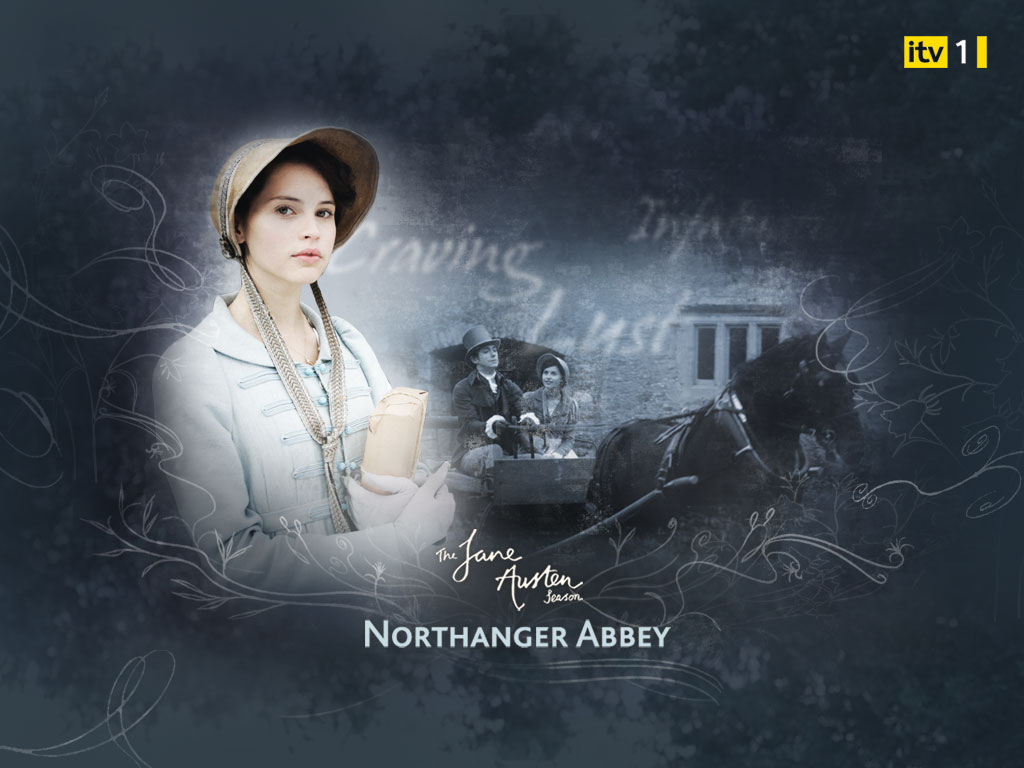
Northanger Abbey


In this context and in a nutshell, Northanger Abbey was Jane's memory of Tom Lefroy when they were still young, when hope still lingered in the air. Yes, yes, I hear you… NA was written circa 1797, and the general knowledge is that Jane and Tom were never in contact anymore after January 1796. So…?

Well, several Austen investigators, e.g. Jon Spence (‘Becoming Jane Austen’) and Claire Tomalin (‘Jane Austen’s Life’), paired with various research in this blog have strongly indicated that JA and TL still resumed their contact well beyond 1797. See JA/TL timeline for details. So, as I said earlier, NA was the fresh scent of JA/TL romance if I may say so. By the first time she wrote NA, Jane Austen was still full of love and hope for TL, and thus TL was effused in the personification of Henry Tilney (clergyman, gardening, clever conversation...). November 1798 brought the nightmare for Jane Austen, for Tom left to Ireland (not to see Mary, but to see his family) – and I believe that it was in strong association with Anthony Lefroy’s elopement (might never been proven, but I strongly believe it was an elopement instead of a sweet and nice marriage). Hence the beautiful drama in Jane Austen’s life ended.

Bottom-line of NA: Henry Tilney = Tom Lefroy. Catherine Morland was of course Jane Austen. Happy thoughts. No young black goat here... only the scary old General Tilney. He might be the great uncle Langlois...


Sense & Sensibility


Written circa 1811, well beyond her final separation with Tom Lefroy circa November 1798, Sense & Sensibility was the first novel which clearly indicated Jane Austen’s mixed opinion of Tom Lefroy. Here, Jane saw Tom as BOTH John Willoughby and Edward Ferrars. Our dissections on Mansfield Park led me to believe that Tom finally disclosed the true nature of Anthony Lefroy’s elopement. I am still uncertain of the approximate time, but most definitely I believe that Tom finally confided in Jane about his brother (see this post). We will eventually arrive in MP, but before that I just want to know that by the time SS was written, Jane still had troubles in grasping the fact that Tom had to leave her to save his family.

Yes, deep inside, Jane believed that Tom would not leave her for money like that. But Tom did not give her enough information (eh, typical man… thinking that all women are from Venus, hence possessing the ability to read minds); hence Jane also saw him as Willoughby (how come Willoughby and Wickham all start with W? As in Wicked?). This John Willoughby of Allenham was a coward who left Marianne for a very rich Miss Grey and thus still deserves age-old spankings.

Nonetheless, Jane Austen still had soft spot for Willoughby, for then she made him calling on Marianne... well, Elinor, and confessed to the elder Miss Dashwood that he still loved Marianne despite everything. Jane still believed that Willoughby had a good side…that Tom Lefroy had a good side. Her believe was magnified by Edward Ferrars' character; a character that fell in love with a good, smart woman (Elinor) after engaging with a silly girl (Lucy Steele). From an observer’s viewpoint, I see that Mary Paul was so NOT Lucy Steele; Miss Paul was too good a woman to be the model of Miss Steele. I am more inclined to see Mary Paul as the inspiration of Miss Grey. But again, that was Jane's perspective at that time, and I do not judge her at all (she could just create Lucy Steele ‘just for fun’... not referring to Mary Paul directly).

Bottom-line of SS: John Willoughby + Edward Ferrars = Tom Lefroy


Pride & Prejudice


Before I resume with PP, I have to thank Arnie Perlstein for his discussions with me more than a year ago. In relation to my article here that Anthony Lefroy was the main reason for Tom Lefroy to return to Ireland in November 1798, Arnie’s theory was simply put as: George Wickham = Anthony Lefroy. Both conducted elopement and both had forced two gentlemen (Fitzwilliam Darcy/Tom Lefroy) to clean up their messes. Makes no sense? Read on…

Somehow, between 1811 -1813, Jane came to terms with the role of Anthony Lefroy in changing the entire course of her life with Tom Lefroy. Hence, as she revised First Impression into Pride & Prejudice, she added the character Wickham - who to me was worse than Willoughby, for at least Willoughby loved Marianne, though he loved Sophia Grey's money better. I’m not sure if the first drafts of First Impression had Wickham (or someone akin to him) in it… worth checking…

In 1812/1813, Jane saw Anthony as Wickham - a bastard who ran away with an immature girl and disturbed the growing interactions between Darcy and Lizzy. In the real world, Anthony Lefroy was this young man who ran away with a girl (Elizabeth Wilkin) and hence disturbing the budding romance between JA and TL. In Wickham’s case, Darcy (who shared a bit of Lefroy in his seriousness) had to go down the streets of London for damage controls (did Tom do the same thing? Only in the streets of York instead of London?).

But Jane did not know back then that Tom did that NOT only because he had to, but also because he wanted to. Tom loved Anthony, I believe, hence his action was a brotherly love action, and not only out of responsibility. The evidence of Tom's affection towards Anthony was not only him helping little brother Anthony to gain the title of Barrack Master (see Fay’s ‘Jane Austen’s Letters’), but also Tom's closeness with Thomas Edward Preston Lefroy (TEPL). For why would he share such a bond with his nephew if he was not in good terms with Anthony? That would be awkward. Had Tom Lefroy been in a bad speaking term with Anthony Lefroy, Tom would not commission TEPL for the Cadell letter, and hence there would be no MOTIVE for TEPL to obtain the Cadell paper.

And who was Tom Lefroy in PP? Well, I tend to see Tom not only as Darcy/Lizzy combo (see Jon Spence for more info), but also as Charles Bingley (and hence Jane Austen herself as Jane Bennet). See this old post as another reference.

Bottom-line of PP: Tom Lefroy was NOT George Wickham. Lefroy was more of Bingley instead. Now the case went directly to Anthony Lefroy, who was more or less portrayed as Wickham here. That brings us to Mansfield Park.


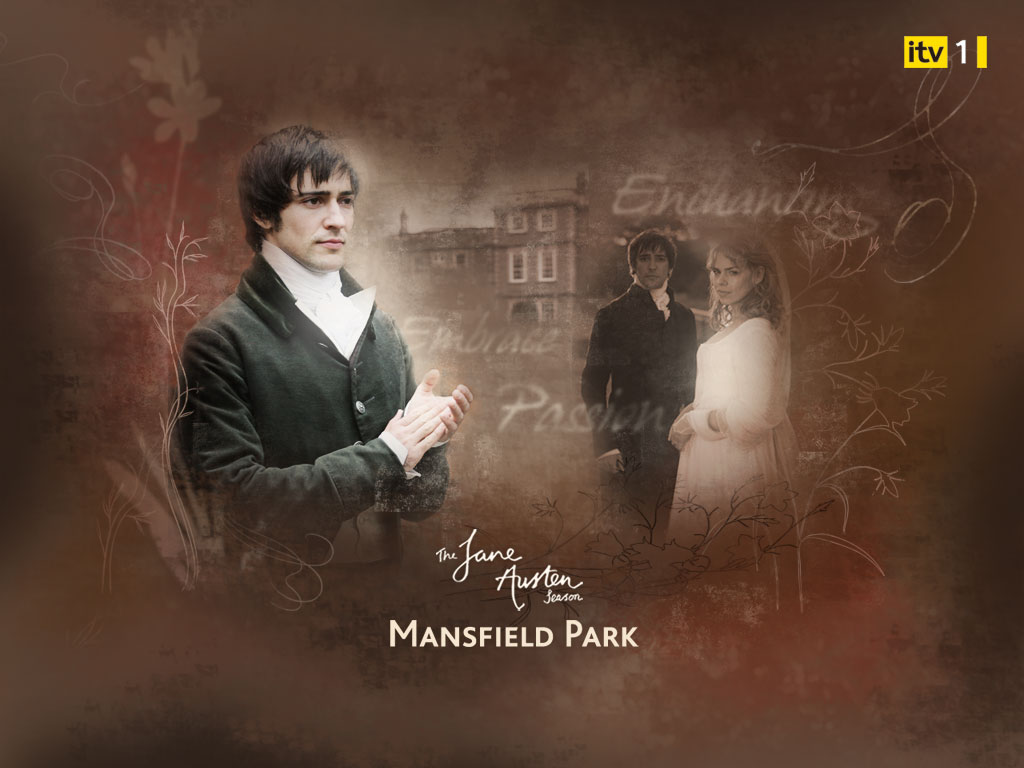
Mansfield Park

Written in 1814, MP is indeed Jane's tribute to Tom Lefroy; hence the weird, unmatched feeling with other novels (thanks to Nadia Radovici for her amazing, out-of-print book!). I sense that before writing MP, Jane truly came to terms with the true nature of Tom's leaving to Ireland in Nov 1798 (and hence, also Anthony Lefroy's marrying Elizabeth Wilkin).

I see Tom's characters were split into both Fanny Price (shy and reserved but smart) and Edmund Bertram (kind, serious, an excellent clergyman-to-be). Michelle and I had dissected MP in a rather lengthy fashion here; hence I am not to repeat it again. And what of Tom Bertram? Ah…Wikipedia says:

Tom Bertram: The elder son of Sir Thomas and Lady Bertram; he is seven years older than Fanny. Tom is principally interested in carousing in London society and enjoying the pleasures of the theatre with his friend Mr Yates. Tom incurs large debts, forcing Sir Thomas to sell the church position that was to have gone to Edmund, Tom's younger brother. One celebratory journey leaves Tom with a fever.

Tom Bertram had a bit of Anthony Lefroy, again to me in Jane's perspective. I don't know how well Jane knew Anthony's character, hence I keep saying 'perspective'. Because marrying to an undesirable woman does not equal to a bad guy. Anthony might be bored with all the society pretence and scruples, and he wanted to break all the rules by marrying Elizabeth Wilkin. But Jane would not know this. Jane started to see Anthony as not the 100% wicked guy… he was just a lost case here. A poor, lost soul. She also reduced his importance in the story, unlike Wickham's role in PP.

Bottom-line of MP: Fanny Price + Edmund Bertram = Tom Lefroy. The black goat Anthony Lefroy was now Thomas Bertram instead.


Emma


In 1815, after the strange, rather out of place MP, came Emma. Now, Emma was very cheerful compared to MP, and to me, she's on par with PP in the brilliance. More, perhaps. And Emma, correct me if I'm wrong, has NO direct reference to a character akin to Willougby, and no Wickham or Tom Bertram either. All good and happy, despite the hidden mocks, puns, and jokes. Emma has Frank Churchill, who to me was Tom Lefroy himself. In Emma, Jane Austen had come to understand Tom in almost perfection. By now, she might have seen Anthony in different light, hence her understanding towards Tom's difficulty and her forgiving him for leaving her. See this post for more reference of Tom Lefroy (and Ireland) in Emma. Oh, and Frank Churchill was about three and twenty when he was introduced in Emma (Tom Lefroy was twenty years old when he met Jane Austen), and he (like Tom Lefroy) had a good singing voice as well!

Bottom-line Emma: Tom Lefroy = Frank Churchill + Charles Dixon. Anthony Lefroy? Uh, I couldn’t find him. Perhaps some of you could…


Persuasion

The last punch and evidence of Jane's understanding and forgiving Tom was Persuasion. There, we find no Willoughby and no Wickham/Tom Bertram, not even Frank Churchill (who despite him lying to everybody, everybody still loved him. Like Jane to Tom). In Persuasion, we find only Captain Wentworth and Anne Elliot. Back to the first dot of the cycle: Northanger Abbey. Back to Henry Tilney and Catherine Morland.

In Persuasion, Jane came to terms with Anthony's marriage and Tom's actions towards it. She had forgiven Tom (and also Anthony for that). There was William Elliot, who according to Wikipedia, was 'a relation and the heir presumptive of Sir Walter, who became estranged from the family when he wed a woman of much lower social rank, for her fortune.' Sounds like Anthony Lefroy to me… but I don't think William Elliot was even 25% Anthony now. But Miss Austen still had to have an antagonist in her story, and hence poor William Elliot’s role.

By the way, I think dear Charles Musgrove is Harris Bigg-Wither. You know Charles… a nice guy, husband of Mary Musgrove (nee Elliot) and heir to the Musgrove estate. He originally wanted to marry Anne but had to settle with Mary (much to the disappointment of the Musgrove family, and to his misfortune) when Anne refused him due to her eternal love for Wentworth.

Bottom-line Persuasion: Tom Lefroy = Captain Wentworth. Jane Austen = Anne Elliot. Here, Jane had finally forgiven Tom Lefroy for leaving her. She had finally come to terms with the past. Tom Lefroy left Jane Austen for family honour, and Miss Austen respected and forgave Tom for that.


Bottom-line for me: Forgiveness can be extremely hard to do. But if it brings peace to us… like I believe it did Jane… why can’t we forgive others? And most importantly, ourselves… for our stupid past?

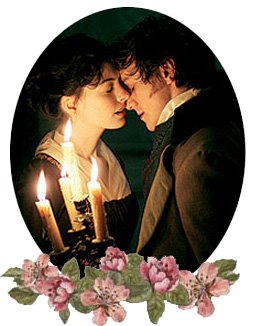
Pic 1: Tom Lefroy (James McAvoy) and Jane Austen (Anne Hathaway) in 'Becoming Jane'

Pic 2: Northanger Abbey 2007, from fanpop.com

Pic 3: Sense & Sensibility 2008 cast, from BBC UK

Pic 4: Pride & Prejudice 2005 wallpaper, from vistawallpaper.com


Pic 5: Mansfield Park 2007, from fanpop.com


Pic 6: Emma 1995, from photobucket.com

Pic 7: Persuasion 2007
, from videodetective.com

Friday, 12 December 2008

My Birthday Gift to Jane.

I wanted to start this by referencing Claire Tomalin's wonderful biography of Jane ('Jane Austen: A Life') which I truly adore. Any of you that have not read it should definitely put it on your christmas list!

Pasted below is a beautiful extract from chapter one which introduces our Jane to the world.

All of the photos in this post were taken by me on my trip to Hampshire.

Chapter One: 1775
The winter of 1775 was a hard one. On 11 November the naturalist Gilbert White saw that the trees around his Hampshire village of Selborne had lost almost all their leaves. "Trees begin to be naked," he wrote in his diary. Fifteen miles away, higher up in the Downs, in the village of Steventon, the rector's wife was expecting the birth of her seventh child from day to day as the last leaves fell. She was thirty-six and had been married for eleven years. Four sturdy little boys ran about the parsonage and the big garden at the back, with its yard and outhouses, rising to the fields and woodland beyond. The eldest, James, at ten already showed promise as a scholar, sharing his father's taste in books, and the only daughter, Cassy, kept her mother entertained with her constant chatter as she followed her round the house and out to visit the dairy and the chickens and ducks. Cassy would be three in January. Outside Mr. Austen's study the house was seldom entirely quiet.


The November days went by and the rains set in, keeping the boys indoors; by the end of the month it was dark in the house at three in the afternoon, and dinner had to be eaten very promptly if they were to do without candles. Still no baby appeared. December came, bringing an epidemic of colds and feverish complaints. There was a sharp frost, putting ice on the ponds, enough for the boys to go sliding; then, on the 16th, White noted, "Fog, sun, sweet day."
The 16th of December was the day of Jane Austen's birth. The month's delay in her arrival inspired her father to a small joke about how he and his wife had "in old age grown such bad reckoners"; he was forty-four. The child came in the evening, he said, without much warning. There was no need for a doctor; it was rare to call one for something as routine as childbirth, and the nearest, in Basingstoke, was seven miles away over bad roads. In any case, "everything was soon happily over." They were pleased to have a second daughter, "a present plaything for her sister Cassy and a future companion. She is to be Jenny." George Austen's letter went on to talk of the prospects of a ploughing match in which he was interested, Kent against Hants for a rump of beef, weather permitting. A village rector in a remote country parish was as much a real farmer as a shepherd of souls.


The baby was immediately christened at home by her father, like all the Austen children. There would be a church ceremony later. And now winter set in in earnest. Mr. Austen's ploughing match could not take place, as snow fell steadily, thickly and persistently, drifting right up to the tops of the gates. Soon the lanes were filled and almost impassable. The poultry would not stir out of the hen house, and wild birds appeared at the kitchen door for crumbs. "Rugged, Siberian weather," wrote White, remarking that the snow formed romantic and grotesque shapes as it continued to fall and then freeze. Newborn lambs were frozen to the ground, and hares came into the gardens looking for food.


Inside the parsonage, Mrs. Austen lay upstairs in the four-poster, warmly bundled under her feather-beds, the baby in her cradle beside her, while someone else-very likely her sister-in-law Philadelphia Hancock-supervised the household, all the cleaning and cooking necessary where there were many small children, together with the extra washing for the newly delivered mother. The maids stoked the fires and boiled coppers, and when she could the washerwoman made her way from the village and toiled for a day, although laundry froze before it dried and the house was full of airing sheets and baby things. Mr. Austen might read to the children after their three o'clock dinner, but boys like to run and slide up and down stairs, and there were no carpets to dull the noise. Mrs. Austen would not be expected to set foot on the floor for two weeks at least.


As a gift I would like to post a wonderful poem written by the american poet Ted Kooser. The theme is birthday and I just love it. There is alot of depth to this poem and the interpretations/analysis is vast. I have my own personal interpretation, as I am sure you will too. Thats the beauty of personal interpretation; no one can ever criticise.

I would like to dedicate this poem to Jane. Happy Birthday.

A Birthday Poem by Ted Kooser

Just past dawn, the sun stands
with its heavy red head
in a black stanchion of trees,
waiting for someone to come
with his bucket
for the foamy white light,
and then a long day in the pasture.
I too spend my days grazing,
feasting on every green moment
till darkness calls,
and with the others
I walk away into the night,
swinging the little tin bell
of my name.


Pic 1: Steventon Rectory. Taken by myself, Rachel Kingston
Pic 2: Jane's writing desk. Taken by myself, Rachel Kingston
Pic 3: Bed cover, made by Jane, Cassandra and their mother. Taken by myself, Rachel Kingston
Pic 4: Chawton House. Taken by myself, Rachel Kingston