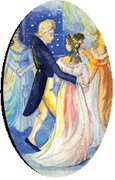
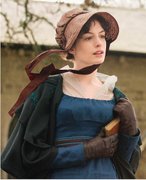
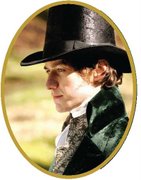
Sunday, 17 June 2007

Another interpretation on the 'friend' in letter November 17, 1798

Dear BJ lovers,

I just re-read John Halperin's article (Jane Austen's Lovers), and found out that he suggested that the 'friend' that wrote to Mrs. Lefroy was NOT Tom Lefroy, but a Rev. Samuel Blackall whom Jane met in December 1797. For the article clearly stated that the analysis was based on deductions, I feel that I do not need to amend my earlier post re: Jane Austen's letter November 17, 1798. I just think that another reference would be beneficial for comparisons, and of course, feel free to interpret the documents. Below is the excerpt of Halperin's interesting paper (p. 723). Although I still believe that the 'friend' referred to Tom Lefroy instead of Samuel Blackall, I would of course welcome constructive feedback on this particular letter and additional information of Mr. Blackall.

-xxx-

About Jane Austen's next suitor there is more information, though much of what follows here is the result largely of guesswork and deduction; his name is not mentioned in any surviving letters written by Jane Austen. During the Christmas festivities at Steven- ton in 1797, just after the novelist's twenty-second birthday, she met the Rev. Samuel Blackall, a Cambridge don who was then paying a visit to the Lefroys. He seems to have fallen in love with Jane Austen -or managed to convince himself that he had done so. Four years older than she, Blackall, great-grandson of the Bishop of Exeter in the time of Queen Anne, became a Fellow of Emman- uel College, and was ordained in 1794. In later years (from 1812 onwards) he was Rector of North -not "Great," as Jane has it in a letter -Cadbury in Somersetshire.

In the autumn of 1798, nine months after meeting the novelist in Hampshire, Blackall wrote to Mrs. Lefroy that he wished to improve his acquaintance with the Austens, and especially with Jane -"with a hope of creating to myself a nearer interest. But at present I cannot indulge any expectation of it." Mrs. Lefroy showed Blackall's letter to Jane, who wrote of it to Cassandra: "This is rational enough; there is less love and more sense in it than some- times appeared before, and I am very well satisfied. It will all go on exceedingly well, and decline away in a very reasonable manner." It is clear from this that Blackall had made his feelings known to her the previous year, and that she had made it equally clear to him that his feelings were not reciprocated. It was less than three years since lively Tom Lefroy had disappeared, and the ponderous Blackall was hardly the man to take his place in Jane Austen's affections. Jane tells Cassandra that Blackall will not come into Hampshire this Christmas (1798), "and it is therefore most probable that our indifference will soon be mutual, unless his regard, which appeared to spring from knowing nothing of me at first, is best supported by never seeing me."" This was a one-sided romance. Blackall's name is never given; he is referred to by the novelist only as a "friend."

As Jane predicted, Blackall soon ceased his attentions. Years later, in 1813, he married. Hearing of this, and of his acquiring the Somersetshire living, the novelist wrote complacently to Cassandra of Blackall's "succeeding . . . to the very Living which we remembered his talking of and wishing for." She adds: "He was a piece of Perfection, noisy Perfection himself whom I always recol- lect with regard." "Pictures of perfection," Jane Austen told one of her nieces a few months before her death, "make me sick &wickedn; her characterization of Blackall here should be seen in that light. She could never summon up more than "regard" for him; indeed, she seems to have found him pompous and didactic. When she goes on in her 1813 letter to Cassandra to describe what she hopes for in Blackall's wife, we may see a little more of what he might have been like: "I would wish Miss Lewis to be of a silent turn & rather ignorant, but naturally intelligent & wishing to learn; -fond of cold veal pies, green tea in the afternoon, & a green window blind at night." So much for Blackall. It would seem from this that he was not seeking intellectual companionship in a wife, and this may have been another reason why Jane Austen could not bring herself to accept him.

-xxx-

PS July 10, 2007:

Upon the arrival of Jon Spence's Becoming Jane Austen, I finally convinced myself that 'the friend' in letter November 17, 1798 was actually Samuel Blackall. Thus, I acknowledge my mistake and apologise for that.

Reference:

Halperin, J. 1985, 'Jane Austen's Lovers', Studies in English Literature, 1500-1900, vol. 25, no. 4, pp. 719-736. Available: http://links.jstor.org/sici?sici=0039-3657%28198523%2925%3A4%3C719%3AJAL%3E2.0.CO%3B2-Z

Spence, J. 2003, Becoming Jane Austen, 2007, Second edn, Continuum International Publishing Group, London.

Manydown Park: where it all started...


This is a picture of Manydown Park where Jane Austen and Tom Lefroy once danced together. In fact, it was in Manydown that our youthful couple did the ‘most profligate and shocking’ dances and discussions, as mentioned in Jane’s first letter (January 9, 1976) (Nokes 1997, p. 248).

I scanned the picture from Tomalin's Jane Austen: A Life, p. 271, of which original source was G.F. Proser's Select Illustrations of Hampshire (1833). According to Tomalin, the Manydown Park belonged to the Bigg family, who arrived in Hampshire in 1789. Widower Lovelace Bigg inherited the mansion from cousins Wither, and hence Mr. Bigg and his two sons changed their names to 'Bigg-Wither'. Three of his five daughters, who somehow retained the 'Bigg' name, eventually befriended the Austen girls. The young Harris Bigg-Wither, heir of the Manydown House, grew up to be an excellent educated young man who eventually proposed to marry Jane on the evening of December 2, 1802; seven years after the Lefroy affairs. Jane accepted the proposal on the very evening, only to change her mind and turned it down on the next morning. Apparently, Mr. Bigg-Wither did not leave impacts greater than the Irish Lefroy...

By the by, it is possible that Julian Jarrold &c took this Bigg-Wither character and developed him into Mr. Wisley, for Jane also refused poor Wisley's proposal for marriage. Why, Nokes even said that Harris Bigg-Wither was 'a less amiable companion. Tall, clumsy and awkward, he would shamble through the house, or lounge on a sofa, adding little to the general conversation' (p. 251).

Just a note, Mr. Wisley and Lady Gresham are fictional characters, for to my knowledge their names are not in any Austen biographies or letters at all. The Manydown Park was not included in Becoming Jane either, for Jane and Tom did their first dance in the Basingstoke Assembly Room. I will try to get the picture later and post it in another article.

Reference:

Chapman, R. W. 1979, Jane Austen's Letters to Her Sister Cassandra and Others, 2nd edn, Oxford University Press, Oxford.

Halperin, J. 1985, 'Jane Austen's Lovers', Studies in English Literature, 1500-1900, vol. 25, no. 4, pp. 719-736.

Tomalin, C. 2000, Jane Austen: A Life, Penguin Books, London.

Nokes, D. 1997, Jane Austen: A Life, Fourth Estate, London.

Paintings of Tom Lefroy

To my knowledge, this is the only painting of young Tom Lefroy by G. Engleheart in 1799. I scanned the picture from Claire Tomalin's Jane Austen: A Life (2000 edition, p. 271), and Tomalin took it from the Hampshire Record Office 23M93/83/1/1. The painting's excellent quality made me almost believed that it was a photograph - had I not remembered that the earliest photograph was taken circa 1820, three years after Jane Austen's death.

I like this young Tom, with light hair, lovely eyes and smile. Indeed, the Jane Austen Centre in U.K. said that Tom Lefroy was 'a serious young man with the light hair typical of the family. His prominent nose and deep blue eyes certainly present an overall picture of a “very gentleman like, good-looking, pleasant young man"' - as Jane Austen said in her letter on January 9, 1796 (blue eyes! James McAvoy also has piercing blue eyes!). Tom was born on January 8, 1796, less than a month after Jane's birth on December 16, 1775. So when they met, Tom was just celebrating his 20th birthday, and Jane just had her 20th birthday the previous month.

Now, this one... is the painting of old Thomas Langlois Lefroy as the Chief Justice of Ireland (uh, scary title, eh?). The painting was done by W.H. Mote in 1855 (in the Memoir of Chief Justice Lefroy)... so Tom was 79 years old! He still maintained that prominent nose, but he lacked that... shining spirit, IMO. Perhaps, it was because he was 79 (!) already, as opposed to a fresh 20, but I cannot help thinking that the family burden &c had eliminated that passion. Heh... don't let your son be the Chief Justice before marrying the woman he really loves! Ahem. Still, he was pretty healthy for a 79 years old guy, aye?

Check the Jane Austen Centre and Wikipedia for a brief review of Tom Lefroy. We will also do Tom's bio soon.
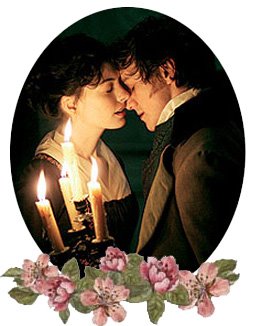
PS 26 July 2007:

The section of Tom Lefroy has expanded beyond our initial intentions, so be sure to check out the About Tom Lefroy section for more info on Thomas Langlois Lefroy!

Saturday, 16 June 2007

New 'Becoming Jane' music video

Dear BJ lovers,

Josie has made a very nice music video in YouTube.


Thanks a lot Josie for the wonderful take on Jane Austen and Tom Lefroy (It's her first video ever, and it's so lovely!)! I especially like how you put the scenes into the words of 'Everything I do'; especially the kiss, the dance and even Tom's boxing! It's in my favourite list now.

Becoming Jane in Denmark, June 15 2007

I just received news from the IMDB that Becoming Jane was released yesterday, June 15 2007, in Denmark. No news yet from Canada, that might mean that the release in Canada will be the same as the U.S. release.

Denmark viewers, please leave some notes...?

Friday, 15 June 2007

JA's letter on November 17, 1798

The following is an excerpt of Jane Austen's letter to Cassandra, November 17, 1798. There is a bit of Tom Lefroy and Mrs. Lefroy here, and I will tell you my opinion of this letter later on.

***

Saturday, November 17, 1798.


MY DEAR CASSANDRA,

If you paid any attention to the conclusion of my last letter, you will be satisfied, before you receive this, that my mother has had no relapse, and that Miss Debary comes. The former continues to recover, and though she does not gain strength very rapidly, my expectations are humble enough not to outstride her improvements. She was able to sit up nearly eight hours yesterday, and to-day I hope we shall do as much. . .

So much for my patient -- now for myself.

Mrs. Lefroy did come last Wednesday, and the Harwoods came likewise, but very considerately paid their visit before Mrs. Lefroy's arrival, with whom, in spite of interruptions both from my father and James, I was enough alone to hear all that was interesting, which you will easily credit when I tell you that of her nephew she said nothing at all, and of her friend very little. She did not once mention the name of the former to me, and I was too proud to make any inquiries; but on my father's afterwards asking where he was, I learnt that he was gone back to London in his way to Ireland, where he is called to the Bar and means to practise.

She showed me a letter which she had received from her friend a few weeks ago (in answer to one written by her to recommend a nephew of Mrs. Russell to his notice at Cambridge), towards the end of which was a sentence to this effect: "I am very sorry to hear of Mrs. Austen's illness. It would give me particular pleasure to have an opportunity of improving my acquaintance with that family -- with a hope of creating to myself a nearer interest. But at present I cannot indulge any expectation of it." This is rational enough; there is less love and more sense in it than sometimes appeared before, and I am very well satisfied. It will all go on exceedingly well, and decline away in a very reasonable manner. There seems no likelihood of his coming into Hampshire this Christmas, and it is therefore most probable that our indifference will soon be mutual, unless his regard, which appeared to spring from knowing nothing of me at first, is best supported by never seeing me.

Mrs. Lefroy made no remarks in the letter, nor did she indeed say anything about him as relative to me. Perhaps she thinks she has said too much already. She saw a great deal of the Mapletons while she was in Bath. Christian is still in a very bad state of health, consumptive, and not likely to recover.

***

Okay. Now, it is clear that the first paragraph told us about Mrs. Austen's illness (not a serious one, apparently). The second one was about Mrs. Anne Lefroy's visit to Steventon, how Jane refrained from asking about Tom Lefroy, and how Mr. Austen helped his daughter by inquiring after Mrs. Lefroy's nephew. What a good father Mr. Austen was, eh? Still supportive of his daughter, even considerate of her uncomfortable position for a simple inquiry.

And then, the 3rd paragraph:
"I am very sorry to hear of Mrs. Austen's illness. It would give me particular pleasure to have an opportunity of improving my acquaintance with that family -- with a hope of creating to myself a nearer interest. But at present I cannot indulge any expectation of it."

That was Tom Lefroy's sentence he wrote to Mrs. Lefroy. Yes, it was from 'a friend', but by the look of Jane's comments, it was very likely that the letter Mrs. Lefroy showed had been Tom's. The letter still displayed affections, albeit hidden, and a wish, if not desire, to receive news about the Austens. Tom also expressed his wish to mend fences with Jane, but he knew that it was a foolish hope. Come to think about it, I begin to think that perhaps Tom did not leave Jane intentionally, unlike several people suggested, for I could see regrets in Tom's words. The fact that Mrs. Lefroy did not comment on Tom's letter might suggest that she indeed pulled a 'Lady Russell' towards Jane and Tom.

Sob-sob-sob! Still, the simple letter was enough to remind Jane that she still cared for the Irishman dearly and still had hopes for the young Lefroy, though she also realised how desperate the situation was.


It is very possible that this letter is one of the 'dots' used by Jarrold &c to create Becoming Jane. It fits, for it took place after the letter from Cork Street and after Thomas Fowle's (Cassandra's fiancee) death.

PS July 10, 2007:

Upon the arrival of Jon Spence's Becoming Jane Austen, I finally convinced myself that 'the friend' in letter November 17, 1798 was actually Samuel Blackall, not Tom Lefroy. Thus, I acknowledge my mistake and apologise for that.

Pic 1: Mrs. Anne Lefroy (gosh, was she not a gorgeous lady?)
Pic 2: Becoming Jane scene, Henry and Eliza told Jane that Tom was in Hampshire

Jane Austen: A Life (Claire Tomalin – 1997)

After checking several Austen biography books, I concluded that not many biographers acknowledged the serious relationship between Jane Austen and Tom Lefroy. Heh, even James Edward Austen Leigh (JEAL) and Jane’s other families were very careful in mentioning Tom Lefroy in ‘A Memoir of Jane Austen and Other Family Recollections’ (1871-1869). The Chief Justice of Ireland was only mentioned twice in page 48 and 186, with a pinch of warning from niece Caroline Austen that JEAL should avoid ‘raking up that old story of the still living ‘Chief Justice’ – That there was something in it, is true – but nothing out of the common way – (as I believe)’.

Okay… so denial and confirmation in one statement, I believe. Caroline Austen’s letter to JEAL also demonstrated how Jane/Tom affair was actually a common gossip in the Austen family. And I understand that the family chose the hush-hush policy to avoid stirring the 'murky' water.

On the contrary, transparency and revolutionary ideas coloured Claire Tomalin's Jane Austen: A Life. The author started the book by describing that ‘The winter of 1775 was a hard one’. The year 1775 was the year when Jane Austen was born, December 16 as we mostly knew. Tomalin then proceeded with JA’s childhood and teenage life, including her school days she spent with her sister Cassandra. Her style was very nice to read, and I found that although she did not mention Tom Lefroy at all until the beginning of Chapter 11 (A Letter), I enjoyed reading other chapters as well. Henry-Eliza lovers will no doubt find particular satisfactions here, for Tomalin took care of the couple very well in her book.

I also found it interesting that Claire Tomalin was the first biographer who openly acknowledged Tom’s deep impact upon Jane’s life. It is also a bit saddening for a Jane/Tom fan like me that the acknowledgement was ‘only’ bestowed in 1997 by the time Jane Austen: A Life was first published, i.e. prior to 1997, Tom Lefroy was basically considered as a ‘passing stage’ (for lack of better terms) in Jane’s life. But Tomalin did not see the Irishman as a mere ‘passerby’ who happened to attract Jane’s heart during a country ball. Indeed, Tomalin accepted the magnitude of Jane/Tom failed romance (Ch 12, Defence Systems, p. 122); that falling in love with Tom was:

‘A small experience, perhaps, but a painful one for Jane Austen, this brush with young Tom Lefroy. What she distilled from it was something else again. From now on she carried in her own flesh and blood, and not just gleaned from books and plays, the knowledge of sexual vulnerability; of what it is to be entranced by the dangerous stranger; to hope, and to feel the blood warm; to wince, to withdraw; to long for what you are not going to have and had better not mention. Her writing becomes informed by this knowledge, running like a dark undercurrent beneath the comedy.’

Tomalin further suggested that ‘writing is what she [Austen] increasingly turned to now’. And it was apparently true, for from 1795-1799, Jane Austen produced three major novels of hers (Northanger Abbey, Sense & Sensibility and Pride & Prejudice), all before she reached her 24th birthday.

Claire Tomalin did not only mention Jane/Tom relationship from the youngsters’ point of views. Tomalin reviewed how considerate Mr. Austen was in inquiring after the young Lefroy to Mrs. Lefroy (JA letter, November 17, 1798). Apparently, the young Tom Lefroy had visited Hampshire in 1798, a few days before Jane’s arrival from visiting her family in Kent. Jane Austen was ‘too proud to make any inquiries’. Thanks to Mr. Austen, Jane ‘learnt that he was gone back to London in his way to Ireland, where he is called to the Bar and means to practise.…’

Tomalin also proposed that Cassandra might feel that the Jane/Tom relationship was too dangerous to be publicly known; hence Cassandra destroying letters prior to January 9, 1796 and letters of the entire 1797 (which was a very important year for the Austens). Tomalin deducted that ‘the first letter about Tom Lefroy can have survived only by mistake’. Interestingly, this first letter about Tom (January 9, 1796) was also the very first surviving letter of Jane Austen.

In short, if time permits, read Jane Austen: A Life. Though I have not read Spence’s Becoming Jane Austen, I bet that both books are a very good compatible set for Jane/Tom lovers. Indeed, Julian Jarrold &c also used Tomalin’s book as another anchor for Becoming Jane, in addition to Spence’s Becoming Jane Austen (2003), to support their revolutionary idea of a famous spinster like Jane Austen falling in love with a rogue Irishman. The book also contains a picture of the young Tom Lefroy, painted by G. Engleheart 1799. I will post the picture once I scan it. The book itself has been reprinted twice after 1997, i.e. in 1998 and 2000. The 1997 edition was published by Viking before Penguin Books took over the publication for 1998 and 2000.

Pic1: Cover to 'Jane Austen: A Life', Penguin Edition
Pic2: Jane Austen & Tom Lefroy, www.james-mcavoy.net


The importance of juvenilia

Again, I want to thank Rachel for the comprehensive juvenilia post, plus the post on Jane Odiwe's work. She made time to take care of the website while I went shopping in Adelaide and Melbourne!

Anyway, we think that juvenilia is a very important post here, as it demonstrates how Jane Austen had started her writing career at a very early age. I understand that many people did not like Becoming Jane because it seemed to show that Jane did not write anything significant before she met Tom Lefroy; which was not the case. Even Julian Jarrold and Jon Spence acknowledged that Jane Austen had done many works before; her meeting with Tom Lefroy 'simply' opened up the door to her fullest potentials. Claire Tomalin (Jane Austen: A Life) noted that after Jane's meetings with Tom in 1795, the young Miss Austen wrote Pride & Prejudice, Sense & Sensibility, and Northanger Abbey. Thus, in four years (1795-1799), Jane Austen wrote three great novels; all before she reached the age of 24. That fact alone leads to the hypothesis that, although Jane already had intrinsic writing ability within her, her experience with Tom explored more of her potentials she had not tapped before. That is, including writing stories of the heart.

Pic: www.annie-hathaway.com

Thursday, 14 June 2007

Jane Austen's Juvenilia


Jane Austen wrote a number of shorter stories in her younger years; she filled three volumes with these ‘Juvenilia’.

Volume 1 (written between 1787 and 1790) contains; ‘Frederic and Elfrida: A Novel’, ‘Jack and Alice: A Novel’, ‘Edgar and Emma: A Tale’, ‘Henry and Eliza: A Novel’, ‘The Adventures of Mr. Harley’, ‘Sir William Montague’, ‘Memoirs of Mr. Clifford: An Unfinished Tale’, ‘The Beautifull Cassandra’, ‘Amelia Webster’, ‘The Visit: A Comedy in Two Acts’, ‘The Mystery: An Unfinished Comedy’, ‘The Three Sisters’, ‘Detached Pieces’ and ‘Ode to Pity.’

Volume 2
(written between 1790 and 1792) contains; ‘Love and Freindship’, ‘The History of England’, ‘Lesley Castle’, ‘Collection of Letters’ and ‘Scraps’.

Volume 3
contains; ‘Evelyn’ and ‘Catharine.’

Jane Austen’s collection of Juvenilia equates to over 90,000 words which was composed in approximately 6 years. The Juvenilia presents pure human passions. She displays themes of murder, gluttony, drunkenness and many more with little subtlety, something in which she masters in her more mature novels. This honest approach is very positive as it illustrates that Jane Austen could observe and interpret human behaviour at its most natural and translate this into writing.

I have chosen to explore and write a short summary of the stories from volumes 2 and 3 of her collection.

Love and Freindship.

Love and Freindship (intentional misspelling; one of many in the story) was completed in June 1970 when Jane Austen was just 14 years old. It is thought that this story was written for the purpose of entertaining the Austen family during nightly readings.

The entire piece is written in the form of letters from Laura to Marianne. Marianne is the daughter of Laura’s friend Isabel. The main characters are very overtly emotional and this takes over any sense; they dislike anyone who do not show their romantic sensibilities: "They said he was sensible, well informed, and agreeable; we did not pretend to judge of such trifles, but ... we were convinced he had no soul.” The story evolves with a young noble gentleman arriving and asking for Laura’s hand in marriage. It seems that their future will be one of happiness and good fortune. After his family announces their rejection of Laura as his bride, however, Laura must overcome a series of events….but not without signs of delirium in her journey. Also in the story a rich widow, Phillipa, marries a younger man who is considered to be seeking money and therefore returns her affections. In Jon Spence’s biography, ‘Becoming Jane Austen’, he speculates that this may be recognizing the position that Jane’s brother, Henry, was in at this time; Eliza De Feuillide was much older and very wealthy and Henry was not. Spence also states that he believes Love and Freindship to be a warning to Eliza to leave Henry alone.
One prominent subtitle is ‘Deceived in Freindship and Betrayed in Love’ which gives instant insight into the developing wit of Jane Austen and her tendency to scorn romantic sentiment; a theme apparent in her later novels. This work of Jane is uninhibited and is a mass of jokes and heightened sensibility; the work is of comedy and tragedy and acts as a precursor to the more famous work of Jane.

The History of England

Jane Austen completed The History of England on November 26th 1791 when she was 16 years old; this coincided with her brother, Charles, leaving home to go to the Royal Navy Academy, following the footsteps of their brother Frank.
Whilst Jane was writing, Cassandra (age 18) provided the illustrations; it was a collaborated effort from the loving sisters. It is evident that Jane had an admiration for the Stuarts, particularly Mary Queen of Scots, but not a keen opinion of the Tudors, particularly Elizabeth, and she manages to include these women in ‘her’ self-styled history. One reviewer stated that Jane and Cassandra’s ‘major revision to conventional Tory British history…lies in their pointed inclusion of women.’

Her attempt was based on Oliver Goldsmith’s ‘History of England’ but Jane was determined to present a more representative depiction of society. She presented her own version of English leaders, e.g. from Henry IV to Charles I, and her personality is declared on every page. The story consists of funny sketches of these varied British monarchs.

Lesley Castle

This unfinished novel consists of ten letters and is not included in the Penguin edition of her juvenilia; instead it is presented with The History of England, and Catharine.

Lesley Castle has a gothic feel to it; perhaps a precursor to her creation of Northanger Abbey. Many humorous characters are presented who are largely superficial, allowing Jane Austen to demonstrate her famous wit at their expense. The main characters are Miss Margaret Lesley and Miss Charlotte Lutterell and they correspond through a series of letters, unveiling their deepest secrets to each other. There are numerous, consecutive plots, each allowing these characters to portray their naivety and lack of knowledge on such matters as adultery and elopement. For example, the manipulative Louisa Lesley deceives a man into thinking that she is kind and so he marries her and they have a child. Louisa then abandons husband and child to run away with her lover.

The many, varied subplots, e.g. a fatal riding accident and the exploration of the theme of marriage with age difference, means that this story could have easily been extended to a larger novel. Jane Austen proves herself to be a comic genius whilst dealing with some very serious issues. She dedicated Lesley Castle to her brother Henry.

A Collection of Letters

Jane Austen embarks on an adventurous approach to writing and she makes many exaggerations of literary traditions. She does, however, focus on the reality of society and the lives of the people who live within such a society. Her writing is moving and wonderfully constructed.

Evelyn

This story was written when Jane was 16 years old and has a very central theme of society and its restrictions. Evelyn is named after the village in which it is set. Jon Spence speculates that the characters of Evelyn are an inversion of the characters of Lesley Castle; they are unselfish and kind but to an extreme which makes them equally as comical. The hero of the story must balance the demands of society and its conventions with a freedom so desperately longed for. There is also a heavy influence of the inner workings of the Austen household on this story; namely everyday chores and limited resources.

Catherine or The Bower

Catharine or The Bower is far more than a juvenile piece of writing. It is dated August 1792 on its last page. Jane Austen has attempted something much more serious and many reviewers feel that it highlights a significant turning point in her development as a writer. It may be that Jane is dwelling on her own life and what it is and could be when she began writing Catharine.
The heroine, Catharine, is trying to come to terms with the emotions and conflicts involved in embracing womanhood. She meets a man called Edward Stanley and is captivated by him. This is a false first impression however and she discovers that she misjudged his character entirely. She does then meet her true hero and marries him; this story paves the way to what will become a prominent theme in her highly successful six novels.

The bower is relevant as Catharine contributed to its construction when she was a child and at age 16 she experienced her first kiss (on the hand) here; this infers that the bower is symbolic of female sexuality. This sexual innuendo is explored and the bower is described as ‘a licensed site of prepubescent homosociality which borders on homoeroticism’ (p.37).


Pic 1: Famous silhouette of Jane Austen
Pic 2: Henry IV illustration. Taken from www.penelope.uchicago.edu/austen/austen.html
Pic 3: The cover of Lesley Castle. Taken from http://www.amazon.co.uk/

Austen Effusions by Jane Odiwe

I have recently received a copy of the book of annotated sketches called 'Effusions of Fancy' by Jane Odiwe. The book contains some absolutely beautiful sketches, portraying the passionate young Jane Austen. The drawings are so detailed and vibrant in colour and exactly how I am imagine Jane Austens world. I am truly inspired by this work and I wanted to inform readers through this post.

Jane Odiwe has a website where you can view all of her work at http://www.austeneffusions.com/. I think that all Jane Austen lovers should have a copy of these magical sketches.

Thank you Jane.

Pic: Jane Odiwe's portrait of Jane Austen- based on Cassandra Austen's sketch. Taken from http://www.austeneffusions.com/page5.htm

Tuesday, 12 June 2007

Becoming Jane: The Wit and Wisdom of Jane Austen

I just visited Amazon.com out of impulse, and found out that Becoming Jane: The Wit and Wisdom of Jane Austen by Anne Newgarden is already available there! I thought that we have to wait until July 3 before the book is available, but it is not the case. Hence, you can buy it now, and if you order it together with Jon Spence's Becoming Jane Austen, you will get a better shipping price for combine shipment. I just ordered it together, and I am very excited! I have to wait until June 14 before Spence's book is available, but it's only two days away!

The books will arrive at my place on July 3, hopefully, so I can drop a short 'First Impression' on them.

James McAvoy's birthday

I just want to (again) thank Rachel for the absolutely beautiful bio of James McAvoy and add that in GMTV Entertainment Today, he also said that he was born on January 1st, so it was confirmed.


Thanks, Rachel for notifying me the YouTube link!

James McAvoy ('Tom Lefroy') Biography

There is some debate over the birth month of James McAvoy but many biographies claim that it is January 1st 1979. He was born in Scotstoun, Glasgow to James, a builder, and Elizabeth, a psychiatric nurse. When young James was 7 they separated and James and his younger sister, Joy, went to live with his grandparents.


James was pushed from a young age to be independent and was enrolled at St Thomas Aquinas, a Roman Catholic secondary school. This religious foundation prompted an interest in James to become a priest. At age 16, however, James had an encounter with a film-maker, David Hayman, which was to change his life. Rather confidently he asked David Hayman whether he could be involved in his next project in any capacity. Four months later James was remembered and given a very small role in the thriller, The Near Room.


Whilst working in the bakery at Sainsbury’s supermarket, James decided to apply for a place at the Royal Scottish Academy of Music and Drama and was accepted. For the next three years James McAvoy’s screen work was limited but he graduated from the Royal Academy and decided to try his luck in London, moving to the East End with his long-term girlfriend, Emma Neilson. James’ career was developing at a fast pace and he was cast in an adaptation of Lorna Doone and soon after, Band of Brothers, produced by Tom Hanks and Steven Spielberg.


The year of 2001 would see James appearing at the theatre on a couple of occasions. A role in the adaptation of White Teeth, a novel by Zadie Smith, and the miniseries Children of Dune would ensure that James was to become more recognised as a young talent. By 2004 James had amazingly not been out of work since he left drama school and the parts he was playing were all so diverse that he was gaining valuable experience.

A break would come when he played the comical brother of Paul Bettany’s character in Wimbledon, also starring Kirsten Dunst. James then attempted a far more serious challenge by playing the character of Rory O’Shea who suffers from muscular dystrophy in Inside I’m Dancing. Next James returned to TV and starred in Shameless, the series depicting life on a tough estate in Manchester. James reached an emotional low at this point in his life, probably a result of the strains of having no breaks since acting school. Anne-Marie Duff, his Shameless co-star was there to guide him through this difficult time, and they would marry in October 2006.

His next character, Mr Tumnus in The Lion, The Witch And The Wardrobe (the first release from the Chronicles Of Narnia franchise) would bring fame his way; he was now popular across many audiences. He received the Rising Star of 2006 award at the BAFTA’s, and was then to impress Kevin Macdonald, director of The Last King of Scotland, who cast him as the amazing character of Nicolas Garrigan. The film was a triumph.

On a personal side, James made a very important emotional journey whilst tackling the themes of this film. After the film was complete, James returned to Uganda to visit some of the real people who live there and to learn more about them. I think that this shows an amazing side to this talented actor; the roles he takes affect him and he is able to absorb this new knowledge and learn from it. I really respect that. In particular, James visited a project, Tiger’s club, which helps children to get off the streets and allows them to interact with other young people and play games such as football and learn other various skills. James actually narrated a short documentary called ‘On the Tigers Trail’ which has been aired on the community channel in the UK and shows him talking to these young people and allows the world to see the great work that this project is doing in order to helping the young people reintegrate into Ugandan life. Here is the link on youtube where you can see some of the work he did out in Uganda: http://www.youtube.com/watch?v=rjt5NDXRbUM
Here is also another short clip of James in Uganda with the Red Cross: http://www.youtube.com/watch?v=S4aVIK2DzkI&mode=related&search=

If you want to find out more about the work that James was trying to promote then it is well worth visiting this site: http://www.retrak.org/

Only a day after returning from Uganda, we would see James start filming Starter For Ten, produced by Tom Hanks and Sam Mendes. Becoming Jane was released in the UK in March 2007 and James has captured the world (and most visiting this site) with his charming and flawless performance of Tom Lefroy. It is only hoped that he receives the praise that he deserves for his tremendous talent. Also this year we are to see the release of Atonement, with Keira Knightley, Penelope, with Christina Ricci and Wanted, with Morgan Freeman and Angelina Jolie. He is only traveling in one direction and that is up.


I know that both myself and Icha have particular favourite roles that James has played (other than Tom Lefroy of course) so I have included a few other pictures of his characters below.


I also found this article (pasted below) in the ‘Jane Austen Regency World, Issue 26’ magazine. I hope that you enjoy.


Pic 1 and 2: James McAvoy taken from google images
Pic 3: James and his wife Anne-Marie Duff, co-star in Shameless. Taken from google images.
Pic 4: James appealing for donations for the work being done in Uganda. Taken from http://www.retrak.org/
Pic 5: James as Mr Tumnus in ‘The Chronicles of Narnia’. Taken from ‘Zap2it’ photo galleries.
Pic 6: James as Tom Lefroy in ‘Becoming Jane’. Taken from http://www.jamesmcavoy.com/
Pic 7: James as Rory O’Shea in ‘Inside I’m Dancing. Taken from http://www.jamesmcavoy.com/

Monday, 11 June 2007

Anne Hathaway ('Jane Austen') Brief Bio

We are expanding our categoriesinto another one: ‘Cast & Crew’, which is about the brief biography of cast and crews of Becoming Jane (click on the left-side bar , below the Heartland Award icon, for all categories). Rachel is doing James McAvoy’s, and I do Anne Hathaway’s. We will alternately post the bios of other cast and also crews here, including (of course) Julian Jarrold’s, Maggie Smith’s, Julie Walters’s, James Cromwell’s and Anna Maxwell Martin’s, but now I will start with Anne’s. Rachel will post James’s after this. There are many sites that wrap up Anne Hathaway’s biographies, e.g. www.annie-hathaway.com and Wikipedia, hence I will be very brief here, and the readers can refer to those sites for further reference.

Anne Hathaway was born on November 12, 1982 in Brooklyn, New York. She was the first teenager to be admitted to the Barrow Group Theater Company's acting program and she shows interest in choirs as well. In fact, she is a good soprano, and we can listen to her singing ‘Somebody to Love’ in Ella Enchanted.

So, anyway, as many AH fans, I first saw Anne Hathaway in The Princess Diaries (2001) where she was this shy Mia Thermopolis who, as many teenagers were, was unsure how to be herself. Though the movie was not her debut (the first one was Get Real, a TV series), Princess Diaries surely launched Anne to the sky of Tinseltown. Between 2001 and 2004, Anne took several roles, including the sequel of Princess Diaries (Royal Engagement), The Life and Adventures of Nicholas Nickelby (based on Charles Dicken’s novel with the same title where Anne played as Madeline Bray, the love interest of Nicholas Nickelby).

Anne Hathaway took more heavy roles as Allison in the R-rated Havoc (2003) and Lureen Newsome in the critically acclaimed Brokeback Mountain (2005). According to Wikipedia, her sensuous role in Havoc even prevented the movie to be screened in North America, due to concerns of conflicting interests and image with Anne’s other role as Princess Mia in Princess Diaries: Royal Engagement that was released in 2004. After Brokeback Mountain, Anne voiced the Red Puckett in the Hoodwinked animated movie that was loosely based on the story of Little Red Riding Hood.

The year 2006 was a very busy and stressful year for Anne, for she had to cope with the legend of Meryl Streep ('Miranda Priestly')in The Devil Wears Prada. I, and many fans and critiques, believe that she was amazing as Andrea Sach and she stood tall, in a very nice way, next to Meryl, the way she did with Julie Andrews in Princess Diaries (I prefer the portrayal of Andy Sach here than the one in the novel, to the original novel was also a fun to read). The movie was an enormous fun to watch and it gained many positive reviews.


After ‘escaping’ Meryl Streep (Meryl is actually Anne’s favourite actress), Anne jumped to an even more challenging role as the Jane Austen, face to face with the Oscar winner Dame Maggie Smith, Julie Walters, BAFTA-winner Anna Maxwell Smith, James Cromwell and, of course, the very talented James McAvoy. I also have to say that James was the first actor that, at least to me, showed very authentic screen-chemistry with Anne's character. Prior to Becoming Jane, I sometimes thought of how great Anne's acting ability was, but it was a pity that she never found a screen-partner that truly clicked with her. That was, until she was paired with James McAvoy as Tom Lefroy. (Is there any award for 'Best Screen-Chemistry of the Year'? I think James and Anne deserve it!).

Anne Hathaway took quite a preparation for her role as Jane Austen. Prior to the filming, she spent a month in England to do research and adjusting to British accent. In Jane Austen’s Regency World, March-April 2007, she said, ‘I re-read Jane Austen’s entire canon and read quite a few biographies. I also read critical essays on her, read her letters and researched the Regency period. I really tried to leave no stone unturned. By the end Julian was prising the books out of my hands because I was just pointing out details that incongruent with the script
and the period. We all sat down early on and agreed that we were going to make a movie that may be contrary to the traditional perception of Jane Austen and her world. In some of her own letters she wrote about how she was hung-over after attending a ball and that’s not something we necessary think of when we think about Jane Austen. But I was very excited to present a woman who was flesh and blood and not simply someone who had an icy wit and tea running through her veins.’

Well, that’s exactly what Anne Hathaway presented us: a very charming, lively and energetic Jane Austen. An intelligent writer who had the full capacity to love and to be loved. At the same time, Anne has proven that she is indeed a very talented actress, capable of not only fresh comedian roles, but also heavier stuffs like reviving the legend of Jane Austen. Her concerns for humanitarian works, i.e. for the Nicaragua Hepatitis A Program, have made her my personal favourite actress as well.

Pictures: www.annie-hathaway.com

Saturday, 9 June 2007

Persuasion: Jane & Tom

I just want to drop a note to thank Rachel for her speedy posting of the Persuasion summary below; for she will actually do the summaries of Austen's juvenilia, so she is quite busy! And before I go to see His Holiness Dalai Lama in Melbourne here (my, am I not excited!), I just want to say that I agree with Rachel's analysis of Persuasion, that it was written with a more (for the lack of better term) matured mind than Jane Austen's other novels. That is not to say that other novels are not great, though... they are!

I also agree that Persuasion pretty much reflects what Jane felt about Tom Lefroy; that Anne Elliot and Fred Wentworth could not be together because Wentworth had been considered... not worth it. That he was poor, and hence could not possibly be Anne's husband. But when Fred became a famous captain, Anne's family began to change their opinions to him. I sometimes wonder if Jane pondered... if Tom Lefroy had been a famous MP, or at least a richer lawyer by that time, or if Jane herself had been a rich gal... would they be together? I suppose, there was the possibility that those ponders created Persuasion.

In that note, I could not help thinking that Anne Elliot actually mirrored Jane Austen very much, and that Frederick Wentworth had a Tom Lefroy there. I also think that Lady Russell was a bit of Anne Lefroy, Tom's aunt that was also Jane's mentor, for Anne Lefroy might think that she did the best for Jane by sending Tom away, the way Lady Russell wanted the 'best' for Anne Elliot. Afterall, Jon Spence speculated that Anne Lefroy might try to make up with Jane by arranging a meeting between Jane and Judge Langlois, Tom's uncle and care taker (see Letter from Cork Street). Unfortunately, that event did not go well, for Jane Austen remained alone, and Tom (unlike Wentworth in Persuasion) married another girl.

By and by, I wrote my first Becoming Jane Fan-fiction based on Persuasion (Countenance So Beloved), with Rachel's beta editing. Please read and drop your comments.

Pic: Anne Elliot and Frederick Wentworth, illustrated by C. E. Brock, 1898.

Friday, 8 June 2007

Persuasion Summary

Notable Characters: Anne Elliot, Frederick Wentworth, Sir Walter Elliot, Lady Russell, Henrietta Musgrove, Louisa Musgrove, William Elliot.

Synopsis:
Persuasion was written between 1815 and 1816 and was Jane Austen’s final completed novel. The heroine is a young woman, Anne Elliot, who is 27 years old at the start of the novel and is the second of three daughters of Sir Walter. She is treated like a Cinderella figure by her widowed father and older sister Elizabeth, who at age 29 years; runs the home. Sir Walter is in debt and is forced to move from the family home, Kellynch-hall, to a more modest dwelling in Bath. Kellynch-hall is leased to Admiral and Mrs. Sophia Croft; the latter has two brothers, Mr. Edward Wentworth and Captain Frederick Wentworth.

Eight years before the story begins, Anne was in love and briefly engaged to Frederick Wentworth. Financial stability parted them however, as Anne was discouraged by her father and a close friend, Lady Russell, due to Frederick’s limited means.

Sir Walter and Elizabeth visit Bath and send Anne to visit her other sister, Mary, who is married with children. Anne loves the children and is respected and praised by Mary’s in-laws, the Musgroves. Their son, now deceased, had been aboard the ship that Captain Wentworth commanded and the Captain arrives at the Musgrove residence to visit the family. Anne and Frederick share a very awquard moment and he is stunned by her change in appearance since their last meeting, 8 years prior. He is still angry and unforgiving towards Anne for her betrayal and during dinner that evening, he is very unresponsive to her.

That November they visit Lyme, where Wentworth’s friend Captain Harville lives and a mutual friend, Captain Benwick, is staying. Anne finds she has common interests with Captain Benwick and they have many conversations regarding prose. One of the Musgrove daughters, Louisa, spends much time with Wentworth and it is suspected that he cares for her. Whilst out walking, Louisa jumps from high steps and she sustains a head injury. She is taken to the Harville residence and nursed back to health by Mrs Harville and Anne’s sister, Mary. Anne leaves and Lady Russell takes her to Bath to meet her father. Anne dislikes Bath, feeling it a place of confinement. Anne is told by her sister that Louisa Musgrove is now engaged to Captain Benwick and that her sister, Henrietta Musgrove has also become engaged to a cousin of the family.

Anne and Wentworth reunite at a concert in Bath and Wentworth professes that he could never have loved Louisa, providing Anne with hope that he may be returning to her. An estranged cousin of Anne, William Elliot is trying to court Anne but due to her love for Wentworth, she does not respond. Upon her firm decline, Anne is told the true character of William by a close friend. He does not love Anne but believes that through their courtship he can have an influence and ultimately prevent the marriage of Sir Walter to a woman, Mrs. Clay, which will protect his inheritance. Anne believes she should tell Lady Russell at once of William’s true nature but she then sees William and Mrs. Clay meeting on the street and a number of questions occupy her mind.

The Musgrove daughters and their fiancés arrive in Bath and the wedding preparations begin. At a social engagement, in a very poignant scene, Wentworth gives Anne a letter which asks her whether it is too late for her to love him again and proclaims to her that he has never loved anyone but her. They exchange their beloved feelings for each other. Wentworth apologises for the misunderstanding concerning his affections for Louisa and Anne explains that her behaviour 8 years prior was a result of the duty that she felt towards Lady Russell. They are engaged to be married and Anne feels that she has been offered a second chance of happiness. The engagement disrupts the sly plans of William but his true intentions are soon discovered when he takes Mrs. Clay into protection again to prevent her marriage to Sir Walter. Persuasion was published after Jane Austen’s death, along with Northanger Abbey.

Jon Spence states in his biography of Jane Austen that “Persuasion is the most unsettled of Austen’s novels.” He believes that the transition from prudence to romance that Anne takes is not in terms of romantic love but instead in her perception of the world.

I personally feel that this was a very special novel for Jane Austen. Until this point, her heroines always were between the ages of 17 and 21. She was 40 when she wrote this novel and I think that it is from a very different perspective. Anne, the heroine of Persuasion, is fully mature in mind and feels at age 27, that the chance of love has passed her by, but she is given another chance. I like to think that this is a reference to what Jane Austen may have felt about her own life and her love for Tom Lefroy. She was not given a second chance for happiness and fulfilment due to the social and financial barriers that divided them. I feel that perhaps this novel, her last, is a way of giving a happy ending to a very beautiful and tender love story.

Famous Adaptations
:
Persuasion (1995). Directed by Roger Michell. Starring Amanda Root, Ciaran Hinds, Susan Fleetwood, Colin Redgrave. http://www.imdb.com/title/tt0114117/
Persuasion (2007; TV production). Directed by Adrian Shergold. Starring Sally Hawkins, Rupert Penry-Jones. http://www.imdb.com/title/tt0844330/

Possible Similarities:
Anne Elliot: There is the possibility that Anne Elliot is very similar to Cassandra Austen. They both have a reserved nature and also remain very dedicated the memory of their lost love. If this is the reality, then the character of Anne pays wonderful tribute to Cassandra.
As mentioned above, there is also a similarity between the circumstances of Anne and Wentworth’s original separation and the experience that Jane and Tom encountered.

Frederick Wentworth: Two of Jane Austen’s brothers, Francis and Charles, pursued naval careers which Jane would have respected immensely. She would have also known significant details of the profession which would have aided the development of her hero’s character.

Pic 1: Penguin Classic cover of Jane Austen's Persuasion
Pic 2: Wentworth giving Anne his letter. Taken from the Jane Austen Society website.

Last year's interview of Film 2006 with James, Anne & Julie Walters

Okay, before I fly to Melbourne this evening (to see HH Dalai Lama, yay!), I think I will close the day with this post re: interview of the 'Film 2006' crews with James McAvoy, Anne Hathaway and Julie Walters. It was done last year, October 2006 at least, but it worth putting it here. A very interesting piece, including a scene of Elizabeth and Darcy (Pride & Prejudice 2005) and we have a bit of dance scenes here, plus James' very sexy way of saying 'sexy' (true!). Yumm!


This is the link to the YouTube video.

Thursday, 7 June 2007

Dances in Becoming Jane

It is the truth universally acknowledged among Jane Austen fans that Jane Austen loved to dance. Her letters to her sister Cassandra showed how the former loved dancing, e.g. as expressed in her letter on December 24, 1798:

‘There were twenty dances, and I danced them all, and without any fatigue. I was glad to find myself capable of dancing so much, and with so much satisfaction as I did; from my slender enjoyment of the Ashford balls (as assemblies for dancing) I had not thought myself equal to it, but in cold weather and with few couples I fancy I could just as well dance for a week together as for half an hour. My black cap was openly admired by Mrs. Lefroy, and secretly I imagine by everybody else in the room.’

In fact, Austen’s first surviving letter (January 9, 1796) described her first interactions with Tom Lefroy through dancing:

‘You scold me so much in the nice long letter which I have this moment received from you, that I am almost afraid to tell you how my Irish friend and I behaved. Imagine to yourself everything most profligate and shocking in the way of dancing and sitting down together. I can expose myself however, only once more, because he leaves the country soon after next Friday, on which day we are to have a dance at Ashe after all. He is a very gentlemanlike, good-looking, pleasant young man, I assure you. But as to our having ever met, except at the three last balls, I cannot say much; for he is so excessively laughed at about me at Ashe, that he is ashamed of coming to Steventon, and ran away when we called on Mrs. Lefroy a few days ago.’


According to family records, Jane Austen excelled in dancing and sometime took the role of the leading lady who started the dance (‘I opened the ball with Edward Bridges’ - Austen’s letter on September 5, 1796). Apparently, she was also considered as a popular dance partner, as observed in the following paragraph from Austen’s letter on January 9, 1796:

‘I danced twice with Warren last night, and once with Mr. Charles Watkins, and, to my inexpressible astonishment, I entirely escaped John Lyford. I was forced to fight hard for it, however.’

Austen’s aficionado towards dancing was often reflected in her novels; in fact, none of her novels were devoid of dancing scenes, including Sense & Sensibility (1811), although the dance in this novel was not conducted by the hero(s) and heroine(s) as a couple.

During Austen’s time, dance was an excellent tool for match-making and socialising. In the 18th century, English dance consisted of traditional ‘country dance’, minuets, European dances such as the waltz (which was considered rather improper due to the close physical contact with the partner) and sometimes Boulangeries (a type of French dance, see Austen’s letter dated September 5, 1796). However, dances performed in assembly rooms were usually minuets and the traditional country dance; both dances adhere to the rule of only holding one’s partner by the hand and at arm’s length.

A ball usually began with minuet, a more stately and elegant form of dance performed in similar fashion to the country dance, yet danced in the same steps regardless of the tunes. In minuets, couples performed a two-line set and began to dance their way up the row as the leading couple danced down the set. Every couple who had reached the top row would then have to turn and dance down as well. The set in minuets could be very long, ergo giving the couples the (sometimes long-awaited) chance to converse without anyone’s notice (not even the chaperon’s). Balls in Pride & Prejudice (1995, 2005) had such minuets, in which Elizabeth Bennet and Mr. Darcy had the opportunity (or rather, adversity) of somewhat frosty conversations due to the latter’s indifferent demeanour. See this link to learn how to dance Mr. Beveridge’s Maggot, the famous country dance number in Pride & Prejudice (1995) and Emma (1996).

The second ball in Becoming Jane in Lady Gresham’s manor also began with a minuet, in which Jane Austen half-heartedly danced with Mr. Wisley. Many movie fans praised the particular scene, for in this scene one would enjoy a perfectly choreographed dance in which Tom Lefroy suddenly ‘appeared out of nowhere’ in front of the gloomy Jane. The set in the particular dance was rather long; hence Jane could not see Tom’s presence beforehand (even though she had looked for him earlier). I used the minuet scene in Becoming Jane in Chapter 8 (Dance of the Heart) of Becoming Jane: the Vignette, with the courtesy of Rachel’s beta editing.


English country dance was sometimes performed in a circle, but more often in a set consisted of several couples facing each other (the number of couples could increase depending on the situation and room capacity – as in the party the Dashwood sisters attended in Sense & Sensibility 1995). As in minuets, country dance involved each couple working their way from top to bottom (or bottom-up if they were down the bottom) of the set and, all the way, dancing with every other couple in turn until they returned to the original position or until the music stopped. In such a fashion, Emma Woodhouse had the opportunity to have one or two turns with Mr. Knightley, although her dancing partner was Frank Churchill and Mr. Knightley was actually Harriet Smith’s partner (Emma 1996). Tom Lefroy and Jane Austen also performed the country dance during the Basingstoke Assembly, where the couple incessantly criticised each other’s flaws.

Music to country dance in Basingstoke Assembly had similar quick and merry tones with the ones Elinor Dashwood had in London when she accidentally met Willoughby in the same room (Sense & Sensibility 1995). In the London dance, Elinor could not detect Willoughby’s presence first hand due to the length of the dancing set; the way Jane did not initially see Tom during the second dance in Lady Gresham's manor. Nonetheless, Elinor meeting Willoughby produced very uncomfortable and undesirable effects to both parties (plus Marianne later), as opposed to the delight of Jane when Tom suddenly appeared in front of her.


There were several occasions when a gentleman could breach the etiquette of dancing; i.e. when he did not dance when a lot of young women standing idly, when he refused a lady’s invitation to dance yet afterwards danced with another person or when he left the dance floor before the dance was finished. In Becoming Jane, Jane heavily criticised Tom Lefroy who did not dance with any women at all during the Basingstoke Assembly, despite the unequivocal evident that there were many women who did not have a partner that time. An amusing scene, for Tom was actually standing behind her, listening to all her complains.

For further reading, see Wikipedia’s English Country Dance and Regency Dance and Balls and Dances in Jane Austen’s Day (Jane Austen’s World). The edited version of this article is already posted in Wikipedia.


Reference:
Chapman, R. W. 1979. Jane Austen's Letters to Her Sister Cassandra and Others, 2nd edn, Oxford University Press, Oxford.

Jones, V. 2003, 'Dancing (Appendix C)', in Jane Austen Persuasion, ed. J. Kinsley, Oxford University Press, Oxford, pp. 219-222.

Saskiruleseva, 2007, Favourite expressions [Online], IMDB Available: http://www.imdb.com/title/tt0416508/board/flat/72539275?p=1.

Pic1 & 5: www.annie-hathaway.com
Pic 2: Basingstoke Assembly from Jane Austen's Regency World Magazine March 2007
Pic 3: Elizabeth Bennet (Keira Knightley) & Mr. Darcy (Matthew Macfayden) in Pride & Prejudice (2005)
Pic 4:
Caricature of a "longways" country dance by Rowlandson, 2nd half of the 1790's, Wikipedia


BBC interview with James McAvoy re: Becoming Jane

Okay, now that I have learned how to insert the YouTube videos, I will begin to insert interesting clips and interviews of Becoming Jane. The first one is of James McAvoy, interviewed in the BBC Breakfast in March 2007. He's so cute here!


I actually also want to insert his other interview (also with Julie Walters, playing Mrs. Austen), but it's from the BBC microsite and I have yet figured out the embedded HTML. Here's the link to the BBC microsite, though.

Wednesday, 6 June 2007

A lovely painting of Jane and Tom!

I found this nice painting of Tom Lefroy dancing with Jane Austen in Austen Effusions, that I visited through the link in Jane Austen's World (thanks, Ms. Place!). It has possibly the earliest rendition of Jane Austen and Tom Lefroy, as Ms. Jane Odiwe painted it in or pre 2003 at least. I love the idea that she caught Jane-Tom fandom before the movie was even made, though I am not sure if she had the idea after reading Jon Spence's Becoming Jane Austen, or independent of it. Either way, this is what she wrote:

The first letter that Jane wrote to Cassandra, wishes her sister a happy birthday and then introduces us to a young man she cannot stop talking about. She is obviously very keen on Tom Lefroy, this "very gentlemanlike, good-looking, pleasant young man" and his name is written again and again. She tells her sister how shockingly she has behaved with him and seems to be relating these incidents to provoke a reaction from Cassandra, who has already scolded her in a previous letter. They have danced three times in a row, sat down with each other and it seems had little time for anyone else.

One of the first images I wanted to produce, was that of Jane and Tom dancing together and I thought it would be fun to imagine the sort of letter Cassandra might have written to Jane, perhaps warning her to be cautious in her behaviour towards Tom, rather in the way that sensible Elinor tries to curb Marrianne's passionate excesses in Sense and Sensibility This illustration and Cassandra's first 'lost' letter inspired a whole series of paintings and letters, which I later turned into my book "Effusions of Fancy".

Interestingly, Ms. Odiwe rendered Tom Lefroy with light-coloured hair, the same way he was depicted in 'Who Was the Real Tom Lefroy'. This is a sketch of Tom Lefroy in his youth (circa 1800), possibly drawn by John Warren. I will try to get a better reference of the portrait, possibly from this book (Jane Austen's World). Tom was gorgeous, is he not? But I am happy that the make up designer retained James McAvoy's dark hair - he is much better with dark hair!

PS, 10 June 2007: I just bought Claire Tomalin's Jane Austen: A Life, and there I found the same picture of Tom Lefroy as the one above (without the bluish tone). It was not painted by John Warren as I thought, but by a G. Engleheart in 1799, a few years after Tom broke up with Jane. Sob sob! Still, he was a handsome lad, eh? Though... again, I have to be honest here; I think that James McAvoy's Tom Lefroy was more dashing than the real one, heheh...

I will put my short review of the excellent book later.