Wednesday, 8 August 2007

Tom Lefroy’s Children

My Visitation of Ireland finally arrives! I’m so happy! The book is bloody thick, like a 600 plus pages of a Harry Potter book. Full of nice family crests and who was who. Anyway, Linda has given me the list of the children of Thomas Langlois Lefroy and Mary Paul before, but I still waited for the book so that I can post the scanned pedigree that has the Jane Christmas name as well. Now, as the book has arrived, here’s the list of Tom Lefroy’s children.

1. Anthony Lefroy (21 March 180011 January 1890)

2. Jane Christmas Lefroy (24 June 18023 August 1896)

3. Anne Lefroy (25 April 180424 February 1885)

4. Thomas Paul Lefroy (31 December 1806 – 29 January 1891; later wrote the Memoir of Chief Justice Lefroy, published in 1871)

5. The Very Rev. Jeffry Lefroy (25 March 180910 December 1885)

6. George Thomson Lefroy (26 May 1811 – 19 March 1890)

7. Mary Elizabeth Lefroy (19 December 181723 January 1890)


There were another son (Benjamin, born March 25, 1815) that died in infancy. All of Tom Lefroy’s daughters (Jane, Anne and Mary) were never married. Weird, huh? Below is the scanned image of Tom's pedigree that contains his name and Jane Christmas Lefroy's. His pedigree is rather long, so I don't scan them all.


Linda has also tracked down the pedigree of Christmases and Pauls, and there is a possibility of Mary Paul’s grandfather named Christmas Paul (hence, Jeffry Paul’s father then). I will post it in another article once we fix the broken link of the Paul/Christmas family tree. If we cannot find the link, I will post it anyway with notes. By the way, in Visitation, Jeffry Paul is only mentioned in Tom Lefroy's page, and no mention of Christmas family either! Still, I got the pages that I want... and the entire book of Ireland pedigree, though not complete.


Pic 1: The Lefroy family crest

Pic 2: Scanned pages of 'Visitation of
Ireland' that contains the names of Tom Lefroy and Jane Christmas Lefroy


Ebert's review on 'Becoming Jane'

Thanks to Kari, I found the Roger Ebert review of Becoming Jane in Chicago Sun-Times. Ebert seems pretty much a serious reviewer, hence I'm glad that he thought well of Jane, even though he 'just' gave her three stars! Below is the excerpt, and this is the link to the entire article. Enjoy! ;-)


Jane Austen wrote six of the most beloved novels in the English language, we are informed at the end of "Becoming Jane," and so she did. The key word is "beloved." Her admirers do not analyze her books so much as they just plain love them to pieces. When I was very sick last year there was a time when I lost all interest in reading. When I began to feel a little better, perhaps strong enough to pick up a book, it was Austen's Persuasion. What else? And I entered again the world of that firm, fine intelligence, finding the humors and ironies of human existence in quiet domestic circles two centuries ago.

"Becoming Jane" is a movie every Janeite will want to see, although many will not approve of it. The Jane Austen in the film owes a great deal more to modern romantic fancies than to what we know about the real Jane Austen, and if Austen had been as robust and tall in those days (circa 1795) as Anne Hathaway, the 5-foot-8-inch actress who plays her, she would have been considered an Amazon. Studying the only portrait drawn during her life, by her sister Cassandra, I think Austen looks more like Winona Ryder. But no matter. Patton was no George C. Scott.

My quarrel involves what this film thinks Jane is 'becoming': A woman, or a novelist? The action centers on a passionate romance between Jane at about 20 and a handsome, penniless young lawyer named Tom Lefroy (James McAvoy). What intimacies or decisions they arrive at, I will leave for you to discover, but surely few of Jane's contemporaries would have allowed themselves to be so bold. Jane, in any event, discovers love. And in the movie's sly construction, she also discovers a great deal of the plot of Pride and Prejudice, beginning with Mr. Lefroy as the original for Mr. Darcy. She even happily chances on what will become the novel's opening words: "It is a truth universally acknowledged, that a single man in possession of a good fortune must be in want of a wife."
...
So followers of Austen will know they are watching a fiction. How good is it? Pretty good, in the same way that the movies based on Austen's books are good; in the movie version of Britain in that era, Laura Ashley seems to have dashed in to dress everyone, while Martha Stewart was in the kitchen. Hathaway is a stunning beauty, with big eyes and a dazzling smile, and McAvoy as Mr. Lefroy seems to have modeled his dashing personality on Tom Jones, the hero of a scandalous novel he gives Jane, who much enjoys it.

Her parents are played by Julie Walters and James Cromwell, who have the good sense to stay under the blankets while indulging in hanky-panky that must not have been common in the vicarages of the day. And Maggie Smith plays the dowager Lady Gresham, one of those minor titled figures who believe they've been charged by heaven to pass judgment on everyone in the neighborhood, especially anyone who is young and has a breath of feeling.

Mr. Lefroy's problem is that he depends on an allowance from his uncle, who will cut him off cold should he marry a country girl. Austen has another suitor named Mr. Wisley (Laurence Fox), who has money but no charm or beauty. Austen feels keenly that she must help support her family, but believes optimistically she can do so from her writings, still for the most part unwritten. Lefroy is desperate not to lose his allowance. Yet they are so much in love. But can they live in a dirt-floored cottage, with Jane plunging her fair skin into laundry water?

The way all of this plays out is acted warmly by the principals, and Eigil Bryld's photography (of Ireland) makes England look breathtakingly green and inviting. The director, Julian Jarrold ("Kinky Boots" and the TV version of "White Teeth") is comfortable with the material, and it is comfortable with him. Maybe too comfortable. The coast is clear for the sequel, "What Jane Became."

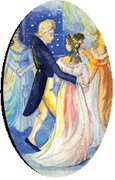
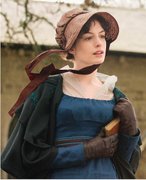
Pic 1: Mrs. Lefroy, Jane Austen, Lucy Lefroy and Eliza de Feullide from Chicago Sun Time

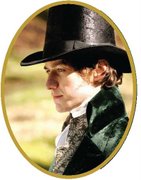
Pic 2: Tom Lefroy, from annie-hathaway.com

Tuesday, 7 August 2007

Mrs. Barrett remembered…

An episode of Jane Austen that we did not know sufficiently was, among others, the Bath period. Last night I was reading Memoir of Jane Austen (Austen-Leigh 1871, Oxford edition 2002) when a letter caught my attention. It was the letter from G.D. Boyle, Vicar of Kidderminster, who wrote to James Edward Austen-Leigh (JEAL) on October 7, 1869 (Memoir of JA, p. 195-197). Mr. Boyle had a friend called Mrs. Barrett who apparently knew JA when she was still alive. JA wrote to her several times, but the letters got lost, hence cannot be included in the Memoir of JA. Upon learning that JEAL planned to publish a memoir of the famous authoress, Boyle wrote to JEAL to add some info he had learned from Mrs. Barrett (that had passed away in 1866). This is the excerpt of the letter:

Dear Sir,

…I saw in the literary announcements of the autumn that you were engaged on a life of the incomparable novelist, Jane Austen; and I am tempted to tell you what I sincerely wish was better worth your attention.

I was on intimate terms with a lady who died a few years ago, Mrs. Barrett, whose maiden name was Turner or Edwards/…/Mrs. Barrett was no ordinary woman. She had read widely and wisely, and preserved that most rare of gifts, the power of entering fully into the tastes, ^and especially the intellectual tastes,^ of a younger generation than her own. She had enjoyed the friendship of some remarkable people; but I think I was more interested in hearing her recollections of the author of ‘Persuasion’ than in any other of the reminiscences she recalled. Most unfortunately for the purposes of your biography she had lost, through the carelessness of a friend, a series of letters from Miss Austen of great interest.

Mrs. Barrett declared that to a perfect modesty of a character she [JA] united a real judgement of her own powers, and that on the appearance of a good review (I almost think it was one by Archbishop Whately in the Quarterly, at one time printed among Sir W. Scott's miscellanies) she said, 'Well, that is pleasant! Those are the very characters I took most pains with, and the writer has found me out.'

To a question 'which of your characters do you like best'? she once answered, 'Edmund Bertram and Mr. Knightley; but they are very far from being what I know English gentlemen often are.'

The change of ideas as to clerical duty may be discovered in a fact mentioned by the same lady, that Miss Austen was once attacked by an Irish dignitary, who preferred a residence at Bath to his own proper sphere, 'for being over particular about Clergymen residing on their cures.' This was, of course, in allusion to the conversation of Bertram & Crawford in Mansfield Park. There is one fragment more which I would willingly linger on and expand, - the tribute of my old friend to the real and true spring of a religion which was always present though never obtruded. Miss Austen, she used to say, had on all the subjects of enduring religious feeling the deepest and strongest convictions, but a contact with loud and noisy exponents of the then popular religious phase made her reticent almost to a fault. She had to suffer something in the way of reproach from those who believed she might have used her genius to greater effect; but her old friend used to say, ‘I think I see her now defending what she thought was the real province of a delineator of life and manners, and declaring her belief that example and not “direct preaching” was all that a novelist could afford properly to exhibit.’ – Mrs. Barrett used to add, 'Anne Elliot was herself; her enthusiasm for the navy, and her perfect unselfishness reflect her completely.'

I wish I had more to write. I often approached the subject, but 4 years have passed away since Mrs. Barrett died.

…Very truly yours,
G.D. Boyle
(Vicar of Kidderminster)

Chapman (1949) explained that G.D. Boyle was indeed the Vicar of Kidderminster (starting in 1867) and subsequently became the Dean of Salisbury. Mrs. Barrett’s identity was rather enigmatic. However, Boyle said that she was ‘no ordinary woman’, and hence a reliable witness. Chapman proposed that Mrs. Barrett’s maiden name was Anne Sharp, occasional governess to Edward Austen’s children at Godmersham. Jane’s single surviving letter to Anne Sharp was dated May 22, 1817 from Chawton, two days before Jane and Cassandra moved to Winchester. Jane addressed her friend as ‘Dearest Anne’ (Letter 145) (Chapman 1979).


The ‘Jane Austen: A Family Record’ (Faye et al. 1989) mentioned that Mrs. Barrett was a woman Jane met in Chawton/Alton district circa 1813-1816. That made sense, for then Mrs. Barrett could talk of Mansfield Park with Jane Austen. Mrs. Barrett's later comment on Persuasion that was published postmortem was definitely made in or after 1818. Afterwards, Le Faye did more research and, in 1999, suggested that Mrs. Barrett was actually Ann Barrett (nee Edwards) who married Mr. Charles Barrett (1773-1844) on May 10, 1802. At one point, the Barretts moved to Alton and assisted the business in Chawton estate. Hence, they were in acquaintance with Jane Austen until 1816 when they moved to Manchester.

Anyway, regardless of Mrs. Barrett’s identity, Mr. Boyle’s letter (and his recollection of Mrs. Barrett’s testimonies) was a nice confirmation that Anne Elliot was more or less Jane Austen herself. And that Jane loved Mr. Knightley best! Aaww… I also love Mr. Knightley best! And this one:

Miss Austen was once attacked by an Irish dignitary, who preferred a residence at Bath to his own proper sphere, 'for being over particular about Clergymen residing on their cures.'

Blimey. Did Jane know of an Irish 'dignitary' other than Tom Lefroy? Not that I know of... but I may be wrong...


And the fact that Jane actually talked about an Irishman with Mrs. Barrett! We have to remind ourselves that Tom Lefroy was already a famous lawyer in 1814; hence, a ‘dignitary’. If this Irish dignitary was indeed Tom Lefroy, Jane would not express her deep relationship with Tom, albeit a matter of past recollection. No, Jane would only talk of Tom with Cassandra, and Henry at the most. It is very likely that Jane just referred to Tom as an Irish dignitary she once knew that 'attacked' her (verbally, I suppose) while discussion clerical duties. This Irishman once resided in Bath (a holiday residence can still be called a residence, I guess), and he might like Bath better that time than 'his own proper sphere', which might means London or Ireland, particularly Limerick (duh! He had tons of responsibilities in Ireland).

While discussing this letter, Linda explained to me that the later part of the sentence, 'for being over particular about Clergymen residing on their cures', might mean that either the Irish dignitary (i.e. Tom) or Jane herself (possibly Jane) suggested that a pastor should live in the parish where he served in order to better take care of his duty to the parishioners, and that the other party (possibly Tom) might not agree with it.

But the letter still adds to my suspicion. Provided that it was Tom Lefroy that Jane talked about, Tom might indeed visited Bath. Very likely, the conversation on ‘clerical duty’ took place when Jane and Tom were together in Bath, i.e. in 1797. Nonetheless, something (or many things) happened that finally convinced the Irish dignitary to return to his own proper sphere… and Jane was left alone.


Reference:

Austen-Leigh, J. E. 1871, A Memoir of Jane Austen and Other Family Recollections (2002 Oxford edition), Oxford World's Classics, Oxford.

Chapman, R. W. 1949, 'Jane Austen's Friend Mrs. Barrett', Nineteenth-Century Fiction, vol. 4, no. 3, pp. 171-174.

Chapman, R. W. 1979, Jane Austen's Letters to Her Sister Cassandra and Others, 2nd edn, Oxford University Press, Oxford.

Faye, D. L. 1999, 'Jane Austen's Friend Mrs. Barrett Identified', Notes and Queries: Oxford Journals, vol. 46, no. 4, pp. 451-454.

Faye, D. l., Austen-Leigh, W. & Austen-Leigh, R. A. 1989, Jane Austen: A Family Record, The British Library, London.


Pic 1: Cover to Memoir of Jane Austen, Oxford Edition

Pic 2: Edmund Bertram comforting Fanny Price in Mansfield Park, from Pemberley

Pic 3: Chawton House, by Rachel Kingston

Pic 4: The Bath Abbey, Bath, from Wikipedia


Monday, 6 August 2007

Mulberry Tree in Bath

It was just last week that I wrote about the mulberry tree in Sense & Sensibility and the likelihood of it symbolizing the star-crossed love between Jane Austen and Tom Lefroy. Last night, I was again flipping through Helen Ashton’s novel ‘Parson Austen’s Daughter’, and found out another reference of mulberry tree! I have to say that although Ashton’s book is a novel, most of the data were derived from historical facts (you can consider the conversations as mostly fictional, although they were inspired by original letters and family records). Anyway, here’s the excerpt about the mulberry tree, page 195:

‘In many of the Bath gardens there were old mulberry trees with propped branches and split trunks held together with chains. The story was that Mary of Modena, James II’s Italian queen, who set up the fountain in the middle of the Cross Bath, had given these trees to the Mayor and Councillors of the city in gratitude for her cure. The trees had been sent for all the way to Modena and boxes of silk worms had come with them, for the queen had hoped that the climate of Bath might prove warm enough for the establishment of a silk industry. The silk worms all died quickly, but the mulberry trees did not. Several of them still survived up and down the town and one such grew behind a house half-way up Sion Hill, overshadowing the whole garden between its high stone walls.’

Mary of Modena (1658 – 1718) was of course a historical figure. She came from the city of Modena in Italy and married to James II of England in 1673, but I’m not sure if the legend about her bestowing the mulberry trees was true. Modena was indeed of a great importance for the silk industry in Italy circa 16th and 17th centuries, particularly to produce the silkworms. Inevitably, mulberry trees were abundant in Modena. Mary of Modena indeed visited Bath spas circa Sept/Oct 1687, and nine months later gave birth to her son James Edward ('The Old Pretender') in June 1668. In any case, assuming that the legend of Mary and her trees was true, mulberry trees would have been seen in Bath during Jane Austen’s time.

Did Jane often gaze at the mulberry trees during her stay in Bath? Surely she was well-informed of the legend of Pyramus and Thisbe that she would later use cryptically in Sense & Sensibility. Or, if my suspicion that Jane also had a rendezvous with Tom in Bath in 1797 is correct, could they be strolling Bath and rest under a mulberry tree?

Until now, mulberry trees can be found in Bath. The Mulberry Trees website provides some existing locations for mulberry trees in Bath, e.g. Bath Botanical Gardens, Royal Victoria Park and Moulton Hall, Kingswood School, Lansdown Road. However, the Bath Botanical Garden was built circa 1887, hence would not be there when Jane visited Bath in 1797 or 1801-1806.


Pic 1: Vincent Van Gogh’s mulberry tree

Pic 2: Thisbe, by John William Waterhouse, 1909, from Wikipedia


Empire Online review of ‘Becoming Jane’

Isabelle has provided me the complete review of Becoming Jane from Empire Online. Thanks, Isabelle! The reviewer (Liz Beardsworth) gives BJ four stars out of five.


Plot
Young Jane Austen (Hathaway) spends her time scribbling stories and reading the results to her family. It’s a secure if dull existence, and when the rakish Tom (James McAvoy) arrives in the village, sparks soon fly. But Tom has secrets which threaten their future.


Empire Review

Another month, another James McAvoy movie, and all the better for it. The ubiquitous and consistently excellent McAvoy this time plays roguish Irishman Tom Lefroy, here presented as the gentleman who caused a young Jane Austen to question her sensibility and consider instead her sense.

The role of Austen — that most inscrutable of lady authors — is taken by Anne Hathaway, an unpopular choice with those who swooned at the thought of a Yankee assaying such an icon of English literature. Yet she proves more than adequate, playing Jane as a coquettish, spirited young woman intriguingly at odds with the wry, detached presence of her novels. Owing much to the biography by Jon Spence, it’s a clever narrative device, this dichotomy echoing the question addressed in her most popular novels: is it better to follow your heart or your head? Far from simple literary debate, Becoming Jane offers this recurrent dilemma as the painful reality of Austen’s earlier life, and a struggle that had such a profound effect she could never quite leave it alone — in print, at least.

As such, the characters peopling the young Jane’s life are plainly recognisable as the prototypes for her most celebrated characters: Julie Walters’ anxious mother and James Cromwell’s strong, fair-minded Mr. Austen are clear relatives of Pride & Prejudice’s Mr. and Mrs. Bennet; Maggie Smith’s aloof, disdainful dowager exemplifies the snobbery and social climbing that provide context for Austen’s romances; McAvoy’s cocksure, worldly Lefroy is the epitome of the outwardly arrogant, inwardly sensitive hero of whom Mr. Darcy is the paradigm, while Jane herself shares the wit and passion of Austen’s most beloved heroine, Lizzie Bennet.

The A-list supporting players offer solid work, yet for all their talents at times feel anonymous next to the engaging leads. This really is McAvoy and Hathaway’s movie, the pair boasting a chemistry that fizzes from their first encounter, as trainee solicitor Lefroy — exiled to his country relatives after disgracing himself in the city — snores his way through Jane’s recital of her latest writings, much to her distress. Archetype he may be, but he’s also unavoidably, earthily real, and as bickering and banter develop into an irresistible attraction, the will-they-won’t-they relationship proves at least as delicious as that of Darcy and Lizzie. Indeed, for the first hour you might be watching an Austen adaptation rather than biopic, director Julian Jarrold making the most of moonlit trysts and pretty locations to create a fun period romance.

But it is in the second hour, after Jane uncovers Lefroy’s secret and finds herself forced to pit love against duty, that the emotional pitch of the film develops and real life is revealed to be far messier, agonising even, than any work of fiction. It’s a twist that adds a powerful new dimension to Austen’s story, underlining the film’s central thesis as to the role of writing in her later life: offering her the happy endings that reality, perhaps, could not. That theory is a little too neat to be entirely convincing, much less revealing, but the film’s quietly emotional denouement is undeniably touching, and there is much here to savour.


Verdict:

A charming, intriguing biopic, given extra depth and sparkle by attractive performances from its superior cast.

Pic 1: www.james-mcavoy.net

Pic 2: www.annie-hathaway.com


Anne Hathaway is 'Becoming Jane'

Michelle has provided me again with an in-depth interview of Anne Hathaway with Comingsoon.net. Here's the link to the entire interview, and I shall only quote the part about other Austen movies and chemistry that I have not read yet elsewhere.


CS: When you were cast as Jane, did you watch any of the films based on her novels and did you derive anything from them?

Hathaway: Oh, yes. A lot of anxiety, that's what I derived. (laughs) My favorite—and I gotta keep it in the family—is "Sense and Sensibility." Just everything about that movie is as perfect as it could have been. That's an extraordinary film. I also loved "Persuasion," the BBC version with Amanda Root, I thought she was an absolutely delight, and I really love that one. I loved "Persuasion" because I think it's a little bit bleaker than the others but it's also beautiful to get caught up in Ann Elliot's transformation. In fact, it was "Persuasion" that convinced me I was really doing the right thing by telling this story. Tom Lefroy was born in Ireland and maybe this is nothing and maybe I shouldn't have hung my hat on this one fact, but in the story, Ann Elliot is attending a concert, and Captain Wentworth has arrived and everyone is so impressed with him, including people who disliked him before because he was poor. He arrives and Catherine overhears someone talking about him, someone who had previously denigrated him, and this person said, "Oh, who is that very impressive young man? He has an air about him. Irish I would think." I don't know if that has anything to do with Tom Lefroy, but it seemed fitting. And so, "Persuasion" meant a lot to me when I was making this movie. Also, I thought the recent adaptation of "Pride & Prejudice" was an absolute delight. I think Keira Knightly was heaven in it and I think Joe Wright is genius and I can't wait to see "Atonement."

CS: Can you talk about how you established chemistry with James McAvoy and were you able to shoot the scenes sort of in order with the way they happened in the movie?


Hathaway: (laughs) No, no one cares about putting scenes in order to help us out. That's the least of their concerns. It's funny. The questions that people ask about chemistry. There's no formula to it. It's not like getting into a character of finding an accent or choosing what costumes your character would wear. It's really something much more intangible. I like James. I really like James McAvoy as a person. I think he's smart, terribly clever, a lot of fun, a brilliant actor and so, I just enjoy spending time with him, maybe that's what came through. Maybe he and I understood our characters well enough that we were able to let that relationship come through. Who knows? But it's nice to watch.

Pic from annie-hathaway.com


Sunday, 5 August 2007

Other positive reviews of 'Becoming Jane'

Thanks to Joely_snowflake, I got another positive review from Empireonline.com. Here's the link, but I cannot open it from here. It stubbornly keeps sending me to the Australian site. Hope you guys can open it.

Another one is from NPR by Bob Mondello here (Jane Isn't Quite Austen, but It Is Becoming). Bob said that 'biographical purists will doubtless complain that that flirtation with the real Mr. Lefroy (who later became Lord High Justice of Ireland) is referred to exactly twice in all of Austen's hundreds of letters.' Hmmm... I hope Bob will read our blog soon; I think we have enough posts of Tom Lefroy and Jane Austen to make a decent medium-sized book, including leads and possibilities yet uncovered so far.

Next one is by Deidre Lynch (See Jane Elope: Why are we so obsessed with Jane Austen's love life?) from Slate.com. Among others, Deidre said:

Becoming Jane is based on a chapter in Jon Spence's 2003 critical biography, Becoming Jane Austen. In the book, Spence does identify Tom Lefroy as the love of Austen's life and her relationship with him as the origin of her genius. But he never suggests that there was an aborted elopement (much less subsequent reading sessions with any of Lefroy's children). And he is careful, as the filmmakers are not, to clarify that in speculating about Austen's romantic experience he is reading between the lines of the family records and of the three rather opaque Austen letters that are his principal sources.

Other scholars have been more skeptical than Spence about whether this pair were ever "a couple." They see a flirtation that terminated without fuss when Tom ended his visit to relations in the Hampshire countryside where Jane lived and returned to the London law courts. True, when well on in years, Tom is reported to have answered yes to the question "Were you ever in love with Jane Austen?" "With a boyish love," he said. But at that point the old man might have been eager to play up his connection with the famous writer.

Hmmm… with all due respect, I don’t think that the old Tom Lefroy played up his connection with the famous writer. He could do that before Jane’s death in 1817. No, I think he was being sincere to admit that he had a relationship with Jane in the past, albeit it was ‘a boyish love’. I don’t even translate the ‘boyish love’ as such. There’s more to Tom Lefroy than meets the eye, and this blog just started to dig the surface.

Also, thanks to Michelle, here's the latest news from NZ Stuff about Anne Hathaway. As Michelle said, not much new, but it's nice to see New Zealand still keeping up. What about Canada, everyone?


Pic 1: The young Tom Lefroy, from Carrigglas Manor site

Pic 2: James McAvoy's Tom Lefroy from Jane Austen's Regency World March/April 2007


Time review: Finding Passion in Jane Austen

Thanks to Michelle, here's the Time review of Becoming Jane by Lev Grossman dated August 3, 2007. It's a positive one (though Lev still thinks that Jane looked like Cassandra's sketch). The entire interview can be found here, and below is the excerpt. Thanks Lev for writing the article!

Finding Passion in Jane Austen

Becoming Jane, an Austen biopic starring Anne Hathaway, opens this week. September will bring the movie of The Jane Austen Book Club. Masterpiece Theater is currently re-filming four of the novels—Mansfield Park, Northanger Abbey, Persuasion, and Sense & Sensibility—in preparation for a marathon broadcast of The Complete Jane Austen next year. We can't seem to put down Austen, or leave her alone, or get to the end of her. She has become a commodity for which there is an infinite demand.

On the face of it Austen is an unlikely object for cult worship. She was born in 1775 in Hampshire, England, the seventh of a country clergyman's eight children. She received a smattering of education. She later moved to the city of Bath, which she didn't much care for. She is known to have received one marriage proposal, from a younger man with the odd name of Harris Bigg-Wither, which she at first accepted and then, a day later, declined. Although she started writing fiction in 1789, Austen didn't publish a novel until 1811; all of her six novels would appear anonymously. Six years later she was dead of an unspecified illness. By our standards she barely seems to have lived at all.
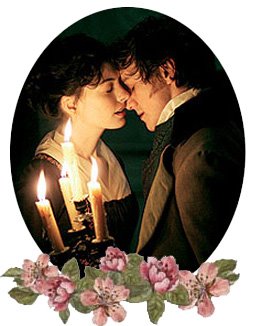
But there she is onscreen in Becoming Jane, vital and vivacious, although Anne Hathaway, with her broad mouth and her un-pin-uppably wavy hair, doesn't much resemble the one authenticated image we have of Austen, a sketchy portrait by her sister Cassandra that now hangs in the U.K.'s National Portrait Gallery. (Olivia Williams, who starts in the upcoming tele-bio-pic Miss Austen Regrets, can claim the better likeness.) Irrepressible and unconventional, Jane plays cricket and the piano, scribbles in her bedroom, and flirts with a witty but financially precarious young lawyer named Tom Lefroy, played by James McAvoy (you may recognize him as the faun from the Narnia movie, though here he's more of a satyr). Lefroy is not only rudely handsome, he's at least partly historically factual—there was a real Lefroy, with whom Austen really flirted. "He has but one fault, which time will, I trust, entirely remove," Austen wrote in a letter to Cassandra. "It is that his morning coat is a great deal too light."

Ultimately the flirtation came to nothing, and Lefroy went on to marry an heiress and become Lord High Justice of Ireland. Becoming Jane does its best to flesh out an episode about which historical information is scant, since Cassandra burned most of the relevant letters. Much is made of suggestive maybe-coincidences, like the fact that Lefroy would name his first daughter Jane. But the result is stately and quite affecting, and the matter it inquires into is one of the supreme mysteries in all of literary biography: Austen, the greatest chronicler of romantic courtship in any era and any language, never married. While her characters passed by the dozen into the Promised Land, she remained behind.

This curious fact underscores a truth frequently neglected about Austen's England, that life there was often difficult and painful for women. Unless they were fortunate enough to have some kind of financial autonomy, women were essentially forced to sell themselves as commodities on the marriage market. The possibility of downward mobility was ever-present, lurking beneath the thin ice of their own charm and attractiveness. To preserve their value, women worked hard to safeguard their fragile sexual respectability, as defined by the Byzantine social codes of the day.

Austen's adapters have to tread a perilously narrow, wobbly line between grim historical honesty and the seductions of Regency glamour. "Because it's very pretty clothes and very pretty houses, the danger is that it just looks very chocolate-boxy and cute, an escapist thing really," says Julian Jarrold, who directed Becoming Jane. "Part of the point of the piece is how dictated economics and money were, and the whole marriage market, and how that dominated women's lives." The margins of Austen's novels are strewn with miserable spinsters and hollow marriages—her stories end happily, but she always makes it clear that her heroes and heroines are the exceptions, the lucky statistical outliers. "I've got a bit of an argument with a lot of the more traditional admirers of Jane Austen, and also fans of costume drama," says Davies. "These are stories about young men and women at a very crucial time in their lives, when they're boiling over with hormones, and they're in a society in which—for the girls at any rate—you usually only get one chance of getting it right, and if you don't you're on the shelf for life, and often financially disadvantaged." He pauses for reflection. "Although I must say, I do like the costumes."

Pic 1: a colour rendition of Jane Austen in 'A Portrait Gallery of Eminent Men and Women in Europe and America'. Johnson, Wilson and Company, New York, 1873, from the Time Online

Pic 2: rendition of Jane on the bridge, original file from annie-hathaway.com

Pic 3: Jane by the window, from annie-hathaway.com


Saturday, 4 August 2007

Mr. Wisley vs Mr. Harris Bigg-Wither

Becoming Jane viewers might not like John Warren who wrote the Judge the nasty letter (in fact, Warren was a pretty much decent guy who drew a sketch of Tom Lefroy and gave it to Jane Austen – letter 9 January 1796), but some viewers develop a sense of sympathy towards poor (well, rich) Mr. Wisley. I consent. I admit that I was not charmed by Laurence Fox’s Mr. Wisley during my first screenings, but then, upon watching the Husbands and Lovers scene again and again in YouTube, he somehow grew in me. Moreover, his last scene with Jane after he ditched his aunt Lady Gresham was touchy. Jane Austen and Mr. Wisley finally understood each other; they parted as friends.

But mind you dear friends, there was no Mr. Wisley in the real Austenian landscape (nor Lady Gresham for that matter). This sensitive guy was created purposely for Becoming Jane, to be Tom Lefroy’s rival. Laurence Fox did his job well; Mr. Wisley was indeed awkward in comparison to James McAvoy’s Tom Lefroy. And when I flipped through David Nokes’ Jane Austen: a Life (1997), I was struck by another ‘awkward’ friend of Jane Austen, a real person this time. He was Harris Bigg-Wither (1781-1833), heir of Manydown Park of Hampshire.

In page 251, Nokes describes Harris as ‘tall, clumsy and awkward, he would shamble through the house, or lounge on a sofa, adding little to the general conversation.’ Caroline Austen even said that Harris was ‘very plain in person – awkward & even uncouth in manner – nothing but his size to recommend him – he was a fine big man – but one need not look about for secret reasons to account for a young lady’s not loving him.’ (Nokes, 1997, p. 258).

Well… that was Mr. Wisley to me. And the fact that in the movie Jane Austen finally accepted Mr. Wisley’s proposal for a very short time (if not hours) before she met Tom Lefroy again in the forest makes me think that perhaps Mr. Wisley’s character was inspired a bit by Harris Bigg-Wither.

Now, to Harris. As I said, he was the heir of Manydown Park, a great house in Hampshire. Jane and Cassandra befriended Harris’ sisters and often stayed in Manydown Park for several weeks. The Bigg sisters (Elizabeth, Alethea and Catherine) did not use the ‘Wither’ name that was derived from their cousin’s name who, from whom they inherited Manydown. Harris was their little brother, six years younger than Jane. Manydown Park, by the way, was the place where Jane danced with Tom Lefroy in the evening of January 8, 1796.

In 1801, the Austens moved to Bath. However, Jane occasionally returned to Hampshire and stayed with, among others, the Bigg sisters. Such was the occasion in December 1802, where Cassandra and Jane stayed for a while in Manydown. At that time, Harris had returned from Worchester College, Oxford; a big tall guy now with golden future. In the evening of December 2, 1802, Jane found herself in the library (or a drawing room?), alone with Harris. It is very likely that the Bigg sisters and Cassandra might have orchestrated the private meeting. There, Harris proposed Jane… and Jane accepted. A happy night for everyone.

Except for Jane. She went to bed, but might not sleep after all. It was in Manydown in January 1796 that she danced with Tom Lefroy in such a ‘profligate’ manner. And now, almost seven years later, she accepted a proposal in the same house. But not from Tom.

We will never know Jane’s train of thought that night, it is possible that she talked with Cassandra about it. In any case, the very first thing she did the next morning was finding Harris and, again in private, cancelled their engagement. Afterwards, Jane and Cassandra simply could not stay longer in Manydown. The Bigg sisters ordered the carriage to take the Austen girls back to Steventon, where Jane later asked her brother James to take her home to Bath immediately. Confused, James finally cancelled his Sunday service to take his sisters back to Bath. And that was the end of Jane’s last marriage proposal.

Apparently, Harris dealt with his broken heart well. On November 2, 1804, less than two years after the faithful rejection, Harris Bigg-Wither married Anne Howe Frith from the Isle of Wight who gave him ten children. They lived happily in Wymering Manor, Portsmouth, Hampshire, and the friendship between the Austen sisters and the Bigg sisters were preserved.

I admire Jane Austen for her decision. She could easily succumb to the grandeur of Manydown Park, to the relatively easy life she could enjoy as the mistress of Manydown. She would be able to help her sister and her family then, and also taste a life of marriage she could only write about in her novels. But she did not do that. She cancelled the engagement, only 12 hours after her consent, risking her reputation and her friendship. She stayed true to her heart and principles, to never marry without love. And with that, she gave us six brilliant novels and three unfinished works that still show us the great woman behind the manuscripts.

Reference:

Nokes, D. 1997, Jane Austen: A Life, Fourth Estate, London.

Tomalin, C. 2000, Jane Austen: A Life, Penguin Books, London.

Pic 1: Jane Austen (Anne Hathaway) and Mr. Wisley (Laurence Fox), from BBC UK

Pic 2: Harris Bigg-Wither, from the Manydown site

Pic 3: Manydown Park, from Jane Austen Society of Australia


Obsessed with ‘Becoming Jane’ part 2

To continue the fun thread of signs of Becoming Jane obsession, here’s the second part of ‘You know you’re obsessed with Becoming Jane when…’, starting from #46, taken from the IMDB message board:

46. You search for Youtube every video you see of BJ you film on your phone so you have always got the little lovely clips to watch till the DVD comes out in September (hetha10-1)

47. ... you decide to start researching the story to see if you can find out more, which helps pass the time till Aug 3rd. Of course the BJ Fansite helps a lot! (kdesign23) (Thank you, Kari!)

48. The film hasn't even come to your country yet (USA) and you've already watched the trailer 10 times in one day. Is it August 10 yet? (blondie2000)

49. You order the Jane Austen Regency World Magazine edition March/April 2007 because it has a very nice cover of Becoming Jane, though you have downloaded the pdf article plus your dear co-admin sent you her scanned version earlier. I’m gonna be broke if am not careful...

50. You glue yourself to those Becoming Jane newspaper articles sitting up the back of the classroom (Little Birdy)

51. You check the imdb board daily for any new news. As if there would be any new news. There won't be, of course, because you already know you have to wait until August 3rd to see what your Briton friends have already seen (Garnet10)

52. You check Yahoo! for movie showtimes to see which theater it is going to open in on August 3rd, even though you know fully well because of your particular job you won't be able to see it on opening night (Garnet10)

53. You have two versions of the trailer downloaded on your computer and you watch them daily, sometimes more than once a day because you just can't wait to see James McAvoy on the big screen (Garnet10)

54. You try to download the movie from a torrent website which you actually had to pay to join, only to find out it is a porn site! And you should have known better that anyone likely to see this film would not secretly tape it (Garnet10)

55. You quickly minimize this computer screen window when your hubby comes up behind you and innocently asks what you are doing because you don't want him to know you are obsessed (Garnet10)

56. You start reading all the great books about Jane Austin just to see if there is anything new (kdesign23)

57. You relentlessly scower YouTube for new clips you may have not seen yet! (kdesign23)

58. You haven't even seen the film, but you're already making blends and fan fiction after seeing the trailer right before Harry Potter and the Order of the Phoenix (butterflybabyeva)

59. You plan to talk to your Blockbuster supplier if you can get the BJ DVD poster for free a month after the DVD release. They won't need it anymore anyway!


60. You've read Icha's Becoming Jane review on Amazon, and fumed at the other users who gave it less than five stars (Joely_snowflake) (Icha: Aaww...Thanks a lot, Joely!)

61. You check Amazon every day, just to see if the DVD release date has been brought forward (Joely_snowflake)

62. You have five Becoming Jane adverts (all on your notice board) that have been ripped out of magazines by your friends, as they hope if they give you one you'll shut up going on, and on about how wonderful the film is (Joely_snowflake)

63. Because you have run out of money to buy the soundtrack, you go to the Becoming Jane website and just listen to the pathetically small excerpts that play... (Joely_snowflake)

Pic 1: Nerd Alert

Pic 2: Computer nerd hug

Pic 3: BJ movie poster from Film Factory

HollywoodChicago review and The FilmFactory clips

Thanks very much to 'filmforlife' on the message board at imdb for letting us know that another positive review has been written for Becoming Jane. It was written by Adam Fendelman at HollywoodChicago.com. There are also a nice selection of pics presented with the review. Here is the link:

http://www.hollywoodchicago.com/2007/08/anne-hathaway-steals-show-in-slow.html


Upon browsing I also came across the website of The Film Factory and I found this link which has some film information, the trailer and a few short clips, one of which was at the London premiere of the film (some nice shots of the stars):


http://www.thefilmfactory.co.uk/cinema/becomingjane.html

Enjoy


Pic 1. Jane and Tom. Taken from http://www.queensfilmtheatre.com/files/page_720/88Becoming_Jane.jpg

Friday, 3 August 2007

Tom Lefroy paid his last respects to Jane Austen

Once more, our dearest librarian Linda has proven herself worthy of the title (she didn’t realise she handed me gold!). She just posted me the link of a web that contained the now de-functioned website of Carrigglas Manor (the house of Tom Lefroy and his family). Thank you Linda, and also to the person who saved the entire web into "The Wayback Machine", for now we can read about the Carrigglas Manor in the link here. This is the excerpt of the web section ‘Family History’:

'The Lefroy family originally came from the town of Cambrai in North Western corner of France. They were affiliated to the House of Souastres, and Monstrelet's Chronicles (written in the fifteenth century) allude to the death of the then head of the family, the Lord L'Offroy, at the battle of Agincourt in 1415 (fighting on the French side, of course!). In 1585 the family had to flee religious persecution in France, and as refugees were not allowed to leave France with any property Jeffry's nine-greats grandfather, Antoine, converted the family money into five diamonds which he sewed into the pockets of his young son Esaie (shown on the left below, in a portrait from 1614) and escaped with his wife Marie (shown on the right below, in a portrait from 1600) to England.'

Ah… so their original name was L’Offroy. Lovely… Battle of Agincourt, eh? James McAvoy’s character (Brian Jackson) in Starter for Ten (2006) was once asked about Battle of Agincourt by Rebecca, his friend. What a weird coincidence. Anyway, now the cream and ganache:

'Thomas Lefroy, Anthony's son, was born in 1776 and after graduating from Trinity College, Dublin in 1796 went to stay with his relations in Hampshire whilst undergoing pupillage at the Lincoln's Inn Bar. There he met and enjoyed a brief romance with Parson Austen's daughter Jane; indeed Jane wrote in a letter to her sister Cassandra 'I am almost afraid to tell you how my Irish friend and I behaved... He is a very gentlemanlike, good-looking, pleasant young man... Imagine to yourself everything most profligate and shocking in the way of dancing and sitting down together.'(!) However, his aunt forbade the relationship and Thomas was sent back to Ireland forthwith. Jane based the character of Mr. Darcy, the hero of Pride and Prejudice on him, and on learning of her death Thomas traveled the considerable distance to England to pay his respects and at an auction of her effects bought a publisher's rejection letter - for Pride and Prejudice. (The family connection survives as Jane's niece married Thomas' cousin, Ben Lefroy). Thomas married Mary Paul, daughter of Sir Jeffry Paul, in 1799 and after a long and distinguished career was made a Baron of the Exchequer in 1841 as Lord Lefroy and in 1852 invested as Lord Chief Justice of Ireland.'

Let me say it again: on learning of her death Thomas traveled the considerable distance to England to pay his respects and at an auction of her effects bought a publisher's rejection letter - for Pride and Prejudice.

I never knew that Tom paid his respect… traveling from Ireland to England to give his last respect to Jane! I imagine that this was done after Jane’s funeral. But why no one mentioned it? Not in the Memoir of Jane Austen either. I don’t claim to read all JA-related books at all, but I never heard of this one. And this information was written in a Lefroy website! Remind me of Cranfield’s ‘From Ireland to Western Australia where Jane Austen was mentioned several times in a book of Lefroy.

And Tom Lefroy bought the Cadell letter? I thought it was Thomas Edward Preston Lefroy who bought it! See the excerpt of Caroline Austen’s letter dated April 1st, 1869:

'I enclose a copy of Mr. Austen’s letter to Cadell – I do not know which novel he would have sent – The letter does not do much credit to the tact or courtesy of our good Grandfather for Cadell was a great man in his day, and it is not surprising that he should have refused the favour so offered from an unknown – but the circumstance may be worth noting, especially as we have so few incidents to produce. At a sale of Cadell’s papers &c Tom Lefroy picked up the original letter – and Jemima copied it for me –' [bolded sentence by Icha]

The novel Cadell was refused in that particular letter was the early version of Pride & Prejudice (originally titled First Impression), rejected in 1797. This is Mr. Austen's letter to Cadell dated 1st November 1797 from the Memoir of Jane Austen (1871, p. 105):

‘Sir, - I have in my possession a manuscript novel, comprising 3 vols., about the length of Miss Burney’s “Evelina.” As I am well aware of what consequence it is that a work of this sort shd make its first appearance under a respectable name, I apply to you. I shall be much obliged therefore if you will inform me whether you choose to be concerned in it, what will be the expense of publishing it at the author’s risk, and what you will venture to advance for the property of it, if on perusal it is approved of. Should you give any encouragement, I will send you the work.


I am, Sir, your humble Servant,
‘George Austen.

Steventon, near Overton, Hants,
1st Nov, 1797


Most importantly to me, the Carrigglas website suggested that the Tom Lefroy who bought back the letter, the person Caroline was talking about, was Thomas Langlois Lefroy (!), the original Tom Lefroy. I was a bit expecting this Tom to be our Tom Lefroy, but then I thought Caroline would not address the Chief Justice Lefroy as only ‘Tom Lefroy’. If it is true that the original Tom Lefroy purchased the Cadell letter after Jane’s death (perhaps immediately during his stay in London?), he would then keep it and handed it over to TEPL later on, who gave it to Caroline for reference. I sincerely hope that was the case.

Oh, wait! How did Tom Lefroy learn of the Cadell rejection? If the buyer of the letter was indeed the Thomas Langlois Lefroy, would he not learn of the rejection from Jane Austen herself circa November-December 1797? In another word, would it not imply that both were still in good communication in 1797?

Anyway, now I can sleep better, knowing that Tom Lefroy did care so much for Jane Austen, that when he was older, he did pay her a visit, even though a bit late, after her death… Oh… now I want to cry!

PS 3:30pm:

I'm not sure what happens to Carrigglas Manor now, whether it is still under the Lefroys or already handed over to the Irish government or County Longford. However, Jeffry Lefroy (the owner, or previous owner of Carrigglas) became one of the extras in Becoming Jane. I think he is the key person we should talk to about the veracity of the information.


Pic 1: Carrigglas Manor drawing room, Longford, Ireland

Pic 2: the young Tom Lefroy, from the
Carrigglas site


Thursday, 2 August 2007

David Letterman on Anne Hathaway & 'Becoming Jane'

Thank you again Kari, for directing me to the YouTube section of David Letterman's interview with Anne Hathaway regarding Becoming Jane. Thank you also boneshk for the video clip!


I hope to receive more info on audio interviews of Becoming Jane from YouTube; so just drop me notes guys! Thanks! Also don't forget to drop your impressions on Becoming Jane in the post below. Truly appreciate it!

Wednesday, 1 August 2007

'Becoming Jane' viewers, how is it? Pray, tell us!


Since the first viewers of Becoming Jane in New York (and many other U.S. cities) have just returned home, we would like to know what you all think of the movie. Reviewers from other countries (Canada, etc) are welcome to leave the comments, of course!

So, here's the post for dropping your comments, and feel free to give constructive feedback. You might not like several things, it's of course okay to say that. Just refrain from using hate words, for this is not a place to fire up hatred...

So, tell us! How do you like it? What's your favourite scenes, what's your best moments?

Pic: Jane (Anne Hathaway) and Tom (James McAvoy) running down the hill, from www.annie-hathaway.com