Saturday, 7 July 2007

JA: A lively young woman or a dull spinster?

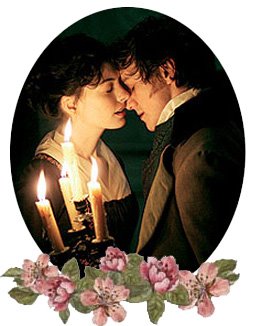
One of the most FLC (Frequently Launched Critics) I heard of Becoming Jane was that ‘Anne Hathaway was too pretty to be Jane Austen’. Ouch, that hurts! Thank God that James McAvoy looks very much like Tom Lefroy, thus I just have to focus on this ‘Anne Hathaway was too pretty to be Jane Austen’ thingy.

Now, after reading her letters, especially those written in her 20s, I believe that Jane was a fashionable lady. Why, she often talked about bonnets and gowns; how she combined the cawl of one bonnet with the ribbon of the other’s (Letter 14, December 18, 1798), how she loved dressing her hair in this way or that way, what she planned to do with her new gowns, or where to buy them (including asking Cassandra to do that for her, Letter 33, January 25, 1801). Caroline Austen (Jane’s niece) recalled that the sisters’ sense of fashion was not so agreeable (‘I beleive my two Aunts were not accounted very good dressers, and were thought to have taken to the garb of middle age unnecessarily soon’). However, Caroline was born in 1805, when Jane was about 30 years old. I believe that Caroline’s memories would not taken place until she was 5-7 years old… which means Jane would almost reach her 40s by then. Many things happened already to the Jane Austen that wrote about bonnets and gowns… broken-heart, the passing of her father, etc, that might alter her sense of fashion.

Jane Austen also loved dancing (particularly in her early 20s), sometimes dancing all the twenty dances (Letter 15, December 24, 1798), or 9 out of 10 dances (Letter 24, November 1, 1800), and had many dancing partners. Henry Austen said in A Memoir of Jane Austen (written and compiled by James Edward Austen-Leigh/JEAL, one of JA’s nephew from James Austen) that:

‘her stature rather exceeded the middle height; her features were separately good; their assemblage produced an unrivalled expression of that cheerfulness, sensibility, and benevolence, which were her real characteristics; her complexion was of the finest texture – it might with truth be said, that her eloquent blood spoke through her modest cheek; her voice was sweet; she delivered herself with fluency and precision; indeed, she was formed for elegant and rational society, excelling in conversation as much as in composition.’

Such a long sentence to describe that Jane Austen was pretty, or at least, charming and attractive. And I tend to consent with that, for in my mind, Jane was a lively, witty and chatty girl, but with loving heart and gentle eyes that could see through a person’s soul. Consequently, she would be someone we describe as charming. Though Jane might not be strikingly beautiful, she was an attractive girl that managed to make several lads fell for her. Including…Tom Lefroy, for that matter (who was exceedingly gorgeous with his bright blue eyes!).

Thus, I cannot imagine that the very Jane Austen whose letters and novels I am reading now looked like lady on the right. No offense to Cassandra, but even Anna Lefroy (JA’s niece, JEAL’s sister, who later married Ben Lefroy) said that the portrait was ‘…so hideously unlike…’ (Dring 2003).

Instead, in the Memoir, Anna described her aunt as ‘…tall & slight, but not drooping; well balanced, as was proved by her quick firm step. Her complexion of that rather rare sort which seems the peculiar property of light brunettes. A mottled skin, not fair, but perfectly clear & healthy in hue; the fine naturally curling hair neither light nor dark; the bright hazel eyes to match, & the rather small but well shaped nose.’ And this is important: ‘One hardly understands how with all these advantages she could yet fail of being a decidedly handsome woman.’

Then came Caroline Austen (Anna’s half-sister) with her own reminiscence of Jane:

‘her’s was the first face that I can remember thinking pretty, not that I used that word to myself, but I know I looked at her with admiration – Her face was rather round than long – she had a bright, but not a pink colour – a clear brown complexion and very good hazle eyes – She was not, I believe, an absolute beauty, but before she left Steventon she was established as a very pretty girl, in the opinion of most of her neighbours…Her hair, a darkish brown, curled naturally – it was in short curls round her face…’

JEAL himself recalled his aunt as;

‘very attractive; her figure was rather tall and slender, her step light and firm, and her whole appearance expressive of health and animation. In complexion she was a clear brunette with a rich colour; she had full round cheeks, with mouth and nose small and well formed, bright hazel eyes, and brown hair forming natural curls close round her face.’

In addition to family recollections, an old friend Revd F.W. Fowle acknowledged Jane was an ‘attractive animated delightful person’. Revd Fowle also said that she was ‘certainly pretty-bright & a good deal of colour in her face-like a doll-no that would not give at all the idea for she had so much expression – she was like a child – quite a child very lively & full of humour' (Dring 2003). Another relative (Sir Egerton Brydges, brother of Mrs. Anne Lefroy, Tom Lefroy's aunt) said that Jane was 'fair and handsome, slight and elegant, but with cheeks a little too full' (Radovici 1995).

Thus, we can safely assume that although Jane Austen might not be as pretty as Anne Hathaway, but there is little doubt for me that Jane was an attractive girl, and definitely prettier than Cass’ watercolour painting (which was done in 1810… when Jane was in a bad mood, perhaps…). I certainly don’t see how such a witty and lively woman like Jane would have such a dull expression as the woman in Cassandra's painting.

So, what did Jane Austen actually look like ?

Because the one and only portrait of Jane Austen (which was done by Cass) apparently bore very little resemblance to the real person, JEAL decided that, for the second edition of Memoir, he would have a different rendition of Jane Austen’s portrait. He asked a Mr. Andrew of Maidenhead to make another drawing of Jane. The picture was later engraved by Lizars and then used as a frontispiece of the second edition of A Memoir of Jane Austen.

Everyone happy? Not really. For Caroline admitted that ‘the portrait is better than I expected…I did not reckon upon finding any likeness – but there is a look which I recognise as hers – and though the general resemblance is not strong, yet as it represents a pleasant countenance it is so far a truth - & I am not dissatisfied with it.’

Okay… now what? In an attempt to better portray Jane Austen physically, in 2003 Melissa Dring painted a sketch of Jane based on prominent family features, such as ‘the bright eyes, long nose, small, narrow mouth.’ The result was this one:

What do you think? For me, I like Melissa’s rendition of Jane Austen’s eyes… bright and witty, very Jane. But I think the nose is too long, for Jane’s nose was ‘rather small but well shaped’, instead of long the way Mrs. Austen’s or the nose of other family members were. But, since we will never know how Jane Austen really looked like, I can only summarise that:

- Though her nose might not as fine as Anne Hathaway’s, it was still considered fine and lovely (see Jane’s silhouette)

- She had witty eyes and tender smile, a good sense of humour (duh!) and loving heart

- She was an attractive and charming girl, definitely falling into the category of ‘pretty’

Conclusion: Jane Austen was a charming and attractive woman (though not as strikingly beautiful as Mrs. Anne Lefroy or Eliza de Feullide, or Anne Hathaway for that matter) with lovely heart, fierce intelligence, and a great deal sense of humour. I suppose her intelligence and wittiness outshone her physical beauty, hence she managed to attract many young lads, including the young Tom Lefroy (who even remembered her well beyond her death, till he was already an old fellow). And in the end, it matters not for me what she looked like, for she was indeed a creature of beauty in heart and head.

Reference:

Austen-Leigh, J. E. 1871, A Memoir of Jane Austen and Other Family Recollections (2002 Oxford edition), Oxford World's Classics, Oxford.

Chapman, R. W. 1979, Jane Austen's Letters to Her Sister Cassandra and Others, 2nd edn, Oxford University Press, Oxford.

Dring, M. 2003, 'A new portrait of Jane Austen', Jane Austen's Regency World, Jan/Feb 2003, no. 1, pp. 5-9.

Radovici, N. 1995, A Youthful Love: Jane Austen and Tom Lefroy?, Merlin Books Devon.

See also Jane Austen Society of Australia for more renditions of Jane Austen's portrait.

Earlier, Jane Austen's World also had a post on JA's portrait that directs you to other links.


Pic 1: Anne Hathaway as Jane Austen

Pic 2: JA's watercolour painting done by Cassandra, c1810

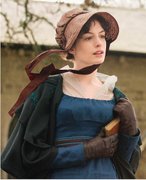
Pic 3: a painting owned by Mr. Rice, one of the Austen descendants, who claimed that this girl was Jane Austen

Pic 4: Mr. Andrew's rendition of Jane Austen, based on Cass' painting and JEAL's request, c1870

Pic 5: Melissa Dring's version of Jane Austen

Pic 6: A silhouette titled 'L'amiable Jane' which appeared in the 2nd edition of Mansfield Park (c1833). Despite the lack of description, the silhouette is often considered as Jane Austen's silhouette.

Pic 7: Anne Hathaway, from www.annie-hathaway.com


Thursday, 5 July 2007

Radovici’s ‘A Youthful Love: Jane Austen and Tom Lefroy?’

First of all, I would like to express my sincere gratitude to Linda for sending me the precious manuscript. She was right; though Nadia Radovici’s book was relatively thin (only 81 pages), it dramatically increased my understanding towards Tom Lefroy, the main target of Jane Austen’s affection outside her family. The book is actually too much to summary; there are too many paragraphs I want to cite. Thus, here’s my best attempt so far to review it.

Radovici’s book consists of ‘only’ four chapters: (1) Northanger Abbey – The story behind the story; (2) Persuasion – What Jane Austen wished to tell in her last novel; (3) Somebody Jane Austen will never forget or forgive; and last but not least: (4) And what about the absent hero, Tom Lefroy?

In chapter one about Northanger Abbey, Radovici explains the similarities between heroine Catherine Morland and Jane Austen herself, plus (no less important) resemblance between Tom Lefroy and Henry Tilney. Both men were exceedingly charming young lads who were well-versed with a vast variety of subjects, including gardening, fashion and interest in Scriptures (albeit still mischievous in their early lives). Radovici also points out how General Tilney disliked Catherine Morland due to her disagreeable financial status… and so it seemed some people thought of Jane Austen in her relationship with Tom Lefroy.

Radovici then proceeds with Persuasion, noting that of the six of Jane Austen's novels, only this book and Northanger Abbey that had such l'accord parfait, where the hero and heroine somewhat fell in love at first sight. Character similarities between Henry Tilney/Fred Wentworth and Catherine Morland/Anne Elliot are also explored in the book, plus the fact that only these two novels were set in real place, i.e. Bath, with particular mentioning of Milsom Street. Could it be... that Milsom St. has historical value for Jane and Tom, not unlike the way Cork St. in London was?

Radovici offers a lot of the interpretation of Persuasion, many of them were cited or used in Walker’s Jane Austen and Tom Lefroy: Stories. One thing that also drew my attention was Lady Darlymple’s comment on Capt. Wentworth:

‘A very fine young man indeed! More air than one often sees in Bath. – Irish, I dare say.’ (Persuasion, Penguin 1986 p. 197).

We need not remind ourselves that Tom Lefroy was Irish, aye? Now, this one will please Arnie as well, for he loves to dig Emma. Radovici notices that Miss Campbell’s husband, Mr. Dixon, was from Ireland, and he often described his homeland to Jane Fairfax. The paragraph below is taken from the 1986 Penguin edition of Emma (p. 173):

‘…he [Mr. Dixon] had shewn them some drawings of the place, views that he had taken himself…Jane was quite longing to go to Ireland, from his account of things.’

And of course, after re-reading those lines, I could understand that JA was probably speaking of herself… dreaming of going to Ireland one day to find the greeneries Tom Lefroy adored.

Contrary to what I anticipated, Chapter 3 does not talk about Tom Lefroy. Instead, it is about Sir Egerton Brydges, Mrs. Anne Lefroy’s brother. Radovici believes that Sir Egerton may have talked Mrs. Lefroy into opposing Jane-Tom’s relationship, under the premise that Jane was not good enough for Tom. Consequently, Jane Austen used poor Sir Egerton as the template of her antagonists, e.g. General Tilney and Sir Walter Elliot.


The cream and ganache is chapter 4 (the absent hero Tom Lefroy). The chapter hit me immediately as I opened it (p. 48 onwards), as it contains ideas that I also thought of Tom Lefroy. Most importantly, his transformation from the happy-go-lucy and a bit mischievous young man into the grim bald chief justice. Radovici wrote that the image of young Tom is very different to the old one, a man 'who seems to have for ever forgotten how to enjoy life'. Oh, I consent 100%. The transformation can only be explained as 'the only way to avoid memories dear and painful, regrets and remorse to haunt his thoughts was to occupy his mind permanently, when not busy with professional problems, with the study of the Holy Scriptures'.

From Radovici, I learned that Tom Lefroy was the first son; his parents had ten children in total (Tom was actually the sixth child with five older sisters and four younger brothers). I had tried to find out how many siblings Tom actually had, but I have not succeeded (I should consult Memoir of Chief Justice Lefroy, but I have no time for full reading yet). Hence, there you go. A middle child of a poor family with ten offspring in total. Remember what James McAvoy’s Tom Lefroy said when Jane Austen (Anne Hathaway) asked how many siblings he had?

‘Enough,’ he replied wearily while observing the pensive Jane. ‘Why?’

Touché. And very sad as well.

In page 53, Radovici also asked this question:

How was it possible that the young man described by his tutor at Trinity College, Dublin, Dr. Burrowes, as a ‘dutiful boy, with such a kind disposition and affectionate heart’ could have behaved as he did towards Jane? How could he have been happy with another woman and enjoy life while Jane suffered? I tried to imagine him on his wedding day, leaving the church with his bride on his arm, the bells ringing, the crowd acclaiming the young couple, wishing them happiness. What was in his mind? In his heart?

One explanation is possible: Tom Lefroy acted in order not to grieve and disappoint his uncle Benjamin Langlois, his benefactor, to whom he owed so much, out of a feeling of duty. As in the tragedies of Corneille, he had to struggle and to choose between his love and duty – or what he was convinced to be his duty.

And duty vanquished – he thus let himself be convinced to give Jane up and to be ‘hurried away’ without even saying farewell to the girl with whom he was deeply in love and who loved him dearly, and knowing he was breaking her heart. They obliged him to behave abominably. He was never to forgive himself. For a sensitive young man, the experience was atrocious. His religious faith was to support him.

I found myself shiver as I read Radovici’s pages. I have to admit that I had my reservations towards the old Tom Lefroy, and tried to understand why his pictures in the olden days were so different from the young one. Indeed, he had a very successful career and despite his controversial move of opposing the rights of the Catholics to vote, the older Tom Lefroy supported the ‘Society for Promoting Education of the Poor of Ireland’.

Now, I indeed I see Tom Lefroy as a broken-hearted person who tried to live his life anyway… and hence the Scriptures were his way out. But I still cannot dismiss the thought that had his life been happier; it would have shown in his pictures. I did not doubt that his marriage with Mary Paul was a good one… Radovici also said the same thing (p. 56), 'Mary Paul was indeed wise, kind-hearted and had a strong Christian faith'. I believe that Tom Lefroy learned to love Mary as she was… and hence they had years of happiness. But I also believe that Tom could never forget Jane Austen, his youthful love (see years 1795 and 1816 post). To remind himself of their conditions etc, he again used the Scriptures as his escape or salvation.

In the last chapter, Radovici also talked of Fielding’s History of Tom Jones; young Tom Lefroy’s favourite book. In Northanger Abbey and Persuasion, Henry Austen described her sister as ‘her eloquent blood spoke through her modest cheek’ (words of John Donne). In Tom Jones, Fielding also quoted John Donne to describe Sophia Western, lover of Tom Jones: ‘her pure and eloquent blood spoke in her cheeks…’ (Tom Jones, Penguin 1972, p. 352). Tom Jones was Tom Lefroy’s favourite book; Jane was very aware of that. And Henry Austen also quoted similar words… I have this creeping feeling that Jane still talked with Henry about Tom even after 1798. Or better… that Tom and Henry was still in contact afterwards (wait for my review of Henry Austen for this one! I owe Arnie for that).

By the way, I think Radovici was the first biographer who noticed that Tom’s eldest daughter was named ‘Jane’. Underlining that Tom Lefroy was very close to this particular daughter of his, Radovici also acknowledged the possibility that Tom gave that name for a hidden tribute to Jane Austen. Several reviewers disagreed though (e.g. Walker), arguing that Mary Paul’s mother (hence, Tom’s mother-in-law) was also named Jane; thus became the namesake for the young Jane Lefroy. My view? Well… Tom might sincerely used Lady Paul’s Christian name as the namesake for Jane Lefroy… but I fancy that he actually also gave a nod to Jane Austen by doing that.

It also worth noting what James Edward Austen-Leigh/JEAL said in his passage about Jane and Tom (Austen-Leigh 1871):

At Ashe also Jane became acquainted with a member of the Lefroy family, who was still living when I began these memoirs, a few months ago: the Right Hon. Thomas Lefroy, late Chief Justice of Ireland. One must look back more than seventy years to reach the time when these two bright young persons were, for a short time, intimately acquainted with each other, and then separated on their several courses, never to meet again; both destined to attain some distinction in their different ways, one to survive the other for more than a half century, yet in his extreme old age to remember and speak, as he sometimes did, of his former companion, as one to be much admired, and not easily forgotten by those who had ever known her.

Commenting JEAL’s statement, Radovici concluded the 81-pages book with this soulful paragraph:

I have read this passage many times. But now, after working on this manuscript – going through hundreds of pages in books, articles, reports – with all this knowledge in mind, reading these lines again, a spark of new understanding flashed. Thomas Lefroy said it: Jane was not to be easily forgotten, it was difficult to forget her – he was not able to forget her. I have now understood – but also James Edward understood – and forgiven. The old feud between the Austen and the Lefroy families was ended…

My own conclusion? A Youthful Love is a very excellent book worth reprinting (you hear that, Merlin Books?). Anyone would like to get a copy of it, just send me an
email
. The only mistake I (as an amateur Janeite) picked was that Radovici identified Caroline (Jane's niece who wrote to JEAL on April 1st 1869) as Caroline Lefroy (Tom Lefroy’s sister), whereas this Caroline was Caroline Austen, sister of JEAL.

Reference:

Austen-Leigh, J. E. 1871, A Memoir of Jane Austen and Other Family Recollections (2002 Oxford edition), Oxford World's Classics, Oxford.

Radovici, N. 1995, A Youthful Love: Jane Austen and Tom Lefroy?, Merlin Books Devon.

Walker, L. R. 2007, 'Jane Austen and Tom Lefroy: Stories', Persuasions On-line, vol. 27, no. 1. Available from: http://www.jasna.org/persuasions/on-line/vol27no1/walker.htm


Pic 1: Cover to Radovici's 'A Youthful Love'
Pic 2: Cover to Persuasion, Wordsworth edition
Pic 3: Young Tom Lefroy, c1799 by G. Engleheart (new colour picture provided by Linda, who agrees that James McAvoy looks bloody like the young Tom Lefroy!)
Pic 4: Jane and Tom in 'Becoming Jane' (from www.annie-hathaway.com)
Pic 5: Chief Justice Thomas Langlois Lefroy, c1855 by W.H. Mote
Pic 6: Sophia Western, 1820,
engraved by J. C. Stadler and Piercy Roberts after a drawing by Adam Buck from Republic of Pemberley

You know you’re obsessed with 'Becoming Jane' when…

1. You watched it four-times… and planned to watch it for the fifth time and was devastated because the movie was already gone from the cinema

2. You start compiling pictures of Becoming Jane just to enact the scenes that you will not see again until mid September 2007 as the DVD is released in the UK (not sure with other parts of the world)

3. On that note, you circle August 3 and 10 in your calendar with red markers to remind you and your family/friends of the utmost important days of BJ release in North America

4. You have three BJ movie booklets; one for the office, one for your nightstand, and one to give your friend you stole the first booklet from

5. You also use BJ pictures as your screen-saver to procrastinate upon every ten minutes of idleness


6. You start to love Glaswegian actors, for James McAvoy’s accent (both the original and movie version) is so sexy!

7. You adore Anne Hathaway so much, you wish that she actually sang in Becoming Jane to increase the magnitude of the already passionate romance (she is, after all, an accomplished soprano)

8. On that note, you bug a friend at YouTube to send you the rare copy of Anne Hathaway singing an aria of Woman in White to be used by your other YouTube friend to make a BJ music video

9. You start wishing that Jane Austen actually used the names of ‘Anne Hathaway’ and ‘James McAvoy’ because, as Megan from New Zealand said, the names are very appropriate for a Regency romantic novel

10. You also hope that Anne and James will be paired again in another romantic period drama, with a happy ending this time, for they have such a sizzling screen-chemistry!

11. You love Henry Austen so much, you start wishing that you have such a brother in your life (better, with such a cute eligible friend like Tom Lefroy!)

12. You start this habit of speaking with a lifted chin the way Eliza de Feullide did

13. You dream of sharing your secrets with a sister like Cassandra, with strict prior warning that she will not cull your letters and emails later on


14. You dream of attending a conference in England (for it’s way too expensive to go there yourself) so that you can make an extra detour to Jane Austen-related sites

15. You visit Becoming Jane IMDB message board (and other possible message boards) just to drop a post or two per day, and you are frustrated if the message board does not show significant increase in message number (where are those people?!)

16. You join BJ fanlisting to prove that you are indeed a fan

17. You start doing ‘Jane Austen DVD watching-spree’ by watching Pride & Prejudice (1995 and 2005), Sense & Sensibility (1995), Emma (1996) and Mansfield Park. When you find that your library does not have DVDs of Persuasion and Northanger Abbey (blasphemy!), you start to read the books just to get a better understanding

18. On that note…more than 1/3 of your library books are Jane Austen-related

19. You browse Amazon, Ebay and other places to order JA-related books that are not found in your library

20. And on a recent Penguin discount in your local bookstore, you bought three Jane Austen novels for your private collection (you’re now waiting for the discount for Oxford editions, for sometimes they have different notes from the Penguin ones)

21. You are exceedingly disappointed to find out that Radovici’s ‘A Youthful Love’ is out of print (blasphemy!). Then, the sun shines again as a friend sends you the copy of her precious book (thanks Linda!). As you receives the 'precious one', you immediately scan the entire book into pdf and make another hard copy for further reading and note-jotting . You then place the original document in a very safe filing cabinet along with your other precious data.


22. Due to your excessive fandom to BJ and Jane Austen, you drag your friends to watch other JA movies, like it or not.

23. Much later than other Janeites (but better late than never), you start to curl your hair in Regency style

24. On that note, you’re very happy that the recent winter fashion involves particular tunics that look a bit like Regency style… albeit much shorter and made of wool instead of muslin

25. You're using your working time to browse Jane Austen-related papers, instead of researching your work

26. You notice the difference between Jane’s costumes and the costumes of other female characters, and decide to take a closer look into the Regency vs Georgian/Rococo costume history, eventually resulting in three articles of BJ costumes

27. You search for food in Regency period just to know what Jane and Tom were eating during their dinner in London with Tom’s uncle

28. You encroach Wikipedia with articles by articles, and then, realising that Wikipedia is after all a common resource (hence your article is subjected to deletion anytime), decided to create your own blogspot to preserve those articles

29. You drag a BJ fan you’ve just met in a BJ message board to share the excitement of making the blog (thanks Rachel!)

30. You bug many people in other JA message board to send you copies of JA and Tom Lefroy-related materials (thanks Linda and Warren!)

31. You bug a ‘private Austenian detective’ to solve JA-related acrostics, puns and riddles (thanks Arnie!)

32. You went to Chawton House twice to see the costumes of Becoming Jane, and planning to do that the third times as well as soon as possible

33. You stroll the streets of London just to see Cork Street and, upon finding it still relatively intact after two hundred years, sobbed and thought of romantic things Jane and Tom did there

34. You plan to visit the town of Basingstoke just to get a picture of Barclays Bank that used to be the Basingstoke Assembly Rooms, just to get a bit of idea of the place where Jane danced with Tom

35. You learn Google Map and download Google Earth just to make maps of Hampshire and London for your posts

36. You desperately try to find the source of the music used in the second ball in Lady Gresham’s manor, for it is (to your horror) not found in the BJ soundtrack CD

37. You start to connect dots of every Jane and Tom factoids you find… even if it may not have any connections at all

38. You start tearing down JA’s letters to find any ‘insignificant’ detail missed by previous biographers, in case the detail is actually VERY significant

39. You dream of finding an old wooden-chest somewhere deep in the country of England that contains undiscovered letters and notes of Jane Austen and Tom Lefroy

40. You spend your printing account at the uni to print the out-of-print 424-pages of Memoir of Chief Justice Lefroy just to understand that old bald bloke better


41.
In only a mere two months, your knowledge of Jane Austen experienced a quantum leap from thinking that Jane Austen and Jane Eyre are the same person (!), into the ability to make at least two comprehensive academic papers of Jane Austen and Tom Lefroy

42. People start to think that you’re actually doing a postgraduate research in Classical English Literature, instead of psychology or environmental science!

43. On that note, you start using JA words such as ‘hitherto’ and ‘thither’ in your academic papers. Unfortunately, 'It is the truth universally acknowledged' is not an acknowledged term in academic reviews.

44. You bug people in BJ message board to continue the list, for you are going to put them in your own BJ blogsite

45. You visit this site frequently just to get another glance at Jane and Tom before the US and Canada viewing on August 3 (thanks a lot, ladies and gents!) and you send me your own ‘signs of BJ obsession’ after reading this post!


Pic of Jane & Tom and Jane & Cass are taken from www.annie-hathaway.com

Pic of Henry & Tom is from www.showbizireland.com

Pic of the old Tom Lefroy is from Ebay (lost link), dated circa 1855


Wednesday, 4 July 2007

Places in 'Becoming Jane'

I just learned how to make maps with Google Earth, so I made this map of places Jane Austen and Tom Lefroy visited in Becoming Jane, plus some other important places in Jane’s life (Mozilla Firefox: Right-click to open in new window for better viewing; Internet Explorer: just click the map, it will open in a new window).

Now, here’s the list of important places in Hampshire:

- Steventon, Jane Austen’s home, where she first met Tom Lefroy

- Selbourne Wood (now Selborne), where Tom got lost in the forest and met Jane again

- Basingstoke, where Tom and Jane first danced in the Basingstoke Assembly

- Ashe, home of the Lefroys, where our favourite couple exchanged banters in the library

Outside Hampshire:

- Laverton (in Somerset), where Tom took Jane to see the Laverton Fair

- London, where Tom took Jane to see his uncle and writer Ann Radcliffe

- Kent, where Jane went to see Cassandra after the visit in London

In addition to those places, the first map above also presents Bath (where Jane resided from 1801 to 1806), Chawton (Jane’s house from 1809 to May 1817) and Winchester (where Jane died on July 18, 1817).

The maps are not perfect; I still learn how to make it better. However, Google Earth features showed that Tom took Jane almost 40 miles from Steventon to Laverton! That’s a whole day of going back and forth in Austen's time! Watching the Laverton Fair, eh? No wonder Mrs. Austen was uber-worried...

But, note what Darcy said to Elizabeth Bennet in Pride & Prejudice (volume II chapter IX): 'And what is fifty miles of good road? Little more than half a day's journey. Yes, I call it a very easy distance.' Hah! Way to go, Mr. Darcy. Apparently, Mr. Lefroy also thought of the same thing...

Steventon to London, by the way, is also about 40 miles. Steventon to Ashe is only about 1.5 miles, BUT Steventon to Selbourne Wood is about 15 miles! What the heck was that girl doing there?! Unless, there was another Selbourne that is currently not in the modern map…and just at the backyard of Steventon.


Pic: Jane, Tom and Lucy in Laverton Fair, from
www.james-mcavoy.net

Tuesday, 3 July 2007

Jane Austen’s Lodge in College St. Winchester


As Jane Austen’s health was persistently declining since early 1816, she had to accept her family’s request to move to Winchester to be closer to Mr. Lyford, her medical doctor. On May 24 1817, Jane and Cassandra moved out of Chawton and traveled to Winchester with a carriage, with faithful Henry and William Austen (Edward’s fourth son) riding alongside the carriage. Upon their arrival in Winchester, the Austen sisters resided in 8 College Street (the building still exists now as a private house). Tomalin (2002) wrote that the house was a two-storey house with two sitting rooms, a bow window and two nice bedrooms at the back. Mary Austen (Jane’s niece, daughter of Frank Austen) was sent from Steventon to help Cassandra taking care of Jane. Although Jane insisted that she was getting better, her health did not improve so much; ‘Mr. Lyford has candidly told us that her case is desperate… Lyford said he saw no sign of immediate dissolution’, as James Austen wrote in June 1817.

And so it was. On July 15, 1817 Jane Austen wrote her last poem (‘When Winchester Races’), which contained among others the following lines:

'Oh! subjects rebellious! Oh Venta depraved
When once we are buried you think we are gone
But behold me immortal!
By vice you're enslaved
You have sinned and must suffer, ten farther he said

Venta, by the way, is an old name for Winchester. Tomalin (2000) argued that the second line should have naturally ended ‘dead’, as it rhymed with ‘said’, but either ‘Jane could not say the word, or her sister could not bring herself to write it down’. And now, having learned that Jane loved doing anagrams and other riddles (see Sheehan's and Arnie's analysis of Emma for example), I was wondering if her last poem also contained other information. Anyone up to the challenge? Arnie?

Anyway, that was the last thing Jane wrote, as three days later on July 18, 1817, she passed away in that house, as she rested over Cassandra’s lap. She might be just inhaling Cassandra’s perfume and rest peacefully on the pillow on Cassandra's lap, looking at the street and trees outside… or perhaps scanning flashback images of her life… including her romance with Tom Lefroy? We would not know, eh?

I also used the house in Winchester as the background setting for my ‘Countenance So Beloved’ fan-fiction (in which our heroine received a deathbed visit from an old acquaintance from Dublin). I did not do my research properly back then; I didn’t think to browse any pictures. But, the house in my mind was similar to this house in College St.; with at least one storey and a large window where Jane could see the streets outside. So, when I first saw the image of house in College St., I shivered, for that was the house that I imagined in my story.

PS July 6, 2007:

I just recalled that Jane and Cassandra Austen moved from Chawton to Winchester on May 24, 1817. Coincidentally (and rather eerie for me), I started this blog site on May 24, 2007. It might be trivial, but it was rather strange to realise it... and rather scary as well.

Reference:

Tomalin, C. 2000, Jane Austen: A Life, Penguin Books, London.

Pic: the house where Jane resided (and took her last breath) in College St., Winchester.

Biography of Eliza de Feuillide

Eliza Hancock was born 22nd December 1761 in Calcutta, India, to her mother Philadelphia Austen and her father Tysoe Saul Hancock, a physician with the East India Company. Philadelphia was George Austen’s sister, making Eliza Jane’s first cousin.


Philadelphia Austen had traveled to India in January 1752 without a dowry and in search of a husband. She met and married Tysoe six months after her arrival. By 1759, they were still childless and it was assumed that this indicated that they had a bad marriage. It was around this time that they moved house, met and befriended Warren Hastings; it was rumored that Philadelphia had been Hasting’s mistress. Eliza, or as she was known in childhood, Betsy, was born two years later and the true identity of her father is still questioned. Regardless of his possible paternity, Hasting’s became Eliza’s godfather, giving her £10,000 in trust, and later took the position of Governor General of India.


In 1768, Eliza and her mother traveled to England whilst her father remained in India. He chose to stay in India in order to finance their lifestyle at the expense of being with his wife and daughter. He died in 1775 and in 1777, Philadelphia took Eliza to live in Paris, France where it was cheaper. They enjoyed a fortunate lifestyle here, often attending royal events and at age 20, Eliza married a French Army captain called Jean-François Capot de Feuillide who became a French count. In 1786, a very pregnant Eliza set out for England to visit the Austen’s but did not make it past Calais before giving birth to a boy, Hastings de Feuillide, who was thought to have learning difficulties. Eliza and Philadelphia continued with the baby and arrived in Steventon just before Christmas 1786. At this time it is thought that Eliza had quite an impression on the young Jane who had just turned 11 years old; she aided Jane to feel comfortable and more confident around strangers. During this visit, Eliza and Jane’s beloved brother Henry became very close and flirted constantly despite Henry being 10 years her junior. Eliza’s husband was guillotined in 1794 during the reign of terror and Eliza, Hastings and Philadelphia returned to live in England at this time.


After settling in London, Eliza married Henry Austen in 1797. During this time Eliza and Jane communicated a lot through letters; they were both well-educated, intelligent and witty and took great delight in observing others and describing how they perceived the world. Eliza had traveled the world and this allowed a maturity in knowledge that no doubt intrigued Jane. From reading Eliza’s existing letters (mainly written to her cousin, Phylly Walter whom she was extremely close to), many historians have been unsure on how to judge the character of Eliza; at times she seems incredibly self-centred and confident but there is certainly also a very caring nature. She once described herself as an ‘outlandish cousin’ which serves to give us an impression of the character of Eliza. She suffered many disappointments and heartaches in life and yet remained very optimistic. Humour was very characteristic of her letters; she once wrote to her cousin Phylly: ‘where the Princess of Wales & myself took an Airing—We were however so unsociable as to go in different Carriages.’


It has also been assumed that she persuaded Henry to go into banking, although she did not live to see this venture become a complete failure. Hastings died in 1801 from what is speculated to have been epilepsy. Twelve years later, 25 April 1813, Eliza died after suffering a long illness. It is known that Jane visited Sloane Street (Eliza and Henry’s home) regularly and helped to nurse her during her final years. Eliza is buried with her mother and son in a cemetery in Hampstead, North London.


Deirdre Le Faye has done a fantastic job in editing Jane Austen’s Letters. Her book is called the 3rd or New Edition as R.W Chapman edited Jane’s letters to provide us with the 1st and 2nd Editions. Through Le Faye’s analysis of Jane Austen and her letters, it has been considered that perhaps Jane may have based the character Mary Crawford from Mansfield Park on Eliza. This notion is based on many facts; including that both Eliza and Mary enjoyed amateur acting throughout life, played the harp and enjoyed life in London in comparison to the country. Jon Spence agreed with this position and developed it further through stating that ‘at last Jane was able to convey her ambiguous feelings about Eliza de Feuillide and the unsettling experience of knowing her.’

Pic 1: Eliza de Feuillide, taken from Jon Spence's Becoming Jane Austen (2003)

Pic 2: Eliza (Lucy Cohu) and Henry (Joe Anderson) in Becoming Jane, taken from Jane Austen's Regency World, issue 26.

Pic 3: Eliza (Lucy Cohu) and Jane (Anne Hathaway) in Becoming Jane, taken from Jane Austen's Regency World, issue 26.

Monday, 2 July 2007

Sliding down bannister and dinner with Irony in London

After a whole month of silence, I finally made time to resume my 'Becoming Jane: the Vignette' and just posted chapters 11 and 12.

Chapter 11: Sliding Down the Bannister (containing our heroine's arrival in London and letters between her and Tom Lefroy)

Chapter 12: A Dinner with Irony (in which our heroine had an extravagant dinner with Judge Langlois while discussing irony)

Please read & review... I took several references from Jane's letters to make Ch 11 and took a sneak peek to the Regency Recipe of JA Centre in UK for Ch 12. Thanks a lot to Rachel for her excellent beta.

Pic: 'Becoming Jane' screen capture of Jane Austen (Anne Hathaway) and Tom Lefroy (James McAvoy) in Cork St., London

Sunday, 1 July 2007

Years 1795 and 1816 in the ‘Memoir of Chief Justice Lefroy’

This review is made possible by manuscripts of Memoir of Chief Justice Lefroy (1871) provided by Linda and Warren (thanks guys!). On the Preface page ii, Thomas Lefroy (Tom Lefroy’s son) wrote:

‘I have been often asked by friends who only knew him in the later years of his life, at what period his conscience was first awakened to a sense of his own sinfulness and need of a Saviour, or what were the means made directly instrumental in this work of grace. When I began this memoir I was unable to ascertain anything more than the evidence afforded by his letters as to his having a knowledge of the leading principles of religious Truth at an early age ; but since these sheets went to press I accidentally discovered amongst the papers refered to in p. 342, the following interesting memorandum on this subject written by himself under date of 10th Aug., 1822:

“The papers in this parcel were written at different times from the year 1816, when I first began to have any view of God’s true method of salvation for a sinner. I had from the year 1795, more or less, read the Scriptures, but not with faith – nor as a little child – but in the pride of a Socinian spirit, and consequently I remained long in the dark.

As truth began to dawn I was enabled to see many things, but darkly, and therefore in these papers will be observed more or less of error : but I have preserved them, and mention the circumstances, as a testimony to the great benefit of applying with constancy to this source of all truth, and to glorify the long suffering, the tender mercy, and grace of our Lord God, and at the same time to show what it is that hinders us from reaping the blessed fruits with which the Scriptures abound, as soon as we otherwise should do – namely, leaning on our own poor though proud understandings.” ’

Tom Lefroy mentioned two years in his letter: 1795 and 1816. Year 1795… what happened that year? On page 12 of the Memoir, Thomas Lefroy wrote that ‘he [Tom Lefroy] was appointed Auditor, and delivered the opening address of the Session for 1795. In that Session he obtained a fourth medal from the Society.’

I somehow don’t think that obtaining a medal in 1795 would open young Tom Lefroy’s eyes to spirituality. So, how about we take Linda’s opinion… that in 1795, more or less, as we all know, Tom Lefroy met Jane Austen?

In this thread, Linda said that:

'I wish to give Jane and Tom credit for having learning, intelligence and reasoning powers. They weren't your ordinary 'teenagers'. Modern writers have taken bits and pieces to make their case, but have failed to get the big picture, which is as follows. I previously mentioned that in the Memoir, Tom specifically mentions the year 1795 as a turning point – and as I noted it was the year he met Jane. My point being, based on my brief scan of the Memoir, I believe she pointed out to him the difference between 'head' knowledge and 'heart' knowledge of the scriptures. The bits I have seen in the Memoir seem to illustrate his growing influence in the 'heart' area. Now, throw in the problem of his stance on the Catholic Emancipation in Ireland. I know nothing about it, but in the Memoir there are some of his writings that must be closely looked at, at least for me to come to some conclusion about the whys and wherefores. All these areas need to be investigated in order to get into Tom's mind and what Jane saw in him. In other words, the story has not been told yet in its entirety. I can only see the tip of the iceberg at the moment.' [bolded sentence by Icha]

Go Linda! I support her premise that the turning point of Tom’s life in 1795 was triggered by Jane Austen. And what about the other year, 1816?

Thomas Lefroy mentioned page 342 in the preface. Page 342 belongs to Chapter XI about ‘Traits of His Inner Life – His love for the study of Scripture – Extracts from his Portfolio’. On that page, he wrote:

'He [Tom Lefroy] never kept any diary, but he left behind him a large portfolio full of short notes on passages of Scripture and points of doctrine, jotted down from time to time as opportunity offered, and in these we have a clue to the topics which engaged his thoughts in his hours of retirement. From their dates they appear to have been commenced as early as 1816 and were carried on to 1860.'

Got that? As early as 1816; in accordance with what Tom Lefroy said himself in letter 10th Aug., 1822. Now, I don’t know what happened to Tom Lefroy in 1816; my knowledge of him is not that extensive. But I know what happened to Jane Austen in 1816: she began to feel unwell earlier that year (Austen-Leigh 1871; Tomalin 2000). And here’s where I voice my opinion: What if in 1816 Tom somehow found out that Jane’s health was deteriorating? Afterall, the Lefroys and the Austens remained in good contacts for years to come (Anna Austen, JA's niece, even married Ben Lefroy, TL's cousin in 1814). What if Tom Lefroy, through connections between both families, found out that Jane was not feeling well?

Tom Lefroy could not visit her, even just as a friend… so the best other thing he could do was to turn to God and ask for His Guidance. Too far fetched? I use my prerogative here… but who knows if my hunch was right? That one of the factors that drove Tom nearer to Thee in 1816 was also… Jane Austen?

And by the way, it is very interesting to me that both Memoirs of Jane Austen and Chief Justice Lefroy were published in the same year, in 1871. Well, JA's Memoir was a reprint and expanded edition, the first edition was published in December 1869. But, still...

Reference:

Austen-Leigh, J. E. 1871, A Memoir of Jane Austen and Other Family Recollections (2002 Oxford edition), Oxford World's Classics, Oxford.

Lefroy, T. 1871, Memoir of Chief Justice Lefroy, Hodges, Foster & Co., Dublin.

Tomalin, C. 2000, Jane Austen: A Life, Penguin Books, London.

Pic 1: Chief Justice Thomas Langlois Lefroy in 1855, drawing by W.H. Mote

Pic 2: James McAvoy as the young Tom Lefroy

Pic 3: The Right Honorable Thomas Lefroy (I assume this is THE Tom Lefroy, instead of his son). The picture was taken from Ebay, provided by Linda, and it could be taken c1855 or earlier, judging that he looked a bit younger than the first picture with the wig. Thanks a lot, Linda! And I also ask any readers who are familiar with the origin of this picture to contact me, for I would like to learn more details of this new picture.

Hampshire and County Wicklow

Dear readers,

Lindafern of the Dregston/Potter message board has supplied me with the precious copy of Memoir of Chief Justice Lefroy, written by Thomas Lefroy (the old Tom Lefroy’s son) in 1871. Linda obtained the copy from Warren, hence I thank both of them for the very valuable files. Now, in this first post obtained from the Memoir, I would like to draw your attentions to the filming location of Becoming Jane (i.e. County Wicklow, in addition to Dublin, Ireland. Thanks to Rachel for pointing out the location of BJ filming in Ireland for me, by the way.)


In my previous post re: the location, I reported that BJ was shot in Ireland mostly because the modern Hampshire in UK was now too tidily groomed that the sense of rustic originality was not available there. I definitely do not object the rationales behind the location selection, and I’m sure Julian Jarrold &c thought of it in a realistic and cinematography point of view. I also think that County Wicklow made a lovely Hampshire in the movie. But after reading the Memoir, I (who personally believed that everything in this world is connected to each other) found another interesting thing about County Wicklow that connects itself to Hampshire in UK. Ready?

In July 1812, Tom Lefroy wrote a letter to his wife Mrs. Mary Paul Lefroy from Waterford. I will deal with Tom’s love to Mary in another post one day (I tend to believe that he did love her as well… though of course I fancy the thought that he could not forget Jane entirely). The following is the excerpt from the Memoir (p. 37):

I arrived here yesterday about five o’clock from Kilkenny where I completed all my business. It rained in the night, but the day took up about eleven o’clock; and so fresh was the air, so lively and beautiful all the scene from Kilkenny to Ballyeheale, that I was quite in a “Wicklow trance” all the way. To see the blessings of heaven so profusely poured out as far as the eye could reach without a single damaged ear of corn after the threatened danger of a famine, with the sun suddenly breaking out and enlivening the whole scene, made me exclaim as I reached the top of one of those fine hills, How excellent are Thy works, O Lord; in wisdom hast Thou made them all.

Man... was he not a poet, that Tom Lefroy? Anyway, according to the younger Thomas Lefroy, ‘Wicklow trance’ was a ‘household word in our family circle from the great admiration he had for the scenery of the County Wicklow where for many years he spent his summer vacations’.

Okay. There is no evidence that Jane Austen ever stepped her foot on Ireland, let alone traveling to Wicklow. That’s not my point either. My point is that it was such a ‘coincidence’ that the ‘Hampshire’ location of Becoming Jane was shot in County Wicklow in Ireland, the very place Tom Lefroy loved to spend his summer time. It was very unlikely that Hampshire and Wicklow were related in Austenian world, with the exception of in Becoming Jane… and in Tom Lefroy’s very own letter.

If the modern day filmmakers of Becoming Jane felt that County Wicklow has similar ambience with the olden days Hampshire, was it not possible for Tom Lefroy... to think of the same thing? Subconsciously, at least?

Is my spelling of ‘Divine intervention’ correct? :-D

Reference:

Lefroy, T. 1871, Memoir of Chief Justice Lefroy, Hodges, Foster & Co., Dublin.

Pic: a lovely scenery of County Wicklow.