Saturday, 25 July 2009

Jane Austen Quote - Week 66 by Linda

From Chapter 43 in “Pride and Prejudice”, Elizabeth Bennet and the Gardiners are at Pemberley where they are joined in their walk about the grounds by Mr. Darcy. It appears that Mr. Darcy’s attitude towards the Gardiners is quite civil.


Elizabeth said nothing, but it gratified her exceedingly; the compliment must be all for herself. Her astonishment, however, was extreme, and continually was she repeating, "Why is he so altered? From what can it proceed? It cannot be for me -- it cannot be for my sake that his manners are thus softened. My reproofs at Hunsford could not work such a change as this. It is impossible that he should still love me."


In the margin of my paperback, I wrote, “Do reproofs really work?” Under that I wrote, “On a healthy mind!”


To understand my thinking, you must realize that I have known quite a few people, and I won’t mention their gender, to whom one could talk for a million years and they would not hear you. They “know” everything! But then I realized that Mr. Darcy was not suffering from the ailments of those persons I know. It amazes me how many of human nature’s idiosyncrasies appear in Jane Austen’s novels. It says one more time that people have not changed in hundreds of years.


When will we ever learn?


Linda the Librarian


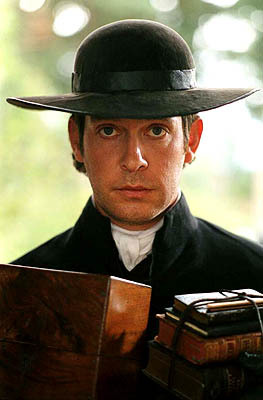
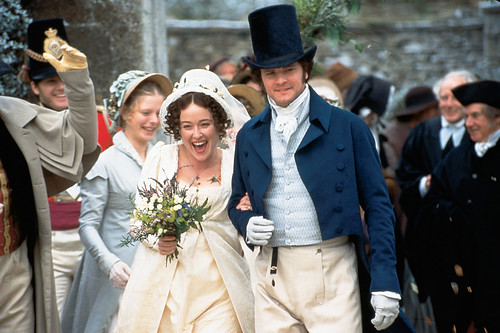
Pic: Fitzwilliam Darcy (Colin Firth) and the Gardiners, PP 1995, from this site.

Sunday, 19 July 2009

Jane Austen Quote Week 65

Those of you who subscribe/follow or site would have received the previous quote I posted earlier about Mansfield Park. A very gorgeous quote… which unfortunately has to be deleted for it has been posted in February, as shown here. We were doing house cleaning in BJ Fansite, placing each quote into one of Jane Austen’s book (or letter), but I haven’t done that particular one for MP. Hence, I made this silly mistake, completely unaware that Michelle has posted it earlier. My apologies Michelle, and to you all.

Now, after the said hiccup, let’s move on with the replacement quote, part of which due to time constrain I have to steal from the very left bar of this site. Luckily, I was the one who placed it there, and since it has never been discussed in this manner (under the Jane Austen Quote of the Week, I mean), I have no guilt whatsoever to reiterate it here.

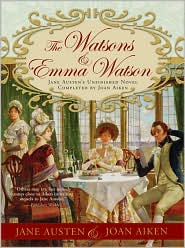
The Watsons, Part 1. Emma Watson was talking to her elder sister about her other sister named Penelope who stole the elder Miss Watson’s lover Purvis. The quotes were taken from classiclitabout.com, for my copy is in the office.

QUOTE

"Not much indeed -- but you know we must marry. I could do very well single for my own part; a little company, and a pleasant ball now and then, would be enough for me, if one could be young forever; but my father cannot provide for us, and it is very bad to grow old and be poor and laughed at. I have lost Purvis, it is true; but very few people marry their first loves. I should not refuse a man because he was not Purvis. Not that I can ever quite forgive Penelope."

/…/

"I am sorry for [Penelope’s] anxieties," said Emma; "but I do not like her plans or her opinions. I shall be afraid of her. She must have too masculine and bold a temper. To be so bent on marriage, to pursue a man merely for the sake of situation, is a sort of thing that shocks me; I cannot understand it. Poverty is a great evil; but to a woman of education and feeling it ought not, it cannot be the greatest. I would rather be teacher at a school (and I can think of nothing worse) than marry a man I did not like."

END OF QUOTE

Of course at that time, being a governess (or a school teacher) is considered rather ‘less’ than being a gentlewoman of no profession. But I see that Jane Austen’s writing here was true to her heart. Although here we may find the authoress’ belief that there may be someone better behind the corner, still in her unfinished novel there echoes the same persistence not to marry, unless for love. Strong, wonderful woman.

Side note: Had Jane Austen finished The Watsons, it would be a very interesting novel. I read it a while ago without truly devouring it, and I'd like to re-read it again, carefully this time.


Pic: Cover to The Watsons & Emma Watson, by Jane Austen and completed by Joan Aiken, from Barnes & Nobles. I'd like to know if anyone has read it, and what you think of it?

Saturday, 11 July 2009

Jane Austen Quote - Week 64 by Linda


I picked up “Sanditon” again and found another treasure in Chapter 7:


I have read several of Burns's poems with great delight," said Charlotte as soon as she had time to speak. "But I am not poetic enough to separate a man's poetry entirely from his character; and poor Burns's known irregularities greatly interrupt my enjoyment of his lines. I have difficulty in depending on the truth of his feelings as a lover. I have not faith in the sincerity of the affections of a man of his description. He felt and he wrote and he forgot."


I had certainly heard of Robert Burns, the poet, but could not remember any specifics about the man or his works. So I went to Google to dig up some dirt on his character and ‘known irregularities’.


Miss Austen and I seem to have the same propensity to judge a writer’s works by his/her character. I like to know a bit about a writer as I read what she/he wrote. Well, I found the ‘dirt’. It appears that he was a bit free in his love life by bestowing his heart among several ‘ladies’. Miss Austen and I would hardly approve, I dare say. Therefore, we conclude it must have ‘tainted’ his works. Not only that, but also I noticed that he wrote with a Scottish accent, which I have a bit of trouble translating. Well, I have certainly been forewarned and shall take a bit of care if I happen to pick up a Burns book, or should that be “burns his book”? I shall leave it for you to determine! And please, do not think that I have any prejudices against the Scots, for I am part Scot myself. Any enlightenment you may have on this subject is most welcome.


Linda the Librarian


Pic: Robert Burns, from dontwastewine

Friday, 3 July 2009

Jane Austen Quote of the Week- Week 63

This week it is actually more a scene which I have chosen; it is a hilarious and truly adored scene from Pride and Prejudice and I dont believe we have included it in our quote of the week as of yet.

I have decided to quote parts of the scene where Mr Collins attempts to propose to Lizzy. One of my favourite elements is Mr Bennet's response to Mrs Bennet's stress. I have highlighted some of my favourite lines from the passages taken from this scene displayed below:

"Oh! Mr Bennet, you are wanted immediately; we are all in an uproar. You must come and make Lizzy marry Mr Collins, for she vows she will not have him, and if you do not make haste he will change his mind and not have her.''
Mr Bennet raised his eyes from his book as she entered, and fixed them on her face with a calm unconcern which was not in the least altered by her communication.
"I have not the pleasure of understanding you,'' said he, when she had finished her speech. ``Of what are you talking?''
"Of Mr Collins and Lizzy. Lizzy declares she will not have Mr Collins, and Mr Collins begins to say that he will not have Lizzy.''
"And what am I to do on the occasion? -- It seems an hopeless business.''
"Speak to Lizzy about it yourself. Tell her that you insist upon her marrying him.''
"Let her be called down. She shall hear my opinion.''
Mrs Bennet rang the bell, and Miss Elizabeth was summoned to the library.
"Come here, child,'' cried her father as she appeared. "I have sent for you on an affair of importance. I understand that Mr Collins has made you an offer of marriage. Is it true?'' Elizabeth replied that it was. ``Very well -- and this offer of marriage you have refused?''
"I have, Sir.''
"Very well. We now come to the point. Your mother insists upon your accepting it. Is not it so, Mrs Bennet?''
"Yes, or I will never see her again.''
"
An unhappy alternative is before you, Elizabeth. From this day you must be a stranger to one of your parents. -- Your mother will never see you again if you do not marry Mr Collins, and I will never see you again if you do.''
Elizabeth could not but smile at such a conclusion of such a beginning; but Mrs Bennet, who had persuaded herself that her husband regarded the affair as she wished, was excessively disappointed.
"What do you mean, Mr Bennet, by talking in this way? You promised me to insist upon her marrying him.''
"My dear,'' replied her husband, "I have two small favours to request. First, that you will allow me the free use of my understanding on the present occasion; and secondly, of my room. I shall be glad to have the library to myself as soon as may be.''

I love this brief window into the personality and character of Mr Bennet; it is enlightening. Jane almost keeps him in the shadows and then wham, he appears with the delivery of such classic lines. A fascinating character.

Slightly later in the scene, Charlotte Lucas has come to visit the family for the day and we get the completely contrasting and slightly imposting character of Mrs Bennet in full bloom!

"Aye, there she comes,'' continued Mrs Bennet, "looking as unconcerned as may be, and caring no more for us than if we were at York, provided she can have her own way. -- But I tell you what, Miss Lizzy, if you take it into your head to go on refusing every offer of marriage in this way, you will never get a husband at all -- and I am sure I do not know who is to maintain you when your father is dead. -- I shall not be able to keep you -- and so I warn you. -- I have done with you from this very day. -- I told you in the library, you know, that I should never speak to you again, and you will find me as good as my word. I have no pleasure in talking to undutiful children, -- Not that I have much pleasure indeed in talking to any body. People who suffer as I do from nervous complaints can have no great inclination for talking. Nobody can tell what I suffer! -- But it is always so. Those who do not complain are never pitied.''

The last line, "those who do not complain are never pitied" is actually the line which drew me to think of the whole scene. In the last few weeks I have been going to a series of interviews in search of a new job. I realised afterwards when the first few returned to me with disappointment that I did not want pity. I never want pity. So I continued to think only in a positive light and see the rejections as a chance to work on what I had done wrong. Yesterday I had an interview and I got the job which I am very happy about. So this line is very wise and something we should all adhere too.

Pic 1: Mr Collins

Monday, 29 June 2009

Once upon a “Bad Tuesday”

The following is Mariana’s companion article for the marvellous calendar that she had made earlier and I’ve posted here. Thank you so much, Mariana!

-xxx-

This is something I’ve started a while ago after reading Ellen Moody’s calendars. Like her I was trying to find patterns in Jane’s books, just that I was looking for them hoping to make the connection with Tom Lefroy –the dates and events that matched those from Jane’s surviving letters written in the years she met and ‘flirt’ with her “Irish friend”.

As per one of her articles, “A Startling Pattern: Bad Tuesday”, Tuesday seems to be “repeatedly a pivotal day in Austen's novels, a day on which some embarrassing or mortifying incident or series of incidents occurs (at a ball, a change of home) which sets off an important change in the plot.”


In P&P, the last ball at Netherfield during which Darcy becomes aware that everyone is saying Bingley will marry Jane and leads him to separate them, occurs on a Tuesday. There is a very similar event in S&S: the first traumatic day which is specifically named as Tuesday is the day when Marianne and her family expected Willoughby to make her an offer, but instead he comes to tell he’s been sent away to London by his reach aunt. Another book in which Jane chose to send away the gentleman on a Tuesday is Emma. Frank leaves Highbury on Shrove Tuesday but not before trying to confess to Emma his love for Jane and their secret engagement.

After reading Jane’s letters ‘between the lines’ and with the help of BJF JA/TL Timeline article, here’s my special calendar with all those pivotal Tuesdays I’ve found in her surviving letters.

In Jane’s first 2 surviving letters, one day gets mentioned repeatedly which happens to be a Tuesday: January 19th 1796, and I believe this was the day Tom Lefroy returned to London, after their last ball at Ashe, during which Jane was also expecting an “offer” (one reason to believe that Jane was talking about an offer in marriage is her statement: I mean to confine myself in future to Mr. Tom Lefroy” and that someone drew Tom’s picture for her):

1. On Sunday January 10 1796, Jane added few more lines to her 1st surviving letter which she started the day before. She talks about her cousins, the Coopers, but I believe this was more a sing of her disappointment in not having her sister home before Tom’s departure, and so not able to meet her “Irish friend”: “By not returning till the 19th you will exactly contrive to miss seeing the Coopers, which I suppose it is your wish to do.”

2. At the beginning of her 2nd surviving letter (January 14-16, 1796) Jane shows again disappointment in not having Cassandra coming home before Tom’s departure. She’s even telling her sister how little she cares about the ball that will be held when Tom is gone (I assume this one was on Friday like all previous balls): “I do not at all expect to see you on Tuesday, since matters have fallen out so unpleasantly; and if you are not able to return till after that day, it will hardly be possible for us to send for you before Saturday [January 23], though for my own part I care so little about the ball [January 22] that it would be no sacrifice to me to give it up for the sake of seeing you two days earlier.”


Another Tuesday I’ve discovered in her 1st surviving letter is the day she visited Mrs Lefroy at Ashe: January 5th, 1796.: “…he [Tom] is ashamed of coming to Steventon, and ran away when we called on Mrs. Lefroy a few days ago.” Most likely the visit took place after she sent her missing letter (January 2-4, 1796) and that’s the reason I think it was on Tuesday. By saying “few days ago” on Saturday morning, it means that more than 2 days passed since this visit.

This is matching again a Tuesday in P&P – the day when Miss Bingley writes to Jane inviting her for dinner at Netherfield Park. Probably the ball at Ashe has been confirmed, or announced during this visit (same as in P&P), after Jane sent her missing letter, and that’s the reason to have it communicated to Cassandra only on January 9th: “I can expose myself, however, only once more, because he leaves the country soon after next Friday [another reason to believe Tom’s departure probably took place onTuesday19th and explains Jane’s hopes to have her sister returning home till this date] , on which day we are to have a dance at Ashe after all.”


One more important Tuesday I’ve ‘picked’ from Jane’s letters is the day she spent in Cork Street –London, August (23) 1796, on the same street if not the same house, where Tom’s great-uncle Langlois lived. Although it can not be confirmed, I still believe this short letter and the missing one (25-29 August, 1796) sent from Rowling-Kent are related to Tom Lefroy. In the first letter we have from Kent, Jane apologizes for the length of her previous one “I am sorry that you found such a conciseness in the strains of my first letter” and promises to make amends for it when they will meet “by some elaborate details, which I shall shortly begin composing”. Jane sent 3 more letters to her sister before returning home, but none of them contained those secret details that I believe were referring to Tom Lefroy and her short visit in Cork Street. Most likely they’ve been communicated in person, as Jane mentioned, when she met Cassandra – an indication these details were not safe to be sent in a letter.

There are similar events in P&P and S&S: Jane Bennet is encouraged by her sister to go to London hoping she’ll meet Mr Bingley again, but instead she’ll send letters (the first one very short) filled with “elaborate details” about Miss Bingley’s plan to have her brother married to Georgiana Darcy: “an event which will secure the happiness of so many”. In S&S, the day Willoughby leaves his card, which Marianne sees when they come in form the morning's drive, it’s mentioned again to be a Tuesday -a week after their arrival in London. Also, the central traumatic moment wherein Willoughby humiliates Marianne at the ball is dated, as per Ellen’s calendar, on Tuesday January 16, 1798.


The last pivotal date for Jane and Tom’s story seems to be again a day when he returned to London after visiting Ashe, in November 1798. Most likely Tom’s departure was related to his brother’s “imprudent marriage” (November 5th, 1798 -reference JA/TL timeline) and probably it took place the day after the news reached them, on Tuesday 6th or Tuesday 13th –the day before Mrs Lefroy’s visit to Steventon (Wednesday November 14th).

This is again only an assumption but it just happens to be a very good match of a pivotal date in S&S: Tuesday November 7th, 1797 (as per Ellen Moody’s calendar) is the day when Willoughby has been sent away to London by his reach aunt. Between 6 and 7 November, Mrs. Smith had discovered Willoughby's affair with Miss Williams and demanded Willoughby marry her as price of her forbearance.


…and the link for a ‘matching video’ on YT: http://www.youtube.com/watch?v=0cYTRTOaW3k&feature=channel

All pictures belong to Mariana Gheorghe

Sunday, 28 June 2009

Jane Austen Quote of the Week – Week 62

My apologies for the belated quote this week, but I finally managed to pull something from Jane Austen’s first written novel. Northanger Abbey, Chapter X.

It would be mortifying to the feelings of many ladies, could they be made to understand how little the heart of man is affected by what is costly or new in their attire; how little it is biased by the texture of their muslin, and how unsusceptible of peculiar tenderness towards the spotted, the sprigged, the mull or the jackonet. Woman is fine for her own satisfaction alone. No man will admire her the more, no woman will like her the better for it. Neatness and fashion are enough for the former, and a something of shabbiness or impropriety will be most endearing to the latter.

I am most impressed by the quote in bold. Woman is fine for her own satisfaction alone. Why, is it not so true? We often unconsciously or consciously compare ourselves with other women, or with what a person of opposite gender that we admire would think of us. But is it not amazing to be happy, just happy and accepts ourselves the way ourselves are? Accepting myself the way I am, with flaws and blemishes? For each and everyone of us is unique in our own ways?

Oh dear oh dear. Seemingly, I have found my new favourite quote. Thank you so much, Jane!

Pic: Catherine Morland, from Mollands.net (submitted by Laurel Ann)

Monday, 22 June 2009

Mariana's amazing calendar!

Our dearest Mariana gave a belated but very beautiful and much appreciated birthday gift for Becoming Jane Fansite. A collection of Jane Austen & Tom Lefroy calendar, tailored-suit for December 1795 until November 1798. Very handsome indeed and deserves to be printed out and framed to admire. So thank you so much Mariana, and hope all of you enjoy them as much as I do! All pictures belong to Mariana Gheorghe.

Christmas time December 1795


1 January 1796

2 January 1796

5 January 1796
8 January 1796
9 January 1796
16 January 1796

3 August 1796


October 1796

17 November 1798


Saturday, 20 June 2009

Jane Austen Quote Week 61

Funny that we’re into Sanditon since last week, for I’d pick another Sanditon theme a month ago just for preparation. Well, Linda dearest, great mind and all…

Anyway, Sanditon quote this week is an inspiration of healthy attitude towards our own health. Or rather, human’s occasional unhealthy attitude towards health as described here, from Sanditon Chapter 10:

‘Disorders and recoveries so very much out of the common way, seemed more like the amusement of eager minds in want of employment than of actual afflictions and relief. The Parkers were no doubt a family of imagination and quick feelings – and while the eldest brother found vent for his superfluity of sensation as a projector, the sisters were perhaps driven to dissipate theirs in the invention of odd complaints.’

The Parker sisters should really talk to Mrs. Bennet, for she also loved to complain about her health in order to gain other’s compassion (or perhaps due to lack of conversational themes). And of course Jane Austen despised such a habit. Why, she was very ill at the end of her life, but she still maintained a high spirit and even wrote some poems a few days before her death. What a woman!

But of course the bottom-line is that we should maintain our health, our prime capital the best we can. And if we unfortunately are presented with illness, we must seek beyond the sickness to see what caused it and what changes we can make in our lives to alleviate it. We are so fortunate to live in the 21st century with advance medical knowledge; one would wonder why there are souls who still take pleasure in demanding attentions from others by exaggerating their illness, instead of taking self-command and responsibility to deal with it.

I hope I’m not too harsh, and that dear friends here do not misinterpret my words as being cruel or so. I certainly do not mean to offend anyone who is currently ill and unable to perform as usual. I used to be ill myself, and I realised the power and importance of self-commitment to recover and stay healthy ever since. Blessings for you all.

Pic: Florence Nightingale, the Western epitome of ground-breaking medical woman. I wish Jane Austen would have known her (or did Florence read Jane’s novels?). Picture from Wikipedia.


Sunday, 14 June 2009

Jane Austen Quote - Week 60 by Linda


From Sanditon, Chapter 8 in the Penguin Classics:


The two ladies continued walking together till rejoined by the others, who, as they issued from the library, were followed by a young Whitby running off with five volumes under his arm to Sir Edward’s gig - and Sir Edward, approaching Charlotte, said, "You may perceive what has been our occupation. My sister wanted my counsel in the selection of some books. We have many leisure hours and read a great deal. I am no indiscriminate novel reader. The mere trash of the common circulating library, I hold in the highest contempt. You will never hear me advocating those puerile emanations which detail nothing but discordant principles incapable of amalgamation, or those vapid tissues of ordinary occurrences from which no useful deductions can be drawn. In vain may we put them into a literary alembic; we distil nothing which can add to science. You understand me, I am sure?"


"I am not quite certain that I do. But if you will describe the sort of novels which you do approve, I dare say it will give me a clearer idea."


“Most willingly, fair questioner. The novels which I approve are such as display human nature with grandeur; such as show her in the sublimities of intense feeling; such as exhibit the progress of strong passion from the first germ of incipient susceptibility to the utmost energies of reason half-dethroned; where we see the strong spark of woman’s captivations elicit such fire in the soul of man as leads him – (though at the risk of some aberration from the strict line of primitive obligations) - to hazard all, dare all, achieve all, to obtain her. Such are the works which I peruse with delight and, I hope I may say, with amelioration. They hold forth the most splendid portraitures of high conceptions, unbounded views, illimitable ardour, indomptible decision. And even when the event is mainly anti-prosperous to the high-toned machinations of the prime character -- the potent, pervading hero of the story -- it leaves us full of generous emotions for him; our hearts are paralyzed. T’were pseudo-philosophy to assert that we do not feel more enwrapped by the brilliancy of his career than by the tranquil and morbid virtues of any opposing character. Our approbation of the latter is but eleemosynary. These are the novels which enlarge the primitive capabilities of the heart; and it cannot impugn the sense or be any dereliction of the character of the most anti-puerile man, to be conversant with.”


"If I understand you aright," said Charlotte, "our taste in novels is not at all the same."


END OF QUOTE


This is a very long quote, but I could not bear to leave anything out in order to shorten it. The paragraphs following my quote are also recommended for more enlightenment on the subject of ‘novels’. I used the Penguin Classic edition, 1974 with an introduction by Margaret Drabble that had Lady Susan and The Watsons also. I had marked up my copy and there were markings such as “T.L.?” where I had wondered if she were writing about you-know-who. I will try to get to that quote later on. Sanditon is the last book Jane wrote and therefore I can see it is highly charged with meanings about several subjects. It bears a lot more looking into. I get the sense that there are more treasures to be found in it.


My main point/question is: how does the opinion of novels, quoted above, reflect her own opinions/writings?


Linda the Librarian


Pic: 'Girl Reading At a Sunlit Window' by Carl Vilhelm Holsoe, from Booksdofurnisharoom

Thursday, 11 June 2009

Becoming Jane piano music sheet

Michelle, you are to love this information. Thanks to our new friend Janeen; she informed me of the existence of a wonderful piano book containing piano music scores of many period drama musics, including Becoming Jane's! The Piano Solos Film Music: The Costume Drama Collection. BJ music scores in this adoring music book are An Adoring Heart, First Impression, Lady Gresham, Runaways, and Selbourne Wood.

But not only that, dear friends, for the book also has piano sheet for Dangerous Liaison, The Portrait of a Lady, A Passage to India, Pride and Prejudice, Romeo and Juliet, Sense and Sensibility, and Little Women, to name some.

It is a bit dear, GBP 14.95, and only available in themusicroom.com in UK (no, not even in Music Room Australia!), so perhaps Rachel is the lucky one here to have a low shipping price :-D

Janeen has offered to write a review on this music book once she receives hers; so I'm very eager to post her review here for us all to read!

Pic: Front cover to "The Piano Solos Film Music: The Costume Drama Collection", from themusicroom.com

Thank you Mariana! BJF toddler two years old!

If I can hide myself like an ostrich hiding its head underground, I would. For I forgot (EEPS!) that last May 24 was our anniversary! Yes, Ladies and Gentlemen... Becoming Jane Fansite is two years old already!

And the one dearest friend who reminded me (us) is none other than our Mariana! She even sent this beautiful Youtube video by Needingyourvoice as a belated birthday present.


Beautiful, beautiful video indeed! No wonder it won first place in AmeliaKate09's Valentines Day Contest and first place in Volz545's Jane Austen Character/Couple contest. I have no idea how I missed that! Oh wait... I was in the middle of the sea, doing field work. No wonder :-D

Sunday, 7 June 2009

Quote of the Week- Week 59

My chosen quote for this week is from Pride and Prejudice. I think that the character of Miss Caroline Bingley is fascinating and is often forgotten in the midst of all the other fantastic Austen characters. She is a brilliant example of Jane's ability to observe people and their flawed personalities. Miss Bingley is so shallow and so vindictive; a great character to keep the audience entertained.

She has always felt alot (in the only way she knows) for Mr Darcy. In chapter 11, she is fully aware how Darcy has started to devote his attention to Elizabeth and she hates it. To put the scene in context, Elizabeth has just walked from her home to be with her sister who has taken ill in the Darcy/Bingley company. Miss Bingley dislikes reading but in an attempt to impress Mr Darcy, she is reading the second volume of the novel in which he is currently reading. In an exasperated desperation for attention, she exclaims:

"How pleasant it is to spend an evening in this way! I declare after all there is no enjoyment like reading! How much sooner one tires of anything than of a book!—When I have a house of my own, I shall be miserable if I have not an excellent library.”

Elizabeth is frank and openly speaks her mind to Darcy, whereas Caroline is very reserved in an effort to please and endear him. Jane Bennet may have been fooled by Carolines apparent friendliness but Elizabeth always saw through her mask. Caroline Bingley is in complete contrast to Elizabeth Bennets genuine, intelligent persona and this is what makes the chemistry between these characters so intriguing.


Pic 1: Elizabeth and Caroline Bingley
Pic 2: Elizabeth and Darcy

Saturday, 30 May 2009

Quote of the Week 58

I am luckily in the process of studying Persuasion ... how can it be work?! I am also mid-way through preparations for an upcoming Shakespeare exam, so I had to seize on this weeks' quote. It's from Persuasion, chapter 11. Anne is in Lyme, and is entertaining Benwick:


For, though shy, he did not seem reserved; it had rather the appearance of feelings glad to burst their usual restraints; and having talked of poetry, the richness of the present age, and gone through a brief comparison of opinion as to the first-rate poets, trying to ascertain whether Marmion or The Lady of the Lake were to be preferred, and how ranked the Giaour and The Bride of Abydos; and moreover, how the Giaour was to be pronounced, he showed himself so intimately acquainted with all the tenderest songs of the one poet, and all the impassioned descriptions of hopeless agony of the other; he repeated, with such tremulous feeling, the various lines which imaged a broken heart, or a mind destroyed by wretchedness, and looked so entirely as if he meant to be understood, that she ventured to hope he did not always read only poetry, and to say, that she thought it was the misfortune of poetry to be seldom safely enjoyed by those who enjoyed it completely; and that the strong feelings which alone could estimate it truly were the very feelings which ought to taste it but sparingly.


This is a very different type of quote for me, and I love it ... Anne is a magnificently constructed character - I wouldn't mind having her for a friend! (In the flesh, anyway.) I believe the power of poetry lies in its ability to say so much, in so few words. I love Anne's thoughts, regarding poetry and Benwick: all good things in moderation. The dangers of too much inward literary excess??

One of my greatest pleasures in life is finding my soul in anothers' written words. Sometimes it's poetry, sometimes a play, a diary, a novel. It would be ideal for this communion through words to have an outward equivalent, but sometimes life doesn't provide for that. At any rate, I love Anne's thoughts, and I'm going to continue dwelling on them. Brilliant novel.


Pic: Anne Elliot from: muohio

Saturday, 23 May 2009

Jane Austen Quote – Week 57

Jane Austen has a very unique advice for family planning! But of course; knowing well that excessive number of children did not bode well with family’s prosperity, particularly if they were poor. Well, or at least she was clever enough to suggest a simple method of family planning, in a dark time where healthy birth control was unheard of. This is from a letter where she was talking about a Mrs. Deedes giving birth to another child:

I would recommend to her and Mr D. the simple regimen of separate rooms.

LOL! I say: laugh out loud! What a witty woman! Makes me wonder why they never thought of having a decent family planning program in ye olde days. Perhaps due to lack of hygienic technology...

By the way, the quote was taken from Jane’s letter to Fanny Knight, 20-21 February 1817, a few months before Jane’s own death. Obviously, she still retained her sense of humour. Oh, and I snatched the quote from Dominique Enright’s very interesting compilation of ‘The Wicked Wit of Jane Austen’, p. 114. Amazing read, truly.

Pic: four cute children are already rather unmanageable. How about 8 or 10? Yeah, these are Victorian children, not Georgian... From this site

Emma- open-air theatrical production

My most recent post was about an event in the uk and now I have another for you Brit fans out there....or others who dont mind travelling a considerable distance!

In various open-air locations around the uk, there is to be a theatrical version of Emma this summer.

For more details, please visit the heartbreak productions site

The tour begins on July 1st in Leamington Spa and ends on August 29th at the national trust site, Fountains Abbey in North Yorkshire.

I am going to look into getting tickets this weekend as some of the venues are beautiful in their own right; add Emma and Mr Knightley into the mix and it will be magical!

Pic: Emma and Knightley

Friday, 15 May 2009

Quote of the Week 56 by Linda

Let us take a look at the happy ending in the final paragraph of Pride and Prejudice:

With the Gardiners, they were always on the most intimate terms. Darcy, as well as Elizabeth, really loved them; and they were both ever sensible of the warmest gratitude towards the persons who, by bringing her into Derbyshire, had been the means of uniting them.

What I gather from this is that we should be grateful for all events in our lives because we never know which event may result in something good (that we would wish for). We take the good with the bad.

Alas, we may even learn a lesson from the bad. To top that, a strange thing happened on the way home while listening to the radio. A song came on and the few words I heard made my ears perk up. The words were: Some of God's greatest gifts are unanswered prayers. The song was by Garth Brooks named “Unanswered Prayers”. Those particular words were in reference to the fact that in his youth he had prayed for a special girl at school and it didn’t happen. Instead he ended up with his most beloved wife for which he thanked God for his ‘unanswered prayer’.

So you see, we cannot be certain about the outcome of the good/bad events of our lives. ‘Tis best left to the Higher Power.

Linda, your Friendly Philosopher, er, the Librarian


Pic: Lizzie & Darcy (1995) from: Flickr

JA Fans In London

We have received a very exciting email today from Ali at Faber and Faber Publishing House in London. On Saturday 27th there is a 'How to Read: Jane Austen' course.

I am going to paste the information she provided below:

Saturday 27 June 2009:

Faber and Faber, Bloomsbury House, 74-77 Great Russell Street, London WC1B 3DA

In the first of an exciting series of How to Read courses from the Faber Academy, John Mullan will lead you through the intriguing minutiae of Austen’s fiction, believing that the closer you look, the more you see.

Virginia Woolf said that ‘of all great writers she [Austen] is the most difficult to catch in the act of greatness’, but catching this act is our purpose. We will examine the content of her novels – her interest in courtship, or money, or impoliteness – but also at how she writes. The classes are designed to help readers recognise the audacity of some of Austen's narrative techniques and see that this genteel and conservative woman was a great innovator in the art of fiction. Quite simply, this is a day for those who love Jane Austen’s novels.

The day will take place at the beautiful Georgian offices of independent publisher, Faber and Faber, and there are no hard and fast criteria for attendance, save the following:
To have read Jane Austen’s novels
To come with a lively, open mind
To ask interesting questions and be prepared to have your opinions challenged

Course cost: £100 (inclusive of VAT)

Coming soon: Jeanette Winterson on Virginia Woolf; John Carey on William Golding; Claire Keegan on Anton Chekhov; Maxim Jakubowski on Raymond Chandler.
Call Patrick on +44 (0) 20 7927 3822 for more details


Course outline
10-10.30 A cunning Jane Austen Literary Quiz
10.30-11.30 Sense and Sensibility and Pride and Prejudice: topics - illness and letters
11.30-11.45 Coffee
11.45-12.45 Mansfield Park: topics - acting and dialogue
12.45-1.45 Lunch
1.45-2.45 Guest speaker on Austen's life
2.45-3.45 Emma: topics - blunders and free indirect style
3.45-4 Tea
4-5 Persuasion and Northanger Abbey: topics - feelings and Bath

About the tutors

John Mullan is Professor of English at University College London. He is the author of How Novels Work (OUP) and Sentiment and Sociability: The Language of Feeling in the Eightenth Century (OUP). He has published widely on eighteenth- and nineteenth-century literature. A broadcaster and journalist as well as an academic, he writes a weekly column on contemporary fiction for The Guardian.

About Faber

Faber and Faber is the last of the great independent publishing houses in London. We were established in 1929 by Geoffrey Faber and our first editor was T. S. Eliot. Among our list of authors we are proud to publish five Booker Prize winners and eleven Nobel Laureates. We are particularly well-known for our unrivalled list of modern poets and playwrights, as well as for publishing writers of prize-winning fiction and general non-fiction. More (link to
www.faber.co.uk)


To make a booking:

Contact Patrick on either
patrickk@faber.co.uk or +44 (0) 20 7927 3822Alternatively, write to Patrick Keogh, Faber and Faber, 74-77 Great Russell Street, London WC1B 3DA

If any of you do decide to take up this wonderful offer then please do ensure that you let all of us know your comments and thoughts on your experience.

Thanks again Ali for providing us with the information. For any of you that cant make this course (like me! Sob sob!), I did ask Ali whether any other similar courses may be repeated later in the year. She said that if they have the interest and many people sign up for this one then that may well be the case. I will keep you posted......


Saturday, 9 May 2009

Quote of the Week- Week 55

This weeks quote is from the wonderful Mansfield Park.


"Oh! I know nothing of your furlongs, but I am sure it is a very long wood, and that we have been winding in and out ever since we came into it; and therefore, when I say that we have walked a mile in it, I must speak within compass."

"We have been exactly a quarter of an hour here," said Edmund, taking out his watch. "Do you think we are walking four miles an hour?"

"Oh! do not attack me with your watch. A watch is always too fast or too slow. I cannot be dictated to by a watch."

A few steps farther brought them out at the bottom of the very walk they had been talking of; and standing back, well shaded and sheltered, and looking over a ha-ha into the park, was a comfortable-sized bench, on which they all sat down.


This is taken from chapter 9 of the novel and is spoken by Mary Crawford (this antagonist gets all the best lines!) Mary Crawford, Fanny Price and Edmund Bertram are taking a walk in the wood and Mary and Edmund are debating the distance in which they have walked.

Mary is a very skeptical character and I think that there is some depth to this line (in bold). I might be completely wrong in my stance so please do correct me if you think I am.

I think that Jane Austen has some very philosophical thinking and is highly aware of not only the people, but the society and philosophy of her time. I think that we can see examples of this in her novels, i.e. my chosen quote of the week. I think that this line is questioning the concept of truth and certainty; highly philosophical principles. I love it.

I would really like to explore more of her lines to analyse them and wonder whether she sometimes did have a philosophical purpose when she was writing........


Pic 1: Mary, Edmund and Fanny, taken from the Austen Prose Site

Tuesday, 5 May 2009

We Have Knightley Photos!

Three photos of Johnny Lee Miller as Knightley Courtesy of Pemberley


What do you think! I think he looks five foot tall! Oh gosh, I am so horrid.


I've just seen new photos of Romola as Emma and I like them a lot better than the first offerings. New Austen to look forward to - much excitment. :)


Pics 1: Jonny Lee Miller as Knightley from: Pemberley
Pic 2: Romola Garai as Emma from: Romola Garai

Saturday, 2 May 2009

Quote of the Week 54

Rachel posted a beautiful quote from Emma last week, and in honour of the recent news about filiming of Emma 2009, I have chosen to quote from the same novel this week.


Emma & her family are en route to the Weston's Christmas Party, and she falls into discussion with her brother-in-law, John Knightley. He 'slyly' suggests that Mr Elton 'seems to have a great deal of good-will' towards Emma. She replies:

'I thank you; but I assure you you are quite mistaken. Mr Elton and I are very good friends, and nothing more,' and she walked on, amusing herself in the consideration of the blunders which often arise from a partial knowledge of circumstances, of the mistakes which people of high pretensions to judgment are for ever falling into; and not very well pleased with her brother for imagining her blind and ignorant, and in want of counsel. He said no more.

Emma, Chapter 13

I love the irony here. John Knightley is of course, correct, and Emma herself is missing the obvious signs in front of her. I love how we can convince ourselves of 'the truth' around us, misinterpreting other's motivations through the filter of our own desires.

Besides the irony (and fairly good summary of Emma), I love this quote because once again Miss Austen hits the proverbial nail on the head. '...she walked on, amusing herself in the consideration of the blunders which often arise from a partial knowledge of circumstances...' I can't count the number of times I have leapt to premature judgements which at best have been embarrassing and at worst ... well, acutely embarrassing! (and harmful, etc). 'Partial knowledge of circumstances' is a very curious state-of-being. Hmm. I need to keep thinking on this one. There is a lot in this little sentence, isn't there?!

Pics 1 & 2: Kate Beckinsale as Emma from: Strangegirl