Jane Austen Quote of the Week- Week Nineteen
She retorts:
"Your entire personality is a riddle, Mr. Knightley. I thought you overqualified."
Posted by
Rachel
at
23:27
2
comments
Labels: Emma, Quote of the Week
From Persuasion, Chapter 10:
Please excuse the length of the quote, but it is so wonderful that it begs to be put in context. Some (and I won’t mention Charlotte Bronte’s name) have said that Jane lacked passion. See my Passionate Passages page HERE where the aforementioned nameless person said: “the Passions are perfectly unknown to her.” After reading the Quote of this Week, I beg to differ, passionately!
Posted by
Anonymous
at
16:44
2
comments
Labels: Persuasion, Quote of the Week
This week my quote is from Northanger Abbey. Catherine and Henry are discussing Henry's brother's flirtations with Catherine's brother's fiancee. (yikes!) Henry says:
'No man is offended by another man's admiration of the woman he loves; it is the woman only who can make it a torment.'
Northanger Abbey, Chapter 19
This was one of those statements that made me stop reading, and reread it. It just demands a second reading! Everytime I read NA I stop at this quote, so I thought it belonged here on the blog. I don't have a massive opinion about it, I just wonder at it!
There is something lovely, I think, about hearing a masculine voice in this way. It speaks of such pride and love and tenderness, and I can fully believe Henry Tilney feeling this way about Catherine. Such a beautiful quote. It always makes me smile.
Pic: Felicity Jones as Catherine Morland from: The Lit Connection
Posted by
Anonymous
at
10:18
2
comments
Labels: Northanger Abbey, Quote of the Week
This is non-BJ related (actually, Atonement-related. Good movie. Michelle, where’s that Atonement assignment?!), but since I missed James McAvoy so much (and his Scottish accent!), these are three parts of an interview of James with Michael Parkinson. Oh, Billie Piper was there too, she’s pretty cute.
Enjoy!
Posted by
Icha
at
00:46
1 comments
Labels: Cast and crew
Ah… sweet sixteen… before Michelle’s turn next week (nudge!) for the sweet seventeen. Anyway, for it’s sweet 16, I should come up with something sweet and romantic. Here it goes, Emma Volume III, Chapter 13 (page 339,
Seldom, very seldom, does complete truth belong to any human disclosure; seldom can it happen that something is not a little disguised, or a little mistaken; but where, as in this case, though the conduct is mistaken, the feelings are not, it may not be very material. – Mr. Knightley could not impute to Emma a more relenting heart than she possessed, or a heart more disposed to accept of his.
Aaah… Knightley! I really think it was so sweet of him to admit his love to Emma in such a way, without too flowery a language and by accepting that neither he nor Emma was perfect (but their very imperfections actually add the chemistry between them). Such sweet tender truth, spoken by an old friend like Mr. Knightley. Emma would be a fool indeed not to love him!
Sorry Linda and Michelle dear, Mark Strong is compelling, but I just have to go with my Jeremy Northam this time… swoon…
Pic: George Knightley (Jeremy Northam) and Emma Woodhouse (Gwyneth Palthrow) from the Riskyregency.blogspot.com
Posted by
Icha
at
14:09
3
comments
Labels: Emma, Quote of the Week
I'm so happy to have so many passionate readers and talented friends to contribute to this website. Take a look at this gorgeous fanvid of Maria from Sweden (and Peanut!), dedicated to Pat Lovell. Pat chose the song, i.e. You're the One by Karen Carpenter. Brilliant! Thank you, Maria and Pat!
Posted by
Icha
at
20:11
2
comments
Labels: Fan-fiction and fandom, Music and dance
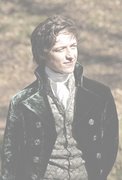
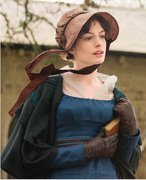
Dearest Mariana sent us a pack of lovely pictures of her renditions of Jane Austen (Anne Hathaway) and Tom Lefroy (James McAvoy), one of them is this one above.She also sent us the lovely photo of her Jane Austen/Becoming Jane collections. It's very cute, and makes me thinking about this... that fans and readers of this site can email me or Rachel (rachkingston@aol.com) for any great pictures of Jane Austen/Becoming Jane collections.
Pics: Mariana's private collections
Posted by
Icha
at
20:52
2
comments
Labels: Fan-fiction and fandom
I am delighted to announce that the winner of our quiz which we launched in commemoration of the anniversary of Jane Austen's death is...........
Posted by
Rachel
at
20:43
3
comments
Labels: About Jane Austen, Quiz, Trivia


Posted by
Rachel
at
02:01
1 comments
Labels: Persuasion, Quote of the Week
This helpful quote is from P&P, Chapter 56:
“You may ask questions which I shall not choose to answer.”
Here is the context for that gem. Lady Catherine is trying her utmost to get Elizabeth to deny that there is an engagement to Darcy:
"And can you likewise declare, that there is no foundation for it?"
"I do not pretend to possess equal frankness with your ladyship. You may ask questions which I shall not choose to answer."
“This is not to be borne! Miss Bennet, I insist on being satisfied. Has he, has my nephew, made you an offer of marriage?" 
"Your ladyship has declared it to be impossible."
Once again, Jane has given us a treasure. I only wish I had known that I had the right to dismiss unwanted questions in like manner. I could have never been so rude as to not answer a direct question. This has been my problem for ages since I was not taught in school nor learned by nurture that women should be treated as rational beings and have their person respected in all things.
Much to my dismay, I learned that lesson too late in my life and the damage had been done already. I could have been spared grief, and all the synonyms that accompany it such as remorse, anguish, pain, sorrow, misery, unhappiness, shame, suffering, and regret. That should give you a fairly good picture of what comes of being an obedient daughter and wife rather than using one’s own better judgment. Total, unreasoning obedience makes one into a 'doormat' which other people use to 'wipe their feet on' when things in their life go wrong or they are in a bad humor.
If you want a real eye-opener, read John Stuart Mill’s essay on “The Subjection of Women” that I recently stumbled into. You can read it here: The Subjection of Women

Posted by
Anonymous
at
09:43
1 comments
Labels: Pride and Prejudice, Quote of the Week
A rather bad news for Carrigglas, I'm afraid. And it's two months old news anyway, so there might be some other news I'm not aware of. Thanks to Rachel and Simon for the hints. News from The Post in

Carrigglas company is facing liquidation
18 May 2008
The development company behind Carrigglas Manor, the €160 million hotel and golf development in Longford, is set to go into liquidation, writes Ian Kehoe.
The directors of Thomas Kearns Developments have petitioned the High Court to wind up the company and have it placed into liquidation. The petition is due to be heard by the court early next month.
Construction work on the development has been stopped since last year, following a dispute over payments to contractors. Bowen Construction, the lead contractor on the Carrigglas Manor project, issued a letter to sub-contractors, informing them of payment issues.
The latest move by the directors of Thomas Kearns Developments has thrown the project further into doubt. It is understood that the directors of the company Tommy Kearns and his son Tom, own the development land in a personal capacity, and not through the company.
Bank of Ireland has a €35 million exposure to Carrigglas Manor, and recently asked accountancy firm Deloitte to assess the viability of the project.
The €160 million development was to include a four-star 96-bedroom hotel, spa, country club and 300 properties.
The project also includes a championship golf course designed by Retief Goosen, the South African golf star. Carrigglas was to have been financed through property sales, but suffered due to the downturn in the housing market.
Bowen Construction, has since made an €8 million bad debt provision in its accounts, arising from its involvement in Carrigglas.
Posted by
Icha
at
21:58
1 comments
Labels: About Tom Lefroy
I posted a trivia quiz this time last week. I hope you all enjoyed it.
Here are the answers:1. Of the following characters, who was fictional and who existed:
o Mrs Ann Radcliffe- REAL
o Mr Wisley- FICTIONAL (but based on the real Mr Bigg-Wither)
o Henry Austen- REAL
o Cousin Eliza de Feuillide- REAL
o Lady Gresham- FICTIONAL
o Benjamin Langlois- REAL
2. Which actor plays the character of Mr Wisley?
Laurence Fox
3. Which year did Mr George Austen (Jane’s father) die?
1805
4. Name Jane’s six novels in the order that they were published.
Sense and Sensibility (1811), Pride and Prejudice (1813), Mansfield Park (1814), Emma (1815), Northanger Abbey and Persuasion (both 1817)
5. What was the famous book that Tom gave to Jane in the library and told her to read?
Tom Jones by Henry Fielding
6. At the end of the film when she is reading an extract from one of her novels to the young Jane Lefroy, which novel is the extract from (clue: see post within the last week)?
Pride and Prejudice
7. Whilst at dinner with Tom’s uncle during their visit to London, Eliza describes how her husband was killed. Was he:- Hung- Guillotined- Missing, presumed dead- Drowned- Died of Cholera
Guillotined

8. What colour was the dress that Jane was wearing at the second ball when herself and Tom shared their first kiss?
Pale green
9. When Tom returns to Hampshire after news has broke that he is engaged to someone else, where does Jane learn that Mary, Tom’s new fiancé, is from in Ireland?
County Wexford
10. Which character from a Jane Austen novel is Lady Gresham supposedly modelled upon?
Lady Catherine from Pride and Prejudice
11. Which award did Becoming Jane win at the People’s Choice Awards?
Favourite Independent Movie
12. In the film, who sent the letter to the Judge telling him about Tom’s intentions to marry Jane and consequently ruining their chances of being together?
John Warren (friend of the Austen family)
13. What exactly does Tom say to Jane:- “I love you Jane, with all my heart and soul!”- “I'm yours, Jane, heart and soul!”- “You’re mine, Jane, heart and soul!”- “We are bound Jane, heart and soul!”
“I'm yours, Jane, heart and soul!”
14. When Tom arrives in Hampshire, Jane is reading a speech in celebration of which special event?
The engagement of her sister, Cassandra, to Thomas Fowle
15. What is Jane doing in the opening scene of the film?
Playing the piano
16. What does Jane read which prompts her to change her mind and return home to Steventon after Tom and herself had decided to elope?
A letter from Tom’s family thanking him for the money that he sent them on a regular basis
17. How did Jane communicate with her brother George?
Sign Language
18. What did George Austen (Jane’s father) do for a living?
Rector at Steventon parish

19. What was the name of the wood that Jane met Tom whilst they were both taking a walk?
Selbourne Wood
20. Which of Jane’s novels was influenced most by the work of Mrs Ann Radcliffe?
Northanger Abbey- due to its gothic nature
Pic 1: Jane and TomPic 2: Jane Writing
Pic 3: Tom and Jane dancing
Pic 4: Jane Reading
Pic 5: Tom In Selbourne Wood
Pic 6: In Love
Posted by
Rachel
at
17:28
3
comments
Labels: About Jane Austen, Awards, Becoming Jane, Cast and crew, Quiz, Trivia
Thanks to Maria, here's a freshly made fan-video to commemorate Jane Austen's death yesterday. It's lovely and touching, as always.
Say hi to peanut, Maria!
Posted by
Icha
at
12:32
4
comments
Labels: Fan-fiction and fandom
As Jane Austen’s most famous novel is Pride & Prejudice, I decided to pull out this quote to commemorate her passing away this 18 July. So it goes, as the studious Mary Bennet commented on Mr. Darcy:
“Vanity and pride are different things, though the words are often used synonimously. A person may be proud without being vain. Pride relates more to our opinion of ourselves, vanity to what we would have others think of us.”(PP, volume I, chapter 5).
Hmm… I’m ambivalent with Jane Austen’s definition of pride and vanity, because I have formed my own over the years (see below). I know, I know… it’s the first time I argue with what Jane wrote. It’s ironic that I should say so. But I think this blog is a free media where we can debate our dearest Jane Austen herself, not for debate sake, but for a healthy understanding.
And you know what? Many people will bash me for this; but I often think that Fitzwilliam Darcy often treaded on the definition of ‘vanity’ instead of ‘pride’ (well, not a secret here. My number one Austen hero is actually Mr. Knightley, not Mr. Darcy. Okay, sue me, but give me time to hide!)
I still recall what Darcy said to
Let’s see what Dictionary.com says about the two things:
Pride: a high or inordinate opinion of one's own dignity, importance, merit, or superiority, whether as cherished in the mind or as displayed in bearing, conduct, etc.
Vanity: excessive pride in one's appearance, qualities, abilities, achievements, etc.; character or quality of being vain; conceit: Failure to be elected was a great blow to his vanity.
Anyway, there is a very fine line between pride and vanity, so fine and thin that we usually fail to detect it. But it’s important to me to check whether at one point I’m experiencing pride or vanity. Hence, my indication is that:
1) If I’m ‘just’ proud of myself or someone or something, with a warm feeling inside because of what I/he/she/that something did/said, that’s pride. A warm feeling to acknowledge that it was truly something to be done/said, or that the state one’s in is truly something worth praising
2) But if I then compare such action/statement with someone else’s, saying that mine/his/hers is incomparably better than that someone else, then there’s red alert there. It’s possible that it’s not pride that I have. It’s vanity instead
3) Vanity can be shaken or blown by failure. Yet, it’s harder to destroy pride. Pride is the ability to walk with head straight despite our failure or defeat; for we know that we’ve done our best, and nothing is wasted
Hence, I’m sorry to say this, but to me Mr. Darcy’s accounts are often on the verge of vanity, hence he needed Elizabeth Bennet to balance him. Just like Emma Woodhouse. Her excessive pride of herself made her insensitive towards Miss Bates, hence George Knightley needed to rebuke her.
But Fanny Price would be someone I put directly into ‘pride’. She has her own pride that guides her through all the troubles, despite Mrs. Austen labeling her as ‘insipid’.
Of course, this is my 21st century definition of pride and vanity. Yours might be different. Thoughts?
Pic: A very nice water-colour picture of Darcy and Lizzy by Jane Odiwe
Posted by
Icha
at
02:00
8
comments
Labels: Pride and Prejudice, Quote of the Week
This Friday, 18 July, exactly 191 years ago, Jane Austen left this world. I understand that some fans are not comfortable with the commemoration of Jane’s death, and we honor their views. But for many, Jane’s death is also an important event to remember, for it is the day where the famous authoress, the strong, witty, and amazing woman we know, left us for good. Physically, but not at heart.
In accordance, we would like to conduct another quiz for Jane Austen fans (and also Jane/Tom fans). The winner will have a copy of the great-read ‘Confessions of a Jane Austen Addict’ sent to her/his abode by none other than the authoress of the book herself, Laurie Viera Rigler (thanks a lot Laurie!). The questions are as followed:
How to join? Just answer the three questions and send the answers to Icha (tara_parvati@yahoo.com) AND Rachel (rachkingston@aol.com). DON’T reply to the comment section, unless you want your answers copied by others.
Deadline:
The winner will be announced on 2 August 2008 at the latest and he/she will get a copy of the ‘Confessions of a Jane Austen Addict’ shipped to his/her address wherever that is, so long as it’s on Earth.
Pic: ‘Confessions of a Jane Austen Addict’ by Laurie V. Rigler
Posted by
Icha
at
00:17
0
comments
Labels: About Jane Austen, Quiz
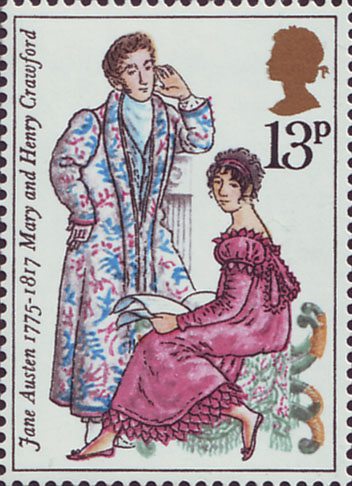
I am so torn this week - I have a handful of amazing quotes to post - but I have decided to go with Mary Crawford and Mansfield Park.
Posted by
Anonymous
at
07:43
3
comments
Labels: Mansfield Park, Quote of the Week
I thought that it would be nice to do a 20-question trivia quiz for our faithful fans who love the film, Becoming Jane, as much as us.


3. Which year did Mr George Austen (Jane’s father) die?
4. Name Jane’s six novels in the order that they were published.
5. What was the famous book that Tom gave to Jane in the library and told her to read?
6. At the end of the film when she is reading an extract from one of her novels to the young Jane Lefroy, which novel is the extract from (clue: see post within the last week)?
7. Whilst at dinner with Tom’s uncle during their visit to London, Eliza describes how her husband was killed. Was he:
- Hung
- Guillotined
- Missing, presumed dead
- Drowned
- Died of Cholera
8. What colour was the dress that Jane was wearing at the second ball when herself and Tom shared their first kiss?
9. When Tom returns to Hampshire after news has broke that he is engaged to someone else, where does Jane learn that Mary, Tom’s new fiancé, is from in Ireland?
10. Which character from a Jane Austen novel is Lady Gresham supposedly modelled upon?
11. Which award did Becoming Jane win at the People’s Choice Awards?

12. In the film, who sent the letter to the Judge telling him about Tom’s intentions to marry Jane and consequently ruining their chances of being together?
13. What exactly does Tom say to Jane:
- “I love you Jane, with all my heart and soul!”
- “I'm yours, Jane, heart and soul!”
- “You’re mine, Jane, heart and soul!”
- “We are bound Jane, heart and soul!”
14. When Tom arrives in Hampshire, Jane is reading a speech in celebration of which special event?
15. What is Ja
ne doing in the opening scene of the film?
16. What does Jane read which prompts her to change her mind and return home to Steventon after Tom and herself had decided to elope?
17. How did Jane communicate with her brother George?
18. What did George Austen (Jane’s father) do for a living?
19. What was the name of the wood that Jane met Tom whilst they were both taking a walk?
20. Which of Jane’s novels was influenced most by the work of Mrs Ann Radcliffe?
Posted by
Rachel
at
02:49
3
comments
Labels: About Jane Austen, Awards, Becoming Jane, Cast and crew, Quiz, Trivia
I read this essay, Pride & Prejudice by Beth Lau in A Companion to Romanticism, edited by Douglas Wu. First, I will briefly summarise the main theme of the essay, and then quote interesting passages for debate.
The theme of the essay is Pride and Prejudice as a Romantic work. The author identifies key characteristics of Romanticism in the novel, such as love of nature and individualism.
Considering Jane Austen as a writer living during the Romantic movement is extremely interesting. I hadn't made the connection until I studied the period a couple of months ago. Definitely fascinating. In this respect, Beth Lau's essay is an excellent introduction to Jane Austen and Romanticism. She considers the lack of "strong, overflowing emotion" (from a Romantic's viewpoint) and quotes a very interesting comment that, "for women of the Romantic period, rational behaviour was more revolutionary than emotionalism". (Male Romantics were revolutionary in their celebration of emotion.) Lau goes on to say that "Women, however, have traditionally been associated with emotion rather than intellect, and feminist writers fromt he Romantic period, such as Mary Wollstonecraft in her Vindication of the Rights of Women, insisted that women were capable of rational thought. Consider Elizabeth protesting to Mr Collins to consider her as, "...a rational creature speaking the truth from her heart".
(All emphasis my own)
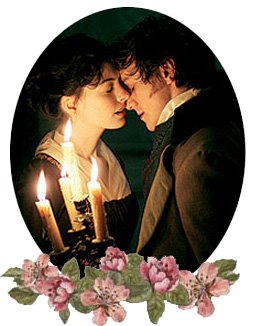
"...To the extent that Elizabeth does allow herself to be guided by her feelings, moreover, she falls into error. Bother her initial dislike of Mr Darcy and her attraction to Wickham prove misguided and result chiefly from Elizabeth's wounded pride, since Darcy scorned to dance with her at their first meeting, whereas Wickham singled her out for attention and intimate conversation during their first socil encounter. Impulsive subjective feelings, whether of love or of hatred, are untrustworthy, the novel seems to suggest. Instead, one ought to form one's opinion of another person gradually, after sufficient evidence has been gathered about that person's character, background and relationships with family members, dependents and friends. Thus, Elizabeth comes to respect Darcy after she sees his tasteful and well-managed estate and leans that he is a good brother, master and landlord, whereas her regard for Wickham dissipates when she finds out that he has been dishonest and unscrupulous in his dealings with others."
Right. Yes, Elizabeth is mistaken in her prejudice. But I disagree with Lau's comment that the novel suggests that "impulsive subjective feelings, whether of love or of hatred, are untrustworthy". We all know the power of a 'gut feeling' and of 'trusting intuition'. I think it's too broad a brush to suggest that ALL impulsive subjective feelings are untrustworthy. Not all of them are. The novel is balanced. Lizzie's 'impulsive subjective feelings' towards Bingley turn out to be very correct. And to take the idea a step further, I am reminded of this beautiful quote by Lebanese philosopher Kahlil Gibran:
"It is wrong to think that love comes from long companionship and persevering courtship. Love is the offspring of spiritual affinity and unless that affinity is created in a moment, it will not be created for years or even generations."
The second bolded paragraph I just hate. Hate! What can I say. Hate! Let me get back to it ... (comments section)
"Besides suggesting that informed judegment rather than impulsive emotions ought to guide women in their choice of a husband, other aspects of the novel's depictionso fcourtship and marriage appear anti-romantic. ... Moreover, there are no passionate love scenes in Pride and Prejudice. (!!!) When Elizabeth and Darcy finaly come to an understanding and agree to marry (Vol III, Ch. 16), the emotional intensity of the scene is downplayed; Elizabeth's and Darcy's words are briefly summarised, rather than presented verbatim, and no embraces or kisses are mentioned. One can even question how passionate Elizabeth's feelings for Darcy are at the end of the novel. (passes out) Her love is said to be based on 'gratitude and esteem' (p. 279), which may strike some readers as rather bland impulses."
What can I say?! There is nothing to say! "One can even question how passionate Elizabeth's feelings for Darcy are at the end of the novel". You have GOT TO BE KIDDING ME!!!!
"...Elizabeth's 'lively mind' seems checked and subdued in the second half of the novel. Susan Fraiman argues that Elizabeth's humiliation and self-castigation after she reads Darcy's letter mark a turning point, after which Elizabeth grows more passive and uncertain of her judgement and Darcy assumes greater power and authority as he 'magically set[s] everything straight', arranging Lydia's marriage, reuniting Jane and Bingley, and transporting Elizabeth to Pemberley (Fraiman, Unbecoming Women, p. 79). Readers may feel that Elizabeth's distinctive personality is repressed as she evolves from witty antagonist to grateful admirer of the proud and powerful Mr Darcy."
In regards to the first quote, Elizabeth is suffering the uncertainty and raging hormones of a first true love! She may be uncertain of her judgement of the Darcy situation, but this is only natural! It hardly suggests a full transformation of character, but rather her change in relation with a certain person ... I totally disagree with the final bolded sentence. No, I do not feel Elizabeth's witty charm is repressed by her love/relationship with Darcy! On the contrary - she is very much the same woman he fell in love with, the woman he admired for the "liveliness of her mind" (Ch. 60). And let me close with one of my favourite paragraphs, one of the last paragraphs of Pride & Prejudice, which illustrates the folly of the suggestion of Elizabeth-lost in her love for Darcy. 
Chapter 61: Pemberley was now Georgiana's home; and the attachment of the sisters was exactly what Darcy had hoped to see. They were able to love each other even as well as they intended. Georgiana had the highest opinion in the world of Elizabeth; though at first she often listened with an astonishment bordering on alarm at her lively, sportive, manner of talking to her brother. He, who had always inspired in herself a respect which almost overcame her affection, she now saw the object of open pleasantry. Her mind received knowledge which had never before fallen in her way. By Elizabeth's instructions, she began to comprehend that a woman may take liberties with her husband which a brother will not always allow in a sister more than ten years younger than himself.
Posted by
Anonymous
at
16:36
3
comments
Labels: Academia, Austen's books, Pride and Prejudice
I opened my Fiction Study Guide this morning, to begin work for Semester Two, and this is what I read:
Posted by
Anonymous
at
06:47
6
comments
Labels: Austen's books
It turned out that many fans are interested with the passage read by Jane Austen (Anne Hathaway) at the end of Becoming Jane, as the older Tom Lefroy (James McAvoy) listened pensively and looked at her fondly. Many a friend knew that the passage was taken from Pride & Prejudice, but quite a few as well unsure of which part of the book it was. Here’s the entire quote of the passage, taken from Chapter 8 of Volume III. That was after Lizzy learned of Lydia-Wickham's wedding plan, but before she knew that it was Mr. Darcy who basically saved her brat sister from destitute and loss of reputation (page # depending on the book version you have):
She began now to comprehend that he was exactly the man who, in disposition and talents, would most suit her. His understanding and temper, though unlike her own, would have answered all her wishes. It was an union that must have been to the advantage of both; by her ease and liveliness, his mind might have been softened, his manners improved, and from his judgment, information, and knowledge of the world, she must have received benefit of greater importance. But no such happy marriage could now teach the admiring multitude what connubial felicity really was.
Oohh… I want to cry again… Take a look at this beautiful YouTube passage (thanks to Arya27 for the video) to refresh your memory.
Pic: Screen shot from the 'Last Reading' scene of 'Becoming Jane'
Posted by
Icha
at
21:49
5
comments
Labels: Austen's books, Pride and Prejudice, Trivia
We are rolling a petition to reprint Nadia Radovici’s 1995 book titled ‘A Youthful Love: Jane Austen & Tom Lefroy?’ that is currently out of print. Please sign for the Radovici's Jane Austen & Tom Lefroy Petition and spread the words! Thanks a lot!
Jane Austen was born on
Cast:
Anne Hathaway - Jane Austen
James McAvoy - Tom Lefroy
Julie Walters - Mrs. Austen
James Cromwell - Revd. George Austen (Jane's father)
Maggie Smith - Lady Gresham
Anna Maxwell Martin - Cassandra Austen
Joe Anderson - Henry Austen
Lucy Cohu - Eliza de Feullide
Laurence Fox - Mr. Wisley
Philip Culhane - George Austen (Jane's brother)
Ian Richardson – Judge Langlois
Leo Bill – John Warren
Jessica Ashworth – Lucy Lefroy
Eleanor Methven – Mrs. Lefroy
Michael James Ford – Mr. Lefroy
Sophie Vavasseur – Jane Lefroy
Helen McCrory – Ann Radcliffe
Julian Jarrold - Director
Graham Broadbent, Robert Bernstein, & Douglas Rae - Producer
Adrian Johnston - Soundtrack
Kevin Hood & Sarah Williams - Screenplay writers
Eigil Bryld - Cinematography
Jane Gibson - Choreography
Eimer Ni Mhaoldomhnaigh - Costume
Gail Stevens & Gillian Reynolds - Casting
Jon Spence,
McAvoy knew his portrait of Tom could only come alive with the right Jane, and he found Anne Hathaway almost supernaturally suited for the part. “I don’t think we could have chosen anyone better to play Jane Austen," he says.
Jane Austen’s greatest love story was her own
‘I’m yours, Jane, heart and soul!’
~ Tom Lefroy to Jane Austen, ‘Becoming Jane’
Anything is to be preferred or endured rather than marrying without affection – JA,
Nothing can be compared to the misery of being bound without Love, bound to one, & preferring another – JA,
To be so bent on marriage, to pursue a man merely for the sake of situation – is a sort of thing that shocks me.
The film Becoming Jane has given us an image of Jane Austen that liberates our imagination. I envy readers of my book who come to it with Anne Hathaway’s image of Jane in their mind’s eye. You will not have to struggle against the image Cassandra created to see the Jane Austen who was young and pretty, lively and in love. Anne Hathaway’s skilful portrayal of Jane Austen in Becoming Jane shows that art can have as much power to bring us closer to the truth as facts themselves can.
Jon Spence,