Showing posts with label Production Notes. Show all posts

Thursday, 26 July 2007

Becoming Tom: James McAvoy Takes on Tom Lefroy

I’ve been missing James McAvoy so much, so here’s another copy from the U.S. Official Site about ‘Becoming Tom’, from the Production Notes (under ‘About the Film’). Gosh, I miss James’ Tom...

Becoming Tom: James McAvoy Takes on Tom Lefroy

When Jane Austen falls in love in BECOMING JANE, it is with the consummate Austen-style rogue, a wily young rake with both ambitions and notions. This is Tom Lefroy, about whose personality little is known, so the writers drew both on Austen's male characters and one fact that Lefroy's favorite book was Henry Fielding's comic novel Tom Jones, about a vigorously lusty yet kind-hearted young man, similar to the character Tom Jones himself to create a portrait of a man well aware of the powers of his charisma.

To play him, the filmmaker sought someone who had not been seen in this kind of role before, a modern, sexy, young leading man who could bring something new to the portrait. Julian Jarrold was soon put in mind of rising Scottish star James McAvoy, having directed in him in the British television series "White Teeth," well before McAvoy came to the attention of Hollywood playing the naive and youthful doctor who becomes personal physician to Forest Whittaker's Idi Amin in THE LAST KING OF SCOTLAND.

McAvoy was equally keen to work with Jarrold again. "With a lesser director, the film could have become some kind of parallel Pride and Prejudice but Julian made sure that did not happen," he says. "I've wanted to work with him again for years. He's got impeccable taste and elevates an ordinary film into an extraordinary one. He has expertly teased out the romance at the center of BECOMING JANE."

As he learned more about Tom Lefroy's high-stakes position as a young man with his family's hopes pinned on him, McAvoy developed empathy for his character's wild ways in the seedy gentleman's clubs of London. "Tom is under a lot of pressure," says McAvoy. "His job, as the eldest son, is to revive his family's ailing fortunes. He has been aware of that duty since the age of eleven or twelve. His Uncle Langlois took him away from his family and friends at an early age to train in law in London. It was an opportunity to elevate himself, marry well and, although he is a true non-conformist at heart, he does feel the weight of that responsibility on his shoulders. So he is a conflicted person and when you are experiencing that kind of conflict you do strange things." McAvoy continues: "Through his teenage years and early twenties, Lefroy goes off the rails a bit, but then he meets Jane. They are both non-conformists and I think recognize a kindred spirit in each other. Then, in our film, they fall in love."

As much as it is about becoming Jane, the film is also about Tom becoming a man of his times, facing the tragic reality that love must take a back seat to forging one's fortunes and keeping one's family commitments. "The interesting thing is that later in life Tom would conform completely, while Jane becomes a brilliant non-conformist, writing in a revolutionary way," observes McAvoy.

McAvoy knew his portrait of Tom could only come alive with the right Jane, and he found Anne Hathaway almost supernaturally suited for the part. “I don’t think we could have chosen anyone better to play Jane Austen,” he says.

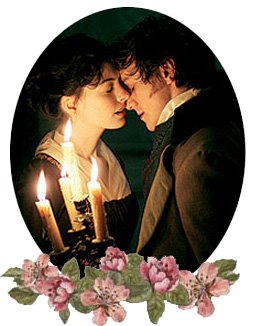
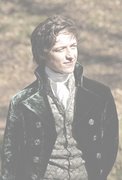
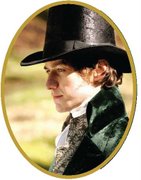
Pic 1: Tom Lefroy, from www.annie-hathaway.com

Pic 2: Tom Lefroy carrying Jane Austen, from Reading Kit of the U.S. Official Site

Wednesday, 25 July 2007

Dressing Jane: About the Costumes

This time, I copy an article from the U.S. about the costume. I’m happy to see that quite a few of my earlier observations in the female and male costumes were correct (including Tom's white coat referring to Jane's letters on January 9 and 16, 1796). But of course, this article gives more info than what I have excavated. See the U.S. Official Site, under the ‘About the movie’ and ‘Production Notes’ for ‘Dressing Jane’. I've said it, and I will say it again: this movie deserves an Oscar for costume design!

As with the photography and production design, Julian Jarrold hoped to take a different view of Austen-era costumes in BECOMING JANE. For this, he worked with Emmy-nominated Irish costume designer Eimer Ní Mhaoldomhnaigh ("David Copperfield," THE WIND THAT SHAKES THE BARLEY).

"Like most people I studied Jane Austen at school so I was familiar with her world," says Ní Mhaoldomhnaigh. "But I deliberately moved away from recent film adaptations of Jane Austen's work and my priority was to try to do something different. 1790s Regency England was a very transitional era in terms of fashion so it was a real challenge to make it work."

Ní Mhaoldomhnaigh read up on the fashion of the day, visited museums for inspiration, consulted Austen's letters for clues and reread the novels for context and color. In particular she investigated the influence of continental fashions and also the likely differences not only between town (London) and country (Hampshire) but between the social classes. She discovered that Jane and her family were quite fashion conscious - but the family's financial circumstances dictated that they make their own clothes. While practical clothes were required for the farm yards, there was also the opportunity to dress up and show off at the occasional local ball.

By the mid-1790s, Ní Mhaoldomhnaigh also learned, fashion was becoming simpler, moving away from the huge dresses of the French Revolution and towards a more modern look. "Things were heading towards the Empire line which is a very basic style influenced by the Roman and Greek civilizations," she says. "1795 marked the beginning of that trend. But because Jane Austen was from the country which is slower to adapt to fashion changes we are showing just the introduction of that. The look in London of course is very different from the look in the countryside."

Ní Mhaoldomhnaigh sourced authentic fabric in India and scoured the costume houses of London as well as the BBC costume department. "We kept away from very ornate fabrics and were very careful to pare back the look," she says. When it came to dressing Jane, Ní Mhaoldomhnaigh made Anne Hathaway's wardrobe entirely from scratch, using a combination of research and intuition. "I wanted to get her youthfulness and innocence across through her dress," she states. "But crucially there was also her strength of character. So we kept away from frills and flounces. I wanted a look that was quite strong but also pretty. Jane was living on a working farm so her dress had to be practical as well. We were definitely trying to steer away from the chocolate box image that we associate with Jane Austen." Ní Mhaoldomhnaigh sifted through Austen's own correspondence to get a better picture of the writer's fashion sense and sensibility. "In her letters to Cassandra, Jane talks about going into town and buying new ribbon for her hat," she says. "She would not, at that time, have been able to afford a new hat so she buys ribbons and flowers to trim the bonnet. People would also visit from London and Jane and her friends would ask them about the latest fashion in London. She would write in her letters of new fabric that she had bought and she would describe it in detail."

It didn't hurt that Ní Mhaoldomhnaigh was dressing the preternaturally lovely Anne Hathaway, who became a close collaborator in the creation of her character's costumes. "It was great to dress Annie," the designer says. "She had just come from THE DEVIL WEARS PRADA, in which she wore all this amazing couture fashion and now I had to talk to her about wearing simple cotton dresses! But she was very keen to get the details right. Sometimes I would suggest a little extra piece of lace but she would say that it might be too much. She really grasped what we were trying to do. Of course Annie looks so wonderful on camera that she doesn't need adornment."

Meanwhile, Ní Mhaoldomhnaigh focused equally on creating clothes for Tom Lefroy that reveal him as a fashionable man-about-town. The designer was partly inspired by Jane Austen's letter to Cassandra, in which she writes of Lefroy: "He has but one fault, which time will, I trust, entirely remove - it is that his morning coat is a great deal too light. He is a very great admirer of Tom Jones, and therefore wears the same colored clothes."

But she also was influenced by the screenplay's colorful portrait. "When we first meet him, Tom is boxing, boozing and cavorting so there's definitely had to be rakishness to him," says Ní Mhaoldomhnaigh. To make Lefroy stand out from the crowd, Ní Mhaoldhomnaigh used a few tricks of the rag trade. "We used much richer fabrics like velvets," she says. "For his hat we used a beaver fur which is a lot more luxurious than the other hats. He wears very stylish waist coats and cut-away jackets.

With Jane around he'd have an extra swagger in front of her. James was really into it. We'd talk about the colors and fabrics to achieve his distinctive look." Ní Mhaoldhomnaigh notes that men's fashion at the time was also in a state of flux in 1795. "Some of the younger men have cut away style jackets which were just coming into fashion," says Ní Mhaoldomhnaigh. "In the countryside the men were wearing slighter older fashions except for those who had been to London and picked up styles there like a silk waist coat which they would wear to the ball.

Long trousers did not come into vogue until the early part of the 1800s. Men wore riding boots which were practical but also fashionable. Men's calves were seen as very sexy at the time so if somebody had good calves it was something to be proud of."

Of the other characters, one of the most distinctive is Maggie Smith's Lady Gresham. "I spoke with Maggie and told her that I'd like her costume to be from a slightly earlier period," recalls Ní Mhaoldhomnaigh. "We went for the 1770s, the sort of dress that the Of the other characters, one of the most distinctive is Maggie Smith's Lady Gresham. "I spoke with Maggie and told her that I'd like her costume to be from a slightly earlier period," recalls Ní Mhaoldhomnaigh. "We went for the 1770s, the sort of dress that the character would have worn when she was much younger. Lady Gresham is very much her own character and is not someone who is dictated to by fashion. She looked quite stern, almost gothic so the colors that we choose were greys and sea greens. Everything about her is quite rigid from the skirts to the fabrics. She wears a very large hood called a calash that was very common at the time. No one else in the film is wearing it so it makes her look quite different and even eccentric. Maggie loved it.

Not so enjoyable were the corsets -- de rigueur in Regency England but the bane of the 21st Century actors' lives. "Having to put on the corsets, especially first thing in the morning, they would say, ‘Oh do I have to?’" recalls Ní Mhaoldomhnaigh. "But that's how you get the distinctive look and silhouette of the period."

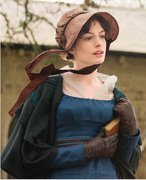
Pic 1,2 and 5: www.annie-hathaway.com

Pic 3 and 4: www.james-mcavoy.net

Observing Jane

I am happy to compliment the U.S. Official Site for finally giving Jane what she deserves. The production notes are particularly interesting to read, though I have to say the explanatory texts are a bit too small. Hence, I took this article below verbatim from the Production Notes section (under the ‘Observing Jane’) for your convenient reading. Two words: homage and reverse engineering. I agree that Becoming Jane is not copying other Jane Austen movies in negative ways; it instead pays homage to Austen’s genuine works. Enjoy!

Observing Jane: How Jane Austen’s Fiction Informs Her Character in Becoming Jane

In a kind of reverse engineering, BECOMING JANE utilizes key scenes and characters from Jane Austen’s novels – from the beloved Pride and Prejudice all the way to the lesser known Northanger Abbey and Persuasion – to forge the film’s depiction of Jane and Tom as a man and woman caught up in a courtship driven by heady feelings but complicated by money and mores. Austen scholar Joan Ray has identified several areas after a single viewing where the film converges with Austen’s fiction, including:

Harking back to Pride and Prejudice, Jane’s character resembles both the flirtatious Lydia Bennet who loved to dance and later Elizabeth Bennet who engages in witty repartees with Mr. Darcy, much as Jane does with Tom Lefroy in BECOMING JANE.

Tom Lefroy at first resembles Wickham, who in Pride and Prejudice was studying law with rather haphazard study habits, and also Darcy in the pejorative way he tends to judge country people.

Lady Gresham, the character played by Maggie Smith, closely resembles Catherine de Bourgh from Pride and Prejudice, Darcy’s wealthy aunt who didn’t want Elizabeth Bennet to marry Darcy. Lady Gresham is controlling and opinionated, like Lady Catherine, and Jane in the film even runs aside to scribble a note when Lady Gresham mentions a “little wilderness or shrubbery,” just as Lady Catherine does when she visits Elizabeth to discourage her from marrying Darcy.

The clumsy Mr. Collins in Pride and Prejudice is echoed in BECOMING JANE’s klutzy young clergyman Mr. Warren. Warren also resembles Mr. Elton in Emma with his unexpected proposal.

Jane’s heightened emotional reactions resemble those of the sensitive Marianne Dashwood in Sense and Sensibility.

In BECOMING JANE, Countess Eliza has a pug dog, just as she did in real life, and as does Lady Bertram who spends her days on the couch petting her pug in Mansfield Park.

In Mansfield Park, Lady Bertram tells her impoverished niece Fanny Price that it is every woman’s duty to marry well and Lady Gresham is given similar lines in BECOMING JANE.

Jane Austen is shown playing cricket in BECOMING JANE, a favorite pastime of young Catherine Morland, the heroine of Northanger Abbey.

Jane and Tom visit the popular Gothic novelist Ann Radcliffe in BECOMING JANE, while Catherine Morland in Northanger Abbey is reading Radcliffe’s Mysteries of Udolpho, which fires her imagination.

In Northanger Abbey, Jane Austen defends the art of writing novels, noting that it is in books that “the most thorough knowledge of human nature, the happiest delineation of its varieties, the liveliest effusions of wit and humor are conveyed to the world.” Jane is given a similar line as a young writer in BECOMING JANE.

The scene where Jane and Tom are in the staircase in Uncle Benjamin’s house provides a quick homage to the staircase scene with Henry Tilney and Catherine Morland in Northanger Abbey.

The heroine of Persuasion, Anne Elliot, breaks off her engagement with Frederick Wentworth, despite her true love for him, in a similar fashion to the way Jane does with Tom Lefroy in BECOMING JANE.

When BECOMING JANE imagines Jane meeting Tom Lefroy again at a concert of Italian music this mirrors the moment in Persuasion when Anne Elliot sees Wentworth at a concert and, though realizing that he loves her, is unable to communicate with him, wondering “How was the truth to reach him?”