Sunday, 30 September 2012

The sad fate of Carrigglas Manor

We received an email a few days ago from a John O'Neill. He conveyed sad news about what is happening to Carrigglas Manor, the former home of the Lefroys (including our Tom Lefroy, of course). John went to Carrigglas earlier last year, and found the estate to be in an unkept condition.


It seems that whatever hotel/estate development it was meant to be done in Carrigglas isn't happening now. We wrote several posts about Carrigglas here, here and here. Sad that that Tom Lefroy's symbol of pride and love is now in an utterly desperate state....

Tom Lefroy Quote of the Week 24

This weeks quote is from chapter XII, page 370 of Tom Lefroy's memoir.

"I feel that any memorial of him would be wanting which omitted to notice his unalterable cheerfulness under the little every-day crosses of life. Though the shadow of a cloud might flit past, it seemed as if it could never long obscure the sunshine of his temper or his countenance. If a wet day interfered with some cherished plan for a holiday excursion (and he retained to the very last an almost childlike enjoyment of such occasions) we were sure soon to hear some such remark as "well, only think of the good this gracious rain will do in the country," or "Really when I come to think of it, 'tis a decided advantage to me to have the day at home."

What a wonderful way to be remembered!


Monday, 24 September 2012

Jane Austen Quote of the Week 207

This week, I was lucky enough to receive a nice email from Mariana Georghe who analysed a passage from Sense & Sensibility versus The Memoir of Chief Justice Lefroy. Thank you Mariana for the email!

-xxx-


Hello dear Ladies,

I’m sending you a quick note regarding Westminster school that may be of use to you for the blog, containing few paragraphs from Sense and Sensibility and from Tom Lefroy’s Memoir. Now that we know Tom’s uncle, I. P. George Lefroy and his son J. Henry George Lefroy were sent to Westminster  - a public school, with the recommendation from their uncle, Benjamin Langlois (according to the Notes and documents relating to the family of Loffroy, by a cadet [J.H. Lefroy] ), and that Tom Lefroy instead had received private education, being the pupil of Rev Burrowes between 1790-95 when he met Mary Paul, maybe we’ll read with different eyes the story of Edward Ferrars and the following paragraph from Chapter 36:


"Upon my soul," he added, "I believe it is nothing more; and so I often tell my mother, when she is grieving about it. 'My dear Madam,' I always say to her, 'you must make yourself easy. The evil is now irremediable, and it has been entirely your own doing. Why would you be persuaded by my uncle, Sir Robert, against your own judgment, to place Edward under private tuition, at the most critical time of his life? If you had only sent him to Westminster as well as myself, instead of sending him to Mr. Pratt's, all this would have been prevented.' This is the way in which I always consider the matter, and my mother is perfectly convinced of her error." 

“Elinor would not oppose his opinion, because, whatever might be her general estimation of the advantage of a public school, she could not think of Edward's abode in Mr. Pratt's family, with any satisfaction.”

We know that Edward and Lucy met while Edward studied with Lucy's uncle, Mr. Pratt, and have been secretly engaged for four years. Edward was a pupil of Lucy's uncle in Plymouth, and that is where their relationship began.

Based on the Memoir [pages 3, 14 and 20], Tom Lefroy, “after a private education entered the University of Dublin, on the 2nd November, 1790, at the early age of fourteen.” The distance between Limerick and Dublin being “at that time a work of three days”, Tom was sent to a college tutor, Rev Dr. Burrowes “who kindly consented to receive him into his family circle”. In the Memoir we are told that Tom developed “a warm friendship” with a fellow student, Mr. Thomas Paul, “during their College course” between November 1790 and April 1795 and that Lefroy visited Paul family “and, very soon, an attachment sprung up between him and Mr. and Mrs. Paul’s only daughter

This is not really new, but I think the Westminster school part that’s related now to the Lefroys of Ashe does bring a little bit more light on what Jane Austen knew and wrote in her books as related to Tom Lefroy and his engagement to Mary Paul. I still have to check Mansfield Park for the Westminster school connections with Henry Crawford & J.Henry George Lefroy.

In the Memoir also, I found an interesting note that I think will connect once again the surroundings from the “unseen portrait” with Tom Lefroy:

“...written while he was keeping his Law Terms at Lincoln’s Inn, that would rank high...During his stay at the Temple, he resided with his grand uncle, Mr. Langlois, in London, and attended daily at Westminster Hall, where, in the Courts presided over by such men as lord Eldon and Lord Kenyon...”

Have a delightful weekend!

Lots of Hugs,
Mariana

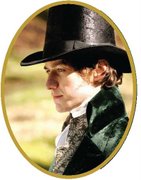
Pic: The yummy Dan Stevens as Edward Ferrars in Sense & Sensibility 2008

Tuesday, 18 September 2012

Jane Austen Quote of the Week 206


 I have a special reason for using the following quote this week.  My granddaughter and I went to see a local presentation on stage of "Pride and Prejudice" with local actors.  And that is why this quote is a wee bit late.  I must say that it was beatifully done, the actors were superb, the script well done, and the stage props lovely!   I had no idea that the local folks were quite as capable of putting on such a lovely show!  I am now inclined to go see some of next seasons presentations.
 
So, from Pride and Prejudice, Chapter 1 I quote:
 
"It is a truth universally acknowledged, that a single man in possession of a good fortune, must be in want of a wife."
 
That is of course, a very well-known sentence, but it does carry lots of wisdom also. And dear Jane proves it with the rest of the novel.
 
Yrs aff'ly,
 
Linda the Librarian
 
Pic: http://austenacious.com/?tag=caroline-bingley

Sunday, 9 September 2012

Jane Austen Quote of the Week 205

I have chosen this letter from Jane's Love and Friendship. It is part of Lettter The Firth - From a Young Lady Very Much in Love to Her Friend. It is regarding this letter sent from Mr Musgrove to Henrietta:

                                                                                                                  Sackville Street: January 7th

It is a month today since I first beheld my lovely Henrietta, and the sacred anniversary must, and shall, be kept in a manner becoming the day - by writing to her. Never shall I forget the moment when her beauties first broke on my sight - no time, as you well know, can erase it from my memory. It was at Lady Scudamore's. Happy Lady Scudamore to live within a mile of the divine Henrietta! When the lovely creature first entered the room, oh! what were my sensations? The sight of you was like the sight of a wonderful fine thing. I started - I gazed at her with admiration - she appeared every moment more charming, and the unfortunate Musgrove became a captive to your charms before I had time to look about me. Yes, madam, I had the happiness of adoring you, a happiness for which I cannot be too grateful. "What!' said he to himself. 'Is Musgrove allowed to die for Henrietta?' Enviable Mortal! and may he pine for her who is the object of universal admiration, who is adored by a colonel, and toasted by a baronet! Adorable Henrietta how beautiful you are! I declare you are quite divine! You are more than mortal. You are an angel. You are Venus herself. In short, madam, you are the prettiest girl I ever saw in my life - and her beauty is increased in her Musgrove's eyes, by permitting him to love her, and allowing me to hope. And ah! angelic Miss Henrietta, Heaven is my witness how ardently I do hope for the death of your villanous uncle and his abandoned wife, since my fair one will not consent to be mine till their decease has placed her in affluence above what my fortune can procure. Though it is an improvable estate -.


Cruel Henrietta to persist in such a resolution! I am at present with my sister where I mean to continue till my own house which, though an excellent one is at present somewhat out of repair, is ready to receive me. Amiable princess of my heart, farewell - of that heart which trembles while it signs itself -

Your most ardent admirer and devoted humble servant,

T. Musgrove.

This letter is then described by Henrietta to her friend Matilda as "Such sense, such sentiment, such purity of thought, such flow of language and such unfeigned love in one sheet."
I quite agree!

Pic: Buddha and true love
Extract from link above: "Life has a great need of the presence of love, but not the sort of love that is based on lust, passion, attachment, discrimination, and prejudice."

Sunday, 2 September 2012

Tom Lefroy Quote of the Week 23


This is quite a story for a simple quote, but it pulled at my heartstrings, so I have to tell it!

I noticed our copy of the movie "A Little Princess" and decided to watch it.  It was the ending that really made a point in my own life.  Briefly, the story is about going from riches to rags and back to riches.

At the end of the movie the young girl, Sara, is speaking with her Father's friend, Mr. Carrisford, who makes her rich again.  The conversation goes thusly:

Mr. C.:  "What are you thinking, Sara?"

Sara:  "I was just thinking about your question, why Karma should have treated me so cruelly.  I believe it was to teach me a lesson."

Mr. C.:  "What lesson?"

Sara:  "There are so many poor people in the world, I took my Papa's money for granted, you see.  But I had no idea what it was like not to have any."

Mr. C.:  "It taught me a lesson, too.  That money doesn't buy happiness."

Sara:  " But it prevents people from starving, though, doesn't it?  And gives them a roof over their heads."

Mr. C.:  "Yes."

Sara:  "I remember one day, when I was particularly hungry, there was little girl outside a bun shop who was even hungrier than I was.  I wonder what became of her, what becomes of all other children who don't have enough to eat.  I wish I could help them."

------------

Next Mr. C. and Sara visit the bun shop where Sara offers to pay for any buns the Mistress gives to any hungry child who comes by.  The Mistress of the shop has taken in that hungry girl, Anne, that Sara had given buns to even though at the time Sara was poor and hungry.  Sara and Mr. C. leave the shop and


Anne says:  "Who is she, Ma'am?  I thought she was poor like me!"

Mistress:  "Poor?  That little one's never been poor.  Not even when she hadn't a penny to her name."

------------------

The movie ends with Sara saying:  "It's the magic, that's what it is.  The Magic.  Remember I told you that when things are at their blackest, the magic always comes to your rescue?  Well, it's come.  It's just like being a princess after all."

-----------------

My Point being - that no matter how bleak life may seem, it could always be worse.  Now what has that got to do with our own Tom Lefroy.  Well, I must quote him.  The quote is a letter Tom wrote to his wife from the "Memoir of Chief Justice Lefroy" on page 47 at this site:  


TO HIS WIFE.

Castle Connell,

Wednesday.

She is a striking instance how utterly inadequate what is called firmness or strength of mind is to contend with affliction. Nothing can do that but what teaches us that it is good for us that we are afflicted, and makes us see through our very heaviest trouble the merciful purpose of Him who makes us perfect by suffering, but who at the same time that He sends the rod, holds out the staff also. There is in true piety a humility of mind, a bowing down of the spirit, an acquiescence in all that comes, as coming from the source of love, which proceeds from faith to patience, from patience to resignation, and from resignation at length kindles into joy, that holy joy which is allied with peace, the joint offspring of that Holy Spirit who alone can bind up the broken heart and pour oil into those wounds which set human consolation at defiance. If, in prosperity, we prepare for trials, we shall never be taken entirely by surprise ; and this I believe is another way by which religion makes good its promises of increased comfort, even in this life.

T. L.


His language is a bit hard for me to cipher out, but I hope I get the gist of what he means because I think it is beautiful.  It puts into words my own belief.  And to think he wrote those words so long ago - over 150 years! 

Also, to put the quote in context, it is best to read at least the preceding pages from page 45.  I think I must read the Memoir in its entirety!

The moral of the story reminds me of the old saying "I cried because I had no shoes until I saw the man who had no feet."

Yrs aff'ly,
Linda the Librarian

Pic: A Little Princess, Amazon.com

Monday, 27 August 2012

Jane Austen Quote of the Week 204


The auction and selling of Jane Austen’s ring (I still ponder over its final value of GBP 152,450!) made me realise how fine Jane’s taste of exquisite things was. So I browsed around her letter today and found a letter she wrote to Cassandra, dated 1 November 1800, exactly 63 years before Eleanor Austen bequeathed the now-famous ring to Caroline Austen. Here’s the quote, taken from Le Faye’s Jane Austen’s Letters page 52:

‘Your abuse of our Gowns amuses, but does not discourage me; I shall take mine to be made up next week, & the more I look at it, the better it pleases me. – My Cloak came on tuesday,& tho’ I expected a good deal, the beauty of the lace astonished me. – It is too handsome to be worn, almost too handsome to be looked at. – The Glass is all safely arrived also, & gives great satisfaction.’

Now I’m wishing that the cloak Jane talked about here survived the age... but perhaps it’s a thinking too wishful for the reality. But I now am certain that Jane was a tad of fashionista herself. Perhaps not as lavishly as Marianne Dashwood would dress herself up, but certainly, Jane was not a plain Jane.

Pic: a pretty 1820s Regency cloak

Wednesday, 22 August 2012

Jane's Ring ... SOLD

The turquoise and gold ring that belonged to romantic novelist Jane Austen 

Sorry it has taken us a while to write this information but a ring belonging to Jane Austen sold for £152,450 at a Sotheby's auction in London on July 10th, this was over five times the predicted price!

An article from the guardian newspaper states "The turquoise and gold ring came to Sotheby's from Austen's family, complete with a note sent by Jane's sister-in-law, Eleanor Austen, in November 1863, to Jane's niece, Caroline Austen. "My dear Caroline," wrote Eleanor. "The enclosed ring once belonged to your Aunt Jane. It was given to me by your Aunt Cassandra as soon as she knew that I was engaged to your uncle. I bequeath it to you. God bless you!""

The ring was passed from Jane Austen to sister Cassandra Austen to sister-in-law Eleanor Austen to niece Caroline Mary Craven Austen to niece Mary A. Austen-Leigh to her niece, Mary Dorothy Austen-Leigh, then to her sister, Winifred Jenkyns, who passed it to her descendants.

There has been speculation that the ring was given to her by Tom Lefroy but experts predict that she actually received it from her brother Henry who she was very close to.

Pic: http://www.guardian.co.uk/books/2012/jul/06/jane-austen-ring-for-auction

Monday, 20 August 2012

Jane Austen Quote of the Week - 203

Generally mothers want the best for their children and have good intentions. I work with alot of young people who find their mothers a drain and certainly "uncool". With age my perspectives have changed greatly in this regard and although I am not a mother myself allowing me to see the relationship in both directions, I find interactions between parents and their children fascinating to observe.

Mrs Bennet always makes me chuckle and this large selection of lines taken from early in Pride and Prejudice (chaper 9) does not fail to amuse me. The conversation involves Mr Darcy, Mr Bingley, Elizabeth and her mother primarily. Elizabeth is embarrassed by her mother's bold comments.
There are many types of people walking this earth, each with their own story - variety is the spice of life.


Lizzy," cried her mother, "remember where you are, and do not run on in the wild manner that you are suffered to do at home."
"I did not know before," continued Bingley immediately, "that you were a studier of character. It must be an amusing study." "Yes; but intricate characters are the most amusing. They have at least that advantage." "The country," said Darcy, "can in general supply but few subjects for such a study. In a country neighbourhood you move in a very confined and unvarying society." "But people themselves alter so much, that there is something new to be observed in them for ever." "Yes, indeed," cried Mrs. Bennet, offended by his manner of mentioning a country neighbourhood. "I assure you there is quite as much of that going on in the country as in town." Every body was surprised; and Darcy, after looking at her for a moment, turned silently away. Mrs. Bennet, who fancied she had gained a complete victory over him, continued her triumph. "I cannot see that London has any great advantage over the country for my part, except the shops and public places. The country is a vast deal pleasanter, is not it, Mr. Bingley?" "When I am in the country," he replied, "I never wish to leave it; and when I am in town it is pretty much the same. They have each their advantages, and I can be equally happy in either." "Aye—that is because you have the right disposition. But that gentleman," looking at Darcy, "seemed to think the country was nothing at all." "Indeed, Mama, you are mistaken," said Elizabeth, blushing for her mother.

And later ...

"I have been used to consider poetry as the food of love," said Darcy. "Of a fine, stout, healthy love it may. Every thing nourishes what is strong already. But if it be only a slight, thin sort of inclination, I am convinced that one good sonnet will starve it entirely away." Darcy only smiled, and the general pause which ensued made Elizabeth tremble lest her mother should be exposing herself again.

Pic: Mr and Mrs Bennet

Sunday, 12 August 2012

Jane Austen Quote of the Week 202

In the few minutes of spare time that I can find nowadays, I work a daily puzzle named "Cryptogram" which uses quotes from famous and not-so-famous people.  Well, finally, there was one by our own dear Jane, and I simply must share it with you.  I found the quote in her letter No. LXXX in the Brabourne edition, dated Nov. 18,1814 written to her niece, Fanny Knight.  To put the quote in context here is the whole paragraph:
 
 
Think of all this, Fanny. Mr. A. has advantages which do not often meet in one person. His only fault, indeed, seems modesty. If he were less modest he would be more agreeable, speak louder, and look impudenter; and is not it a fine character of which modesty is the only defect? I have no doubt he will get more lively and more like yourselves as he is more with you; he will catch your ways if he belongs to you. And, as to there being any objection from his goodness, from the danger of his becoming even evangelical, I cannot admit that. I am by no means convinced that we ought not all to be evangelicals, and am at least persuaded that they who are so from reason and feeling must be happiest and safest. Do not be frightened from the connection by your brothers having most wit -- wisdom is better than wit, and in the long run will certainly have the laugh on her side; and don't be frightened by the idea of his acting more strictly up to the precepts of the New Testament than others.
 
 
The cryptogram quote is in bold.  I thought I knew what the word 'wit' meant in the back of my mind, so I looked it up in the dictionary to be sure.  However, now I am not at all sure.  I'll have to think about it for awhile.  Any enlightenment you may wish to send me will be greatly appreciated.
 
I especially appreciated her reference to 'evangelicals' which agrees with my own beliefs.  The bottom line is this:  what other gems might we find in her letters?  Did she never write anything that is not worth reading?  Sigh, I leave it for you to determine.
 
Yrs aff'ly,
Linda the Librarian
 
Pic: water colour picture of Fanny Knight, taken from The Jane Austen Centre UK
 

Sunday, 5 August 2012

Tom Lefroy Quote of the Week 22

This week's quote is actually inspired by an old Tom Lefroy quote that I posted about 1.5 years ago, in November 2010. The quote was taken from a letter Tom wrote to Jane Christmas Lefroy, his eldest daughter. At that time, Jane must have been a young girl learning how to write, because such was the nuance of the letter. One particular sentence captured my attention this time, and when I read further, another one also popped up, begging to be written. The funny thing is, the two sets of sentences seem to be at odds with each other. When I looked deeper though, I realised that they were not contradictory. Instead, they were logical.


Hence, here I rewrite the longer version of the letter for our perusal. Page 31-32 of the Memoir of Chief Justice Lefroy (emphasizes are my own):


Limerick, Monday.


MY DARLING J---, Your letter gave me great pleasure; it was fairly written, well worded and no mistakes in the spelling; and I hope, by employing your time regularly between this and the next time I leave home, you’ll be able to correspond with me on subjects of more importance. Believe me, my darling girl, there is no progress to be made in anything without steady and continued application, which, besides the advantages it brings in the way of improvement, makes labour pleasant from habit instead of being irksome, as it always is to the idle and irresolute. A saunterer when young, continues a saunterer through life.Nothing has always struck me so forcibly to show the value of order, and precision in our works, as observing the regularity and exactness displayed in all the works of God, day and night - summer, winter, autumn, and spring, - the regular and uniform motions of the almost infinite host of heavenly bodies. In the same manner in His kingdom of grace, there is a time and a season for everything. Although a thousand years are in his sight as one day, nothing is permitted to occur a moment before its appointed time. Our blessed Lord's constant observation was, "mine hour is not yet come." How is it possible that we can expect to please God in the neglect of order and the disregard of stated times for different purposes?


If we take a look at the first bold sentence and see the next two bold sentences, they seem to contradict each other. The first one tells us that practice makes perfect, basically. The second one, though, says that everything is only perfect in Its/His/Her time. So why waste time to practice stuffs that we want to happen/achieve, if nothing is ever appearing before its time?

My take here, dear friends, is that in order to receive the best benefit of the long-awaited event, we must prepare the necessities. For instance, I want to make a proposal for my postdoc. I haven't got any funding source that can cater to my needs. But won't it be prudent to just write my umbrella proposal now (and prepare other things like budgeting etc) so that the majority of the proposal is ready when I find the correct donor?


Or, in love... We know that nothing happens before its time. A couple won't meet before their destined time to meet. However, the man and woman can actually 'prepare for the encounter' by being true to themselves, taking care of old issues (and making sure they don't reappear), and be happy - tremendously happy - with one's own presence. Thus, when The Time comes, the man and woman are actually ready for the encounter. Their past is no more, and thus they can clearly see the person in front of them: someone they can rely on to accompany them for the rest of their lives....

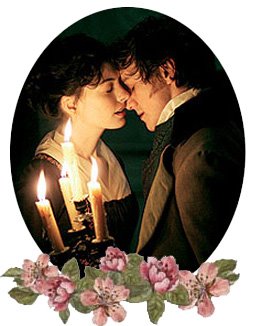
Pic1: James McAvoy as Tom Lefroy, Becoming Jane 2007
Pic2: Anne Hathaway as Jane Austen, Becoming Jane 2007


Sunday, 29 July 2012

Jane Austen Quote of the Week 201

I have been dipping into Northanger Abbey and one paragraph made me chuckle - Mrs Thorpe and Mrs Allen have just been reacquainted in Bath and in chapter 4 of the novel they are catching up.


"Mrs. Thorpe, however, had one great advantage as a talker, over Mrs. Allen, in a family of children; and when she expatiated on the talents of her sons, and the beauty of her daughters, when she related their different situations and views — that John was at Oxford, Edward at Merchant Taylors’, and William at sea — and all of them more beloved and respected in their different station than any other three beings ever were, Mrs. Allen had no similar information to give, no similar triumphs to press on the unwilling and unbelieving ear of her friend, and was forced to sit and appear to listen to all these maternal effusions, consoling herself, however, with the discovery, which her keen eye soon made, that the lace on Mrs. Thorpe’s pelisse was not half so handsome as that on her own."


I dont know about you but I so often find myself feeling the same as Mrs Allen. It may be about different subject matters but often there is always a way to make yourself feel better about life!


Pic: Northanger Abbey scene, taken from: http://wickfield-writings.blogspot.co.uk/2010/10/wrp-review-15-northanger-abbey.html

Saturday, 21 July 2012

Jane Austen Quote of the Week 200

I thought I had a brilliant idea, namely, to include on the Becoming Jane Fansite a list of other sites that are Jane Austen related which our readers may or may not know about.  Lo and Behold, upon looking at the BJ home page I discovered that such a list already existed called "Austenian Links".

So the best I could do is recommend another site to add to that list which is edited by my friend, JulieW.  The name of the site is "Austen Only" and deals mainly with Jane's Life and Times.  She has a treasure house of information there.  You may peruse it here:  Austen Only
So, simply to pique your interest in that site, I will say the the entry for July 19, 2012 is about a "twitten".  You will have to read the article to understand what a "twitten" is, so I won't spoil your fun.  The next entry dated July 18, 2012 is about Jane's connection with Winchester Cathedral (where she is buried).  That is of special interest to me because in July 2003 I made a trip to dear England for a Jane Austen conference and included a tour of Winchester Cathedral - which I will never forget.  You may read about my trip here:  Linda's Sentimental Journey.  You will even find a picture of me next to Jane's grave.  At the top of that page is a partial quote from Jane's brother, James Austen, and I will include his entire poem here:

"On such subjects no wonder that she shou'd write well,
In whom so united those Qualities dwell;
Where 'dear Sensibility', Sterne's darling Maid,
With Sense so attemper'd is finely portray'd
Fair Elinor's self in that Mind is exprest,
And the Feelings of Marianne live in that Breast,
Oh then, gentle Lady! continue to write,
And the sense of your Readers t'amuse & delight.
"
A Friend

James wrote this after the publication of her first novel, "Sense and Sensibility".   So dear Readers, have fun looking into these items about our own Jane Austen.

Yrs aff'ly,
Linda the Librarian

Pic: Linda besides Jane Austen's grave in the Winchester Cathedral in 2003

Sunday, 15 July 2012

Jane Austen Quote of the Week 199


I have been reading ‘The Dressmaker’, a Victorian novel written exquisitely by Posie Graeme-Evans. The heroine in the novel slightly reminds me of Margaret Hale in North and South (by Elizabeth Gaskell). Ellen Gowan (the heroine in ‘The Dressmaker’) had a father – a poor vicar – who died in a tragic accident, thus the story also reminded me of Edward Ferrars in Sense and Sensibility (not that he died in the SS novel). I haven’t discovered how poor Reverend Gowan was (his entitlement or stipend, etc), or to some extent, the general living condition of an honest but poor vicar (like Jane Austen’s own father, albeit in a different era). I do however, remembered a passage or two in SS about Edward’s entitlement. This is from Chapter 49:

One question after this only remained undecided between them, one difficulty only was to be overcome. They were brought together by mutual affection, with the warmest approbation of their real friends; their intimate knowledge of each other seemed to make their happiness certain -- and they only wanted something to live upon. Edward had two thousand pounds, and Elinor one, which, with Delaford living, was all that they could call their own; for it was impossible that Mrs. Dashwood should advance anything, and they were neither of them quite enough in love to think that three hundred and fifty pounds a year would supply them with the comforts of life.


I then found an eloquent article by Ms Place from The Jane Austen’s World that explained a great deal of living cost during the Regency Era. Vic (Ms Place) also quoted a passage from Chapter 17 of SS:

"And yet two thousand a-year is a very moderate income," said Marianne. "A family cannot well be maintained on a smaller. I am sure I am not extravagant in my demands. A proper establishment of servants, a carriage, perhaps two, and hunters, cannot be supported on less."

How much does GBP 2,000 of the 1810 worth now? Ms Place used the UK national archives to calculate the worth of GBP 2,000 (Edward Ferrar’s entitlement) in 2005. It was GBP 67,920 or approximately GBP 81,000 in 2011 using the UK Consumer Price Index. Putting it in AUD (so I can imagine the purchasing power), that amount is about AUD 122,000 per annum or AUD 2,340 per week for 2011. It is a lot of money.

But Chapter 49 of SS stated that Edward’s and Elinor’s annual income would only be GBP 350 per annum. Perhaps they could not use their entitlement, only the annual interest of their combined entitlement. If so, Edward and Elinor would only live with GBP 11,886 per annum in 2005 or GBP 14,175.97 per annum in 2011. In the 2011 AUD, it is about AUD 21,400 per annum, or AUD 411 per week. That’s the lower level stipend of a postgraduate student in Australia, which practically only provides the student for rent, basic groceries, bus ride and occasionally cheap movie nights. The amount is certainly not enough for a family living.

Now I know why the Dashwood ladies were distressed when they received only GBP 500 per annum for their living (three ladies and two maids). If this is about the amount that Rev Gowan (Ellen’s father from The Dressmaker) received during his years of service, no wonder Ellen was concerned about their income once her father passed away…

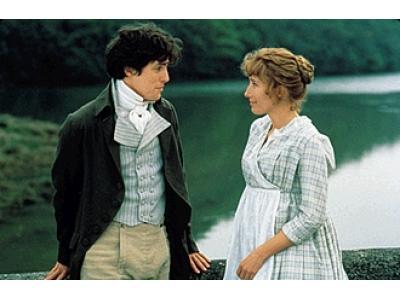
Pic: Edward and Elinor from Sense & Sensibility 1995