Wednesday, 5 September 2007

Mansfield Park: Jane Austen’s tribute to Tom Lefroy Part 2

Okay, Ladies and Gents, Mansfield Park review Part 2. I will try to keep it shorter than Part 1, but if not, you will forgive me, Fitzwilliam (think Colin Firth’s Darcy!). Special thanks to Michelle for her precious inputs on MP. This instalment picks up Chapters 4 to 11; bear with us, we sometimes go back and forth, picking up breadcrumbs we did not detect previously. But first, let me give another support for the theory that Jane Austen borrowed a lot from Tom Lefroy for her Fanny Price. Fanny lived in Portsmouth in England; a port town. And guess where Tom lived before coming to London? Limerick, Ireland. Also a port town, albeit a bit deep in the estuary, and much further from Dublin than Portsmouth to London ^_^


On marriage

Chapter 4 finds us in the mind of Edmund as he observed the engagement of Maria Bertram with Mr. Rushworth.

Edmund was the only one of the family who could see a fault in the business; but no representation of his aunt's could induce him to find Mr. Rushworth a desirable companion. He could allow his sister to be the best judge of her own happiness, but he was not pleased that her happiness should centre in a large income...

It is obvious here that Edmund was not pleased that his sister should adopt the common practice of the greatest betrayal of self, as Michelle put it, giving yourself to someone you neither respect nor admire, denying yourself your true nature. To me, this was also Jane speaking… the way she advised her niece Fanny Knight in some letters. And it does not hurt to see that some names in Mansfield Park refer to wealth, e.g. the Grants and Rushworth.

Then we arrive at Chapter 10, where Henry Crawford said to Maria Bertram:

'I believe I was relating to her [Julia] some ridiculous stories of an old Irish groom of my uncle's. Your sister loves to laugh...I could not have hoped to entertain you with Irish anecdotes during a ten miles' drive.' [Bolded words by Icha]

Cheeky Jane! To me, it's obvious that she was jesting about Tom Lefroy here. And Jane Austen often talked about marriage in Mansfield Park (well, also in her other novels), so we will return to the subject of marriage later on.


Black November

Chapter 11 particularly attracted me for the obvious second paragraph:

November was the black month fixed for his [Sir Thomas's] return...His business was so nearly concluded as to justify him in proposing to take his passage in the September packet, and he consequently looked forward with the hope of being with his beloved family again early in November.

Maria was more to be pitied than Julia, for to her the father brought a husband [Mr. Rushworth], and the return of the friend most solicitous for her happiness, would unite her to the lover, on whom she had chosen that happiness should depend...It would hardly be early in November, there were generally delays, a bad passage or something; that favouring something which every body who shuts their eyes while they look, or their understandings while they reason, feels the comfort of. It would probably be the middle of November at least; the middle of November was three months off. Three months comprised thirteen weeks. Much might happen in thirteen weeks. [bolded words by Icha, italics by JA]

The italic early and something invoked my suspicion. Didn't Tom Lefroy return to Ireland in mid November 1798 because of Anthony’s marriage earlier the month? To his beloved family in Ireland. The return of the friend most solicitous for her happiness - was Tom not Jane's 'friend' most solicitous for her happiness? And what happened in... say, mid August, thirteen weeks before mid November? Counting back from 17 Nov (Jane’s letter explaining the return of Tom to Ireland) brings us to 18/19 or mid August 1798. No JA letters survived after 8 April and before 24 October 1798, but I bet mid August was very important for Jane and Tom. Could Tom somehow talk of a possible commitment with Jane then? Or at least, they met in mid August 1798.

Then a dialog between the sassy Mary Crawford and Edmund:

MC: ‘Your father's return will be a very interesting event.’

EB: ‘It will, indeed, after such an absence; an absence not only long, but including so many dangers.’

MC: ‘It will be the fore-runner also of other interesting events; your sister's marriage, and your taking orders.’

Before November 1798, Tom's last visit to Ireland was Easter Term 1797. That's more than 1.5 years away. Such a long absence... that included so many dangers (of him changing his mind, cancelling Mary Paul and taking Jane instead). And it was NOT a fore-runner, but a consequence of his brother's marriage. A very 'interesting' event, though very tragic as well.

Edmund taking orders to become a clergyman. Can I translate 'taking orders' as taking one's responsibility? In the case of Tom Lefroy, Tom’s return to Ireland means that he was to face his responsibilities as the eldest son.

Also, talking about Sir Thomas reminds me of Tom Bertram, who was (to us) the portrayal of Anthony Lefroy in Jane’s perspective. It occurred to me last night as I watched the 1999 DVD of Mansfield Park (what a great movie!) that TB might actually dislike his father so much, particularly on his inhuman treatments on his slaves (not to mention the slavery itself). Hence, Tom Bertram's drunk habit &c... in addition to he might be the kind of slack person, could also due to his aversion or major dislike towards his father for what he had been doing to the slaves? The Bertrams got dirty money anyway, why not wasting it? Hence Tom protested with being drunk and gambling, not unlike Anthony protesting Benjamin Langlois’ stern views of proper marriage by marrying an ‘undesirable’ woman.


Jane, Tom and star-gazing

In the last section of Chapter 11, we are introduced to another hobby shared between Edmund Bertram and Fanny Price, in addition to horse-riding.

EB: 'There's Arcturus looking very bright.'

FP: 'Yes, and the bear. I wish I could see Cassiopeia.'

EB: 'We must go out on the lawn for that. Should you be afraid?'

FP: 'Not in the least. It is a great while since we have had any star-gazing.'

Ah… l’amour… Such a romantic thing to observe the starry nights with your significant others…Now, my dearest friends, I don't know if you know that Tom Lefroy liked star-gazing, but click this old article of mine, and you will see that Tom was indeed interested in astronomy.

And I also wrote this in the article:

Now, of course then my imagination flew away to more than 50 years from that date, when the young dashing Tom Lefroy was still in Hampshire with Jane Austen, after a ball in Basingstoke or Manydown House (when he ran away as his family laughed at him about Jane…).

In one of those nights, it was possible that he took Jane outside to the balcony or the garden and pointed at the sky. Jane then said, ‘That’s a very bright star over there. Is that Venus?’ Tom smiled and answered, ‘No. That is not Venus; it’s Jupiter. Venus is –’ he directed Jane towards the other part of the dark night sky, ‘ – there! See that bright star there? Now, that’s Venus. And it is beautiful.’ He then looked back at Jane and, after a moment of silence, added, ‘But not as beautiful as you.’

Face/palm! Of course, the Jane/Tom scene there was merely my imagination, but I NEVER thought that small article will be useful now. If we link Fanny/Edmund and their star-gazing hobby with Jane and Tom, it is natural that I suspect that Tom Lefroy and Jane Austen indeed star-gazed together. At least, during Tom’s limited time in Hampshire. A great while ago.

Ahem. Now, let’s check the stars or constellations Jane, I mean, Fanny mentioned. Arcturus, the Bear and Cassiopeia. What about them? As a very amateur star-gazer, I am curious about the stars in MP, and had several sleuthing of them.

Arcturus/Bootes

According to Wikipedia, Arcturus is the brightest star in the Bootes constellation, only visible in Northern Hemisphere. The myth says that Arcturus is the bear guard who guards Ursa Minor and Ursa Major (Callisto and her son Arcas, seeded by Zeus), who protects and accompanies them for eternity. Arcturus is also the third brightest star in Earth's sky (after Sirius and Canopus). That reminds me of Tom Lefroy, one of the brightest men in his generation. And he was not the guardian of his family for the rest of his life?

Now, let’s take a look at the constellation where Arcturus belongs (from the Earth’s viewpoint, that is). One of the earliest constellations identified by ancient humankind, Bootes is also known as the Herdsman. Herdsman, the Shepherd, like the Priest or a religious person. Reminds you of Tom Lefroy?

And again from Wikipedia: Boötes was also supposed to have invented the plough. This is said to have greatly pleased Ceres, the goddess of agriculture who asked Jupiter to give Boötes a permanent fixture in the heavens as a reward for doing this.

Big Dipper or Ursa Major (the stars Arcturus protects) is also called the Plough. Plough and agriculture, eh? Shall I remind you that Tom Lefroy loved gardening?

Bootes and Virgo

Bootes is located near several famous constellations, one of them is Virgo. In Poussin's painting (Shepherds of Arcadia) above, Bootes is the guy next to the maiden (Virgo). Together with Serpens and Hercules (squatting, tracing the inscription), they surrounded a tomb (Ophiuchus). An excellent example of hidden knowledge of astronomy by Nicolas Poussin in mid 17th century, for indeed you can see Bootes together with all these constellations (see Skymap.com for the month of August).

You can draw a straight line from Arcturus to Spica, the brightest star of Virgine/Virgo constellation. The old astronomy maxim is ‘follow the arc to Arcturus and speed on to Spica’. Virgo is, by the way, the zodiac of August, and also one of the only three female constellations in the Western astronomy (along with Cassiopeia and Andromeda).

Virgo the Celestial Virgin. Was Jane Austen not a virgin herself? ;-) Though we can also refer to Virgo as the representation of Mother Mary… As such, let’s see the meaning of Spica. Spica literally means ‘ear of wheat’, and hence was known since ancient times as the ‘Star of Prosperity’. Although I believe that Tom Lefroy truly loved Mary Paul later on, I do not doubt that there was prosperity motive, in the most respectable manner and intention of saving his family, in their marriage.

Virgo is also often called Astraea (‘starry’), as Wikipedia says:

According to one interpretation, the constellation depicts Astraea, the virgin daughter of the god Zeus and the goddess Themis. Astraea was known as the goddess of justice, and was identified as this constellation due to the presence of the scales of justice Libra nearby.

So, Virgo is also a representation of justice… who placed herself next to Bootes, the Shepherd. And was Tom Lefroy not a very pious barrister?

Anyway, Bootes and Virgo have always been closely linked. This is what Heavens Above says about the two constellations:

In Greek legend, Bootes is seen as representing Icarius, an Athenian who was taught the secret of winemaking by the god Dionysius. Icarius then allowed some peasants to sample his produce, but his kindness back-fired. The men became extremely drunk and were convinced that they had been poisoned, so they killed Icarius and buried him. His daughter Erigone and was so overcome with grief when she found his body that she hanged herself. Zeus transferred her to the heavens as Virgo, Icarius became Bootes, and Maera, the dog who had led Erigone to her father’s grave, became one of the dogs of Canes Venatici.


There is also a story of Bootes and Virgo as the symbol of Adam and Eve. Hmm… eating the apples, eh? Forbidden fruit of what? Of unfortunate marriage like Anthony Lefroy’s, or marriage for wealth, like Tom’s?


Anyway, let’s use the common knowledge that Virgo represents a virgin and see the graphic visualisation above. From these particular pictures, we can see that Bootes (the herdsman) seems to leave Virgo (the virgin). In the night sky, Bootes seems to face Cassiopeia (there is a picture down below; also see Skymap.com for August). And if we see the Virgo as Jane Austen herself, and Bootes as Tom Lefroy, who is Cassiopeia then?

Cassiopeia

In Greek Mythology, Cassiopeia was a beautiful but vain queen who insulted the Nereids, boasting that her daughter Andromeda was much prettier than the daughters of Poseidon himself (there…don’t let your mums do that, lest you will be chained and fed to the monsters!).

Cassiopeia forms a W or crown. If we translate it as 'noble lady', then Jane might be alluding to Mary Paul, who was a respectable woman, mostly for her wealth and connexion. Also, turn W upside down, and we have an M. For Mary! Or, we can see W as ‘wedding’ and M as ‘marriage’. There is a ‘Mary’ character in Pride & Prejudice that associates with ‘crown’ or ‘queen’. Mary King, a rich lass that almost married Wickham. Either way, to me, Cassiopeia refers to Mary Paul.

Let’s return to what Fanny said at the end of Chapter 11. Yes, and the bear. I wish I could see Cassiopeia. Could Jane be telling us that she wished to meet and understand Mary Paul better? And did Jane just mention ‘the bear’ or Ursa Major/Minor here for a decoy, or did she allude that she actually have met Anthony Lefroy, whom Tom protected, before? After all, Anthony lived in England as the Captain of 65th regiment in 1798. If not meeting Anthony, Jane would have at least heard of him from Tom himself… hence she ‘saw the bear’.

My dear astronomer friend Alex (thanks a lot, Alex!) has kindly provided me with a simulation of the London night sky on August 15, 1798. Mid August was the time when the star-gazing conversation between Edmund and Fanny took place; also the month I suspect something serious happened between Jane Austen and Tom Lefroy before Anthony’s unfortunate marriage on November 5, 1798. From the picture below, Cassiopeia constellation was indeed visible together with Bootes in August in Northern Hemisphere (well, they are always seen together anyway!). There was Moon crossing Virgo; hence the night sky of mid August must be beautiful to see.

In any case, Jane Austen evidently has designed the four lines of ‘mundane’ star-gazing talk in Chapter 11 very carefully, for the depth of information in the mere four lines of astronomy at the end of Chapter 11 is amazing. Let’s read Jane's letter 9 January 1799 to Cassandra that explained, partly, her knowledge of stars:

'Of my Talent in Drawing I have given specimens in my letters to You, & I have nothing to do, but to invent a few hard names for the Stars.'

Phew. After all this musings, I do not doubt that Tom Lefroy was a major trigger for Jane's interest in astronomy. Oh, and a spoiler for MP part 3 is found in Chapter 3, as Edmund said to Fanny:

Why, indeed, Fanny, I should hope to be remembered at such a distance as the White house. You speak as if you were going two hundred miles off, instead of only across the park.”

Also see Elizabeth Inchbald. Thanks for reading the second part of MP review, and see you later!


Reference:

Faye, D. L. 1997, Jane Austen's Letters, Oxford University Press, Oxford.


Pic 1: Cover of Mansfield Park, Penguin Edition

Pic 2: Henry and Mary Crawford, 1999 Mansfield Park, from Boots & Bonnets

Pic 3: Mountains of Creation, interstellar clouds in Cassiopeia

Pic 4: Bootes, the Shepherd, from Acme

Pic 5: Virgo, the Virgin, from Acme

Pic 6: Simulation of night sky of London on 15 August 1798 by Alex Hons

Pic 7: Shepherds of Arcadia, representing (from left to right) Serpens, Ophiuchus (the tomb), Hercules, Bootes and Virgo. Painting by Nicolas Poussin in 1638-1640, from Phillip Coppens.com


BJ fansite link and more BJ clips!

First, I want to thank Donald Munro for making an article in the Fresno Beehive about Becoming Jane Fansite. I have posted Donald's nice review of BJ before here, and apparently, he was impressed by our works here, and hence the article on his blog. Thanks a lot, Donald, for your encouragement! Keep it up, Ladies!

Now... for those who have craved for BJ clips, Nimue09 (from the IMDB message board) and Kari have spotted a collection of Becoming Jane clips in YouTube, posted by Willow09 (thank you, Ladies!). There are six clips so far.


The first one: Basingstoke Assembly. Ouch, my foot! Poor Jane!


Second: the library banter. Experience is vital...


Third: the Ball at Lady Gresham's manor. The electric chemistry! Aaahhhh!!! The magical appearance of Tom Lefroy! Jane's shining eyes! Aaahhhh!!! Am swooning...


Fourth: Kiss by the pond. Yumm...


Fifth: Walking up the stairs.... Miss Austen, good night...


Sixth: the kiss in the woods. Hello, brother George! Oh, it's also interesting to hear Mary Paul's county truly mentioned (County Wexford)...

Enjoy! ;-)

Tuesday, 4 September 2007

New Picture Gallery

Thanks to Anima for the tips about the lovely Czech site of Becoming Jane, these are more pictures of Becoming Jane that I haven't seen on the web before. All pictures are taken from the Tiscali website. Such lovely pictures... triggering such emotions in this cloudy day... not unlike a day in Steventon.... aahhh!

First, the rascal Tom, ahem, James McAvoy (bare chested! Oh God!)... woooow...


I love this... Tom and Uncle Ben, and Tom's painful expression as he watched Jane leaving (is this outside the tavern?).


This one, Jane's contemplating on Tom's letter while holding his jacket (must have smelled good, Tom's fragrance!) and her sorrowful look as she returned home without him.


This one, Cassandra saying, 'What did she want to say?' LOL!


And the lovely Steventon Rectory... I forgot which scene was this one. Lovely creeping plants over there! And a lovely barouche as well. Most obliging!


Last but not least, Jane approaching Tom for a kiss (she kissed him first!) and Tom with Anne and Lucy Lefroy. There are some more pictures in the Tiscali site, but I have used the others in this blog beforehand. Anyway, enjoy!

Mourning a Manor


First, I would like to welcome Rachel home after completing her Mission to Ireland succesfully. You will hear from her of her magnificent adventures there shortly. I also would like to thank our dearest Librarian Linda for finding this 2005 Times Online article for us. It's about the decision behind selling Carrigglas Manor to a hotel developer. I admit that I was very sad to learn that Carrigglas was turned into a hotel, but I understand that it's never easy to manage such a large manor (40 rooms!) in this century. Hence, here's a tribute to Jeffry and Tessa Lefroy who had taken care of Carrigglas for almost 30 years.

Ireland: Mourning a Manor

After years of struggling to maintain their family seat, Tessa Lefroy describes how she and her husband are bidding it farewell — and they feel bereaved.

The first time I set eyes on Carrigglas Manor was on a dark, wet day in the summer of 1967. In the driving rain, the large castellated edifice loomed up rather like something out of Wuthering Heights.

It was new to me but of course not to my husband, Jeffry, whose family had owned it since 1810. We were there to visit Jeffry’s cousin, Phoebe, as part of a tour of the Irish relations and to show off the new son and heir. Little did we know that she had other ideas. Early in 1972, Phoebe announced that she was moving to something smaller. Carrigglas would be our home for the next 29 years.

The next time we visited, the house had been vacant for a few months. We soon discovered that unless lived in, its deterioration would be alarmingly swift. On our arrival, it felt dank and chilly, with a pervading odour of decay. We must be mad, I thought, coming back home to Ireland where the political climate of the time was as inhospitable as the weather.

The situation in the north seemed to have spread its tentacles throughout the whole of Ireland — traditional loyalties had become polarised and it was imperative to watch one’s tongue. Jeffry, because of his links with the British Army — albeit in an Irish regiment — had been warned not to return to Ireland because his safety could not be guaranteed.

Not wanting to give in to intimidation we visited the house regularly, returning during the summers to do the hay and other farm work.

I moved in permanently in 1976, six months before Jeffry, and was promptly advised by a prominent local citizen to “keep a low profile”. I heeded the advice, which, in hindsight, was a mistake, because it was years before I got to know my neighbours. This was a loss to me because when Jeffry was away on farm or forestry business, life was often lonely — unintentionally I gave the impression of being grand and unapproachable behind my big walls.

Having decided to take our chance and stay on in what remains a lovely, unspoilt part of Ireland, the house became our obsession. We had little money and attacked the renovation with more gusto than sense, but it seemed to respond to our good intentions and soon the results began to emerge. My interior decorating skills were aroused after lying dormant through years of living in army quarters with Jeffry.

It was painstaking. The background of the cornice in the drawing room alone took four months to complete, but although I say it myself, some of the results were magnificent.

In 1985, we opened to the public and a couple of years later began taking in paying guests under the auspices of Hidden Ireland. This was the brainchild of John Colclough, where holidaymakers were welcomed into the great private houses of Ireland and entertained by the owners with dinners and accommodation in huge four-poster beds.

As we became practised, the dinners became more resplendent both in taste and elegance. Soon we were living in a style to which we had never been accustomed. In our heyday, as many as eight coaches arrived per week to be entertained by Jeffry’s unique guided tours of the house followed by lunches in the tearoom and a tour of the gardens. Business appeared to be booming.

It didn’t last. After about 14 years, a period when tourism in Ireland was at a peak, the visitors began to drop away and we woke up to realise that we had never made enough money to keep up with the repairs.

Our labour costs were increasing so we had to dispense with the staff — what had been exhilarating in the beginning became exhausting. We worried constantly. Jeffry was combining farm work, ever-increasing paperwork and his role as “front of the house”, while I looked after the horses, kept the gardens and cooked. The hardest thing was turning up for dinner with guests every evening pretending I had spent the day arranging flowers.

After an emergency family conference, we decided that our job was simply impossible. We reasoned that the only way for the house to survive was to sell it to somebody with the resources to look after it properly. This was a particular blow to Jeffry. As titular head of the Lefroy family worldwide, he felt he was the custodian of the ancestral home. It seemed that 29 years of labour had been to no avail.

The house has such a magnificent history. It was built in 1837 by Thomas Lefroy, an inamorato of Jane Austen and the inspiration for Mr Darcy in Pride and Prejudice. When it was built it was the height of modernity, perhaps the earliest Victorian house in Ireland.

Fortunately, our relations were magnificent when we told them of our plans, praising us for what we had done and for giving so many years of pleasure to so many people.

In the past century, the same fate has befallen hundreds of country estates. Indeed, many of them have met a much worse fate, either being razed to the ground or left to ruin. Thankfully, Carrigglas’ future is secure: it is going to be turned into a country house hotel development with new homes in the grounds. The planning laws are now so strict that the house and yards must be restored to their former glory.

The long, drawn-out process of leaving it can only be compared to that of living out the last days with a terminally ill, dearly loved relation. Our final family gatherings have been like wakes — a mixture of nostalgia and fun punctuated by stabbing moments of grief.

Sorting out the family chattels of 200 years or more is an onerous task. Some will stay with the house but many will come with us. The day-to-day things — old photographs, letters and other intimate objects, the inventory of a family — are the problem. Everything has to be labelled, so we know where it came from and where it belongs. There are 40 rooms to empty, and Jeffry and I can’t agree on anything. We have more than 100 boxes of family archives to be housed where relatives can see them, and we shall need a certain amount of wall space on which to hang family portraits.

We thought we had found a dream house not far away but we were gazumped. What we need is a place we can manage as we get older.

As the dreaded day of departure looms we are homeless — though certainly not bereft of belongings. What shall we do with the horses or the peacocks and ducks, the only stalwarts to escape the fox? We hope we will find the perfect property in Ireland, the land of our birth. If not, we may turn to France, from whence the family came in 1760. I have a recurring nightmare where we are living in a mobile home in the middle of a field, surrounded by 40ft containers filled with our belongings. I hope the strong Huguenot tradition of moving on will see us through.


Pic 1 : Aerial view of Carrigglas Manor from Carrigglas of Longford

Pic 2: Carrigglas Manor, from Carrigglas of Longford

Pic 3: The drawing room of Carrigglas Manor

Pic 4: Jeffry and Tessa Lefroy, from the archives of Carrigglas Manor website

Pic 5: The large complex of hotel and houses in Carrigglas, from Carrigglas of Longford


Monday, 3 September 2007

Michelle’s personal review on her first copy of ‘Becoming Jane’ DVD!

I say first copy, because I’m not sure that Michelle is satisfied with only the UK/Aus/NZ copy. Like me, she might be aiming to buy the US-version DVD as well. But, without further ado, here’s Michelle’s review of her BJ DVD. Thanks so much M, and let’s read it with healthy jealousy ^_^

Sunday, 2nd September

Yesterday I had the rare good fortune of strolling into our local video store on a routine hiring mission and stumbling across a treasure. The "Recent Release" poster grabbed my attention immediately. Sitting pretty at the top of the chart was nothing other than Becoming Jane, with a September release date - the FIRST of September!! After doing a little happy dance in the doorway, I promised myself to book the DVD immediately, and pick it up as soon as September rolled into town... (face/palm)

Not two seconds later Becoming Jane was beaming down at me from the shelf, and I was kicking myself for my stupidity! I raced home with an unstoppable grin on my face...

The NZ/Aus Special Features are sparse, but better than nothing! The Special Features are: "On the Set" feature, "Trailer", and "Interviews with Cast and Crew".

The "On the Set" feature is excellent; approximately 25 minutes long with interviews with the Director, Writer (Hood), Choreographer, Costume Designer, and principles (Hathaway, McAvoy, Walters, Cromwell, etc). They covered everything from choreographing the dances, to the mood on set, to the conception of the movie. The short interview clip with Anne and James discussing the "Dancing in Becoming Jane" which has popped up on Youtube is taken from this feature. My two favourite moments were: Anne on James, that she was working not only with an excellent actor, but, "...My God! A future legend!", and James on Julie Walters, "If she were but forty years younger..." Priceless!

The Special Feature trailer was different. It wasn't the US version or the Australia/NZ version. It was lovely, but I had a laugh at the featured music. The music was in four parts; the first part I have never heard before, the second part was the theme from Emma (Paltrow), the third part was the (gorgeous) theme from Little Women, and the forth part was "Devonshire" from Sense and Sensibility (Winslet)!! They certainly packed a punch; I got quite a kick out of that.

I haven't watched the interviews with the cast and crew yet, which is a cardinal sin.

The DVD itself was stunning, sensational, and everything lovely and charming. The early New Zealand release was an extra treat as I only caught the movie once in the theatre. (Evil, I know).

My second viewing was a magical as the first, even more so, which is no mean feat. I fell in love with Jane and Tom all over again. (Isn't James McAvoy a revelation?) I also introduced my Mum and Dad to the tale. They loved the film, and thought that the real story was even better. I had a great time filling them in on the history (as we know it) of Tom and Anthony Lefroy and the other players. (Thank you, Icha and team!)


Picture quality and sound receive two thumbs up. Lush and beautiful. One of my favourite scenes in the movie is the aria from The Marriage of Figaro. When I heard it in the theatre I was moved to tears by its haunting beauty. It was the perfect way to seal in the emotions stirred by Tom & Jane's story. I was a little disappointed with the soundtrack version, while at the same time breathing a sigh of relief that it was actually included on the track listing! I think the differences are due to a studio version vs a "live" version with excellent acoustics. I'm not 100% certain about this, as I thought that singing in films is usually dubbed in afterwards, but the acoustics in the Becoming Jane aria scene make me wonder...

Something didn't pick up during my first viewing was that the opening and closing pictures of the film portray a "full circle". In one of the early shots Jane expresses her release of emotions on the piano, and we are silent witnesses, watching from a distance. The end of the film is very similar, with Jane once again expressing herself through music, but with very different emotions. I like to think of the final scenes many years later as a "postscript", linking with the story through the Mozart aria...

This is not unlike the other "full circle" between Tom and Jane's first and last meetings. When we are first introduced to Tom and Jane, he would rather be anywhere else. Don't even mention the reading: "My God, there's writing on both sides of the paper!" His applause is shallow; insincere. But as the film closes, Tom is once again sharing Jane's reading, and this time, his applause is from the heart. Very, very beautiful.

Housekeeping: MAKE SURE YOU LISTEN TO THE CREDIT MUSIC! (It is too gorgeous to overlook!) Ahem. When I turned the DVD off, it was a fitting tribute that the TV flicked over to Emma, which was screening on Sunday Theatre. Such a timely reminder of Jane's legacy; her genius and imagination.

I hope you all receive the DVD soon!


Pic 1: 'Becoming Jane' DVD cover (UK/Aus/NZ edition)

Pic 2: An old poster of Le Nozze di Figaro in Hamburg Germany, from BBC UK


Friday, 31 August 2007

Mansfield Park: Jane Austen’s Tribute to Tom Lefroy

Are we mistaken in consideringMansfield Park’ as a silent homage to [Jane’s] Irish friend? (Radovici 1995, p. 70).

I have read the quote above a few months ago as I acquired my copy of Radovici’s A Youthful Love from dearest Linda. Yet, I have never got the chance or interest to look deeper into Mansfield Park, not until a few afternoons ago, when Michelle told me what she had found in the first pages of MP. And after re-reading the passages (and snatched an MP copy from the closest bookstore), I have to agree with Radovici: Mansfield Park was Jane's tribute to Tom Lefroy. And because in 1814 only a very few people knew of Jane’s history with Tom (let alone the true story of Tom Lefroy and brother Anthony), almost no one realised the treasure of MP. I doubt that even Henry and Cass knew the real big background story of MP, other than that MP was an evidence of Jane's support to the abolitionist movement (viva Amazing Grace! Go Wilberforce!) and that MP was alluding to the cousins in love (i.e. Henry and Eliza) the way Jane wanted to portray The Watsons.

Now, many biographers and scholars think of MP as a different kind of Austen book, unlike her other works. Back when MP was first published, not many of Jane’s family and friends favoured the book (check Republic of Pemberley). Even Mrs. Austen thought that Fanny Price was ‘insipid’. Indeed, Wikipedia says that MP ‘is the most controversial and perhaps the least popular of Austen's major novels.’ In short, a truly out-of-place book.

It was indeed what I thought until I read it with Jane’s view point of Tom Lefroy. With such a POV, information jumped easily out of the pages to reveal the other layers not yet seen, with the exception by dear Radovici. Hence, this is the first of several articles on the meaning of Mansfield Park for Jane Austen and Tom Lefroy. The article is heavily coloured with Michelle’s suggestions, hence I thank her for that.


Reference of Tom Lefroy in Mansfield Park

Jane wrote MP from February 1811 to 1814 and published it on May 9th, 1814 (Austen-Leigh 1871). First, the initial. MP = Mansfield Park. But it can also mean Mary Paul (!), or Member of Parliament. The last one is tricky, for in 1811-14, Thomas Langlois Lefroy was not an MP yet (he became an MP in 1830). But it's just... a strange coincident. Then, Volume I Chapter 1, first paragraph:

About thirty years ago Miss Maria Ward, of Huntingdon, with only seven thousand pounds, had the good luck to captivate Sir Thomas Bertram, of Mansfield Park, in the county of Northampton, and to be thereby raised to the rank of a baronet's lady, with all the comforts and consequences of an handsome house and large income. All Huntingdon exclaimed on the greatness of the match, and her uncle, the lawyer, himself, allowed her to be at least three thousand pounds short of any equitable claim to it. She had two sisters to be benefited by her elevation; and such of their acquaintance as thought Miss Ward and Miss Frances quite as handsome as Miss Maria, did not scruple to predict their marrying with almost equal advantage. But there certainly are not so many men of large fortune in the world as there are pretty women to deserve them. Miss Ward, at the end of half a dozen years, found herself obliged to be attached to the Rev. Mr. Norris, a friend of her brother-in-law, with scarcely any private fortune, and Miss Frances fared yet worse. Miss Ward's match, indeed, when it came to the point, was not contemptible: Sir Thomas being happily able to give his friend an income in the living of Mansfield; and Mr. and Mrs. Norris began their career of conjugal felicity with very little less than a thousand a year. But Miss Frances married, in the common phrase, to disoblige her family, and by fixing on a lieutenant of marines, without education, fortune, or connexions, did it very thoroughly. She could hardly have made a more untoward choice. [bolded sentence by Icha]

Forget Maria Ward or Frances Ward for a moment. What happened to Jane Austen and Tom Lefroy thirty years from a certain time point?

Jane met Tom in Christmas 1795. Thirty years beforehand, 1765 was... the secret wedding of Anthony Peter Lefroy and Ann Gardner; i.e. Tom Lefroy's parents. November 15th, 1765, to be exact (Cranfield 1960). Hence, in the first sentence of MP, Jane already stated that Mansfield Park was a story about Tom Lefroy, starting from his parents’ ‘unfortunate’ marriage.

Sir Thomas Bertram had interest, which, from principle as well as pride--from a general wish of doing right, and a desire of seeing all that were connected with him in situations of respectability, he would have been glad to exert for the advantage of Lady Bertram's sister; but her husband's profession was such as no interest could reach; and before he had time to devise any other method of assisting them, an absolute breach between the sisters had taken place. It was the natural result of the conduct of each party, and such as a very imprudent marriage almost always produces.

It is possible that Sir Thomas Bertram (STB) referred to Tom Lefroy himself who helped brother Anthony after Ben Langlois ditched him. But, with all due respect to my dear AR/O, I think STB was more of Benjamin Langlois, who was a snobbish man in nature, and certainly wanted to protect his family's name (though STB could also be the portrayal of Tom himself). Now, Michelle also pointed out that apparently Tom Lefroy's sister's disagreed over his choice of bride (i.e. Mary Paul). Interestingly, Lady Bertram and Mrs Norris bickered with their sister over her choice of husband.

I consent, because the 1979 Huguenot paper by JAP Lefroy also indicated that Tom's sisters were NOT happy with Tom’s marriage with Mary (thanks to Arnie for the paper!). I am not certain of the cause, perhaps because the sisters wanted to grab Thomas Paul (Mary's brother) instead. But, certainly the unhappiness was not about Jane. I doubt that Tom's sisters were well-versed of Jane Austen.

Then, still Chapter 1, second paragraph (JA's paragraphs are long, eh?):

By the end of eleven years Mrs. Price could no longer afford to cherish pride or resentment, or to lose one connection that might possibly assist her.... she addressed Lady Bertram in a letter.[bolded words by Icha]

Counting 11 years from 1765 was... bingo! 1776. The year Tom Lefroy was born. Radovici explained that only after Tom's birth did Tom's parents tell Ben Langlois of their marriage. And of course, Mrs. Price then sent Fanny, her ELDEST daughter, to the place of her rich sister's. And of course we know that Tom was the eldest son of his family. Plus, Mrs. Norris had no offspring…the way Ben Langlois had no son/daughter at all. Could it be that Fanny Price was actually Tom Lefroy?

Now, this is what Wikipedia said about Fanny Price:

A daughter in a family of nine who is sent to live with her mother's sisters at Mansfield Park. Her mother defied her family and married a poor lieutenant of marines for love. Mrs Price's alcoholic husband was disabled and released from the service on half pay, and she had to settle for a life far less comfortable than those of her sisters. Fanny is sensitive and shy, and her status at Mansfield Park as a dependent poor relation only intensifies these traits. The bulk of the novel takes place when she is between fifteen and eighteen.

A daughter of nine. Well, Tom was a son of eleven, but then two of his siblings (Catherine, 3rd Dec 1805 and Christopher, 14th Feb 1805) died. Hence, by the time MP was written (1811/14), Tom was a son of NINE, who had been sent to live with his father's relative. And was he not a reserved person? A shy person whom Jane loved to tease? A sensitive soul?

That's Fanny Price, who had a lot of Tom in her. Fanny, who often feared the presence of Sir Thomas Bertram (and we doubt that Tom saw Benjamin Langlois as someone not to be feared of). Fanny, who in Chapter 4 had an old grey poney (The ensuing spring deprived her of her valued friend the old grey poney). Later, Cousin Edmund Bertram gave her a horse, a true mare, and she liked it, though ‘She had not supposed before, that any thing could ever suit her like the old grey poney.’

Now, Jane Austen did not have a pony. She had a donkey instead (Letter #142, July 9th, 1816: ‘we set off in the Donkey Carriage for Farringdon’). Now let’s see p. 382 of the Memoir of Chief Justice Lefroy:

He always enjoyed riding more than any other exercise, and, whenever the weather permitted, he continued, up to the year of his death, to take his morning or afternoon ride on a favourite pony which he had had for more than thirty years.

Tom Lefroy loved riding horse... to be precise, a PONY which he had had since 1830s, when he was in his 60s. Could JA be alluding to Tom with the poney? That Tom actually had loved ponies since he was a teenager (perhaps even owned a grey one), and told Jane about it? Jane then used it to indicate that Fanny Price was actually Tom Lefroy.

There was another character that was inspired by Tom, i.e. Fanny’s cousin, Edmund Bertram. Wikipedia says that Edmund was:

The younger son of Sir Thomas and Lady Bertram; he is six years older than Fanny. He plans to be a clergyman. He alone among his family has any consideration for Fanny's feelings. As her protector and friend, he has a great deal of influence over her and helps to form her character. Edmund becomes attracted to Miss Crawford.

Didn't Tom want to be a clergyman? Or at least, he was VERY religious. And he was kind and a good listener, I bet not unlike the real Tom Lefroy himself, to whom the chatty Jane fell in love. And Edmund was attracted to a Mary Crawford. In real life, we know that Tom finally married Mary Paul.

Hence, in Mansfield Park, Tom Lefroy was at least portrayed in both Fanny Price and Edmund Bertram, her cousin she later married to. However, there are instances where Jane Austen inserted herself in Fanny's story, as we will read in the following sections.


Anthony Lefroy in Mansfield Park

Jane Austen had many references for her characters in MP. Unexpectedly for me, had I not learned about Anthony before, Jane also inserted Anthony in MP. As we know, the generous Edmund had an elder brother, Thomas Bertram, who – according to Wikipedia – was:

The elder son of Sir Thomas and Lady Bertram; he is seven years older than Fanny. Tom is principally interested in carousing in London society and enjoying the pleasures of the theatre with his friend Mr Yates. Tom incurs large debts, forcing Sir Thomas to sell the church position that was to have gone to Edmund, Tom's younger brother. One celebratory journey leaves Tom with a fever.

Now, the 1979 JAP paper has something about dear Anthony Lefroy (p. 155):

His [Tom's] brother Anthony had followed his father into the Army. He had a disastrous career, being constantly in debt and having to be bailed out by great-uncle Benjamin. Finally, as mentioned above, he made what was regarded as an unsuitable marriage and his great-uncle, in letters full of furious invective, cut him off completely. he had to sell his commission and leave the Army. Thomas, however came to his assistance. Using his influence with the Government he obtained for his brother the lowly but reasonably paid post of Barrack Master at York which he held for nearly 40 years.

Michelle also found something in the first paragraphs of Chapter 3:

The living was hereafter for Edmund; and, had his uncle died a few years sooner, it would have been duly given to some friend to hold till he were old enough for orders. But Tom's extravagance had, previous to that event, been so great as to render a different disposal of the next presentation necessary, and the younger brother must help to pay for the pleasures of the elder. There was another family living actually held for Edmund; but though this circumstance had made the arrangement somewhat easier to Sir Thomas's conscience, he could not but feel it to be an act of injustice, and he earnestly tried to impress his eldest son with the same conviction, in the hope of its producing a better effect than anything he had yet been able to say or do.

"I blush for you, Tom," said he, in his most dignified manner; "I blush for the expedient which I am driven on, and I trust I may pity your feelings as a brother on the occasion. You have robbed Edmund for ten, twenty, thirty years, perhaps for life, of more than half the income which ought to be his. It may hereafter be in my power, or in yours (I hope it will), to procure him better preferment; but it must not be forgotten that no benefit of that sort would have been beyond his natural claims on us, and that nothing can, in fact, be an equivalent for the certain advantage which he is now obliged to forego through the urgency of your debts." [bolded parts by Icha]

By now, we know that Tom Lefroy had to lose his future; because of marrying Lizzy Wilkin, Anthony had robbed his brother Tom for ten, twenty, thirty years, perhaps for life... Though beforehand, there was actually another family living held for Tom Lefroy. Not with Mary Paul… but with Jane Austen.

But, perhaps Anthony was not that evil. He was a pitiable mess indeed, but Tom still cared for him, and I believed, vice versa. For it is also said that 'Tom [Bertram] listened with some shame and some sorrow'. It means that he, to Jane’s perspective at least, held some remorse.

It’s interesting to think of Jane’s perception of Anthony Lefroy. Chapter 5 page 45 (Penguin 2003) mentioned another thing about Thomas Bertram:

Tom Bertram must have been thought pleasant, indeed, at any rate; he was the sort of young man to be generally liked, his agreeableness was of the kind to be oftener found agreeable than some endowments of a higher stamps, for he had easy manners, excellent spirits, a large acquaintance, and a great deal to say... [bolded words by Icha]

Watch the must have been thought; for it means that this is truly the narrator's (Jane's) POV, despite trying to get into the head of Mary Crawford. I mean, in describing Fanny and Edmund, Jane did not use the 'must have been thought' style. Hence, it means that Jane was also not sure what kind of person Tom Bertram exactly was. Or, Anthony Lefroy, to be precise. But from Tom Lefroy's descriptions of his younger brother, Jane concluded that, from the outside, Anthony must be an amiable man; at least his manners were agreeable. Cheerful person, in comparison to Tom's shy and reserve nature.


Irish Reference in Mansfield Park

Now, we cannot talk of Tom Lefroy without talking of Ireland. We found references of Ireland in Persuasion and Emma, and seemingly, MP is not devoid of Irish reference. Michelle has found out one, jumping out of chapter 2 as Fanny's cousins talked about her lack of knowledge:

“But, aunt, she is really so very ignorant! - Do you know we asked her last night, which way she would go to get to Ireland; and she said, she should cross to the Isle of Wight. She thinks of nothing but the Isle of Wight, and she calls it the Island, as if there were no other Island in the world.”

Not unlike the way Jane Austen 'used' Frank Churchill to tell about Jane Fairfax/Austen or Lizzy to tell about Jane Bennet/Austen, here she also used Fanny's cousin to tell how Jane herself always thought of nothing but the Isle... the Island. Ireland, as if there were no other Island in the world. What did Miss Bates say about Jane Fairfax and Ireland in Emma? ‘Jane [Fairfax] was quite longing to go to Ireland, from his account of things’ for ‘he [Mr. Dixon] had shown them some drawings of the place, views that he had taken himself’ (Emma, Volume II chapter 1).

The way Fanny Price could not think of another Island in the world, Jane Austen told us that she could not think of another island other than Ireland.


Christmas holiday in Mansfield Park

Mansfield Park was not devoid of Jane’s favourite holiday: Christmas. Kudos to Michelle on spotting the importance of Christmas holiday in Chapter 2, where William (Fanny’s brother) visited Fanny in Mansfield Park.

Once and once only in the course of many years had she the happiness of being with William…Luckily the visit happened in the Christmas holidays, when she could directly look for comfort to her cousin Edmund, and he told her of such charming things of what William was to do, and be hereafter, in consequence of his profession, as to make her gradually admit that the separation might have some use…In return of such services she loved him better than any body in the world except William; her heart was divided between the two. [bolded parts by Icha]

From the passage, we learn that Fanny's greatest happiness (so far) took place during the Christmas holidays. Michelle suggested that Fanny (Jane) enjoyed the company of William (Tom – JA often switched characters), while applying to Edmund (Cassandra) for comfort and support for the upcoming separation. I totally agree. After meeting Tom Lefroy, Jane Austen’s heart would be torn between her sister Cass and Tom.


Tom’s trust in Jane

On scanning, five first chapters are already full of Ireland/Tom Lefroy references. What about the ENTIRE book? Can't imagine that; too scary! Michelle already bombarded me with more and more analysis, I had to request her to slow down :-D

Another very important thing: since clearly here Jane talked about Benjamin Langlois, Tom's parents (and sisters perhaps) brother and Anthony, it means that Jane was Tom's confidant. He entrusted her the 'dirty family business' of the Lefroys. To me, she was MORE than a fling to him. Much more than a simple winter flirtation.

Jane could not possibly know these all from Mrs. Anne Lefroy; Anne would not relay such embarrassing news to her young friend. No. I am certain that Tom Lefroy himself told Jane about his family problems. And how could Jane now about Anthony, of all people, in details if Tom did not tell her? That means another thing: if it's true that MP was alluding to Anthony's 'unfortunate' marriage as well (in addition to his fathers' - Anthony Peter Lefroy's - marriage), hence after Anthony's wedding, Tom still had time to tell Jane of what truly happened. It could be right after November 1798... or before the March 1799 wedding... or afterwards.

For as Arnie said from the first letter of Mrs. Lefroy (Rachel is trying to obtain the book for me), Tom and his father (Anthony Peter Lefroy) visited Ashe in early Oct 1800. And there was a long gap in Jane's letters then (more than a year, after 19 June 1799 to before 27 October 1800). Could Tom talk to Jane then... after his wedding? I cannot think of another window of opportunity... unless Tom wrote her a letter. But somehow, I feel he would want to deliver the story himself, if he had the chance. And seemingly, he had the chance.

Dear friends, I hope this post triggers your interest in reading Mansfield Park now. I find it a very interesting book after I read it with Tom Lefroy perspective. Perhaps I should not do that. Perhaps I just read it as it is: a novel, full stop. But I cannot believe that Jane scattered so many hints on Tom Lefroy in Sense & Sensibility, Pride & Prejudice, Emma, Northanger Abbey and (of course) Persuasion, but left Mansfield Park out. It is, to me, unthinkable. To me, Mansfield Park was indeed Jane Austen’s silent homage to Thomas Langlois Lefroy. As Radovici (p. 70) put it:

'Mansfield Park’ is above all a book about the difficulty of preserving true moral consciousness in the selfish maneuvering of society…After one has read the Memoir of Chief Justice Lefroy’, after one has learned of Thomas Lefroy's lifelong struggle to maintain true values in a changing world, Mansfield Park’sometimes described as 'a strange book' acquires a deeper meaning.


Reference:

Austen-Leigh, J. E. 1871, A Memoir of Jane Austen and Other Family Recollections (2002 Oxford edition), Oxford World's Classics, Oxford.

Austen, J. 1814, Mansfield Park (2003 edition), Penguin, London.

Austen, J. 1815, Emma (2003 edition), Penguin, London.

Cranfield, R. E. 1960, From Ireland to Western Australia: The Establishment of a Branch of the Lefroy Family at Walebing, Western Australia, 1842 to 1960, Service Printing Perth.

Faye, D. L. 1997, Jane Austen's Letters, Oxford University Press, Oxford.

Lefroy, J. A. P. 1979, 'Jane Austen's Irish Friend', Huguenot Society Proceedings, vol. 23, pp. 148-165.

Lefroy, T. 1871, Memoir of Chief Justice Lefroy, Hodges, Foster & Co., Dublin.

Radovici, N. 1995, A Youthful Love: Jane Austen and Tom Lefroy?, Merlin Books Devon.


Pic 1: DVD cover to the 1999 Mansfield Park, Allposters

Pic 2: Cover to Mansfield Park, Oxford edition

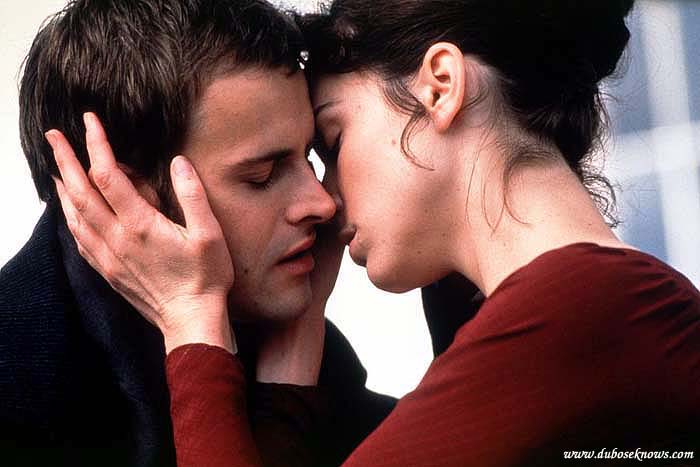
Pic 3: Edmund Bertram (Jonny Lee Miller) and Fanny Price (Frances O’Connor), jimandellen.org

Pic 4: Edmund comforting Fanny, Republic of Pemberley

Pic 5: the 2007 ITV Mansfied Park, Guardian UK

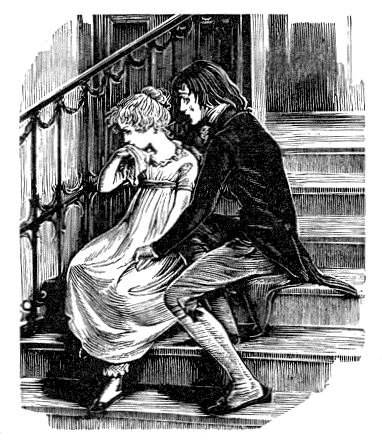
Pic 6: A Joan Hassall woodcut for Mansfield Park, Folio Edition 1959, JA Society of Australia

Pic 7: Fanny accepting Edmund’s proposal, Jane Austen Society of UK