Monday, 10 February 2014

Tom Lefroy Quote of the Week 37


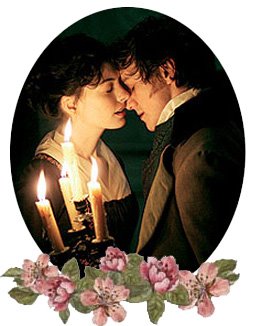
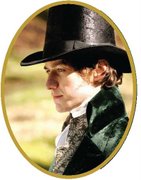
Jane (Anne Hathaway) and Tom (James McAvoy) before the faithful moment that turned the tide


I’d like to revisit an old quote of Tom’s that Rachel has posted back in August 2010 here. This quote popped up in my mind again today when I was reflecting upon a recent dinner with an old friend.


"I do not say that we are to extinguish the affections which belong to the different relations of life; on the contrary, by the pure and sincere exercise of them, selfishness is in some degree extinguished, but the gratification arising from the most delightful of these affections should not form the stay, and hope, and prop of life. No; therein consists the excess and the abuse: but I’ll say no more on this head, lest you should tell me that nothing but my vanity could suggest the necessity of sermonizing you in this manner. I own, however, it is grounded on a conviction that the sensibility and devotedness of my darling wife’s attachment to a certain degree impair her own enjoyment. But, remember, I am not willing to part with the least atom of it to any earthly object; whatever of it ought to be pruned away, let it be transplanted to that region where we may hope and trust to enjoy it in bliss unfading."


Emphasize are my own.

Rachel et al have discussed this quote in the link above, an interesting discourse I must say. Then, coming back to my dinner, my friend has related to me her love story. Since she remains anonymous here, I feel no guilt in explaining the gist of her love story (and I sincerely hope I do not trespass her boundaries here). The gist is simple: the man and the woman love each other, but due to prior engagement, they cannot be together. They find it difficult to move on, but the woman has made up her mind to do so.

I understand her journey will not be easy, so here’s my prayer for her. She reminds me of Tom, because now I believe that Tom did love Jane Austen and Mary Paul at about the same time. God knows, loving two people at the same time is very difficult, not to mention the guilty feeling. However, I believe that Tom surpassed those turmoils. He dedicated his life and love to Mary, while at the same time kept the sweet memories with Jane in one corner of his heart. 

Was it wrong to do so? I doubt it. Certainly Tom (or my friend) did not wish to have two concurrent loves. But it happened. It still happens these days. What Tom did, and what my friend will do, is distancing himself from Jane. He did not do it out of malice. He did it out of respect, love and responsibility to Mary, and out of his love to Jane as well (at least I think he didn’t want to put Jane in trouble). It was not an easy decision to make. He did it, though. My friend is doing it now. God knows how many hearts have to do that as I write this sentence. That kind of journey is not easy. Letting go is never easy.

So here’s this quote, to those hearts out there who need to let go and move on, despite the desires to be together. May the Universe bless you in this difficult journey.  

Sunday, 2 February 2014

Jane Austen Quote of the Week 260


Sorry for the delay in posting Linda's quote. We will be more on time this weekend.


Here I go again!  Sorry, but I can't help myself.  This quote just keeps popping up and I am losing count of the number of times!
 
Jane Austen (I firmly believe) said in The Loiterer No. 9:
 
I am a great reader....
 
and here is why I was drawn to that again.  I was perusing my shelves of Jane Austen books and ran across this one by Bee Rowlatt and May Witwit:  Talking About Jane Austen in Baghdad - The True Story of an Unlikely Friendship.  It is a true story  told in an email format between and English Lady and an Iraqi Lady.  And our Jane Austen brought them together.  I have only briefly looked at the book, and I must get-around to reading it in its entirety.  My point being that "reading Jane Austen" is world wide!!  It takes something "special" to be able to do that.
 
Yrs aff'ly,
Linda the Librarian


Jane Austen Quote of the Week 259

Chapter 6 of Northanger Abbey finds Isabella Thorpe and Catherine Morland having a conversation in the early stages of their friendship. They are talking of reading novels such as The Mysteries of Udolpho by Ann Radcliffe (who Jane meets with in Becoming Jane). Isabella says:


“Yes, quite sure; for a particular friend of mine, a Miss Andrews, a sweet girl, one of the sweetest creatures in the world, has read every one of them. I wish you knew Miss Andrews, you would be delighted with her. She is netting herself the sweetest cloak you can conceive. I think her as beautiful as an angel, and I am so vexed with the men for not admiring her! I scold them all amazingly about it."
Scold them! Do you scold them for not admiring her?”
“Yes, that I do. There is nothing I would not do for those who are really my friends. I have no notion of loving people by halves; it is not my nature. My attachments are always excessively strong.


I actually could not believe that we have not cited this quote before on the blog. It came into my mind yesterday after a colleague of mine, who has now become a good friend, has left to go on maternity leave. I spoke to her about not losing touch and she made a comment about how she always makes a huge effort for people who she regards as "real" friends - it has been in my mind since so thought it apt to use this quote today. As soon as a big occasion (whether it be negative or positive) strikes in your life, you certainly quickly learn who your true friends are. I never forget that either.


I hope that you are having a great weekend.


Pic Isabella and Catherine

Monday, 20 January 2014

Jane Austen Quote of the Week 258


Sunrise in north Bali (my own collection)


It’s my first turn of the year, and I already am late! Sigh... (being more punctual is undoubtedly in my resolution list for this year). However, I do find a quote that resonates with some of my New Year spirits...

From Pride & Prejudice, Volume I Chapter 11, Mr Darcy to Elizabeth:

“My good opinion once lost is lost forever”

I have been Mr Darcy in the past. I have been Elizabeth too, in the past. But I realise now that people are either: 1) not as they seem, or 2) indeed capable of growing into better versions of themselves. “People” in this case includes me, of course.

I once wrote a quote in 2010 how I went into a big fight with a friend. Since last year, we have amended the friendship, to the point that he seems not to even remember that big fight. Or at least, he chooses not to dwell on it. Good on you, my dear friend... I’m sorry that we went into that fight, but I’m glad that we are over it now.

And just early last year, I also misjudged another person. Turned out, he is not who I thought him to be. I later explained to him how I had a Lizzy Bennet moment the moment I met him (he was doing something I thought snobbish, but really, it wasn’t the case). He laughed and we became good friends. We still fought and argued a lot last year, involving a big project. Once or twice I thought of just terminating this new friendship. I’m glad that we persisted tho. Otherwise we wouldn’t have grown up in this friendship...

So, that’s one of my New Year resolutions. Instead of jumping into conclusion, I’d like to keep an open mind on anything before concluding something based on enough facts. Of course, at times we shouldn’t ignore intuition. But intuition should be balanced with good judgement as well, methinks.

By the bye, if any of you are still unsure about your New Year resolutions, fret not. The Chinese New Year of the Horse is coming soon on 31 January, just 11 days away. You can still wish upon a star for a better year ahead...

Monday, 13 January 2014

Tom Lefroy Quote of the Week 36


This week I chose a quote from part 9 of Tom Lefroy's memoirs:

"But the things I am speaking of concerning his personal character – his love for God’s word, his humiliation as a sinner, his confidence in Christ – these are not gone. My brethren, for ourselves let us think can we look for more earthly things than he had? Few of us, perhaps none of us here, will attain to that advanced life. A few, indeed, may attain to the same high eminence in the world, or to the honors that crowned him; but even of those who attain these honors few may have that unbroken family peace and happiness which he had."


The highlighted words stood out for me. We hear such horrifying stories on the news every day and I wonder whether there is a reduction in the number of people who feel a sense of humiliation after committing a sin? I also wonder whether there are less people who have unbroken family peace and happiness in the world we live in today? Perhaps people don't fight as hard for what is important.


I think that from reading this it is clear that Tom was a very admirable character, someone to respect and follow as a compass of morality. I believe he may have understood the importance for balance in life.

Pic: Yin Yang symbol

Sunday, 5 January 2014

Jane Austen Quote of the Week 257

This quote is to reply to a comment we received from Anonymous last week who questioned the authorship of Jane's novels.  You may read his comment at the bottom of the post HERE.  I did a search for the book title he wrote and found the description at Amazon HERE.  Therefore the author of the comment is Nicholas Ennos.
 
I wish to state my own opinion on this subject even though I have not read his book.  Please keep in mind that this is only an "opinion" because I have not read his book and I believe in hearing both sides of a "story".  So here is "my side" which has not been thoroughly researched.
 
I have quoted the first paragraph in the letter from Sophia Sentiment in Issue No. 9 of James Austen's "The Loiterer" only 3 times since I have been doing these quotes.  Hee hee.  Here is a link to that issue:  No. 9 published on March 28, 1789 when Jane was only 13 years old.  And I am opinionated enough to think that Jane is guilty of writing that letter.  So here it is again:
 
I write this to inform you that you are very much out of my good graces, and that, if you do not mend your manners, I shall soon drop your acquaintance. You must know, Sir, I am a great reader, and not to mention some hundred volumes of Novels and Plays, have, in the last two summers, actually got through all the entertaining papers of our most celebrated periodical writers, from the Tatler and Spectator to the Microcosm and the Olla Podrida. Indeed I love a periodical work beyond any thing, especially those in which one meets with a great many stories, and where the papers are not too long. I assure you my heart beat with joy when I first heard of your publication, which I immediately sent for, and have taken in ever since.
 
Mr. Ennos is concerned with Jane's limited amount of formal education.  If memory serves me, her father was a tutor and had a library.  As a younger daughter I can envision her spending her time perusing that library and being taught in some indirect manner by her father.  Her older brothers were formally educated and I can imagine she picked up some 'pointers' from them also.  We have to realize that there were no TVs to distract them, so time was available.
 
I have collected copies of those periodicals mentioned above, among other books of that era, and am amazed at what they did know.  Up until then I thought those people were quite limited in their knowledge. 
 
And as for the "fictitious love affair between Jane Austen and Tom Lefroy", I have my own feelings about that but I am not ready to expose myself yet with my suspicions.  Briefly, I think the 'affair' has been overdone, but their feelings may have been held inside for their own reasons, and not as 'exposed' as all these modern authors like to exploit.
 
So, at present (before I have the chance to do deep research) I respectfully disagree with Mr. Ennos' ideas.  And as we say, I won't be so foolish as to 'throw the baby (his book) out with the bath water.'  I Thank You, Mr. Ennos for your comments.  It keeps us on our toes to get the truth.
 
Yours with respect,
 
Linda the Librarian


Sunday, 29 December 2013

Jane Austen Quote of the Week 256

The subject of "Truth" in all areas of our lives has recently been brought to my attention. That naturally led me to wonder what Jane and Tom had to say about it. I was not disappointed.

This will be Part 1 and concern Jane's encounter via her brother James and what he wrote in The Loiterer, of which I am sure that our Jane was well aware. Here is the first paragraph of Issue No. 2 of The Loiterer:

Ars Rhetorica, from Vimeo

Language has been commonly defined by Grammarians to be the Art of expressing our ideas. Nor was the definition a bad one, during those times when our rude ancestors were sufficiently uninformed in the Ars Rhetorica, to speak always what they really thought. But since we have wisely banished that absurd custom, I should humbly presume that the aforesaid definition might also be altered, and that from henceforward Language be entitled the Art of concealing our Ideas; and I will venture to assert it is used infinitely oftener for the latter purpose than the former, by all ranks and ages, and at all times and in all places. So totally indeed is a regard to veracity excluded from the system of modern ethics, that were it not for diseases, duns, and wives, who sometimes tell one disagreeable truths, one would imagine that Truth as well as Justice had left this degenerate world at the expiration of the Golden Age. And that I may not take an unfair advantage, I shall say nothing of the numerous tribes, whose situation authorizes and in some measure obliges them to a continual breach of veracity; (such as foreign ministers, ladies; maids, lawyers, an physicians; to which list I may also add lovers and their mistresses, who can claim so many precedents in favour of this practice, that they may be said to lie by prescriptive right) and only consider how little attention we all of us pay to truth in the common intercourse of life.

Due to my limited education, it was necessary to define Ars Rhetorica and the Golden Age. As you can see by the above quote, James deplores the then terrible world condition of Truth.

Lately (in the past 10 years at least) I have noticed those same "conditions" in today's world. Evidently from what James wrote it has been going on for quite some time and I cannot disagree with him.

I can't help but wonder how this condition (of lack of Truth) may have possibly shown up in Jane's works. However, that research would be a book in itself.

I never cease to be amazed at how smart all those Austens and their contemporaries really were. Now, you may check Part 2 and Tom's thoughts.

Yours in Truth,
Linda the Librarian
 

Monday, 23 December 2013

Jane Austen Quote of the Week 255


Sir Walter Scott in 1822 by Henry Raeburn

I seem to open my quote these days with apologies again for being late. My excuse this time was, again, a report overdue. But then also, I had difficulties in finding a quote that expresses what I feel at the moment (scroll down to see why). Thank God for our own Linda’s Loiterer; I found just what I needed there.


Here Linda compiled what male authors thought of Jane Austen post-mortem. Sir Walter Scott’s comments caught me, and I herewith quote it in its entirety. 


"Read again, for the third time at least, Miss Austen's finely written novel of 'Pride And Prejudice'. That young Lady had a talent for describing the involvements and feelings and characters of ordinary life, which is to me the most wonderful I ever met with. The big Bow-Wow strain I can do myself like any now going; but the exquisite touch which renders ordinary common-place things and characters interesting from the truth of the description and the sentiment is denied to me. What a pity such a gifted creature died so early!"

The Diary of Sir Walter Scott
(March 14, 1826)


“What a pity such a gifted creature died so early!” is something close to my heart at the moment. This morning I received sad news that an old colleague of mine passed away last night after battling cancer for a few months. She was a mere 44 years old, about Jane Austen’s age when our authoress died. As for my friend, I think it was – among others – overwork that contributed to her illness. I was somewhat aware of this coming, when I learned that she had metastatic cancer a few months back. But still, I still feel that pang of loss. 

My friend, like Jane Austen, was a hard worker. She worked hard for her cause, such that she seldom took a rest. Her passing is a strong reminder for me to slow down this holiday season. Yes, I have some reports coming... but so what? It’s not like I’ve been laying around doing nothing for the last few months.

It’s just... in this era, everything seems to be measured with what we have done. What we have achieved. Those are important, I don’t deny that. But those achievements should not come at a cost; certainly not health and happiness as a cost.  

So, let’s commit to ourselves to slow down this holiday season. Put the tools down, as my old friend told me this morning, when I told him about my sad news. Take a piece of paper or a diary and start writing, hand writing, not typing... that is a healthier option. Walk down the beach you always want to walk; go up the hill you always want to conquer. Take time to smell the fresh green grass... and let’s be grateful that we are still here, healthy and happy, to celebrate Christmas, Year End and New Year.

Monday, 16 December 2013

Jane Austen Quote of the Week 254

Tomorrow (16th December) will be Jane's 238th birthday.

There are so many quotes to pick from in order to celebrate Jane's birthday and mine might seem to be a strange choice, both because it has been used before on the blog but also because it doesnt seem to be birthday related. I love it though!

This quote is taken from chapter 5 of Mansfield Park when Mary is being spoken to about marriage.

"If one scheme of happiness fails, human nature turns to another; if the first calculation is wrong, we make a second better: we find comfort somewhere."

I think that this highlights Jane's philosophy; she recognises bad luck and events that occur in life which are out of our control but she also sees hope and gives us the courage to seek comfort in a better plan. These words are very uplifting for me and form wise advice from someone who, I believe, lived a honest, thoughtful and inspiring life.

Happy Birthday Jane!


Pic: Great design taken from old-fashioned charm blog

Saturday, 7 December 2013

Tom Lefroy Quote of the Week 35

Our James McAvoy as dear Tom Lefroy in 'Becoming Jane' 2007

This is Part 2 in my study of "Truth" and here is what I found in the "Memoir of Chief Justice Lefroy".  It is in Chapter 4, pages 76 to 78 specifically, but I highly recommend reading the entire chapter for more details.  I was astounded when I read it because it is exactly what I had lately thought of myself and he wrote this almost 200 years ago.  This quote is rather long but it does tell the story.  You may read the entire Memoir here:  Memoir of Chief Justice Lefroy.
 
Certain it is that the law may and does in some measure restrain the progress of crime, but it cannot reach the root of the evil or the source of crime. The law cannot change the nature or the habits of men, and our experience of the operation of the law since the year 1776 is demonstrative of this fact. It is no impeachment of the law that the evil has not been eradicated, nor any reason why we should abandon the law, or cease to carry it into execution. So long as men continue to commit crimes, the law must be shown to be supreme, and punishment should follow crime. But whilst we may naturally be indignant at the crimes which now exist, our feelings of humanity ought to lead us to find out, if possible, the source of the evil and its remedy, and we are happily not left without the means of doing so, for Scripture teaches us that the source of the evil lies in the absence of the fear of God, and of the influence of true religion, and we have on the same high authority the true and only remedy for the evil in that divine maxim, which should be impressed upon the minds of all " Train up a child in the way he should go, and when he is old, he will not depart from it." But, gentlemen, woeful experience has proved the converse of this great truth, for it is in the way in which they should not go that unhappily the lower orders of the people are too often trained up. To your own experience, gentlemen, I would put the question, 'What sort of training do the lower orders get ?' 1 am bold to say, that if my own children or the children of any of you whom I have the honour to address were so trained, they would probably become the same pests of society. I do not speak of these things theoretically, as I have made the disturbances of this country the frequent subject of my consideration during the last fifteen years, and I give it as my opinion, that until a well-ordered system of education is introduced, not the mere mechanical art of reading and writing, but a system calculated to impress upon the young mind as far as is in the power of man, to write upon the young heart, the great truths of Christianity truths which all sects and parties concur in acknowledging; unless such be done, it is idle to hope for peace, loyalty, or tranquility in this country; society will, as it is doing at present go on from bad to worse. I trust, gentlemen, that you whom I now address will take this matter seriously to heart, in pity, at all events to the rising generation, how- ever you may despair of the reform of those who now seem hardened in crime. I do not mean to dictate to you, gentlemen, it would not become me to do so from the place where I now address you ; I direct my observations to you as country gentlemen, and to you who now have schools on your estates, I would earnestly suggest the necessity for improving the present system of education, and no longer allowing the children of the peasantry to drink of the poison imbibed at the hedge schools, but to see that they are at least instructed in the fundamental truths of the Christian religion, which, you must allow me to remind you, forms a fundamental part of the law of the land. Without this, gentlemen, I see no means by which we can look for the fear of God and the principles of religion having their due influence upon the rising generation, nor do I see any other means of striking at the root of the evils which now afflict our unhappy country.


Whew, and this is just a "small" excerpt of an eye-opening chapter.  I must find time to read the entire Memoir for who-knows what  else is in there.   Tom really was "something else" as we say now-a-days.  As for Truth, "you will know the Truth and the Truth will set you free"!
 
Happy Reading,
Linda the Librarian