As Jane Austen’s most famous novel is Pride & Prejudice, I decided to pull out this quote to commemorate her passing away this 18 July. So it goes, as the studious Mary Bennet commented on Mr. Darcy:
“Vanity and pride are different things, though the words are often used synonimously. A person may be proud without being vain. Pride relates more to our opinion of ourselves, vanity to what we would have others think of us.”(PP, volume I, chapter 5).
Hmm… I’m ambivalent with Jane Austen’s definition of pride and vanity, because I have formed my own over the years (see below). I know, I know… it’s the first time I argue with what Jane wrote. It’s ironic that I should say so. But I think this blog is a free media where we can debate our dearest Jane Austen herself, not for debate sake, but for a healthy understanding.
And you know what? Many people will bash me for this; but I often think that Fitzwilliam Darcy often treaded on the definition of ‘vanity’ instead of ‘pride’ (well, not a secret here. My number one Austen hero is actually Mr. Knightley, not Mr. Darcy. Okay, sue me, but give me time to hide!)
I still recall what Darcy said to Elizabeth as he tried to propose her for the first time. He spoke of his affection to her whilst at the same time acknowledging her inferiority to his status. Why, I can understand why Lizzy kicked him out of the house! Really, Darcy and Mr. Thornton of the North & South should swap notes on how to charm smart independent ladies! Check this out!
Let’s see what Dictionary.com says about the two things:
Pride: a high or inordinate opinion of one's own dignity, importance, merit, or superiority, whether as cherished in the mind or as displayed in bearing, conduct, etc.
Vanity: excessive pride in one's appearance, qualities, abilities, achievements, etc.; character or quality of being vain; conceit: Failure to be elected was a great blow to his vanity.
Anyway, there is a very fine line between pride and vanity, so fine and thin that we usually fail to detect it. But it’s important to me to check whether at one point I’m experiencing pride or vanity. Hence, my indication is that:
1) If I’m ‘just’ proud of myself or someone or something, with a warm feeling inside because of what I/he/she/that something did/said, that’s pride. A warm feeling to acknowledge that it was truly something to be done/said, or that the state one’s in is truly something worth praising
2) But if I then compare such action/statement with someone else’s, saying that mine/his/hers is incomparably better than that someone else, then there’s red alert there. It’s possible that it’s not pride that I have. It’s vanity instead
3) Vanity can be shaken or blown by failure. Yet, it’s harder to destroy pride. Pride is the ability to walk with head straight despite our failure or defeat; for we know that we’ve done our best, and nothing is wasted
Hence, I’m sorry to say this, but to me Mr. Darcy’s accounts are often on the verge of vanity, hence he needed Elizabeth Bennet to balance him. Just like Emma Woodhouse. Her excessive pride of herself made her insensitive towards Miss Bates, hence George Knightley needed to rebuke her.
But Fanny Price would be someone I put directly into ‘pride’. She has her own pride that guides her through all the troubles, despite Mrs. Austen labeling her as ‘insipid’.
Of course, this is my 21st century definition of pride and vanity. Yours might be different. Thoughts?
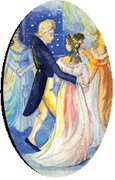
Pic: A very nice water-colour picture of Darcy and Lizzy by Jane Odiwe


 Here are the answers:


 Pic 1:


.jpg)


 (All emphasis my own)


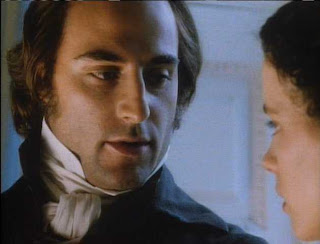 Emma is informing Mr. Knightley that Harriet Smith had refused an offer of marriage from Robert Martin. Mr. Knightley says:


 Posts
Posts