Monday, 16 June 2014

Jane Austen Quote of the Week 271

Here is a quote from Linda, thanks so much.

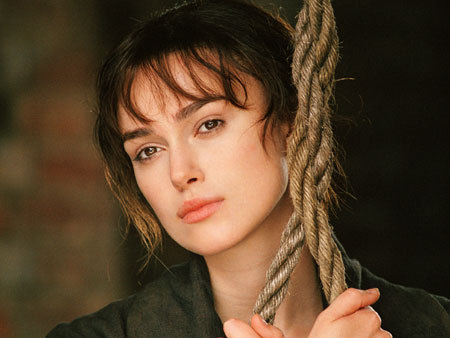
This Sunday, June 15, is Father's Day here in the U.S.  So in honor of all of our Fathers, I will quote Jane on dear Mr. Bennet.
We begin in Chapter 1 of "Pride and Prejudice" where Mr. Bennet is rather "put out" as Jane would say.  There is some "give and take" about Netherfield and its new inhabitants when Mrs. Bennet says:
"Mr. Bennet, how can you abuse your own children in such a way! You take delight in vexing me. You have no compassion on my poor nerves."
Mr. Bennet answers:
"You mistake me, my dear. I have a high respect for your nerves. They are my old friends. I have heard you mention them with consideration these twenty years at least."
In the last chapter, 61, he takes a turn for the better with this opinion after his 2 oldest daughters are married:
Mr. Bennet missed his second daughter exceedingly; his affection for her drew him oftener from home than anything else could do. He delighted in going to Pemberley, especially when he was least expected.
And so it is with Fathers and Daughters.  My Father was quite upset when I announced I was leaving home to live elsewhere after finishing college.  Thank  goodness, he did get over it.

Yrs aff'ly,

Linda the Librarian

Pic: www.danahuff.net


Sunday, 15 June 2014

Jane Austen Quote of the Week 270

"Belle" movie poster
There's a movie I need to see before it disappears from my local theater. "Belle", directed by Amma Assante and featuring Gugu Mbatha-Raw as the main heroine. The movie is set in the 18th century Georgian England on the life of Dido Elizabeth Belle (1761-1804), the illegitimate daughter of Admiral Sir John Lindsay and Maria Belle, an enslaved woman of African origin. Dido Elizabeth Belle was in turn the grand niece of William Murray, 1st Earl of Mansfield, who later became a Lord Chief Justice.

I've always admired Gugu after watching her in Lost in Austen and in a Marple episode (of which title I can't remember). I remember thinking about her in Lost in Austen, that she was an amazing actress, but it wouldn't be possible to see her in a period drama. And lo and behold, I was wrong. And I'm so happy I was wrong.

But it returns me to Jane Austen, and how eerie is that Belle actually was Austen's contemporary. Belle was about the same age as Jane Austen when the former died (43 years old, Jane died when she was 42 years old). I wonder if Jane ever heard of the great niece of Chief Justice Murray. And would it be too far fetched to guess whether Jane's novel "Mansfield Park" was inspired by the Mansfields?


The painting of Dido Elizabeth Belle and cousin Elizabeth Murray ca 1779 (formerly attributed to Johann Zoffany)

At any rate, it got me digging Mansfield Park to find a quote related to slavery. It's difficult to find a verbatim one; but I found this conversation between Edmund Bertram and Fanny Price:


[Edmund:] “Your uncle is disposed to be pleased with you in every respect; and I only wish you would talk to him more. You are one of those who are too silent in the evening circle.”

[Fanny:] “But I do talk to him more than I used. I am sure I do. Did not you hear me ask him about the slave-trade last night?”


[Edmund:] “I did — and was in hopes the question would be followed up by others. It would have pleased your uncle to be inquired of farther.”


[Fanny:] “And I longed to do it — but there was such a dead silence! And while my cousins were sitting by without speaking a word, or seeming at all interested in the subject, I did not like — I thought it would appear as if I wanted to set myself off at their expense, by showing a curiosity and pleasure in his information which he must wish his own daughters to feel.”


Mansfield Park was published in May 1814, seven years after the Slave Trade Act in 1807. I am inclined to think that Miss Austen understood that slavery was still a sensitive topic at that time, hence her hidden messages about her anti-slavery views in Mansfield Park. Of that topic alone, some scholars have reviewed it rather extensively (see this for an example).

Monday, 9 June 2014

Jane Austen Quote of the Week 269

Dear Readers,

 
We seem to have a problem keeping up with our posts these days, and Icha asked us just this day, June 8, the following question when she sent us the roster for June and July:  "7/8 June:  God knows, anyone want to volunteer?"  Well she inspired me with that question due to the fact that this Sunday, June 8, I am celebrating the Church holiday known as "Pentecost" with some friends and we are doing it on line.  So, I determined to check to see if our Dear Jane used the word "God" in P&P, and sure enough, she did - 4 times.    And here they are:

 
Two of them are sort of derogatory, as in Chapter 3:  For God's sake, say no more of his partners.
 
And in Chapter 46:  "Good God! what is the matter?"
 
The next 2 quotes are a bit more respectable, as in Chapter 24:  I have nothing either to hope or fear, and nothing to reproach him with. Thank God! I have not that pain.


And in Chapter 35, my favorite:  I will only add, God bless you. " Fitzwilliam Darcy."
 
So, dear Readers, excuse me whilst I go back to my study now.  And, to quote our dear Jane:  God Bless You All!
 
Linda the Librarian

Sunday, 1 June 2014

Tom Lefroy Quote Week 39


The House of the Commons during Regency Era


It’s almost presidential election day in my country, and many people are in the election-frenzy (or busy ignoring it altogether). I opened the Memoir of Chief Justice Lefroy randomly just now, trying to find a quote (we have been abandoning the site for a while). And the one that I found made me smirk because election is always a frenzy to report, even back then in 1841...

Page 135

To his wife

Longford, 16th July 1841

We pulled up to-day considerably, but still are beaten by a large majority, owing to the Roman Catholics, who promised to vote for us or stay away, being brought up by the priests in spite of their wishes and polled against A___, as well as from the number of Protestants who were deterred from leaving their houses, by the violence and intimidation of the Priests’ mobs. Thank God, we have had a comparatively quite time with this town, owing to the providential circumstance of having a good High Sheriff, and an effective military force, as well as police.

.... The election is virtually over, but the Members can’t be declared until to-morrow evening. Henry White has left this, and comparatively few have been in the town to-day. The poll as just announced is: for Henry White, 613; for Luke White, 614; plumpers for Lefroy, 480. On the whole, we have made a very noble fight, and we expect a few more plumpers to-morrrow.


Interesting....

Sunday, 4 May 2014

Jane Austen Quote of the Week 268


'The Three Sisters' from JA Center UK
I have just found the pleasure of reading Jane Austen’s ‘The Three Sisters’ Juvenilia from Pemberley. The reading is light and pleasant. There’s a funny thing tho that I found out about Mary Stanhope, one of the three sisters (Mary, Sophy and Georgiana Stanhope). So a Mr Watts asked for Mary’s hand in marriage, but she was unsure whether to accept it or not. He was rich, but she was not very fond of him. Mary’s mother then (as many other mothers in the Regency Era) threatened her, saying that if Mary did not give a positive answer by the day after (when Mr Watts was scheduled for tea with them), he would address the proposal to Mary’s sisters (Sophy and Georgiana). Then, as Mary narrated to her close friend Fanny, 

 "The only thing I can think of, my dear Fanny, is to ask Sophy and Georgiana whether they would have him were he to make proposals to them, and if they say they would not, I am resolved to refuse him too, for I hate him more than you can imagine. As for the Duttons, if he marries one of them, I shall still have the triumph of having refused him first. So, adeiu my dear Friend --"


That is such a very girlish response to a marriage proposal from a girl who had almost zero attachment to the said person. I wish that Jane Austen had actually developed ‘The Three Sisters’ for a larger novel. I’d love to read more about the Stanhope Sisters.

Saturday, 3 May 2014

Jane Austen Quote of the Week 267

I apologise for us being slower than normal recently, we have all had a lot on. We are now back though.


Over the past week I have read Tracy Kiely's Murder at Longbourn which I really enjoyed. The story is of a character called Elizabeth Parker who is planning New Year's resolutions after her boyfriend has recently cheated on her. She visits her Aunt Winnie's home who is hosting a murder mystery party on New Year's Eve. Rather predictably a party guest ends up dead and the rest of the story involves Elizabeth trying to solve the crime. The story is witty and had me laughing out loud in parts, many of Jane Austen's themes and characters are drawn upon and it is an engaging, fun read.


At the start of every chapter is a famous quote and there are some great choices used by the author.


Chapter 12 starts with Thornton Wilder's quote "It's when you're safe at home that you wish you were having an adventure. When you're having an adventure you wish you were safe at home."
This stood out for me as I am always striving to have more adventure in my life, but when I do, I always think and long for the comforts of home.


From Chapter 28, a Pride and Prejudice line referencing Elizabeth Bennett talking to Mrs. Gardiner about the actions of Mr Darcy: "Is not general incivility the very essence of love?"


Finally Chapter 29 ends with the famous line from Pride and Prejudice: "That would be the greatest misfortune of all! To find a man agreeable whom one is determined to hate!"#


I think a lot of women out there can relate to this ...


Tracy Kiely Murder at Longbourn