Friday, 27 February 2009

Jane Austen Quote - Week 45


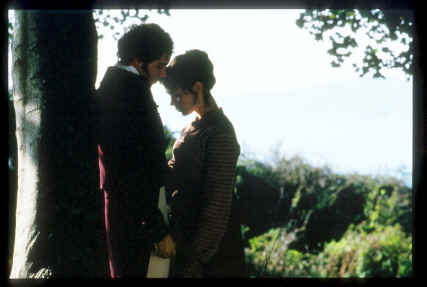
This week's quote is taken from Persuasion Volume II Chapter XI (Oxford edition, 2004, p. 196), Captain Wentworth’s words to Anne Elliot:

‘…You were single. It was possible that you might retain the feelings of the past, as I did; and one encouragement happened to be mine. I could never doubt that you would be loved and sought by others, but I knew to a certainty that you had refused one man at least, of better pretensions than myself: and I could not help often saying, Was this for me?’

Ahem. Sorry that I go back to Persuasion again… I promise that I will get another Austen book for my turn next month. But ah…Captain Wentworth’s trepidation is so recognizable here… who would not tremble when one is faced with hope again? For with hope, comes fear… fear of being rejected and hurt again… that the scar that is not yet healed properly will gush open again. But I am sure that Wentworth (or Jane Austen herself) also thought that…that if he/she didn’t seize the opportunity and have another try, he/she would regret it for the rest of his/her life.

So, there you go. ‘Was this for me?’…and Carpe Diem. Wentworth wrote the famous letter, and saw Anne Elliot flying (or running across Bath) over to him. Sigh…

Coming back to Jane Austen and Tom Lefroy… I am certain that Jane had a bit of Tom-moment when she wrote it. I just wish… I just wish things would be different… but it never was, was it not?

Pic: A very lovely photograph of (supposedly) Captain Wentworth’s letter to Anne Elliot (written and photographed by Sodabug), from Flickr.com

Marvel's take on Pride & Prejudice!

Well, thanks to Michelle, who has spotted this one earlier and who understands my fascination towards comic world, here's Pride & Prejudice by Marvel Comics! You know Marvel, don't you dear friends?

Oh well... most definitely NOT Jane Austen. Marvel usually dwells on Spiderman, X-Men, Fantastic Four, Thor, the Hulk... Iron Man... you got the idea... all superhero stuffs. So, it's a surprise for me that they chose to adapt one of Jane Austen's most famous novels, Pride & Prejudice. But rest assure, dear friends, it seems that the author, two-time Rita Award-Winner Nancy Butler and acclaimed artist Hugo Petrus are taking care of PP seriously. Here's what Ms. Butler says about her project:

"I've tried to keep the flavor and sly humor of the story, and modernized the language only for better understanding," explains Butler. "Wherever space allowed, I've used Jane Austen's own words. This is your grandmother's PRIDE & PREJUDICE, and your mother's and your own."

Ah well... methink it's a refreshing take... though I honestly think that the art is too modern for Jane Austen. I can see Mary Jane Parker (Spiderman Peter Parker's wife) as Lizzy Bennet due to her hair colour etc. I wouldn't mind if the art is toned down a bit to make it more Georgian style. Not the hair style or clothes, I think Hugo Petrus got it right... the pen strokes. Too... too bold for a Georgian era. Still, a lovely comic, I might say...

Click here for the 5 pages sneak peek of PP#1 by Marvel Comics.

Pic: Part of the cover to Pride & Prejudice #1 by Marvel Comics

Saturday, 21 February 2009

Anne Hathaway is nominated for Academy Award's Best Actress!

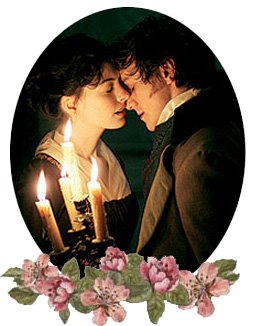
I have to apologise for this post for I created bias by not displaying proper Oscar news about James McAvoy's Atonement Oscar achievements last year (didn't mean to... was just too busy with life... and still now...). I should've done or suggested a post about JMA last year, but just didn't think of it. Now I think we should post any exciting news about James MacAvoy and Anne Hathaway as the main actor and actress for Becoming Jane (plus other supporting casts).

Anyway, I also have to apologise for the belated news, for surely many of you have been following Oscar news this year... I just didn't realise that four of five nominees in this year's Oscar is my favourite actresses. This is the complete list of Oscar 2009 nominees for Best Actress in alphabetical order:

Anne Hathaway - 'Rachel Getting Married'
Angelina Jolie - 'Changeling'
Melissa Leo - 'Frozen River'
Meryl Streep - 'Doubt'
Kate Winslet - 'The Reader'

I don't have an opinion about Ms. Leo, but that's more attributed to my lack of knowledge of her. But the other actresses are my fave (particularly Anne, Meryl Streep and Kate Winslet), and I'm so proud of Anne for her achievement! What a great girl she is!

So, I don't care if Annie doesn't win this year's Oscar, which will be announced tomorrow... she's still my fave actress. I wouldn't mind seeing Meryl or Kate winning either...

See this for the complete profile of 'Rachel Getting Married'.

Pic: Anne Hathaway as Kym from Wikipedia's 'Rachel Getting Married'

'Lost in Austen' series will be adapted into movie

Thanks a lot Mariana for the news, here's a very exciting news for 'Lost in Austen' fans like myself (my apologies to the ladies who dislike the ITV series, hehehe...). LIA will be made into a movie.

From Broadcast Now:

Sam Mendes to exec Lost in Austen movie

Sam Mendes to exec Lost in Austen movie


ITV's Jane Austen time-travel drama Lost in Austen is to be turned into a movie, with Oscar-winning director Sam Mendes as an executive producer.

Indie Mammoth Screen will develop the movie version with Revolutionary Road producer Neal Street Productions for Sony Pictures, the studio behind the Spider-Man franchise and more recently the James Bond film Quantum of Solace.

The original four-part series, starring Jemima Rooper and Gemma Arterton, aired on ITV1 in September last year, drawing a mainly ABC1 audience of around 4 million per episode.

The show's original writer, Guy Andrews, is currently working on the movie script.

He will also act as executive producer alongside Mammoth Screen's Damien Timmer and Michele Buck, and Neal Street Productions' Mendes and Pippa Harris.

There are no casting details as yet for the movie adaptation, although Mendes' wife Kate Winslet could be a contender.

Winslet won a Bafta and was nominated for an Oscar for her portrayal of the lovestruck Marianne Dashwood in Ang Lee's big screen adaptation of Austen's Sense and Sensibility in 1995.

Pic: Jemima Rooper (Amanda Price) in 'Lost in Austen'

Quote of the Week 44 by Linda

I thought I might do something a bit different this week by collecting a group of tidbits of wisdom from “Emma”. Jane Austen's words are still true today as they were then. People have not really changed in all those passing years. We still say, believe and do the same things. I believe the quotes are self explanatory.

Chapter 9:


"And then their uncle comes in, and tosses them up to the ceiling in a very frightful way!"

"But they like it, papa; there is nothing they like so much. It is such enjoyment to them, that if their uncle did not lay down the rule of their taking turns, which ever began would never give way to the other."

Chapter 11:

There are people, who the more you do for them, the less they will do for themselves.

Chapter 32:

Miss Hawkins perhaps wanted a home, and thought this the best offer she was likely to have."

Chapter 46:

So unlike what a man should be! None of that upright integrity, that strict adherence to truth and principle, that disdain of trick and littleness, which a man should display in every transaction of his life."

And two from Chapter 49:

A man would always wish to give a woman a better home than the one he takes her from; and he who can do it, where there is no doubt of her regard, must, I think, be the happiest of mortals.

-------------

What did she say? Just what she ought, of course. A lady always does.

END OF QUOTES


We do thank you, Miss Jane Austen, for giving us so many wise words. And Thank You all for your concern during the last few weeks of our illness. We are all recovered and feeling much better now.

Hugs,
Linda the Librarian


Pic 1: Kate Beckinsale as Emma from: Strangegirl
Pic 2: Kate Beckinsale & Mark Strong as Emma & Knightley from: Strangegirl

Saturday, 14 February 2009

Quote of the Week 43 - Valentine Edition - by Rachel

As its Valentines Day today I prepared my quote before I departed on my travels to reflect this special day. I hope that you are all celebrating in style.....single or attached!


My quote is taken from Persuasion (Chapter 23), in which Anne and Captain Harville's discuss the male versus the female heart. Captain Wentworth overhears Anne's dialogue, which leads to the famous love letter (quoted earlier on the blog) and the rest is history! I know that we have used many Persuasion quotes lately but they are all so fantastic and etch in our brains with permanent marker due to their brilliant construction and delivery, and of course their connotations. Calling Jane a special lady is an understatement.

" 'Oh!' cried Anne eagerly, 'I hope I do justice to all that is felt by you, and by those who resemble you. God forbid that I should undervalue the warm and faithful feelings of any of my fellow-creatures! I should deserve utter contempt if I dared to suppose that true attachment and constancy were known only by woman. No, I believe you capable of everything great and good in your married lives. I believe you equal to every important exertion, and to every domestic forbearance, so long as--if I may be allowed the expression--so long as you have an object. I mean while the woman you love lives, and lives for you. All the privilege I claim for my own sex (it is not a very enviable one you need not covet it), is that of loving longest, when existence or when hope is gone.' "

"She could not immediately have uttered another sentence; her heart was too full, her breath too much oppressed."

But I particularly love the lines :

"I mean while the woman you love lives, and lives for you. All the privilege I claim for my own sex (it is not a very enviable one you need not covet it), is that of loving longest, when existence or when hope is gone." "She could not immediately have uttered another sentence; her heart was too full, her breath too much oppressed."

I feel that this statement is so so representative of the love between Jane and Tom, I am so completely sure of it. "Her heart was too full"- As Jane was writing this, I KNOW that she was referring to her own feelings and memories.

I have chosen pictures from the 2007 tv version of Persuasion as I like Sally Hawkin's Anne and Rupert Penry- Jones' Wentworth. I know that the other ladies on this site may disagree but that allows a greater variety in pictures!


Happy Valentines Day!!

Pic 1: Sally Hawkins Anne + Rupert Penry-Jones' Wentworth from visitbath
Pic 2: Anne Hathaway + James McAvoy in: abc

Saturday, 7 February 2009

Jane Austen Quote of the Week 42

I really uhmmed and ahhed over my quote this month - it is so hard to pick just one out of Jane's wealth of wisdom and all-around awesomeness. But this week my quote is from Mansfield Park, and I've chosen it just because I love it. ;)

The quote is from chapter 42. Fanny Price has been shipped back to Portsmouth, and is deep in coversation with the persistant Henry Crawford, who is pressing/flattering Fanny up a storm:


(Henry) '... Shall I go? Do you advise it?'

'I advise! - you know very well what is right.'

'Yes. When you give me your opinion, I always know what is right. Your judgment is my rule of right.'

'Oh, no! - do not say so. We have all a better guide in ourselves, if we would attend to it, than any other person can be. Good bye ...'

Mansfield Park, Chapter 24


Ah Fanny, what a beautiful brush-off.

But isn't it a fantastic and thought-provoking statement? I am always struck by Jane's frequent comments regarding personal conscience / responsibility for ones self, etc (although now pressed I can't think of a handful of the bat), but my choice this week was partly inspired by Linda's earlier quote from Pride & Prejudice: 'That is a question which I hardly know how to answer. We all love to instruct, though we can teach only what is not worth knowing.'

I think what the character's are saying here in P&P relate back to Fanny's statement - that there are some things we need to decide in our hearts, for ourselves - that no one can make that choice for us, or instruct us what to do (life choices, moral choices, etc) - the conscience must guide - does this make sense? (It has been a ridiculous day ...)

Anyway - they are ideas I like to think about. Thank you Jane!

Have a great week, friends. :)


Pic: Fanny & Henry in Mansfield Park 1999 (yes, this pic is contrary to what the quote is getting at, but how hard to find Fanny & Henry pics online!) from: Jim and Ellen

Saturday, 31 January 2009

Jane Austen Quote – Week 41 (by Linda)

My quote this week is from Persuasion, Chapter 24:


QUOTE

Who can be in doubt of what followed? When any two young people take it into their heads to marry, they are pretty sure by perseverance to carry their point, be they ever so poor, or ever so imprudent, or ever so little likely to be necessary to each other's ultimate comfort. This may be bad morality to conclude with, but I believe it to be truth; and if such parties succeed, how should a Captain Wentworth and an Anne Elliot, with the advantage of maturity of mind, consciousness of right, and one independent fortune between them, fail of bearing down every opposition? They might, in fact, have borne down a great deal more than they met with, for there was little to distress them beyond the want of graciousness and warmth. Sir Walter made no objection, and Elizabeth did nothing worse than look cold and unconcerned. Captain Wentworth, with five-and-twenty thousand pounds, and as high in his profession as merit and activity could place him, was no longer nobody. He was now esteemed quite worthy to address the daughter of a foolish, spendthrift baronet, who had not had principle or sense enough to maintain himself in the situation in which Providence had placed him, and who could give his daughter at present but a small part of the share of ten thousand pounds which must be hers hereafter.

END OF QUOTE

Pardon me for sounding ‘preachy’ to the younger generation, but today, Jan. 30, is my 68th birthday, and what a horrible day it was. Four sick people in the house to nurse and me just getting over a siege myself and feeling rather poorly. We decided to postpone my celebration till everyone was feeling better and the ice storms had melted so visitors could travel.

My quote was brought on by the wedding plans of my dear friend’s son. I thought what Jane had to say was true and appropriate. She gives us, in the nicest way, what we shouldn’t do, and then gives us an example of how it should be done via Anne and Wentworth. I only wish I had seen this quote some 39 years ago. She has included so many truths that we really have to pay attention to catch them. So ends today’s sermonette.

Linda the Librarian

Pic: Anne Elliot (Amanda Root) and Captain Wentworth (Ciaran Hinds) in Persuasion 1995, from The Independent UK

Sunday, 25 January 2009

Later manuscripts of Jane Austen

I just received a notification from Amazon.com about this very expensive but also very interesting book about the later manuscripts of Jane Austen. The hardcover book is appropriately titled Later Manuscripts (The Cambridge Edition of the Works of Jane Austen), edited by Janet Todd and Linda Bree, and we can see the table of contents here. It combines the three unfinished novels of Jane Austen (Lady Susan, The Watsons and Sanditon), with opinions on Mansfield Park and Emma. We also have extra poems and charades in the 872 pages book.

Anyone interested? I might just wait 1-2 years for the decently priced second hand version, $ 126 is too much for a student...

Pic: Cover to Later Manuscripts from Amazon.com

Saturday, 24 January 2009

Quote of the Week – Week 40

Thank God that those other Jane ladies here are eloquent in exploring other JA books, lest I fear that dearest readers will be bored with my chosen quote, for it is, again, taken from Persuasion. I can’t help it, the book just holds my heart so gently yet persistently nowadays that all I did to find a quote was just randomly opened a page, and there you go: the quote of the week. From Volume II Chapter XI (Oxford edition, 2004, p. 194) after Anne Elliot received that letter from Captain Wentworth, and they both wandered along the streets of Bath just to rekindle their old feelings:

QUOTE

There they returned again into the past, more exquisitely happy, perhaps, in their re-union, than when it had been first projected; more tender, more tried, more fixed in a knowledge of each other’s character, truth, and attachment; more equal to act, more justified in acting. And there, as they slowly paced the gradual ascent, heedless of every group around them, seeing neither sauntering politicians, bustling house-keepers, flirting girls, nor nursery-maids and children, they could indulge in those retrospections and acknowledgments, and especially in those explanations of what had directly preceded the present moment, which were so poignant and so ceaseless in interest.

END OF QUOTE

I find this passage very interesting, for these feelings can only be experienced by those who had loved and lost before, who completely understand the meaning of growing up alone, letting go all the pain without giving into hatred or feeling sorry for themselves. It’s like… they grow up without each other’s presence, even without any hope that their love will be returned, and yet they survived and emerged as better beings. And when they met again, they found the same souls that they were attracted to, and also much more, for their separate learning processes had taught them so much.

Jane, you’re a wonderful woman, you know that my lady? I wonder if she was thinking of Tom Lefroy when she wrote this passage... and having a 'what-if' moment. Nevertheless, a strong woman she remained!

Pic: Captain Wentworth (Rupert Penry-Jones) and Anne Elliot (Sally Hawkins) from Clerkenwellfilms

Saturday, 17 January 2009

Quote of the Week- Week 39

This week I have chosen a quote from Chapter 1 of the beautiful Northanger Abbey.

Catherine has just been introduced to us and it takes us through her transformation into an intrigued and excited 17 year old.


Catherine is one character within Jane's work which I have always taken a particular fondness. I feel that sometimes she is forever in the shadow of characters such as; Elizabeth Bennet, Emma Woodhouse, Anne Elliot.


Mr. Allen, who owned the chief of the propertyabout Fullerton, the village in Wiltshire where theMorlands lived, was ordered to Bath for the benefit of agouty constitution--and his lady, a good-humoured woman,fond of Miss Morland, and probably aware that if adventures will not befall a young lady in her own village,she must seek them abroad, invited her to go with them. Mr. and Mrs. Morland were all compliance, and Catherineall happiness.


This line is particularly poignant to me as in three weeks I am going away for nearly 6 weeks to do some volunteer work abroad again. It is my calling at this time in my life. I adore Jane's insight into the world and other people, considering she rarely travelled.


Pic 1: Masterpiece Images- Catherine Morland - Played by Felicity Jones

Saturday, 10 January 2009

Quote of the Week by Linda - Week 38

While viewing my VHS of Pride and Prejudice with Elizabeth Garvie and David Rintoul recently, Lizzie said something so interesting that I had to look it up to make sure it was really in the book. Sure enough, it was there. The meaning of that one sentence is puzzling and I am hoping someone can shed some light on it.

In Chapter 54 Lizzie and Jane are having a sisterly chat – about men, what else? The men in question are Mr. Bingley and Mr. Darcy, of course, and their recent get together at the Bennet home. Here is the quote:

QUOTE

"It has been a very agreeable day," said Miss Bennet to Elizabeth. "The party seemed so well selected, so suitable one with the other. I hope we may often meet again."

Elizabeth smiled.

"Lizzy, you must not do so. You must not suspect me. It mortifies me. I assure you that I have now learnt to enjoy his conversation as an agreeable and sensible young man, without having a wish beyond it. I am perfectly satisfied, from what his manners now are, that he never had any design of engaging my affection. It is only that he is blessed with greater sweetness of address, and a stronger desire of generally pleasing, than any other man.

"You are very cruel," said her sister; "you will not let me smile, and are provoking me to it every moment."

"How hard it is in some cases to be believed!"

"And how impossible in others!"

"But why should you wish to persuade me that I feel more than I acknowledge?"

"That is a question which I hardly know how to answer. We all love to instruct, though we can teach only what is not worth knowing. Forgive me; and if you persist in indifference, do not make me your confidante."

END OF QUOTE

My problem is with the sentence in bold. I can understand the first part “We all love to instruct”, but what is Jane’s meaning in the second part of the sentence, “though we can teach only what is not worth knowing.” Just what is she trying to tell us? Is she saying we teach nonsense? Surely she doesn’t mean it, or does she? There must be an easy answer, but it eludes me. Thoughts anyone?


Linda the Librarian


Pic 1: Elizabeth Garvie in Pride & Prejudice from: kayedacus
Pic 2: Jennifer Ehle in Pride & Prejudice from: Jennifer Ehle Blogspot
Pic 3: Keira Knightley in Pride & Prejudice from: photobucket

Saturday, 3 January 2009

Jane Austen Quote of the Week - Week 37

Dear friends - Happy New Year!!

I am excited to post the first quote of the new year and it's taken from one of Jane's letters, dated 24 December 1798, to Cassandra.

"You deserve a longer letter than this; but it is my unhappy fate seldom to treat people so well as they deserve."


And I must be a little tongue in cheek but far more in earnest and admit that I see myself in Jane's words - I do treat the friends closest to me (and usually only the people closest to me - isn't life weird) not half as well as they deserve ... So when I found this quote, it pulled me up short - for I have just 'bombed out' on my Team Jane friends shockingly for the past month or so - and I have a very guilty conscience right now! But her words have stirred up a new resolution for 2009 ...

I know now that I'm waffling, but she did it again. Jane caught me out with so much applicable truth. I love her. And I love you all! I hope the new year is very kind to you all, and that you enjoy the rest of the holiday season. I shall go and work on some NY resolutions which are less foolhardy than jumping off bridges and riding motorbikes ... the latter being the last to complete for this year. Yes!

Pic: Jane Austen by Jane Odiwe from: Jane Odiwe Blogspot

Saturday, 27 December 2008

Jane Austen Quote of the Week – Week 36

This week, the last weekend of 2008, I’d like to pick something from my favourite book ‘Persuasion’ about the inner strength of a woman. No, I’m not talking of Anne Elliot, though she was one mighty woman of her own. This quote is about her friend, Mrs. Smith, who used to be a rather wealthy woman but by the time of Anne’s visit to her humble quarters in Bath, she had become an ill woman of barely any means to live on. As we all know, Jane was very sick when she wrote the last chapters of ‘Persuasion’, and I think she channelled her strength through her descriptions of Mrs. Smith. Yes, I do think that Mrs. Smith resembles Jane Austen in her later days.

Persuasion Volume II Chapter 5:

QUOTE

Anne found in Mrs. Smith the good sense and agreeable manners which she almost ventured to depend on, and a disposition to converse and be cheerful beyond her expectation. Neither the dissipations of the past – and she had lived very much in the world, nor the restrictions of the present; neither sickness nor sorrow seemed to have closed her heart or ruined her spirit.

In the course of a second visit she talked with great openness, and Anne’s astonishment increased. She could scarcely imagine a more cheerless situation in itself than Mrs. Smith’s. She had been very fond of her husband, – she had buried him. She had been used to affluence, – it was gone. She had no child to connect her with life and happiness again, no relations to assist in the arrangement of perplexed affairs, no health to make all the rest supportable./…/Yet, in spite of all this, Anne had reason to believe that [Mrs. Smith] had moments only of languor and depression, to hours of occupation and enjoyment. How could it be? – She watched – observed – reflected – and finally determined that this was not a case of fortitude or of resignation only. – A submissive spirit might be patient, a strong understanding would supply resolution, but here was something more; here was that elasticity of mind, that disposition to be comforted, that power of turning readily from evil to good, and of finding employment which carried her out of herself, which was from Nature alone. It was the choicest gift of Heaven; and Anne viewed her friend as one of those instances in which, by a merciful appointment, it seems designed to counter-balance almost every other want.

END OF QUOTE

Now tell me my dearest friends, if Jane Austen was not talking of herself now? As if she said that ‘Although my body is terminally ill now, I am not resigning to despair. Not ever.’

I consider myself very lucky now. Now and then I had to remind myself to take it easy, lest my body will suffer, and will definitely launch a protest that will force me for a bed rest (my Boxing Day was spent in the bed, due to a sudden attack of gastritis, my fault really…). But, just to recall the friendships we have shared in this blog, some of them getting to sisterhood level even… I remind myself that I can make the best of my life. Jane Austen could do that; and though I will never be a great authoress like her, I want to give the best of me as well.


On that note, have a Merry Xmas (once more) and Happy New Year. May 2009 be kind to us, more peaceful and loving, and may our spirits be strengthened to give the best of us to this world.

With lots of love,
Icha

Pic 1. The Wordsworth Classics variant of Persuasion cover, from the Old Grey Pony
Pic 2. A beautiful Xmas and New Year card from our dearest Mariana

Thursday, 25 December 2008

CHRISTMAS WISHES

I just wanted to wish everyone a very merry christmas from us here at the Becoming Jane Fansite.

Enjoy your time with your loved ones and cherish every moment.


Thank you for taking the time to support our blog.


Love to all.
Pic: wikipedia portrait of Jane

Sunday, 21 December 2008

Jane Austen Quote of the Week- Week 35

I was endeavouring to do a christmas quote for this week. I thought that Mansfield Park was the obvious choice for this decision.

This quote is not particularly related to christmas or its festivities (it simply references it!) but I think it is wonderful prose and a real gem from our Jane; particularly the line "Varnish and gilding hide many stains".

It is taken from a letter written from Miss Crawford to Fanny;


Vol III, Chapter XIV (Penguin Edition)


"from what I hear, poor Mr. Bertram has a bad chance of ultimate recovery. I thought little of his illness at first. I looked upon him as the sort of person to be made a fuss with, and to make a fuss himself in any trifling disorder, and was chiefly concerned for those who had to nurse him; but now it is confidently asserted that he is really in a decline, that the symptoms are most alarming, and that part of the family, at least, are aware of it. If it be so, I am sure you must be included in that part, that discerning part, and therefore entreat you to let me know how far I have been rightly informed. I need not say how rejoiced I shall be to hear there has been any mistake, but the report is so prevalent that I confess I cannot help trembling. To have such a fine young man cut off in the flower of his days is most melancholy. Poor Sir Thomas will feel it dreadfully. I really am quite agitated on the subject. Fanny, Fanny, I see you smile and look cunning, but, upon my honour, I never bribed a physician in my life. Poor young man! If he is to die, there will be _two_ poor young men less in the world; and with a fearless face and bold voice would I say to any one, that wealth and consequence could fall into no hands more deserving of them. It was a foolish precipitation last Christmas, but the evil of a few days may be blotted out in part. Varnish and gilding hide many stains. It will be but the loss of the Esquire after his name. With real affection, Fanny, like mine, more might be overlooked. Write to me by return of post, judge of my anxiety, and do not trifle with it. Tell me the real truth, as you have it from the fountainhead. And now, do not trouble yourself to be ashamed of either my feelings or your own. Believe me, they are not only natural, they are philanthropic and virtuous."

Tuesday, 16 December 2008

Bilbo's second birthday gift for Jane Austen

~This is the second of two parts of Bilbo’s birthday presents for dearest Jane Austen. Thanks a lot, Bilbo!~

The second item I wish to submit for Jane's birthday is a little panegyric about my favorite Austen 'extension', Sanditon, Jane Austen's Last Novel Completed, by 'Jane Austen and "Another Lady"'. It was copyrighted in 1975 by a Marie Dobbs (apparently aka Anne Telscombe), but has been reprinted since several times, I believe. Of all the many books purported to reproduce the experience of Jane Austen's fictional creations, this one comes by far the closest in my humble opinion. The story reasonably supposes Carlotte Heywood to be Jane's intended heroine and Sidney Parker the hero. Unlike in many extensions, the characters speak and act naturally, much as they would if Jane had written it herself. Although obviously no one really knows how Jane intended the story to play out, the happenings here are highly akin to her other novels in feel, dwelling on the doings over a limited period of time of, if I remember the phrase properly, "3 or 4 families in a country village". The gentle satire is there, and the comical characters are fully developed, but the main focus is on the internal feelings of the heroine.

Here is one of my favorite passages near the middle of the book:
…. She went on happily talking about her exotic shells till they were interrupted again by Sidney, this time calling them across to admire a particularly tasteless shell box his sisters had just bought. It was entirely covered with what Miss Lambe had just described as clumsy and common shells and had ‘Brinshore’ inscribed on the lid in tiny pebbles. While Sir Edward talked of its ‘frangible appearance’ masking an ‘adamantine construction’ and racked his brains for a suitable quotation about shells, Sidney silently passed the box around for inspection. The Miss Beauforts agreed it was exquisite; Miss Denham thought their own villagers should be encouraged to produce similar boxes with ‘Sanditon’ on the lid. Miss Brereton allowed it to be pretty; Miss Lambe faltered and, whispering it was ‘very interesting’, retreated into her usual silence. Charlotte, rejoicing in having avoided all comment on the box when it was dutifully praised by everyone else, realised rather too late that Sidney had not drawn Miss Lambe and herself into the group from motives of consideration alone. ‘I do not think we have yet heard Miss Heywood’s opinion,’ he said with a polite bow in her direction which informed her he had let her off over seaweed pictures merely to trap her more entertainingly over shell-work boxes. Charlotte now heartily regretted she had missed the opportunity of emulating Miss Lambe’s almost inaudible ‘very interesting’. She began stammering that she was naturally that of course she had given her opinion — but found she could no longer avoid doing so, Sidney having produced a lull in the general conversation by advancing towards her and holding out the box. She took a fleeting glance up at him, saw the gleam of amusement in his eyes and said with dignity, ‘It is extremely pretty.’ ‘You would not call it an — ah — unnecessary object?’ ‘Not at all, in this case,’ she replied, biting her lip to refrain from laughing. She was willing to concede Sidney had outwitted her; but she refused to look up at him in open acknowledgement of the victory. She kept her own eyes very firmly on the box, determined to reserve her right to that measure of independence at least. But Sidney, equally determined to impose his will on anyone with whom he chose to exert himself, continued to stand in front of her till in sudden embarrassment that everyone must be watching them — in a rush of confusion she was unable to control — Charlotte weakened and glanced up again. She had frequently found the teasing expression of Sidney’s eyes to be exasperating, and had every intention of meeting it with a blank look of innocent gravity. But before she could check herself, she discovered she was smiling back at him involuntarily and admitting that, exasperating or not, Sidney’s teasing gleam had quite become irresistible to her. In that moment, as they stood smiling at one another, Charlotte was conscious of several contradictory sensations, of which the chief were these: annoyance with herself for being incapable of governing her own actions, satisfaction that Sidney had won this very minor victory over her, amusement, embarrassment — an odd something between perturbation and pleasure — and, above all else, a flutter of joyful spirits which made her feel she had strayed somehow into a most unfamiliar world.


And this from the next chapter:
He held out the small parcel, carefully wrappcd and tied, and accompanied by a letter thrust under the string. There could be no doubt of his burning curiosity with regard to the contents. Even Mrs Parker, in quieter fashion, appeared wary and worried over this impulsive gesture of her brother-in-law in sending a letter and a gift to their young guest. Very conscious of their intent observation, Charlotte accepted the parcel, laid it aside, extracted the letter and opened it. Knowing she would have to read it aloud to satisfy Mr Parker, she had some misgivings herself; and from her still imperfect knowledge of Sidney’s character, was dreading what it might prove to contain. She glanced over it. Dear Miss Heywood, Forgive this hurried note. I could not resist buying the accompanying gift in Brinshore yesterday. I believe I intended it at the time as a present for my brother, but on reflection, have decided he might not appreciate it, and will have to content himself with the ‘Guide to Watering Places’ which I had already purchased for him. Moreover, as I was indeed lucky enough to find an exact replica of the object my sisters bought, it now occurs to me that my own family are well provided with mementoes of Brinshore. Your own admiration was so dearly expressed that I feel I can do no better than bestow my rash purchase on you. I cannot, in any case, take it to London, as it is too fragile for me to pack And you, I am sure, will agree such an ‘extremely pretty’ and ‘necessary’ box deserves better than to be broken. Yours etc. Sidney Parker. Suppressing a smile, Charlotte handed the letter to Mrs. Parker, and cautiously unwrapping the layers of paper, revealed the small box, labelled ‘Brinshore’. ‘What’s this? What’s this?’ cried Mr Parker. ‘A box all covered with shells? And why does it have Brinshore on it in those little coloured pebbles? What does one do with it? And what can Sidney mean sending such a thing to Miss Heywood?’ ‘Sidney says he meant to give it to you,’ said Mrs Parker, looking up from the letter. ‘It is clear enough what his intentions were. So exactly his sense of humour! He thinks it would have been very amusing to give you a box with Brinshore written on it. She handed the letter to her husband. ‘It is one of his jokes.’ ‘Then why did he give it to Miss Heywood?’ demanded Mr Parker in bewilderment. ‘Would you like it?’ offered Charlotte a little fearfully. Quite suddenly she found she had become very possessive over the ugly little box.


‘Me? Like a useless box labelled Brinshore? No, no. Sidney is quite in the right there. “On reflection, I have decided he might not appreciate it.” Very proper. But let me see it. So this is the type of thing Brinshore goes in for! Do they think that will attract visitors? Yes, yes, I see it is one of Sidney’s jokes, as Mary says. But good Lord! I would not have such a thing in the house. Ah! So Susan and Diana bought one too — precisely what they would do, of course. My sisters are very worthy women, Miss Heywood, but without a scrap of taste to share between them. You should see some of the knick-knacks they keep about their house — tables crammed with ornamental pill-boxes and extravagant gewgaws. It does not surprise me in the least to find them adding to the number. Well, it is funny, I suppose. “Too fragile for him to pack.” And did you really call it an “extremely pretty box”?’
‘I believe I did say so,’ admitted Charlotte. ‘Your sisters had already bought one and the Miss Beauforts were admiring it — and Sir Edward — in short, I remember saying something of the sort.’ ‘Ha! I see how it all was. Many a time have I been forced to admire some hideous thing Diana has bought and Sidney has teased me about it afterwards. He can never resist these little attempts to be humorous at other people’s expense.’ The Parkers had decided to laugh at Sidney’s unexpected letter to Miss Heywood; and the box was now firmly established as one of Sidney’s jokes, to be looked at and smiled at over their breakfast, but not given another thought. And Charlotte, who also smiled at it, was not really surprised to discover it meant far more than a joke to her. She was grateful the box had been presented in such a way that she could keep it without arousing anybody’s suspicions.

From later that chapter:
But when she picked up her own box and carefully carried it off to her room — not forgetting the accompanying letter — it never occurred to her that she, too, might be doing something which Sidney intended. A young lady’s exact estimate of her own charms would be a difficult matter to determine but Charlotte certainly never estimated hers as meriting the full treatment of one of Sidney’s intricate little plots. If she could have brought herself to believe he had purchased the box especially for her, and devoted a great deal of thought to composing a seemingly hasty letter which made it possible for her to accept it, she would have valued the gift even more.

And, finally, from a later chapter:
Charlotte had her own suspicions that Sidney may have realised by then that the prudence and common sense he teased her about were no longer sufficient barriers to her falling in love if he persisted in his attentions. Perhaps he had guessed it even earlier in the tea rooms? But his kindness, frankness and cheerfulness towards her had never varied. Beyond paying her a few charming compliments and amusing her with gay conversation, had he done anything at all to try and gain her affection? He had, Charlotte remembered rather wryly, done nothing except — in a burst of typical high spirits — bought and bestowed on her a hideous little shell box, which she would keep as a treasured memento. And she smiled to herself a little sadly when she reflected that this — her most precious souvenir of Sanditon — was, in fact, labelled Brinshore.

As I noted, these are from near the middle of the book, so a great deal more is yet to happen to our heroine. I believe Jane would be amused. Happy birthday, Jane!

Pic 1: The completed 'Sanditon', by Jane Austen and 'another lady', from Jane Austen Centre, UK
Pic 2: Pine Cove Cottage by Thomas Kinkade. (Icha: I wonder if the house in Sanditon looked a bit like this...)
Pic 3: Sea shell, from the Seashellmotel

Bilbo's first birthday gift for dearest Jane

~This is the first of two parts of Bilbo’s birthday presents for dearest Jane Austen. Part two will be posted shortly. Thanks a lot, Bilbo!~


Here are two items I would like to submit in commemoration of Jane Austen’s birthday.

The first item is a review of the script of our favorite movie, Becoming Jane, apparently written in April 2006 by "Miss Schuster-Slatt" (aka Diana Birchall, author of Mrs Darcy’s Dilemma). I found the review posted at http://server4.moody.cx/index.php?id=697. While this review was written before the movie was produced, and her later review of the actual movie was less positive, I find my own experience of the movie in much greater agreement with this:

I have been meaning to post here because I read Kevin Hood’s screenplay Becoming Jane a year or so ago, and wanted to report on it as there has been so much speculation about the script, but needed to find time to reread it first. I should explain that I am a writer (author of Mrs Darcy’s Dilemma, a best-selling P & P sequel) who works as a story analyst at a major Hollywood studio, and was sent the script by a friend. These things get around, and because of my lifelong interest in Austen I have actually been sent no fewer than four screenplays about the life of Jane Austen in the past couple of years! Yes, really. And Kevin Hood’s was by far, unquestionably, hands down, the best. He is apparently an accomplished English playwright, and his skill and confidence show in the sheer structural economy with which he introduces the large cast of Austen family characters and manipulates them in a natural and unforced way, with charm and humor. I had to admire it; it was one of the few screenplays I’ve read in years where I actually thought I couldn’t do better myself, despite my knowledge stemming from thirty years’ immersion in the subject. I don’t mean to sound arrogant here: I don’t write plays or screenplays myself, just books, and my job is actually reading novels for the studio, but hundreds of thousands of screenplays are circulated in this town, and the vast majority are ill conceived and written. So to “do better” than most of them is not difficult, and in fact the other Austen scripts were better than most of them, too. But Hood’s is something more than that. He is what Jane Austen would call a reading man, but also possesses a light touch. The other Austen screenplays are by reading people but without the dexterity, or have the light touch but are not by reading people! Kevin Hood’s drama is not a literal, factual, faithful, plodding replication of precise events in Jane Austen’s life, and if you’re going to read (or see) it constantly exclaiming, “But that never happened! Jane Austen never had a neighbor anything like Lady Catherine! (That’s your Lady Gresham.) Henry Austen never behaved like that in London! If that character is supposed to be Blackall she never met him that early in her life!” then it’s possible that prejudice might prevent you from enjoying it. Justifiable prejudice, indeed, for no one doubts that we Janeites approach these things with our critical antennae very suspiciously extended; but this is a charming story and deserves an open mind. And I can at least explode one misconception that seems to have been assiduously spread by the project’s most ignorant, uninformed man who ever dared to be a press agent (whom I don’t think actually read the script): it does not make it appear that Jane Austen up and decided to become A Novelist because she was disappointed in Tom Lefroy! The script presents her as already a dedicated writer, already singular, already unfond of the marriage market and the idea of being a poor animal, before she meets him! (I can hear the collective sigh of relief.) Yes, it is a love story, in which she has a romance with Tom Lefroy and is disappointed. It takes touches from Mr Darcy and elsewhere and attributes them to Lefroy’s character, a ploy which must be fictional. The poverty of the Austens is played up and surely JA’s parents never pressured her to marry as these do. There are quibbles, but all is accomplished with such panache and confidence that the script finally wins us over. There is invention galore: Eliza is more involved in the Lefroy matter than she could really have been (but why not bring her in); and there are scenes such as a sneaking-away to Astley’s and a meeting with Ann Radcliffe that are purely imaginary, but fun. The prominence in the plot of Judge Langlois, some changed names, the presence of Jane Austen at a bloody birth, an aborted elopement – yes, considerable invention. This is fiction, but plausible fiction, done in a consistent manner, with an internal truth all its own. Most of all, Hood’s achievement is that the contingencies of the plot actually make you feel. How rare is that in a screenplay! I confess that I, jaded I, actually shed a tear, which happens perhaps twice a decade. A very effective script and I will defend it. I will further venture to say that if it is not screwed up in the production (which could easily happen…I am not an Anne Hathaway fan, but then I also wanted to beat Keira Knightley about the head with her own torn off shin bone, to paraphrase Mark Twain), judging by the screenplay alone, this has at least a good chance of being a charming, moving, enjoyable film.


I thought about omitting the last sentence from the review, with which I am in total disagreement, but decided that intellectual honesty requires its inclusion. I am a fan of Anne Hathaway, as well as of Keira Knightley, and I believe that Becoming Jane as produced amply fulfilled the review's expectations. As a further bit of intellectual honesty, I will admit there is a strongly negative review posted at http://server4.moody.cx/index.php?id=727 by the poster of the above review; while that severely prejudiced review screams for a rebuttal, this would not be the appropriate occasion for it.

Happy Birthday, Jane Austen!

From our dearest video-maker Maria, Happy Birthday to You! And of course, from all of us too! 16 December 1775 - 16 December 2008; 233 years old, and still beautiful and proud!


Now, I haven't posted mine, and I will do that the end of the day. But after this one, I shall post Bilbo's and perhaps others too if anyone still want to email it to us. Michelle, where's yours? Still thinking what kind of note to play? :-D

Friday, 12 December 2008

My Birthday Gift to Jane.

I wanted to start this by referencing Claire Tomalin's wonderful biography of Jane ('Jane Austen: A Life') which I truly adore. Any of you that have not read it should definitely put it on your christmas list!

Pasted below is a beautiful extract from chapter one which introduces our Jane to the world.

All of the photos in this post were taken by me on my trip to Hampshire.

Chapter One: 1775
The winter of 1775 was a hard one. On 11 November the naturalist Gilbert White saw that the trees around his Hampshire village of Selborne had lost almost all their leaves. "Trees begin to be naked," he wrote in his diary. Fifteen miles away, higher up in the Downs, in the village of Steventon, the rector's wife was expecting the birth of her seventh child from day to day as the last leaves fell. She was thirty-six and had been married for eleven years. Four sturdy little boys ran about the parsonage and the big garden at the back, with its yard and outhouses, rising to the fields and woodland beyond. The eldest, James, at ten already showed promise as a scholar, sharing his father's taste in books, and the only daughter, Cassy, kept her mother entertained with her constant chatter as she followed her round the house and out to visit the dairy and the chickens and ducks. Cassy would be three in January. Outside Mr. Austen's study the house was seldom entirely quiet.


The November days went by and the rains set in, keeping the boys indoors; by the end of the month it was dark in the house at three in the afternoon, and dinner had to be eaten very promptly if they were to do without candles. Still no baby appeared. December came, bringing an epidemic of colds and feverish complaints. There was a sharp frost, putting ice on the ponds, enough for the boys to go sliding; then, on the 16th, White noted, "Fog, sun, sweet day."
The 16th of December was the day of Jane Austen's birth. The month's delay in her arrival inspired her father to a small joke about how he and his wife had "in old age grown such bad reckoners"; he was forty-four. The child came in the evening, he said, without much warning. There was no need for a doctor; it was rare to call one for something as routine as childbirth, and the nearest, in Basingstoke, was seven miles away over bad roads. In any case, "everything was soon happily over." They were pleased to have a second daughter, "a present plaything for her sister Cassy and a future companion. She is to be Jenny." George Austen's letter went on to talk of the prospects of a ploughing match in which he was interested, Kent against Hants for a rump of beef, weather permitting. A village rector in a remote country parish was as much a real farmer as a shepherd of souls.


The baby was immediately christened at home by her father, like all the Austen children. There would be a church ceremony later. And now winter set in in earnest. Mr. Austen's ploughing match could not take place, as snow fell steadily, thickly and persistently, drifting right up to the tops of the gates. Soon the lanes were filled and almost impassable. The poultry would not stir out of the hen house, and wild birds appeared at the kitchen door for crumbs. "Rugged, Siberian weather," wrote White, remarking that the snow formed romantic and grotesque shapes as it continued to fall and then freeze. Newborn lambs were frozen to the ground, and hares came into the gardens looking for food.


Inside the parsonage, Mrs. Austen lay upstairs in the four-poster, warmly bundled under her feather-beds, the baby in her cradle beside her, while someone else-very likely her sister-in-law Philadelphia Hancock-supervised the household, all the cleaning and cooking necessary where there were many small children, together with the extra washing for the newly delivered mother. The maids stoked the fires and boiled coppers, and when she could the washerwoman made her way from the village and toiled for a day, although laundry froze before it dried and the house was full of airing sheets and baby things. Mr. Austen might read to the children after their three o'clock dinner, but boys like to run and slide up and down stairs, and there were no carpets to dull the noise. Mrs. Austen would not be expected to set foot on the floor for two weeks at least.


As a gift I would like to post a wonderful poem written by the american poet Ted Kooser. The theme is birthday and I just love it. There is alot of depth to this poem and the interpretations/analysis is vast. I have my own personal interpretation, as I am sure you will too. Thats the beauty of personal interpretation; no one can ever criticise.

I would like to dedicate this poem to Jane. Happy Birthday.

A Birthday Poem by Ted Kooser

Just past dawn, the sun stands
with its heavy red head
in a black stanchion of trees,
waiting for someone to come
with his bucket
for the foamy white light,
and then a long day in the pasture.
I too spend my days grazing,
feasting on every green moment
till darkness calls,
and with the others
I walk away into the night,
swinging the little tin bell
of my name.


Pic 1: Steventon Rectory. Taken by myself, Rachel Kingston
Pic 2: Jane's writing desk. Taken by myself, Rachel Kingston
Pic 3: Bed cover, made by Jane, Cassandra and their mother. Taken by myself, Rachel Kingston
Pic 4: Chawton House. Taken by myself, Rachel Kingston