Saturday, 20 April 2013

Jane Austen Quote of the Week 230

I have recently started a new job and although the following quote does not match how I feel some of the time, it is definitely how I wish to be all of the time.

In chapter 31 of Pride and Prejudice Colonel Fitzwilliam reminds Elizabeth that she has promised to play the piano. She begins to play and after a short time Lady Catherine begins speaking to her nephew. Mr Darcy moves towards the piano and positions himself so he can view Elizabeth playing.  She says:

“You mean to frighten me, Mr. Darcy, by coming in all this state to hear me? But I will not be alarmed though your sister does play so well. There is a stubbornness about me that never can bear to be frightened at the will of others. My courage always rises with every attempt to intimidate me.”

I wonder whether Jane saw herself in Elizabeth - a courageos, independent woman - or infact she also was insecure at times and had a real desire to be strong with every hint of intimidation.


Pic: Elizabeth Bennet's courage

Saturday, 13 April 2013

Jane Austen Quote of the Week 229

Since my Jane Austen quote of the Week No. 224, I have done some more research on the subject of the slave trade, mainly due to a friend mentioning Sir Thomas of Mansfield Park.
I found this in Chapter 3:
 
Fanny Price (Frances O'Connor) and Sir Thomas Bertram (Harold Pinter), MP 1999
 
 
These opinions had been hardly canvassed a year before another event arose of such importance in the family, as might fairly claim some place in the thoughts and conversation of the ladies. Sir Thomas found it expedient to go to Antigua himself, for the better arrangement of his affairs, and he took his eldest son with him, in the hope of detaching him from some bad connexions at home. They left England with the probability of being nearly a twelvemonth absent.
 
My friend told us about a new book titled "Sugar in the Blood" that got my interest. So thereafter I searched the Pemberley site for information and found a treasure trove that is so extensive that I will be studying for years to come. I shall have to complete my education. It amazes me how much I didn't know. So happy hunting everyone.
 
Yrs aff'ly,
Linda the Librarian

Monday, 8 April 2013

Jane Austen Quote of the Week 228

We haven't done Mansfield Park for a while, so I thought of pulling something from MP. I found this one below, and although I wasn't melancholic or particularly sad today (I'm a bit upbeat, actually), this quote actually can speak volume when the condition is right. Mansfield Park, chapter 46, quoted from Pemberley.com:


"There is nothing like employment, active indispensable employment, for relieving sorrow. Employment, even melancholy, may dispel melancholy."
Frances O'Connor as Fanny Price (MP 1999)

It can be true, but we must take it with a grain of salt. Too often, we modern people drown ourselves in employment, or our career, to ignore something that is not balance in our lives. It should not be like that, I think. I think Jane's quote below is good for temporary distraction. But when the sorrow is already too deep, I think one must go deep within to deal with the feeling, instead of ignoring it and turning to our career for a refuge.

Thoughts?

Saturday, 30 March 2013

Jane Austen Quote of the week 227

I have used this quote before back in August 2008 but I thought it was particularly apt this special weekend of Easter.
From chapter 20 of Persuasion Anne is describing her experience of visiting Lyme which is also rather suitable because I am travelling near there this weekend.

The last few hours were certainly very painful," replied Anne; "but when pain is over, the remembrance of it often becomes a pleasure. One does not love a place the less for having suffered in it, unless it has been all suffering, nothing but suffering, which was by no means the case at Lyme. We were only in anxiety and distress during the last two hours, and previously there had been a great deal of enjoyment. So much novelty and beauty! I have travelled so little, that every fresh place would be interesting to me; but there is real beauty at Lyme; and in short," with a faint blush at some recollections, "altogether my impressions of the place are very agreeable."
I was with friends this evening and we were talking about places we havent liked being during our lives. I lived somewhere for three years and I really did not enjoy my time there, I could consider my reaction to it at the time as suffering. But ultimately we can learn alot when we are suffering and I think that is why this quote stands out for me, when we are able to get through the difficult time and survive, that suffering can turn into an enormous sense of achievement and often generate quite a connection with the place in which we endured such negative feelings. 
Anyway Easter is a time for remembering how lucky we are and I wish you all a Happy Easter and an enjoyable weekend with your loved ones. 

Sunday, 24 March 2013

Tom Lefroy Quote of the Week 29

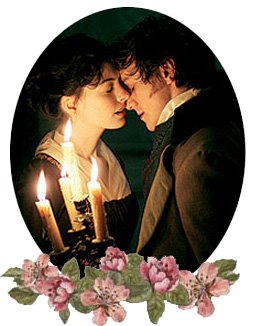
Tom Lefroy (James McAvoy), from DokinaCZ
 
I recently stumbled across the following article and I simply had to pass it on to you.  The title is:  "Who was the real Thomas Lefroy?" written by one of his descendants.  Here is the first paragraph which explains what it is about:
 
As reported recently in the Longford Leader, the new film about the life of Jane Austen, "Becoming Jane", documents the famous author's relationship with Thomas Lefroy, who went on to purchase Carrigglas Manor. While the film concentrates on Austen, there is also much interest in Mr Lefroy's background and how he came to own Carrigglas. Here, in an article written by Lt Colonel Patrick Lefroy MA MBE, a descendent of Lefroy, for the 1983 Longford Historical Society Journal, we look at Lefroy, the man who was said to be the inspiration for Darcy- one of Austen's most famous characters.
 
You may read the rest of the article HERE.  What I really like about the article is that he seems to be of the same mind as I am about the Tom/Jane 'affair'.  Also, we get a rather detailed look at Tom's life.
 
Yrs aff'ly,
Linda the Librarian

Sunday, 17 March 2013

Jane Austen Quote of the Week 226

Have you ever been agitated, vexed out because you sent a rather long letter (read: email, SMS), and yet received a very short reply instead? Well, I have, more than several occasions. Hence, I find it very amusing when this quote popped up from our BJF old archives. Thanks to Michelle (wherever you are now, M, take care...) for providing us with this quote back in 2009.


Mollands.net
From Jane's letter to Cassandra, dated 24 December 1798 (click here for the Pemberley archive):

"You deserve a longer letter than this; but it is my unhappy fate seldom to treat people so well as they deserve."


So there you go. Whenever you receive a very short answer to your lengthy (traditional) letter, email, SMS etc, just remember this: Cassandra Austen had the same fate too! Although I wouldn't say that Jane's letter to her was short at all...

I love you, Jane...

Saturday, 9 March 2013

Jane Austen Quote of the Week 225

I was reading some of Jane Austen's letters to her niece Fanny Knight and the following quote grabbed my attention. It is taken from letter 84 written on 23 March 1817.

"Do not oblige him to read any more. Have mercy on him, tell him the truth, and make him an apology. He and I should not in the least agree, of course, in our ideas of novels and heroines. Pictures of perfection, as you know, make me sick and wicked; but there is some very good sense in what he says, and I particularly respect him for wishing to think well of all young ladies; it shows an amiable and a delicate mind."

This week I have come across some people who are 'pictures of perfection' and it has left me with that feeling that Jane Austen describes. I felt guilty but upon reading this it made me feel much better and more normal!

A minute of perfection was worth the

Pic: Perfection

Saturday, 2 March 2013

Jane Austen Quote of the Week 224

 
Statue of Wilberforce at Yorkshire
This past week I had a "light-bulb" moment after viewing the movie "Amazing Grace" about William Wilberforce's campaign against the British slave trade which was abolished in 1807.  I began to realize exactly what that "trade" was all about, and it wasn't 'pretty'.  This movie actually happened during Jane's life time and she knew of the writer Hannah More.
 
I was checking James Austen's periodical, "The Loiterer" that I put on line, for a quote and ran across this in Issue 23 subtitled "Vexations attending the pursuit, and possession of wealth, in a letter from Indicus.":
 
The Son of a Neighbour (very few years older than myself) about this time returned from the East-Indies, with one of those sudden fortunes, which never fail to draw upon their possessors the admiration of the Vulgar, the envy of the Weak, and the pity of the Wise. — As we had been formerly Schoolfellows, and our Families were still upon terms of great intimacy, I was one of the first who were invited to a magnificent Villa, he had just purchased, on the banks of the Thames, where one fortnight spent amidst the luxury of fashionable dissipation, and the blaze of Oriental Grandeur, completely turned my head, and determined me to waste no more time in this dirty Island, but to go at once to that Country, were riches were so easily to be acquired. It was to no purpose, my Friends attempted to oppose this resolution: it had so entirely taken possession of my mind, that it haunted my very Dreams. Sometimes I found myself carried in an elegant Palanquin, attended by a long train of Blacks; and at others inclined at my ease on a rich Sopha, while my careful Slaves drove away the Mosquitoes with their fans. I now settled the accounts with my Circars, now counted imaginary Lacks, and admired the lustre of ideal Diamonds.
 
My point being that James Austen used the terms "Blacks" and "Slaves".  So the Austens must have had some idea about that situation.  However, I am not at all sure what James means with the term "Lacks".
 
The movie left me in tears and consternation at the ignorance of us "Southerners" (in the U.S.) of the real circumstances of the People of Africa.  I am here to declare that slavery is wrong and evil.
 
The complete Issue No. 23 gives us a good example of what should and should NOT be done with wealth.  You may read it HERE.
 
Yrs aff'ly,
Linda the Librarian

Saturday, 23 February 2013

Jane Austen Quote of the Week 223

Thanks to Mariana we have been reminded of a great quote in Pride and Prejudice Chapter 5 when there is a discussion about Mr Bingley's fondness for Jane Bennet.

"Oh!—you mean Jane, I suppose—because he danced with her twice. To be sure that did seem as if he admired her—indeed I rather believe he did—I heard something about it—but I hardly know what—something about Mr. Robinson."


"Perhaps you mean what I overheard between him and Mr. Robinson; did not I mention it to you? Mr. Robinson's asking him how he liked our Meryton assemblies, and whether he did not think there were a great many pretty women in the room, and which he thought the prettiest? and his answering immediately to the last question—"Oh! the eldest Miss Bennet beyond a doubt, there cannot be two opinions on that point.''

On January 8 1796 Tom Lefroy invited Jane Austen to dance not two, but three times, at the ball. This is interesting based on Jane's words in Pride and Prejudice, written between 1796 and 1797 (initially called First Impressions and later being changed to Pride and Prejudice).

I wonder if this exchange is based on her own personal experience and perception around the implications of Tom's invite to dance three times with her. It is definitely something to ponder.


Sunday, 17 February 2013

Jane Austen Quote of the Week 222


Regency courtship, from Austenauthors


This week’s quote is about Valentine’s Day, which happened on last Thursday. It was taken from Pride and Prejudice, Chapter 6, spoken by Mr Darcy:

“A lady's imagination is very rapid; it jumps from admiration to love, from love to matrimony, in a moment.”


Just like any other Austen quotes, I originally thought that this quote was just applicable to the Regency or period time. At the most, the 1920s (aaahhh, Downton Abbey!) or 1950s. But apparently, it IS still very applicable today!

(I apologise in advance if this post is rather insensitive. I’m trying to make it more appropriate, but if I still offend someone, I do apologise. It was kindly meant.)

Let’s just check our dating system today. No, I don’t mean our Gregorian calendar system. I mean our modern courting system. When we were teenagers, we don’t care about whether we are going to be with our sweetheart forever and ever. Well, perhaps we do. But we care less. We just want to be with the sweetheart, watching movies together, eating ice cream at the canteen together, doing homework together... ah, how sweet life is!

Then we are at our 20s. Slowly slowly, we start to think if our chosen boy/girlfriend will stick with us through college and hopefully walk with us on the isle. In our 30s, with a horde of our friends already getting married, some already having kids, we look at the clock and start to feel panic. Many of us don’t want to just court any man or woman available; that would be improper. But we want relationship, and a stable one at that. Preferably one that leads us to the aisle with a fluffy dress of our colour choice for ladies. So we start courting a guy or a girl with the hope that he or she is REALLY the one, this time around.

Approaching the 40s, we would fine-tune our search engine. We meet a guy or a girl we are attracted to, and immediately, in practically a nano-second, we wonder if it is possible for us to be with them. Forget if they like us or not. If they don’t, then end of story. But if they do like us too, what are the chances of us walking the isle with him or her? Or at least, doing a co-habitation, for those who choose not to believe in marriage? 

As I quote one of my female friends, ‘I’m looking for a husband, not just a flirtation.’ Point.


So, Mr Darcy’s words are still applicable here. “A lady's imagination is very rapid; it jumps from admiration to love, from love to matrimony, in a moment.” A lady’s imagination can be very rapid indeed. And for modern gentlemen over 30, it might also be the case nowadays.

I learned two days ago when I was watching Al Jazeera, that it takes a huge leap from that first flirtation to a 50 years of happy marriage.  Agree. But still, we have to take the first step.

May you have your first steps taken correctly, my dear friends. Belated Happy Valentine. Love yourself first, and then love others! (but it’s okay to share the chocolate with them; you don’t have to eat all the chocolate by yourself)

Saturday, 9 February 2013

Tom Lefroy Quote of the Week 28

Although this is not strictly a "Tom" quote, this one is especially for Mariana who is researching the Tom/Jane love affair. I was stumbling around (as I do a lot lately) my web site and in the Table of Contents I saw this note to a link under "Jane Austen - The person": Was Jane Austen ever in love? No one knows, but see Jane Austen's Eleventh Letter . I was literally 'blown away' when I read the article. I recommend reading the entire article, but here is a tidbit - the first 2 paragraphs:


I wish to discuss a letter written by Jane Austen to her sister Cassandra on November 17 of 1798. This is the eleventh letter in the most recent edition of Jane Austen's letters published by Deirdre Le Faye (1997) and the tenth in the first collection of her letters published by her grand-nephew (Lord Brabourne, 1884). The latter reference is available on line at the Brabourne Collection. You won't need that link in this particular case, because I reproduce the entire letter for you at the end of this posting.

Let me begin with an observation: If Goethe himself or even if one of the Russians had written this letter for a fictional character, he would have been very proud of himself—and for good reason. I find the letter to be very interesting and very affecting and I suspect that you will as well. Several biographers point to the most important passages in the letter, the ones dealing with her meeting with Madame Lefroy, but I want to do something more. I will discuss those in the context of other passages in the letter because only in that way can the full impact be felt.

The article was written by my late friend, Ashton Dennis for his web site "Male Voices in Praise of Jane Austen". I do believe he has "given us a treasure". See what you think about it.

Yrs aff'ly,

Linda the Librarian


Pic: Jane and Tom 

Sunday, 3 February 2013

Jane Austen Quote of the week 221


This week I have chosen the quote from Chapter 22 of Northanger Abbey:
“But now you love a hyacinth. So much the better. You have gained a new source of enjoyment, and it is well to have as many holds upon happiness as possible. Besides, a taste for flowers is always desirable in your sex, as a means of getting you out of doors, and tempting you to more frequent exercise than you would otherwise take. And though the love of a hyacinth may be rather domestic, who can tell, the sentiment once raised, but you may in time come to love a rose?”


I was having a conversation this week about what exactly makes me happy and defining happiness as a concept. It is entirely individualised and we cannot judge anyone on their desires. It made me think of the highlighted quote above as I think it is so important to take happiness whenever it is available!
But what is happiness? I read somewhere that it is having the strength to confront your own weaknesses. It can't exist in the past or future but can only be felt in the present, so I hope you all find comfort in this quote.


Pic: http://www.kiagarriques.com/a-good-support-system-is-the-foundation-for-success/happiness-kia/

Tuesday, 29 January 2013

Pride and Prejudice 200 Years Old Today

Today is the bicentenary of Jane Austen’s Pride and Prejudice which was first published on 28 January 1813 by Thomas Egerton of London.

It is often regarded as one of the most popular novels of classic literature and so I think it deserves a special post to celebrate its brilliance.

The Telegraph newspaper have posted a quiz found at the link below. How well do you know Pride and Prejudice?? Comments welcome.


Pic: Mr Darcy and Elizabeth

Monday, 28 January 2013

Jane Austen Quote of the Week 220

Sally Hawkins for Anne Elliot in Persuasion 2007

I found this short sentence in Persuasion just now. Volume 1 Chapter 1, page 10 (Oxford edition, 2003):

It sometimes happens, that a woman is handsomer at twenty-nine than she was ten years before; and generally speaking, if there has been neither ill health nor anxiety, it is a time of life at which scarcely any charm is lost.

I have posted this quote back in December 2009. This time, the quote presents another impression for me. The quote is so true, methinks, particularly for myself. When I was 19 years old, I wasn't a girl who knew how to present herself in the best of light. I felt much happier with the way I presented myself when I was 29.... but I wasn't happy with myself. But now, as I'm approaching 39, I find it interesting that I'm also happier than when I was ten years ago.

I mean, it should be like that, right? I do find that I need to reduce my food intake (lest my darling dresses won't fit me...), and I have to do more exercise than before (any tips, Ladies?). But I also accept myself more and at the same time trying to see if I can push the limit a bit more. I don't always succeed, of course. But I can safely say that I'm happier than I was 10 years ago. I hope 10 years later, I will be happier too.

And so I hope for all of us.

(And no, my birthday isn't until March. I just found the above quote charming somehow for this week/weekend past).


Friday, 25 January 2013

An Interview with Syrie James, author of The Missing Manuscript of Jane Austen

Syrie James is the bestselling author of eight critically acclaimed novels, including The Missing Manuscript of Jane Austen, The Lost Memoirs of Jane Austen, The Secret Diaries of Charlotte Brontë, Dracula My Love, Nocturne, Forbidden, and The Harrison Duet: Songbird and Propositions. Her books have been translated into eighteen foreign languages. In addition to her work as a novelist, she is a screenwriter, a member of the Writers Guild of America, and a life member of the Jane Austen Society of North America. She lives with her family in Los Angeles, California. Connect with her on her website, Facebook, and Twitter.


An interview has been conducted with Syrie James, author of The Missing Manuscript of Jane Austen, and we have the exclusive answers to some of the questions.

Are there any fun facts readers wouldn’t know about you from reading your bio?

I was a gymnast in high school and college. I love watching the Olympics gymnastics, ice skating, and ice dancing competitions. My favorite foods are lamb chops, every kind of fruit, any kind of salad, and strawberry shortcake. I adore roses, lilacs, and orchids, and all flowers in general. Strolling through beautiful gardens and the woods is heaven to me—and as a city girl, I don’t get that pleasure as often as I’d like. I love spending time with children and senior citizens, who possess wise, unique, and valuable perspectives of the world. I once thought I’d be an elementary school teacher. I like dogs. I designed and maintain my own website. Scrabble and Rummy Royal are two of my favorite games. I am grateful every single minute of every day for the gift of being alive on this wondrous planet.

What Hollywood actors would you choose to play the characters who appear in The Missing Manuscript of Jane Austen?

I wrote the character Anthony Whitaker especially for Rupert Penry-Jones, who I adore. I can envision Emily Blunt, Amy Adams, or Anne Hathaway playing Samantha; Mia Waskiowska, Carrie Mulligan, or Jennifer Lawrence as Rebecca Stanhope; Tom Wilkinson as Mr. Stanhope; Dan Stevens as Mr. Clifton; Robert Pattinson as Dr. Watkins; and Hayden Panattiere as Amelia Davenport. And of course I'd have to write the screenplay!

If you found a missing manuscript by Jane Austen what would you do with it?

I would read it with wonder and excitement. I'd publish it for all the world to read and enjoy, and make sure the manuscript found a home with a university or library where it would be preserved but also available to view and study.


If you would like to post a comment about the original content above or any of Syrie's novels then a copy of The Missing Manuscript of Jane Austen is up for grabs and can be sent to you. The winner will be chosen randomly from those who comment, unfortunately we can only post a copy to people within the US. Sorry!

Pics: provided by Penguin Group USA


Sunday, 20 January 2013

Jane Austen Quote of the Week 219 by Linda

Emma and Harriet with winter muffs to repel cold (but not effective to get rid of Mr Elton), from this site
 
Tis the winter season in the Northern Hemisphere when we are liable to catch a "cold".  As  a matter of fact our family has had our share of those illnesses.  This has prompted me to look into Jane's Emma where we find dear Mr. Woodhouse lamenting on such things.  In Chapter 29 we find Mr. Woodhouse saying:
 
"Oh! no," said he; "it would be the extreme of imprudence. I could not bear it for Emma! Emma is not strong. She would catch a dreadful cold. So would poor little Harriet. So you would all. Mrs. Weston, you would be quite laid up; do not let them talk of such a wild thing. Pray do not let them talk of it. That young man (speaking lower) is very thoughtless. Do not tell his father, but that young man is not quite the thing. He has been opening the doors very often this evening, and keeping them open very inconsiderately. He does not think of the draught. I do not mean to set you against him, but indeed he is not quite the thing!"
 
My point being that such "colds" have been happening many hundreds of years.  My hope is that our dear readers who may catch one will find it few and very light.   I do hope that we will some day do as Rachel does and practice more "natural" cures as well as keeping our immune systems in tact so as to not be bothered with them at all.  Oh, dear, am I beginning to sound like Mr. Woodhouse?  My apologies!
 
Yrs aff'ly,
Linda the Librarian
 

Sunday, 13 January 2013

Tom Lefroy Quote of the Week - Week 27

I have chosen a quote from chapter VII, page 197, of the Memoir of Chief Justice Lefroy.

This is an extract from a letter to his wife, written from Bangor on a Thursday.

"All nature appears in its most attractive form - a magnificent setting sun just over the dark and massy wood stretched along the opposite bank of the Menai - the air mild as summer, and the sea, with its unruffled glassy surface, spread out below. My window looks out directly on all this beautiful scenery, but yet my heart is looking back to the scenes I left, rather than enjoying those before me."

I think that this quote shows just how sensitive and romantic Mr Lefroy was. His descriptive language is just beautiful, Jane and Tom definitely had something in common.