Sunday, 29 January 2012

Tom Lefroy Quote Week 15

I wanted to find a Tom quote that would reflect the birthday of our lovely Linda, who will be 71 years old tomorrow Monday. From the Memoir of Chief Justice Lefroy page 329, an excerpt from Lord Derby (Prime Minister Edward Smith-Stanley, the 14th Earl of Derby) to Chief Justice Lefroy:

Downing Street,

July 11, 1866
“My dear Chief Justice, - Your son sent me, a few days ago, a most kind letter from you, the handwriting of which I should have taken to be that of a man of thirty instead of ninety, in which you express your readiness to surrender into my hands the high office which I had the satisfaction of intrusting to you fourteen years ago, and which you have filled with so much credit to yourself and advantage to the public service.”

That’s what I often feel when I communicate with Linda… Not exactly 30-90, but I often forgot that she is already 70 years old, and going to be 71 years old tomorrow. Linda still has her sharp mind and alert consciousness, something to be admired from people of her age.

Thank you for helping us these years, Linda. Have a happy birthday, may you be happy, healthy and prosperous always. God bless you.

Pic: Edward Smith-Stanley, Wikipedia


Sunday, 22 January 2012

Jane Austen Quote of the Week - Week 181

I chose a part of Pride and Prejudice that I love - chapter 43 when Elizabeth sees Pemberley for the first time. It triggers the beginning of her growing affection for Mr Darcy. She later meets him in the grounds and they connect like they havent before.

"They gradually ascended for half a mile, and then found themselves at the top of a considerable eminence, where the wood ceased, and the eye was instantly caught by Pemberley House, situated on the opposite side of a valley, into which the road with some abruptness wound. It was a large, handsome, stone building, standing well on rising ground, and backed by a ridge of high woody hills;—and in front, a stream of some natural importance was swelled into greater, but without any artificial appearance. Its banks were neither formal, nor falsely adorned. Elizabeth was delighted. She had never seen a place where nature had done more, or where natural beauty had been so little counteracted by an awkward taste. They were all of them warm in her admiration; and at that moment she felt that to be mistress of Pemberley might be something!"

I really love the part "nature had done more" and "natural beauty had been so little counteracted by an awkward taste" - what a wonderful description and I think that this can be linked to the natural development of her relationship with Mr Darcy.


Pic: Elizabeth Bennet at Pemberley

Monday, 16 January 2012

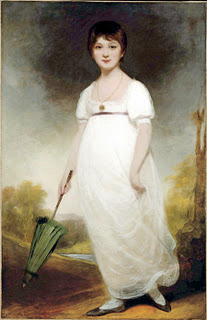
Jane Austen the Unseen Portrait


Thanks to Mariana Georghe, here we are aware of the 'new' unseen portrait of Jane Austen. The clip is from BBC, but is now in SMaryG's YouTube account. The picture was found by Dr Paula Bryne and was later discussed in the recent BBC documentary titled 'The Unseen Portrait of Jane Austen?'.

A detailed article about this portrait can be found here.

I have to say that the picture does not match to my personal image of hers, which was more influenced by the sketches made by Rice and James Stanier Clarke (we discussed them here and here). The Rice and Clarke sketches displayed the frontal view of the young girl's faces, hence I was led to believe that the nose would not be so pronounced, as in the Bryne portrait.

But the facial features does speak of the talented, witty woman we know as Jane Austen. So... who knows?


Pic: Dr Paula Bryne's found portrait of Jane Austen.

Jane Austen Quote of the Week - Week 180

Let's get serious for a minute this week and talk about LOVE and MARRIAGE. In Mansfield Park, Chapter 35 we find a discussion between Edmund and Fanny concerning Fanny's recent rejection of Henry Crawford's proposal of marriage. Edmund had just returned home and heard the news of the proposal. He wished to discuss her feelings about the matter so he joined her in a walk through the shrubbery.


Fanny, at one agitated and dejected, replied, "IF you hear of it from everybody, cousin, there can be nothing for me to tell."
Not of facts, perhaps; but of feelings, Fanny. No one but you can tell me them. I do not mean to press you, however. If it is not what you wish yourself, I have done. I had thought it might be a relief."
"I am afraid we think too differently for me to find any relief in talking of what I feel."
"Do you suppose that we think differently? I have no idea of it. I dare say that, on a comparison of our opinions, they would be found as much alike as they have been used to be: to the point - I consider Crawford's proposals as most advantageous and desirable, if you could return his affection. I consider it as most natural that all your family should wish you could return it; but that, as you cannot, you have done exactly as you ought in refusing him. Can there be any disagreement between us here?"
"Oh no! But I though you blamed me. I thought you were against me. This is such a comfort!"
"This comfort you might have had sooner, Fanny, had you sought it. But how could you possibly suppose me against you? How could you imagine me as advocate for marriage without love? Were I even careless in general on such matters, how could you imagine me so where your happiness was at stake?"


So the crux of the matter is this: one should marry for LOVE and is of the utmost importance. Certainly there are other things to consider, but love is to be considered FIRST. Speaking as one who has "been there, done that" I can vouch for the correctness of such advice. I only wish I had tended to those "other things to consider" a little more carefully. As we say "too soon old, and too late smart". Sigh.


Yrs aff'ly,


Linda the Librarian


Pic: Fanny Price

Sunday, 8 January 2012

Jane Austen Quote of the Week 179 by Linda

While tiding up my cluttered desk I ran across a scribbling dated for 2-21-09, but cannot find that I actually posted it. So I shall give it a try now.

It is from Mansfield Park, Vol. 3, Chapter 5 of my Signet Classic edition, where Miss Crawford made a request of Fanny:

Her [Fanny's] habits of ready submission, on the contrary, made her almost instantly rise and lead the way out of the room. She did it with wretched feelings, but it was inevitable.

I couldn't help but notice this character trait of "ready submission" when anyone makes a request. It simply must be done. It is a trait that has been passed down through the ages, because I have observed this very trait in my own Grandmother, as well as myself. I will also add that it is fostered in our Bibles as "wives be obedient to your husband's will". I have since learned that "ready submission" is not the way to go. But that's another story.

This is just one example of how Jane throws in so many small things that we can relate to. For instance, when I opened my copy of MP, I noticed all the notations I had made. There is enough material for a ton of quotes. So reader beware! Here I go!

Linda the Librarian

Pic: Cover to Oxford World's Classics of Mansfield Park

Sunday, 1 January 2012

Jane Austen Quote of the Week - Week 178

Firstly Happy New Year to you all and thank you very much for your continued support. If any of you have any suggestions on Jane-related things we can do this year on the blog then please do write to us.

Linda has kindly made me aware of a website that we wanted to bring to your attention. It provides information about The Rice Portrait of Jane Austen.
Before I continue I want to link this to a fantastic article that Icha wrote here on the blog in July 2007 about this very same topic Rice Portrait and Clarke's Sketch. Basically it is believed that the 'Rice Portrait’ refers to a portrait of a young girl made by Ozias Humphry, an English painter (1742-1810). It is proposed that the portrait is of Jane Austen when she was around 13/14 years old but there has been much debate about the authenticity of this portrait.

The website mentioned above, The Rice Portrait of Jane Austen, has recently been constructed by Anne Winston Rice who was married to Henry Rice, a descendent from Jane. She wants to set the record straight about whether this portrait is indeed Jane Austen, she believes it is.

The website is quite detailed and I will not try to summarise all the information here as it is well worth exploring yourself if you are interested. She describes 4 pieces of primary evidence which puts together an excellent case. I have simplified the information below:

- Colonel Thomas Austen, Jane's second cousin, had possession of the painting and gave it to his great friend Colonel Thomas Harding-Newman in 1818. Colonel Harding-Newman’s son wrote in 1880: “I shall hope to give another painting of Jane Austen to her relative Morland Rice. It is of a girl about 15, and came into my family the gift of Colonel Austen of Kippington, to my mother-in-law, or rather, step-mother, my father’s second wife, who was a great admirer of the novelist."

- Admiral Sir Francis Austen, Jane's brother, was very close to his grandson John H. Hubback and it is believed he shared valuable information regarding the Rice Portrait with him. Hubback told Mrs Graveson (a lady researching the portrait) that his cousins, the Rices, owned the only professionally executed painting of the authoress.

- Lord Brabourne was the eldest son of Fanny Knight, who married a Knatchbull Hugesson. He was Jane Austen’s great nephew, as also were John Hubback and Morland Rice. They were all cousins. In 1884, he published the first book about Jane, her “Life and Letters”. He relates how he has written to Mr Cholmeley Austen-Leigh about Morland Rice’s portrait, and that Mr Cholmeley Austen-Leigh has replied that if Morland’s portrait is authentic.

- Fanny Caroline Lefroy, the granddaughter of the Rev. James Austen was the family historian. Her mother, Anna Austen had lived in the same house as Jane Austen for some ten years, and therefore would have known what she looked like. Morland Austen, who received the portrait, asked Fanny Caroline Lefroy for her opinion about the portrait. She says she “knew before of the portrait in your possession”, and cites one or two little difficulties but only of when, and where, the portrait was painted.

Pic: Taken from Jane Austen Rice Portrait

Saturday, 24 December 2011

Tom Lefroy Quote Week 14


We will visit the Lefroy family for our Christmas quote. This is from Chapter 12 of the Memoir of Chief Justice Lefroy:

The habit of keeping the Easter and Christmas festivals, as seasons of family re-union, was invariably observed in our Home circle, and wherever the scattered members might be, as Easter or Christmas drew near, no pleasure had sufficient attraction for any of them, and no inconvenience was a sufficient hindrance, to prevent the family-gatherings that used to render these seasons the opportunities for a happy interchange of thought and affection, which seemed equally valued by all.


There is one other instance where "Christmas" plays a part in the Lefroy family. Our dear Tom married Mary Paul whose Grandfather was named "Christmas Paul". I thought that most unusual, since I have never heard of anyone naming their child "Christmas". But to top that off, Tom and Mary named their daughter "Jane Christmas Lefroy". I am of the mind that the name "Jane" was for the Mother of Mary Paul Lefroy and not our Jane Austen, as some may believe.

So, we of Becoming Jane Fansite wish the Christmas season pleasure enjoyed by the Lefroy family to you and yours this holiday season.

Blessings,
Linda the Librarian

Pic: Christmas tree

Saturday, 17 December 2011

Jane Austen Quote of the Week 177

Last Friday, 16 December, was Jane Austen’s 236th birthday. To commemorate the birthday of our ‘girl’, I have chosen a quote she wrote to sister Cassandra on Wednesday 11 January 1809 from Castle Square. The quote was taken from Le Faye’s ‘Jane Austen’s Letters’, p. 165.


The Manydown Ball was a smaller thing than I expected, but it seemed to have made Anna very happy. At her age it would not have done for me.-


Jane was 34 when she wrote this letter. Anna Austen, being born in 1793, was 16. For our modern age, being 34 years old is definitely not old enough. However, for those days 34 years old was definitely seen as a very mature age. But just from the way Jane wrote her letters, I perceive no decline of her spirit at all. She might have danced slower and attended fewer balls, but that does not equate to being spiritless. I can hardly imagine how lively she was when she was at Anna’s age (16 years old), but I guess she must have carried on whatever spirit she had at that age into her twenties (when she met Tom Lefroy), her thirties (when she started to produce her famous novels) and even to the last day of her life.

So here’s a toast to Jane Austen. A fine lady who had made us captivated – until today – by her spirit and wit.

Pic: "Sisters Dancing"; Engraving by Marino or Mariano Bovi (Bova) (1758-1813)


Thursday, 8 December 2011

Jane Austen Quote of the Week - Week 176

Since the Christmas season is upon us, I began my search for a Christmas quote and found a lovely surprise. This week I will consider Christmas in general, because I will make a specific Christmas quote on the 24th.

I have a Pemberley friend, Julie Wakefield, who used to manage the Life and Times board at Pemberley. I had the good fortune to meet her at the Annual Meeting of Pemberley in 2003 at Cape Cod, Massachusetts. She now maintains a web site/blog which continues her interest in Jane's "Life and Times". The surprise I found is her section on "Jane Austen and Christmas"!

Here is a link to that page which has many links worth your perusal on the subject. CLICK HERE

Go to her home page for links to all the other subjects she writes about - it is a treasure indeed! Happy Reading!

Linda the Librarian

Pic: Plum pudding- Jane Austen centre

Sunday, 4 December 2011

Jane Austen Quote of the Week - Week 175

This quote is taken from near the beginning of chapter 48 of Emma.
Emma is discussing her feelings about Mr Knightley, and his possible feelings for Harriet.

"Wish it she must, for his sake—be the consequence nothing to herself, but his remaining single all his life. Could she be secure of that, indeed, of his never marrying at all, she believed she should be perfectly satisfied.—Let him but continue the same Mr. Knightley to her and her father, the same Mr. Knightley to all the world; let Donwell and Hartfield lose none of their precious intercourse of friendship and confidence, and her peace would be fully secured.—Marriage, in fact, would not do for her. It would be incompatible with what she owed to her father, and with what she felt for him. Nothing should separate her from her father. She would not marry, even if she were asked by Mr. Knightley.
It must be her ardent wish that Harriet might be disappointed; and she hoped, that when able to see them together again, she might at least be able to ascertain what the chances for it were.—She should see them henceforward with the closest observance; and wretchedly as she had hitherto misunderstood even those she was watching, she did not know how to admit that she could be blinded here."


Last night I was out with friends and we were talking in depth about relationships between fathers and their daughters. This quote leaped out at me and tells us something about the connection between Emma and her father.

I also understand found this quote resonated with me as I have definitely experienced not being able to dedicate myself fully to someone but at the same time not wanting anything to change or anyone else to have them. As selfish as that sounds, and it is, emotions sure can be complicated.


Pic: Simple Delights blog

Saturday, 26 November 2011

Tom Lefroy Quote Week 13


This week’s quote is taken from The Memoir of Chief Justice Lefroy (pp. 216-217) when he related the extent of a devastating hurricane of 6 January 1839 to his wife, Mary Paul. The excerpt showed how Tom always tried to see the brighter side of an event, for the hurricane indeed destroyed at least 4,600 trees in the park and the surrounding woods.

Carrig-glas,
April 3rd, 1839

You will be glad to hear that I have recovered somewhat from my first anguish, and am suffering myself to be by degrees led into the dream that though Carrig-glas has decidedly lost all its peculiar beauty (at least what constituted its beauty in my eyes) new charms will be unfolded when the wreck and ruin which now strews the pleasure grounds shall be removed, for we shall get views of the distant woods that we had not before, and of the only mountain we can boast of in the county. You can form no idea of the desolation which the storm has made; I could not cross the pleasure-ground from the heaps of trees, but am obliged to walk round to survey the stupendous pile of ruin. A few solitary trees have been preserved by the shelter of the heaps which had fallen around them, but, strange to say, comparatively few of the single trees standing out in the more exposed parts of the demesne have been blown down, and almost all the destruction has been either in the woods or close to the house. I am glad dear A—is not to come here for some time. The new house will be all that a house need be, and I trust will be covered in this autumn, so as to make some compensation for the loss of other beauties before he sees Carrig-glas again.

As someone who had gone through a Category 3 Cyclone earlier this year, I can somewhat relate to what Tom experienced with the hurricane. Seeing the trees fell down like that was a sad sight indeed, my town lost almost 6,000 trees altogether. But Tom lost 4,600 trees just in one park, so Carrig-glas must have stored a huge amount of tree collection before the hurricane hit.

Pic: trees as the victim of the 1938 Hurricane that hit Long Island, USA (obviously I cannot find pictures of the 1839 hurricane that hit Ireland...)

Monday, 21 November 2011

Jane Austen Quote of the Week 174

I have chosen a quote from Mansfield Park simply for the beautiful imagery and great construction of sentences by Jane Austen.

"Miss Crawford's attractions did not lessen. The harp arrived, and rather added to her beauty, wit, and good-humour; for she played with the greatest obligingness, with an expression and taste which were peculiarly becoming, and there was something clever to be said at the close of every air. Edmund was at the Parsonage every day, to be indulged with his favourite instrument: one morning secured an invitation for the next; for the lady could not be unwilling to have a listener, and every thing was soon in a fair train.

A young woman, pretty, lively, with a harp as elegant as herself, and both placed near a window, cut down to the ground, and opening on a little lawn, surrounded by shrubs in the rich foliage of summer, was enough to catch any man's heart. The season, the scene, the air, were all favourable to tenderness and sentiment."


This is taken from chapter 7 and the carefully chosen wording describes Edmund's lust for Miss Crawford- in my opinion there is almost an erotic tone to the description.

Pic: Austen prose

Sunday, 13 November 2011

Jane Austen Quote of the Week 173

I am always amazed at what one can find when looking into all things "Jane Austen". I picked a number at random and turned to that number in Deidre LeFay's book on Jane's Letters and then found it in Brabourne's edition here: http://www.pemberley.com/janeinfo/brablet2.html#letter11

It turned out to be No. XI in the Brabourne Edition written from Steventon: on Sunday (November 25). Here is the section that struck my fancy:

We have got "
Fitz-Albini"; my father has bought it against my private wishes, for it does not quite satisfy my feelings that we should purchase the only one of Egerton's works of which his family are ashamed. That these scruples, however, do not at all interfere with my reading it, you will easily believe. We have neither of us yet finished the first volume. My father is disappointed -- I am not, for I expected nothing better. Never did any book carry more internal evidence of its author. Every sentiment is completely Egerton's. There is very little story, and what there is is told in a strange, unconnected way. There are many characters introduced, apparently merely to be delineated. We have not been able to recognise any of them hitherto, except Dr. and Mrs. Hey and Mr. Oxenden, who is not very tenderly treated.
--------------
We have got Boswell's "Tour to the Hebrides," and are to have his "Life of Johnson"; and, as some money will yet remain in Burdon's hands, it is to be laid out in the purchase of Cowper's works. This would please Mr. Clarke, could he know it.

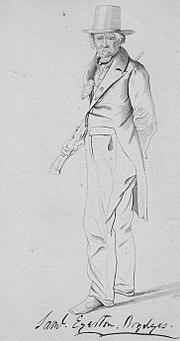
I like to know as much as I can about an author so that I can understand what their influences were and what they are trying to tell me. So this mention of "Egerton" led me to Egerton Brydges who happens to be a brother to her friend and neighbor, Mrs. Lefroy of Deane. That is why she was probably so interested in reading his book. It is still available today and if I had nothing else to do, I would read it just for fun to see what I could see. What is interesting also is the fact that she recognizes some of the characters as people she knew which leads one to think that it was a common practice to use 'real' people as inspirations. I know that I have seen people in my life that are right out of Jane's novels. In other words, as I say, people have not changed in 200 years.

While investigating Egerton, I found that he had written a commentary about a poet, namely, William Collins! Now where have I heard that name before? Ha! My amazement never ends!
In the next part of my quote she mentions Boswell and Cowper, who also bear some looking into, just for comparisons. This may not appeal to everyone, but this is an avenue I like to travel when I read books.

Happy reading,
Linda the Librarian

Pic: Samuel Egerton Brydges from Wikipedia

Sunday, 6 November 2011

Jane Austen Quote of the Week 172

To me, Jane Austen is many things altogether. One of them: she is one of the very few authors whose writings still attracts me, despite her long, long (and I mean LONG) sentences. So, when I found this letter today, I cannot help but laughing, because the short sentences were so unlike her long style!

But rest assure, dear friends. This letter was written by our dearest Jane, dated Wednesday 15 – Thursday 16 September 1813, to Cassandra Austen (LeFaye 1997 edition). The bolded parts are my own.


I am going to write nothing but short sentences. There shall be two full stops in every line. Layton and Shear's is Bedford House. We mean to get there before breakfast if it's possible; for we feel more and more how much we have to do and how little time. This house looks very nice. It seems like Sloane Street moved here. I believe Henry is just rid of Sloane Street. – Fanny does not come, but I have Edward seated by me beginning a letter, which looks natural.

Henry has been suffering from the pain in the face which he has been subject to before. He caught cold at Matlock, and since his return has been paying a little for past pleasure. – It is nearly removed now – but he looks thin in the face – either from the pain or the fatigues of his tour, which must have been great.

Lady Robert is delighted with P. & P – and really was so, as I understand, before she knew who wrote it – for, of course, she knows now. – He told her with as much satisfaction as if it were my wish. He did not tell me this, but he told Fanny. And Mr. Hastings – I am quite delighted with what such a man writes about it. – Henry sent him the books after his return from Daylesford – but you will hear the letter too.

Let me be rational, and return to my two full stops.

I talked to Henry at the play last night. We were in a private box -- Mr. Spencer's -- which made it much more pleasant. The box is directly on the stage. One is infinitely less fatigued than in the common way….


You know, I also attended several other forums, some of them are fan-fiction forums. In one of them, we sometimes made ‘round-robin’ fanfictions where every fan-fiction writer must write just a single sentence before another writer resume the sentence, in the style and direction entirely theirs! So what I did was copying Jane Austen’s paragraph-length sentence and got pretty much what I wanted to say in a sentence! A paragraph-length sentence, that is.

She’s such a delight, Jane Austen!


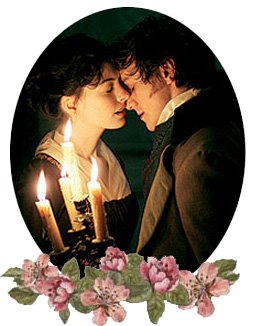
Pic: Cassandra (Anna Maxwell Martin) reading a (heavily edited) letter from Jane (Anne Hathaway) in Becoming Jane 2007

Thursday, 3 November 2011

"Death Comes to Pemberley"

This information was taken from Jane Austen Centre monthly newsletter.

Today a book is being published which was written by the English crime writer PD James called Death Comes to Pemberley

Sarah Crown from the guardian has written an article from which the following excerpt has been taken:

"The year," runs the press release, "is 1803, and Darcy and Elizabeth have been married for six years. There are now two handsome and healthy sons in the Pemberley nursery, Elizabeth's beloved sister Jane and her husband, Bingley, live within seventeen miles, the ordered and secure life of Pemberley seems unassailable, and Elizabeth's happiness in her marriage is complete. But their peace is threatened and old sins and misunderstandings are rekindled on the eve of the annual autumn ball. The Darcys and their guests are preparing to retire for the night when a chaise appears, rocking down the path from Pemberley's wild woodland, and as it pulls up, Lydia Wickham, an uninvited guest, tumbles out, screaming that her husband has been murdered."

Sounds interesting!!

Here is the link for the full article:
The latest Austen mashup: Pride and Prejudice and murder

Pic: Jane Austen centre, Bath

Gone Reading

I would like to thank Brad for posting a comment and making us aware of a wonderful organisation called GoneReading. They provide products for book lovers which I am sure includes every one of our readers on this blog.


It was founded in 2011 and donates 100% of company profits to fund reading libraries and other literacy projects in the developing world.


They work with non-profit organisations such as READ global and Ethiopia Reads who partner local villages and communities in the most underdeveloped parts of the world to effect real change.


BETTER STILL they have a set of Jane Austen themed gifts, see here.

These gifts include t-shirts, mugs, bags.

So shop now to support such a wonderful cause. Founder Brad Wirz says "We believe that when people have open access to great reading materials, life always changes for the better," I couldnt agree more.

Pic : Taken from the GoneReading website

New wallpaper from Maria!


My dearest Maria, please forgive us for missing your email notifying the new Becoming Jane Wallpaper! Totally unintentional!

So here's the beautiful wallpaper from Maria once more, dearest friends. Hope you like them as we do! Thank you so much, Maria. We hope you and your family are well.

1024 x 768


1680 x 1050

Friday, 28 October 2011

Tom Lefroy Quote of the Week - Week 12

This quote jumped out at me this week. It is taken from page 243 of the memoir (part 6)- a letter written on 22nd February 1848.
The newspapers are full of stories of horrific crimes and it does make me feel very sick to think of the evil capabilities of some people.
I think Tom Lefroy was very accurate in this statement - "despair is no remedy", we should all be striving to do our duty to make this world a better place to live in and also for the sake of future generations. I fear that it is a sense of duty that has been lost.

"I confess I scarcely feel adequate to address you, for the heart sickens and the spirit flags at the contemplation of the apparently hopeless state of things which is presented to us by the amount of crime that it records, and the sadly demoralised state of your county which it exhibits.
But gentlemen, despair is no remedy for these evils; the only means by which they can be prevented is by every man in society doing his duty, and by a firm administration of justice. Emphatically, I say, gentlemen, that the state of your county demands that every man shall be found doing his duty, for that is the only way by which you can expect to remedy the evils which now press upon you."


I dont want this to appear as a negative quote, quite the opposite, I think it should be seen as some encouragement to work against some of the negative forces which exist.
I hope you all have a happy day.

Pic: Judges gavel

Saturday, 22 October 2011

Jane Austen Quote of the Week 171 by Linda

I wish to bring your attention once again to James Austen's periodical "The Loiterer" where we find in No. 36 a letter from a Lady named Mary Simple. I will go out on a limb and fanaticize that there is a possibility that it was written by our own dear Jane. She begins her letter thusly:

Dear Sir,

I HAVE always considered a Periodical Work, as a very useful, and necessary publication. For to omit all the amusement it dispenses, and all the morality it contains, I look upon the Author of it as a confidential friend, to whom we Women in particular can entrust our trifling narratives, whose advise we can demand on any occasion, and to whom we may unburden all those little griefs and complaints, which though not sufficiently important to awaken the attention of the public, are yet of too much consequence to be entirely concealed. With this view, Mr. Loiterer, I write to You; and after the recital, though you may not call my situation unhappy, at least you will allow it to be distressing.

Mary goes on to "unburden" her "little grief and complaint" which is entertaining though not earth shattering. To me, the letter sounds so much like our Jane's writing. You may wish to take a moment to read the entire No. 36 of The Loiterer HERE:

Yrs aff'ly,
Linda the Librarian

Pic: The Loiterer, currently being sold in Amazon! Linda, do you want to buy this copy?

Sunday, 16 October 2011

Jane Austen Quote of the Week 170


Australian and New Zealand readers, please forgive the rather late instalment for quote of the week. I have just returned from half a day tour de island where I live, and it would have been a quicker tour had we not experienced a mechanical trouble (flat, and I mean flat, battery!). Anyway, the tour was still pleasant, and my partner and I went out of the hustle and bustle of the southern part of the island, and clean and beautiful hills, mountains and beaches. Because I was still in travelling mode, this rather late quote is taken from Pride & Prejudice again (Chapter 42), when Elizabeth was about to go to Derbyshire.


The time fixed for the beginning of their Northern tour was now fast approaching; and a fortnight only was wanting of it, when a letter arrived from Mrs. Gardiner, which at once delayed its commencement and curtailed its extent. Mr. Gardiner would be prevented by business from setting out till a fortnight later in July, and must be in London again within a month; and as that left too short a period for them to go so far, and see so much as they had proposed, or at least to see it with the leisure and comfort they had built on, they were obliged to give up the Lakes, and substitute a more contracted tour; and, according to the present plan, were to go no farther northward than Derbyshire. In that county, there was enough to be seen to occupy the chief of their three weeks; and to Mrs. Gardiner it had a peculiarly strong attraction. The town where she had formerly passed some years of her life, and where they were now to spend a few days, was probably as great an object of her curiosity, as all the celebrated beauties of Matlock, Chatsworth, Dovedale, or the Peak.


Elizabeth was excessively disappointed; she had set her heart on seeing the Lakes; and still thought there might have been time enough. But it was her business to be satisfied—and certainly her temper to be happy; and all was soon right again.

I was a bit disappointed too today when the car broke down. The thing is, the car had already broken down yesterday, and we had fixed it. But apparently, the mechanic was not thorough enough and left the battery uncharged. Reminded me of the PP 2005 scene where Elizabeth and the Gardiners had to wait for the cart wheels to be repaired.

Still, it was a pleasant weekend after all. The time we took to repair the car had given us idea to go half-circling the island, hence we saw prettier sceneries than what we would have encountered in our original route.

What about you Ladies and Gents? Any recent trips that went a bit wrong, then it turned out to be another pleasant one in the end?


Pic: Keira Knightley as Lizzy Bennet viewing The Peak in PP 2005