Friday, 2 November 2007

It Must Have Been

Dear friends,

In loving memory of Nadia Radovici who wrote the amazing ‘A Youthful Love: Jane Austen and Tom Lefroy?’, I’m very honoured to present you a beautiful piece of writing from Veronica Nahmias, Nadia's own daughter. Veronica contacted us a few weeks ago; her email arrived on time, as Kari had scheduled her trip to Holland a few months back anyway. Afterwards, following a very healthy uproar inside the Team Jane, Kari went to Amsterdam to meet Veronica. There are many interesting stories from Kari’s and Veronica’s meeting; I will let Kari herself write about it. Meanwhile, please enjoy ‘It Must Have Been’, written by Veronica Nahmias, dedicated to her mother, Nadia Radovici. Thank you, Veronica, for trusting us. And friends, don’t forget to ask your friends to sign, sign and sign the Radovici Petition. We need your help to have the book reprinted in the near future.


It Must Have Been

It must have been snowing when my mother was born.

It was the end of November in Bucharest. In a house in the old city center. People in long fur coats hurried through the streets. The sound of horse drawn carriages was softened by the falling snow.

Her parents led busy lives and didn’t care much about babies. A wet-nurse fed and took care of my mother. Nurse-maids and the inevitable German nannies followed. And when she was a little older she was, as a matter of course, sent off to a boarding school.

Luckily, her grandparents were very loving and often welcomed her to stay with them.

Grandpa took her for walks and bought her sweets and coloured balloons. Grandma woke her up and cuddled her every morning. Then they would drink tea together, Russian tea, sweetened with a spoonful of jam.

Grandpa and grandma lived in an apartment overlooking the busiest shopping street in Bucharest. My mother would sit and look out of the window for hours on end.

In summer, when the windows were open, noises from the street below would fill the rooms. The call of vendors selling their wares, barrel organ and gypsy music, the occasional honk of a car.

In winter the double windows were closed tight and my mother would press her nose against the window panes to look at the people coming out of a theatre nearby.

Horse drawn sleighs glided past and the roast chestnut vendor on the street corner stamped his feet and rubbed his hands to keep warm.

‘What else did you see?’ I always asked, when my mother stood up to do something else. ‘What did Grandma look like? What did she wear? And was she a good cook? What did you usually have for dinner?’ My mother would smile. Then she would sit down again and continue her story. I was enchanted by her descriptions.

This is how I most remember her. As the loving, storytelling mother, who often read to me, who talked to me and who encouraged me to know as much as possible about the world. Who accompanied and protected me during our many wanderings.

The colour of a winter evening in Bucharest. Byzantine churches with snow covered domes and the sound of bells tinkling on horse-sleighs. The late 1920’s ... How many people still remember how they were?

The girl who once sat looking out of Grandma’s window with her elbows on a cushion is gone.

She has taken everything with her: her love of life, her curiosity and her enthusiasm. But also her pain and disappointment with a life which was so fatefully intertwined with the politics of the century she lived in. And, above all, she has taken her memories with her, the memories she talked about so lovingly.

She not only left us, but also took a whole world with her.


Veronica Nahmias (Amsterdam 2005 )


Pic: Little Nadia Radovici, 2.5 years old, a private collection of Veronica Nahmias


Wednesday, 31 October 2007

Results of our 'Favourite Scenes' Poll

As most of you voted, you will know that we made a poll for the favourite scenes from Becoming Jane (scroll down to see the options on the left hand bar). The scenes were split into: ‘Jane and Tom’ and ‘Other’ favourite scenes.
The poll closed yesterday and so we can reveal the rather predictable results.

Jane and Tom scenes


With 54% of the votes, the Ballroom scene was voted favourite. I don’t think that anyone can forget the passion and emotion evoked from that dance. And the music…..so perfect. To watch it again, don’t forget to see the Husbands and Lovers clip.


With 42% of the votes (a close second place) was the scene where Tom and Jane meet in the woods after Jane has just learned of Tom’s engagement to Mary Paul. The way her brother George protects her and that kiss! I love this scene!


The kiss by the pond at Lady Gresham’s manor captured 38% of the votes. It is their first kiss and the way she asks if she did it well because she wanted to do it well just once….I think that is enough to melt anyone’s heart.


I have to mention the forth place just because I think that it is my favourite scene. 30% of votes chose the Library scene with the witty banter and introduction of Tom Jones by Henry Fielding to Jane (to be disputed by some Janeites!).


Other favourite scenes

It is quite clear what the favourite scene is for this section; with 41% of the votes, the scene where Jane and Wisley have that discussion after the elopement. I think that this highlights how many of the viewers really liked Wisley and was perhaps disappointed that something did not happen between him and Jane. I liked him but I have to agree with Jane’s father, he was somewhat of a booby in comparison to Tom!


The other scene to get many votes (25%) was when we see Jane walking down the beach with her sister Cassandra at her Brother Edward’s residence in Kent. I love all of the scenes with Jane and Cassandra and I think that this one in particular is very special.


Me and Mr Darcy by Alexandra Potter


To bring us back down to planet earth after the last post, I thought that I would write a short piece about a book that I read when I was in Ghana. A friend recommended it to me because of my obvious love of Jane Austen and Pride and Prejudice.
If you want a book which is so light-hearted and easy-reading that it allows you to escape from the pressures of everyday life, then this is the book for you.

I think it appeals to every woman alive because come on every woman wants their own Mr Darcy.
The book is called ‘Me and Mr Darcy’ and is about an American bookshop owner named Emily, (a very quaint bookshop, like in the film ‘You’ve Got Mail’- does anyone know what I mean? I have always wanted to own a similar bookshop!), who is in her early thirties and single and who gets the offer to go to Mexico with her somewhat crazy friend to drink and party for New Year. She does not want to go and instead prefers to spend time alone with her favourite Jane Austen novel and her slippers (sound familiar? It does to me!). She, rather impulsively, decides to be adventurous and book a place on a guided tour through Jane Austen country instead.

When she arrives the entire tour consists of people over the age of 65, much to her dismay. There is one man her age who is a journalist and who she instantly hates for his arrogance and male pride. On the first day of the tour they visit Chawton to see where Jane lived in the last years of her life. When separated from the rest of the group, Emily stumbles across the real Mr Darcy. From that moment on, the rest of the week becomes quite an experience for Emily, something she will not forget.

As you can see from the premise, it is not serious at all and at times is rather silly but I really liked it. It does refer to the story of Pride and Prejudice a little too closely but sometimes I think it is important to read a book that allows you to swoon in the clouds. I really would recommend it; it is funny and the story telling is great and you just want to carry on reading, captured in the fantasy.
Pic: Taken from www.amazon.co.uk

Monday, 29 October 2007

Information from the Lefroy family themselves!

Team Jane are very, very excited by a recent development in the last few days.
Edward Lefroy, a descendent of Tom Lefroy made contact with us! Edward owns a surf school in Cornwall, UK and has just won The Surfer’s Path Magazine’s ‘Best Surf Travel Company’ award. He located this website through a search and wanted to let us know of his willingness to help us in our quest for information about the Lefroy family.

In Edward’s own words:
“Thomas Lefroy was my great great great great grandfather - I am descended from his fifth child Jeffry (all descendents from the first four children that had issue are now dead) and indeed my grandfather (JAP Lefroy, who you mention, now deceased), father and brother are both called Jeffry. I grew up Carrigglas Manor, which sadly my parents had to sell two years ago.”


We asked him a few questions that we were longing to know the answers to and between himself and his father (Jeffry Lefroy), we can report……….

- The books from the library at Carrigglas were not sold or auctioned. Tom Lefroy’s books and belongings are in safe storage until a new library can be built at the new Lefroy residence. We were so excited to find out that among the belongings is a photograph of Jane Christmas Lefroy (Tom’s daughter)!

- One of our main questions was related to the Cadell letter. See this post for more information. It is speculated that a Thomas Lefroy (either our Tom or Thomas Edward Preston Lefroy; his nephew) attended the Cadell book publisher’s sale in London (circa 1840) and bought the rejection letter that George Austen (Jane’s father) had sent to them in the hope of getting the first draft of Pride and Prejudice published. We wanted to know which Tom bought the letter, hoping that it was Tom Lefroy senior. T this time, this is one of those mysteries that will take longer to solve! We will get there but at the moment it will remain family lore.

- We have learned that there was a shooting accident at Carrigglas involving a young Australian relative of Tom’s. The Australian background links to Tom funding the emigration of his nephews, Gerald and Anthony. One of these nephews married Mary Bruce, the first white woman to be born in Australia…interesting piece of trivia! It was one of their children who came back and had this fatal accident at Carrigglas. We have learned from Jeffry Lefroy that this young Australian is buried in the tomb of Colonel Anthony Peter Lefroy (Tom Lefroy’s father) at St Mary’s Cathedral in Limerick, Ireland. The unfortunate news is that when they opened the tomb, the body of Col. Anthony Lefroy was missing. The body snatchers, linked to Barrington’s Hospital, were probably responsible for this. Jeffry informed us that the body snatchers used to access them whilst the cement was still wet so that it was less obvious and they did not leave a trace.

We are so excited by this latest information and the fact that the living Lefroy family are interested in our findings and respect our research.

Thank you so much to Edward and Jeffry Lefroy from all of us.

Pic: Sent to us by Edward Lefroy. Taken from the front page of The Sunday Times Ireland. The picture is of the back of Carrigglas Manor and features Edward's wife, himself and his mother.

Sunday, 28 October 2007

Just Jane: A Novel of Jane Austen’s Life

Relentless interest and research on Jane Austen and Tom Lefroy produced many things this year: Becoming Jane the movie and many BJ-related sites (including this one). Also, an interesting novel on Jane and Tom published on last Sept 1, 2007.

Just Jane: A Novel of Jane Austen’s Life is written by Nancy Moser, and now available at Amazon.com. I’ve ordered it, interested in the excerpt and the premise, although the writing and diction are not Regencial/Georgian. Hence, some of you (wink to a dear friend) might be put off by these 21st century lines:

“Beautiful,” he whispered as his shoulder skimmed mine.

“Rascal,” was my reply next pass.

“Determined.” He offered a wink.

“Ambitious.”

And we can guess to which couple those lines belonged.

Just Jane also reminds me of Parson Austen’s Daughter by Helen Ashton (1968). A novel based on historical facts… but beware that the conversations were unlikely to take place verbatim, except if they were quotes from Jane’s letters (and other letters, for that matter).

In any case, I’m all excitement! Have ordered it from Amazon, and counting on any miracles, one of the Busy Bees of Team Jane will be here to give a short review later.

Pic: Cover to Just Jane from Bethany House


Friday, 26 October 2007

Miss Terrified of Love

Many many thanks to Maria from Sweden for translating this article, originally written by Petter Karlsson; petter.karlsson@expressen.se. The article is found here. Herewith I also invite more of you to send me more articles… while we wait for Team Jane to compose some very interesting news.

Miss Terrified of Love

At the age of 26 she accepted a proposal from a wealthy youngster. But she changed her mind the very next day. Jane Austen loved love – and was terribly scared of it.

“…he has but one fault, which time will, I trust, entirely remove — it is that his morning coat is a great deal too light.”. Typically Jane Austen. In her whole life she wrote about heated love meetings, passion and sex in secrecy, but she probably only experienced one real relationship. And then… Yes, then she couldn’t help herself but to in a letter to a friend express an irritation over the boyfriend’s too light dressing gown. Maybe she was even afraid of her favourite subejct love? There is much that indicates that.

It feels like Jane Austen wrote the life she wanted to live. Privately, on the other hand, she remained a rather anxious spinster who only dared show her products to the closest family and never really let any man into her life. The only exception was a proposal from a six years younger “big and awkward” man named Harry Bigg-Wither which she first accepted – only to withdraw the answer the next day. And then he with the morning coat, a certain Tom Lefroy that is, later Chief Justice of Ireland, who she had a short fling with as a 20 year old. Reverend George Austen’s oldest daughter was brought up to clear-sight and a fierce irony that was not too common for women in 18th century’s England.

To call her feminist is both right and wrong. Jane Austen never impelled any outspoken thesis. She never protested against that it was the four sons of the family that got the expensive education. (Two became clergymen, two naval officers.) Steady she stood anchored with both boots in a world that was about as liberal as Margaret Thatcher’s politics. Sat right. Curtseyed right. Spoke right. Wrote right. But only just almost. Jane Austen had the ability to look straight through all fancy cravats, graceful phrases and stale conventions. Maybe that is why she still touches us today. The18th century England is not totally unlike the 21st century Sweden. What went on in the finer lounges was sort of a Big-Brother-Soap. Between The Beautiful People a cockfight went on where the most important things were fame and a cool façade. Shallowness meant everything. Profoundness, nothing.

Jane Austen became both a blind follower and revolutionary. She was both fascinated by that world and mocked it. Not everybody appreciated her loving social scourge. Always so sarcastic Mark Twain wrote: “… any library is a good library that does not contain a volume by Jane Austen. Even if it contains no other book.”

Pride and Prejudice. 1797 (published 1813)

Mrs. Bennet at Longbourn in the south of England is struggling to get her five daughters married. The beautiful Elizabeth is enchanted by a young officer, but is at the same time drawn to the proud and arrogant Mr. Darcy.

Trivia

The modern best seller Bridget Jones’s Diary is thought to be a wink to Pride and Prejudice. The male hero is in both cases named Mr. Darcy. When the novels last became film and BBC-series the male leading role is in both cases played by Colin Firth.

Facts about Jane Austen

Lived between: 1775-1817. Died probably of those day’s common illness tuberculosis, or possibly – as her biographer Carol Shields wants to uphold – in breast cancer.

Family: Unmarried.

Residence: Moved around in southern England, Oxford, amongst others Reading, Bath and Southampton. The Chawton cottage is now a museum.

Personality: Witty, ironic, well-read, outspoken, ambitious.

Preferred topics: marriage and love in England’s upper class during the 18th century.

Novels by choice (publishing year): Sense and Sensibility (1811), Pride and Prejudice (1813), Mansfield Park (1814), Emma (1816), Northanger Abbey (1818), Persuasion (1818)

Pic: Cover to 'Pride & Prejudice', Wordsworth edition


Wednesday, 24 October 2007

Short biography of Reverend George Austen

Hello All.

Due to the busyness of our everyday lives, we have not made a post for a while. We have not gone anywhere though and are still very dedicated to Jane and Tom and their story.

Kari has been busy though on her exciting travels to Amsterdam. We will report of her adventure shortly. Now though, I thought it was important to continue with information about Jane and what was very central to her life; her family. This short article is about her father.


The Austen background is somewhat interesting. A very enterprising young woman called Elizabeth Weller (George Austen’s grandmother) married wealthy John Austen in 1695 and started their family which led to seven children in nine years. In 1704 John Austen died young, leaving his wife with the seven young children and numerous debts. The family of John Austen did not honour their promises to help financially but Elizabeth was determined to educate her children (six were sons). She worked as a housekeeper in a schoolhouse in Sevenoaks and her payment was her son’s education. They consequently all gained solid education’s to enter the world of work and she also managed to organize a strong marriage for her daughter so Elizabeth could settle knowing that she had done her best for her children.


Elizabeth’s son William (George’s father, Jane’s grandfather) became a surgeon and married Rebecca Walter in 1727 in Kent. They had four children; the first girl died young, the second girl was named Philadelphia, the first son was George (Jane’s father) and the third girl named Leonora. Rebecca died giving birth to Leonora and William died shortly after in 1738. The children were now orphans so were separated and sent to live with various family members. George, now 7 (born in 1731) went to live with his father’s only sister, Aunt Elizabeth, and her husband in Tonbridge.


George attended the Tunbridge School and later studied at St John’s College at the University of Oxford with a fellowship. He won a scholarship in 1751 to study divinity. By the age of 24 he was back in Tonbridge working as a teacher before he was invited to become assistant chaplain back in Oxford. Here he met Cassandra Leigh and three years later, married her in April 1764 in Bath. In the meantime he had been offered the livings of Deane and Steventon. George was given one living by his uncle Francis who paid for his education and another by his distant cousin, Thomas Knight of Godmersham (who would later adopt his son Edward).


The young married couple began at the Deane parsonage but later, after repair was complete, settled at Steventon rectory to begin their family. Over the next fourteen years they had six sons and two daughters. To financially support this large family, Reverend Austen opened a boarding school for the local boys belonging to the parish.


It is clear that George Austen promoted happiness within his family; there were regular sessions of family reading, games and music. He obviously recognized Jane’s potential when he sent a letter in November 1797 to the publishing firm Caddell and Davies with the view to making an arrangement to publish Pride and Prejudice. The letter was rejected but this act shows a faith in his daughter’s talent and potential as a female author.


It is assumed that George Austen was a handsome man. One account of his appearance was offered by Jane’s niece, Anna Lefroy, who wrote, “I have always understood that he was considered extremely handsome, and it was a beauty which stood by him all his life. At the time when I have the most perfect recollection of him he must have been hard upon seventy, but his hair in its milk-whiteness might have belonged to a much older man. It was very beautiful, with short curls about the ears. His eyes were not large, but of a peculiar and bright hazel. My aunt Jane's were something like them, but none of the children had precisely the same excepting my uncle Henry.”


After a very happy marriage of 41 years, George Austen died on January 1st 1805 in Bath. On January 2nd, Jane wrote to her brother Frank about their father. She wrote: "We have lost an excellent Father. An illness of only eight and forty hours carried him off yesterday morning between ten and eleven. His tenderness as a father, who can do justice to?"

I think that this gives a clear impression to us as to what type of father George Austen was to his eight children.


Pics
1. George Austen from the painting port website
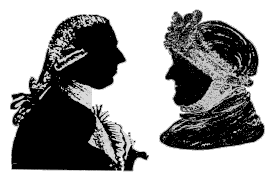
2. Silhouettes of George and Cassandra from the Pemberley Website
3. The immediate Austen family tree from The Jane Austen Society of Australia (which I hadnt spotted before but I love it!)
4. George Austen (played by James Cromwell) in Becoming Jane from Mirror newspaper article

Saturday, 20 October 2007

Team Jane regrouping!

Before regular readers (if any of you still have time to visit this currently-rather-dormant website) think that we have abandoned the cult of Jane Austen and Tom Lefroy :-D let me assure you that we have just been extra busy with our real worlds... but our hearts remain here.

And now, I am very glad to report that Rachel and Michelle have returned to their respective countries, and after tying up loose ends there, will be contributing to some articles soon. Kari had a very successful mission in the Netherland, and I hope she has time to write 2-3 paragraphs of her adventure there, also her very exciting meeting with Veronica Nahmias, daughter of Nadia Radovici. Linda is still busy with her schedules, but she has coordinated some magnificent detective works, and Rachel (despite her tight schedules) has made productive phone calls that all will lead to the re-printing of Radovici's book. Fingers crossed... and let's keep the faith, so that hope remains and will turn to real actions.

As for me, despite of my schedules in Indonesia, I will still monitor our efforts with regards to Radovici's A Youthful Love. And herewith I encourage you all to bug your friends and sign our Radovici Petition. I cannot tell you enough how important it is to have as many signatures as we can have... but I believe, firmly believe, that our goal is nigh. And I believe that Nadia and Jane are helping us too, spiritually.

Pic: Two sisters dancing by Bovi, from Republic of Pemberley

Wednesday, 10 October 2007

Lydia Bennet’s diary!

It is the truth universally acknowledged that Elizabeth was the most famous of the Bennet sisters. But apparently, her fame made one of her sisters restless. Lydia Bennet, the youngest sister with ‘high animal spirits, and a sort of natural self-consequence’ was about to write her own story and see if hers will beat Lizzy’s Pride & Prejudice!

Or at least, Lydia asked Jane Odiwe’s help to write her own story. As a writer, I understand what it means to have a character keep poking her/his head on my door, begging with puppy eyes to be written, dancing on my head until I grumpily open my laptop and write about her/him. Hence, I chuckled as I read Jane’s words as she started Lydia’s Story – a Jane Austen Sequel.

Lydia’s Story is a book I thought could not be written. Who, after all, could like a girl who is badly behaved, who has little regard for propriety and who is described as being vain, ignorant, idle and uncontrolled? I confess I was intrigued by her character and her story, though I resisted putting my ideas down on paper for some time. But Lydia refused to go away and so did the questions I wanted answering. Why and how did she and Mr. Wickham actually get together? We know they must have been thrown together in Brighton but I wanted to know the details, especially as it seemed they did not take much notice of one another in Meryton, or so I thought until I started to write the book!

Heheheh! Persistent Lydia! What can a lady like Jane Odiwe do then, but to write about her? And the good news is: the book will be available before Christmas! Yipppeee! Jane informed me that Lydia Bennet's Story starts just before she goes to Brighton (and then went wild with Wickham there). To promote her book, Jane also created a blog called Jane Austen Sequels, of which journal starts right at the beginning of Pride & Prejudice. The book tells her story with added journal entries alongside. Well, well… can’t wait to read the book! I might be busy by then, but Rachel will definitely be on board already, and can give a preview for us all.

Jane Odiwe also gave another excellent news: sixteen of her Jane Austen illustrations will used in a documentary feature on the DVD of the Jane Austen Book Club. Well, well, well, I have not watched JA Book Club yet, though I really want to. Kari said that the movie was splendid, and I’ve begged her to write a review for us about it. Will be grand to buy the DVD and find Jane’s sketches there as well!

More excellent news: Kari is leaving to the Netherland tomorrow for her own stuffs… and to tie the loose ends of the Radovici mission (i.e. to reprint Radovici’s A Youthful Love). And unexpectedly, just a few days before her departure, we the Team Jane at the Becoming Jane Fansite were contacted by none other than Radovici’s daughter! Though I am very tempted to spoil more, I’m afraid I have to keep my mouth shut and wait for the good news from Kari and Veronica (Radovici’s daughter). Suffice to say that Veronica is very excited with our petition, and hopefully, fingers crossed, the petition will bear its fruits soon! Thanks so much for your helps and signatures, my dear friends, and let’s keep hoping for the best!

Pic 1: Lydia Bennet, by Jane Odiwe


Wednesday, 3 October 2007

Teaching Jane

I’m so glad to find this article, as it shows how ‘Becoming Jane’ is accepted at scholarly level, though not by all scholars, of course. Kudos to Prof. Miriam Wallace of the New College Florida for the new ‘Becoming Jane’ class, and to Jessica of Brandeton for the article. Though… ehm, Jane Austen was not a Victorian authoress…

Jane Austen's timeless sensibility Popular culture finds Victorian author's life gold mine of fantasy

By Jessica Klipa, jklipa@bradenton.com

It is a truth universally acknowledged that women, old or young, wed or unwed, are in want of the ideal romance.

Though an obvious revision of the opening lines to Jane Austen's "Pride and Prejudice," it's precisely the reason she has become all the rave in modern popular culture.

Enchanted by English culture during Austen's era and captivated by witty characters like Elizabeth Bennet, her fans around the world know no limits when it comes to immersing themselves in her work through all forms of media: blogs, books and movies.

Interest is stirring anew with the Oct. 5 release of a new movie, "The Jane Austen Book Club," based on a book by Karen Joy Fowler.

The movie centers on a group of men and women who meet to discuss Austen's works and begin believing their love lives resemble the plots in novels.

Given Austen's enduring popularity, New College professor Miriam Wallace decided to teach a class titled "Becoming Jane."

Though portrayed as sexy and attractive in modern films, Austen was known to have had only two men show interest in her, neither of whom she married, Wallace said.

"It's not enough for her to be a great writer. She has to be one of her romantic heroines. I don't think she was," she said.

Theaters showing films of her works in the past 10 years seem to have merely whet her fans' appetites for more of the same romantic fantasies.

In "Becoming Jane," starring Anne Hathaway, Austen was a portrayed as a young woman who experienced a passionate romance, yet went on to accomplish her dream of becoming an author.

Austen died in 1817 at age 41. Readers and fans tend to be emotionally drawn to an elegant, simple life from that time period.

"What we need from Jane Austen is a picture where the world is smaller and the rules of courtship are clearer," Wallace said.

But life then for women in England was actually more restrictive.

As a literary critic, Wallace said she takes joy in bringing everyone back to reality of a women's position in that time period.

New College student Sarah Southwick began reading Austen's novels in middle school and enjoyed watching "Becoming Jane," which she thought was "heart wrenching."

Southwick, though, said she believes the movie erroneously depicted heartbreak as the reason Austen wrote "Pride and Prejudice."

"I feel like anytime something gets converted into pop culture, it gets oversimplified a little bit, which I think is why this class is important and why I enjoy taking it," she said.

Student Madison Sharko said she believes even more interest in Austen's life and work is likely, but she said fans who do things like dress up in mobcaps the night of the premiere take it a little too far. It's likely that Austen herself would have a witty comment to add.

"It's not Harry Potter," she said. "It's Jane Austen."

Fans of Austen's work have risen to a new level of creativity in immersing themselves in her characters.

Aside from published spin-offs from Austen's work, including "Mr. Darcy Takes a Wife: Pride & Prejudice Continues," "Mr. Darcy' s Diary" or "Lost in Austen: Create Your Own Jane Austen Adventure," books on how to set up a dinner party or dress in English attire also are available.

Jody Mailer, the only male in the New College class, offers a fresh perspective simply because it's the first time he has read a novel by Austen.

So far, he hasn't determined what makes her work so popular, but he said he does believe that it can be enjoyed by either gender.

"Regardless of whether you are male or female, you can relate as a modern reader to her sarcastic wit," he said.

Jessica Klipa, Herald reporter, can be reached at 708-7906.

Pic 1: from UCSB website

Pic 2: Miriam Wallace, from the NCF website


Jane and Tom's wedding photo!


Well, a hypothetical photograph, that is, of Jane Austen (Anne Hathaway) and Tom Lefroy (James McAvoy) if ever they got married in the first place (aaahhh... happy thoughts!). Anyway, since the wedding never took place, but many of us would love to play 'what if', here's a very lovely wedding photograph of Jane Austen and Tom Lefroy, modified from the US Becoming Jane poster by our dear graphic designer Kari. Thanks so much Kari, for giving me a great head start for the day, and may you all love the picture too!

Thursday, 27 September 2007

Anyone missing James McAvoy's Glaswegian accent?

Cos it is very likely that you, like me, will go: 'Aaaarrrrggggggghhhhh!!! Jaaaames!!!' when you see this clip about manners during the Regency period:


And how the cricket was actually not popular in Ireland and Scotland, despite being a favourite sport in UK:


Also, Willow has posted the Becoming Jane cricket scene in YouTube.


Thank you Artisan News Service and Willow for the YouTube videos! By the way, James is bulkier, eh? Must be that 'Wanted' movie! And James is sooo cute and funny in both interview sessions!

Tuesday, 25 September 2007

Downloading music of ‘Becoming Jane’

Just a short article here friends, particularly for those residing outside the United States (like me, Rachel and Michelle) and hence cannot access the Becoming Jane music scores from Walmart and other companies that provide downloaded version of music in Becoming Jane. Particularly the beloved Hole in the Wall by Purcell.

What you need to do is to have Freecorder software that will record any sounds from the internet as you enter one site. It means that you can watch YouTube and download the music from the site as they play. As I type, I am downloading the famous background music of the Becoming Jane US Official Site in MP3 format, so I can play it over and over offline!

So you have to download Freecorder or similar software first. I got mine in the same package with FLV player (that’s the software to play FLV files you download from YouTube to watch videos online) from www.savevideodownload.com. The site will tell you to download the FLV player. As you download the player, make sure that you click the option for Freecorder that comes with the software, and embed it with your Mozilla Firefox or Internet Explorer. I’m sure that you can find a site to download Freecorder without downloading the FLV player, but I find having them both useful, so I download both anyway.

Later, you will have an additional toolbar in your IE or Firefox, with the record, stop, play and pause buttons. Punch ‘record’ if you want to record anything from the internet, and click stop when you’re hit full… I mean, when you’re done with it. It’s MP3 file, I don’t think many will have problems with that.

Have fun then!

Monday, 24 September 2007

Mansfield Park part 3: Drama in the MP drama

Phew! Finally, my seminar was over, and I can give Jane and Tom more attentions they deserve. First, news. Rachel is off to Africa for a very interesting voluntary project for three weeks; take care dearest Rachel, and let’s wish her all the best, great adventure and safe return. Now, back to MP. The second part of Mansfield Park was about astronomy and a bit of marriage. For this third instalment, we’re mostly going to talk about the drama within the drama in MP. I am also pleased to say that most of the ideas in this post are Michelle’s; she was the first one who threw the idea of a hidden drama beneath the theatrical episodes in MP, and I helped her polishing the ideas. Bear with us, it's gonna be a looong post. By the way, I’m using the 2003 Penguin edition of Mansfield Park.

Christmas, again

Before arriving to the drama within the drama in MP, allow me to look back at Chapter 9 (p. 83), where our hero Edmund Bertram said this to Mary Crawford:

EB: “Yes, I shall take orders soon after my father’s return – probably at Christmas.”

After learning of Anthony Lefroy, I tend to see the ‘take orders’ in this sentence as Tom Lefroy’s responsibility to take ‘appropriate action’ by marrying Mary Paul to save his family. I’m not sure about ‘my father’ reference (i.e. Sir Thomas Bertram), but indeed we cannot help noticing that such a change would happen at Christmas. Again, Jane Austen placed Christmas (a very important holiday for her) as a very important date in Mansfield Park, not only for the regular reunion between Fanny Price and her brother William, but also as a very important day for Edmund Bertram.


Drama in the drama

Now, the drama. The theatre episodes in MP covers chapter 12 to 18. Seven chapters just to cover a private play in Mansfield Park… don’t you think it’s a bit too much? Michelle got suspicious of this, and she dug more to find that the MP theatrical episodes was actually Jane Austen’s codes for what happened between her and Tom Lefroy, with Anthony Lefroy as the main supporting cast. The theatre itself was titled Lovers’ Vows, a free adaptation of August von Kotzebue’s The Natural Child by Elizabeth Inchbald; exceedingly renowned in London, and many fashionable resorts (including Bath) between 1798 and 1805.

LV was about a poor woman called Agatha who encountered Frederick (her long-lost, illegitimate son). They eventually resided in a cottage (as helpers, I presume) owned by Baron Wildenhaim, whom Agatha later recognized as her former seducer. The story also evolved to introduce other characthers, namely Amelia (Wildenhaim’s daughter), Anhalt (a chaplain and Amelia’s spiritual adviser) and Count Cassel (Amelia’s supposed fiancée, rich but of course boring). Expectedly, for such a story, Amelia fell in love with Anhalt instead, and later, after Baron found out that Frederick was actually his son, he was forced to make amends and allowed Amelia to marry Anhalt instead.


Two hundred miles, everyone?

In the midst of discussing LV (Chapter 13, p. 114), Mr. Yates suddenly launched a comment about his friend Lord Ravenshaw who had experienced an unfortunate event as of late as his grand mother passed away:

"It is not worth complaining about; but to be sure the poor old dowager could not have died at a worse time; and it is impossible to help wishing that the news could have been suppressed for just the three days we wanted. It was but three days; and being only a grandmother, and all happening two hundred miles off, I think there would have been no great harm, and it was suggested, I know; but Lord Ravenshaw, who I suppose is one of the most correct men in England, would not hear of it." (bolded sentences by Michelle)

Michelle suggested that Mr. Yates’ bewailing the untimely death of a relation many miles away was a bit weird, though he had his justifications, that Lord Ravenshaw was to play in the private Lovers’ Vows himself before ‘the poor old dowager’ (i.e. Lord Ravenshaw’s grandmother) died. Yates was callously wishing that the news could have been suppressed for at least for a couple of days until they did the deed.


Placing this situation in Jane/Tom paradigm … what if Tom and Jane were "that close" to coming to an understanding, healing the hurt, when Anthony’s news came and urged him to come to Ireland? Or was it that Tom’s parents indeed summoned him to Ireland? Who knows. But almost certainly, the news of Anthony Lefroy could not have come at a ‘worse time’ for JA/TL.


Okay, let’s look at the numbers now. Two hundred miles away, with a wish of three days’ news delay: two spatial and temporal references. And let’s look again at Chapter 3 (p. 26), as Edmund said to Fanny:

“Why, indeed, Fanny, I should hope to be remembered at such a distance as the White house. You speak as if you were going two hundred miles off, instead of only across the park.”

Hmmm… two hundred miles mentioned at least twice so far. Nothing is random in Jane Austen’s world. I think (and Michelle agrees) that two hundred miles is the reference of something important in Jane and Tom’s life. And via Google Earth, I learned that York (Anthony’s place) and London is 170 miles away; Dublin and London is 280 miles away; Dublin and York is 213 miles away. Average distance of the triangle is 224.3 miles. What do you think? :-D


We think that the two hundred miles reference in Mansfield Park does not only refer to Lovers’ Vows, but also to the radius among the three sites, or at least Dublin-York and York-London. And about the second reference:

“…it is impossible to help wishing that the news could have been suppressed for just the three days we wanted. It was but three days…”

Three days. THREE DAYS away... from what day? How about November 5, Anthony's wedding? Delaying it three days, we have November 8 or 9, 1798. If particular news could be suppressed at least 3 days... assuming that this reference is Jane/Tom-related, could it mean that Tom wanted to come to Hampshire on November 8 to talk of something very important with Jane? Food for thoughts and more research (as if we don’t have enough on our plates already).


Forced into the Drama

Anyway, Tom Bertram also had seen Lovers’ Vows in London and liked it so much that he wanted to have it played in Mansfield Park. Hence, he dragged his friends as the actors and actresses; some were excessively eager and supportive, some – like Fanny and Edmund – were appalled to the very idea. Still, the show would go on, and Tom had his actors and actresses lined up. Maria Bertram was to be Agatha, Henry Crawford as Frederick, Mr. Yates as the Baron, Mr. Rushworth (Maria’s fiancée) as Count Cassel… and of course the sassy Mary Crawford as the dazzling Amelia. Now what they needed was to find someone to play Anhalt.

Mary Crawford, being attracted to Edmund, naturally wanted Edmund to play Anhalt. Edmund initially refused, for he disliked the plots in Lovers’ Vows. But then, after three chapters of going round and round about who would play who… and that a Mr. Maddox was to play Anhalt, Edmund changed his heart and appealed for Fanny’s advice (Chapter 16, p. 142).

EB: “I do not know what to do. This acting scheme gets worse and worse, you see. They have chosen almost as bad a play as they could, and now, to complete the business, are going to ask the help of a young man very slightly known to any of us. This is the end of all the privacy and propriety which was talked about at first. I know no harm of Charles Maddox; but the excessive intimacy which must spring from his being admitted among us in this manner is highly objectionable, the more than intimacy – the familiarity. I cannot think of it with any patience; and it does appear to me an evil of such magnitude as must, if possible be prevented. Do not you see it in the same light?"


FP: "Yes; but what can be done? Your brother is so determined."


Fanny could not be more correct. Anthony had eloped anyway at that point!

EB: "There is but one thing to be done, Fanny. I must take Anhalt myself. I am well aware that nothing else will quiet Tom."

Fanny could not answer him.

Of course she could not. How could she? So…Anhalt was the bloke that finally married Amelia, played by Mary Crawford. And, Tom Lefroy should play Anhalt as well; marrying Miss Mary Paul! He realised that nothing but marrying Miss Paul would heal the wound Anthony had caused. Let’s resume.

“It is not at all what I like,” he continued. “No man can like being driven into the appearance of such inconsistency. After being known to oppose the scheme from the beginning, there is absurdity in the face of my joining them now, when they are exceeding their first plan in every respect; but I can think of no other alternative. Can you, Fanny?"

"No," said Fanny slowly, "not immediately, but--"

I remember the 1979 JAP Lefroy article that Arnie sent me (thanks again, Arnie), specifically a letter from Tom Lefroy to Mary, written in 1797 after Tom returned from his engagement to Mary during the 1797 Easter Term:

‘I fear, my dear Mary that you have been cursing Term very heartily for sometime and are almost angry with me for reckoning it so great a friend when it is so much your aversion… but I am drilling for active Service, as it were. I am anxious to come, as near as circumstances will allow, and finish Lawyer to the Bar… You will be repaid… by my best attention for life, and sharing whatever credit may accrue from my labours.’

Mary getting anxious about Tom’s commitment to her, eh? Don’t think that the study was the main reason for Tom delaying the engagement…and somehow Mary sensed it. I am not sure when Tom wrote this letter, but I am inclined to think that it was written before November 1797 when he met Jane again in Bath and felt more urge to cancel his engagement with Mary. I’m not sure if Jane knew that Tom had been engaged by then, but in any case, if he had indicated so, it would not be until Sept/October 1798 before he planned to have a serious conversation with Jane and cancel his commitment with Mary. But Anthony’s wedding changed it all.


Marriage for money

Now, let’s get back to Chapter 16 of Mansfield Park (p. 143):

"But what? I see your judgment is not with me. Think it a little over. Perhaps you are not so much aware as I am of the mischief that may of the unpleasantness that must arise from a young man's being received in this manner: domesticated among us; authorised to come at all hours, and placed suddenly on a footing which must do away all restraints. To think only of the licence which every rehearsal must tend to create. It is all very bad! Put yourself in Miss Crawford's place, Fanny. Consider what it would be to act Amelia with a stranger. She has a right to be felt for, because she evidently feels for herself. I heard enough of what she said to you last night to understand her unwillingness to be acting with a stranger; and as she probably engaged in the part with different expectations--perhaps without considering the subject enough to know what was likely to be-- it would be ungenerous, it would be really wrong to expose her to it. Her feelings ought to be respected. Does it not strike you so, Fanny? You hesitate."

Did he just say 'domesticated'? As in 'to accustom to household life or affairs' or MARRIAGE? I’m not sure if ‘domesticated’ has the same meaning now with the one in Jane Austen’s time. But if it does…this passage is a strong indication of Tom Lefroy marrying Miss Paul. And Edmund (TL) also asked Fanny (JA) to put herself in Mary Crawford's (Paul's) shoes... for Tom was after all still engaged with Mary. Or was it Jane Austen asking herself to understand Mary Paul better?

“I am sorry for Miss Crawford; but I am more sorry to see you drawn in to do what you had resolved against, and what you are known to think will be disagreeable to my uncle. It will be such a triumph to the others!”

"They will not have much cause of triumph when they see how infamously I act. But, however, triumph there certainly will be, and I must brave it. But if I can be the means of restraining the publicity of the business, of limiting the exhibition, of concentrating our folly, I shall be well repaid. As I am now, I have no influence, I can do nothing: I have offended them, and they will not hear me; but when I have put them in good-humour by this concession, I am not without hopes of persuading them to confine the representation within a much smaller circle than they are now in the high road for. This will be a material gain. My object is to confine it to Mrs. Rushworth and the Grants. Will not this be worth gaining?"

Let’s see here. RUSHWORTH and GRANTS. Don't the names sound like money and wealth for you? Rush Worth. Grants. Speedy money. In JA's perspective, Tom truly married just for money (well, in all fairness, I think he liked Mary Paul as well, though not as deep as with Jane Austen). For Jane, Tom’s marriage was very political in nature. I don’t think she was wrong.

Fanny seemed nearer being right than Edmund had supposed. The business of finding a play that would suit everybody proved to be no trifle; ...There were, in fact, so many things to be attended to, so many people to be pleased, so many best characters required, and, above all, such a need that the play should be at once both tragedy and comedy, that there did seem as little chance of a decision as anything pursued by youth and zeal could hold out. (Chapter 14, p. 122)

The business of finding a ‘play’ that would ‘suit everybody’ – how about finding a ‘wife’ – a ‘livelihood’ that would suit everybody? After all, Edmund Bertram (and Tom Lefroy) had so many people to be pleased. Was not the business of "marriage" a people-pleasing initiative? Would this not have been how the Irish Lefroy family looked upon their children’s marriages – arrangements to please and humour the Old Judge Uncle?

Let’s resume with Chapter 16 (p. 143):

FP: "Yes, it will be a great point."

EB: "But still it has not your approbation. Can you mention any other measure by which I have a chance of doing equal good?"

FP: "No, I cannot think of anything else."

EB: "Give me your approbation, then, Fanny. I am not comfortable without it."

FP: "Oh, cousin!"

EB: "If you are against me, I ought to distrust myself, and yet--But it is absolutely impossible to let Tom go on in this way, riding about the country in quest of anybody who can be persuaded to act--no matter whom: the look of a gentleman is to be enough.” (emphasise our own)

It's impossible to let Anthony go on his way alone, riding about the country with his new wife... seeking for anyone's support. He, Tom Lefroy, had to come and save his brother. And the bold sections really speak for themselves, do they not? Fanny (Jane) is distraught over Edmund (Tom's) inconsistency and betrayal of his own morality. The ‘acting scheme’ – ‘marriage scheme’ just gets worse and worse.

After reading those passages, we wonder whether Tom finally asked for Jane's approval, or at least understanding. Or was this Jane's wishful thinking of Tom talking to her and asked her permission or blessings? It’s a nice indulging thought that Tom still confided in Jane after returning to Ireland in November 1798. For how could Jane know about Anthony’s 'improper' behaviour then, if not from Tom Lefroy himself?

The Lefroy family conflict

Reading the hidden drama beneath the Lovers’ Vows, we see that the Mansfield Park family quarrels during the LV preparation were not only a reflection of discord among the Bertrams. No Sire, it was also Jane’s reflection on the true nature of the hidden disputes among the Lefroys and how Tom sacrificed himself to prevent further family confilcts. One of our thesis for Mansfield Park was that Tom actually trusted Jane with the story of his brother and his family… and Jane knew that, unlike what they tried to portray to the public, the Lefroys were not truly in harmony. See this sentence in Chapter 13 (p. 119-120) for example:

EB: “Family squabbling is the greatest evil of all, and we had better do anything than be altogether by the ears."

Also, the fight between Tom Bertram and his brother Edmund (p. 119):

TB: "Don't imagine that nobody in this house can see or judge but yourself. Don’t act yourself, if you do not like it, but don't expect to govern everybody else."


Here is Tom Bertram berating Edmund over his ‘interference’ and for daring to pass judgement on Tom's own judgement. He is telling Edmund to basically live by his own rules, but not expect others to adopt them. Was this ever Jane's perception of the "selfishness" of Anthony Lefroy? Or was it that Anthony indeed quarrelled with Tom Lefroy before AL married Elizabeth Wilkin?

In any case, Jane Austen seemed to despise the way some of the Lefroys placing burden upon Tom’s shoulders. In Chapter 15 (p. 137), Fanny was forced into acting in the drama, something that she truly did not like. Charming Edmund finally steps in, supporting his cousin's freedom of choice:

"Do not urge her, madam," said Edmund. "It is not fair to urge her in this manner. You see she does not like to act. Let her chuse for herself, as well as the rest of us. Her judgment may be quite as safely trusted. Do not urge her any more."

"I am not going to urge her," replied Mrs. Norris sharply; "but I shall think her a very obstinate, ungrateful girl, if she does not do what her aunt and cousins wish her – very ungrateful, indeed, considering who and what she is."

Here we have Fanny (Tom Lefroy) feeling the pressure of what his family and cousins wish (expect) of him and Jane Austen as the narrator disagreed with the pressure. JA might also wish that someone would talk Tom out of it (the way Edmund tried to reason with Mrs. Norris)... instead of the entire family and friends pushing him.

Next?

I plan to write another article this week about Jane’s gradual change of perception towards Anthony/Tom. I will be rather busy again these weeks, but Michelle and I have committed that we shall continue reading Mansfield Park to excavate hidden information beneath the passages. In any case, I hope dear readers are now convinced that Mansfield Park was indeed a precious book, and might even carry more stories about Tom Lefroy than JA’s other books. We will keep you posted of the news and reviews, so just keep looking at the blog! :-D


Reference:

Austen, J. 1814, Mansfield Park (2003 edition), Penguin, London.

Lefroy, J. A. P. 1979, 'Jane Austen's Irish Friend', Huguenot Society Proceedings, vol. 23, pp. 148-165.


Pic 1: Mansfield Park audio cassette cover, Amazon.com

Pic 2: Elizabeth Inchbald, from Chawton.org

Pic 3: Elvington Bridge at the City of York in Yorkshire, from Wikipedia

Pic 4: Dublin-York-London triangle

Pic 5: the play at Mansfield Park, University of Missouri Kansas City

Pic 6: Andrew Jack with Alessandro Nivola (Henry Crawford) and Frances O'Connor (Fanny Price), photo by Clive Coote, in Andrewjack.com

Pic 7: Fanny Price and Mary Crawford, Pemberley.com

Pic 8: the stamp of Mary and Henry Crawford, the UK Collectible Stamps

Pic 9: Mary Crawford and Fanny Price, djuna.cine21.com

Pic 10: Fanny and Edmund, from Britmovies UK

Pic 11: James Purefoy as Tom Bertram, from James Purefoy US Fansite